California Title Nineteen Commercial Fire Alarm Wiring
Commercial Fire Alarm Wiring in California: Title 19 Essentials
California Title 19 electrical requirements set the rules we follow when we design and install fire alarm wiring systems for commercial and industrial facilities and major property buildings. In our work at Kord Electric, we focus on how those electrical requirements affect circuit protection, grounding, wiring methods, and the parts that must stay reliable during a fire. Within the first pass, our expert service staff explains what matters and why, so facility managers do not have to guess. And yes, we know that “guessing” is what people do when they forget to read the manual, but fire alarms do not care about vibes. We do the thinking for you.
What California Title 19 Means for Fire Alarm Systems
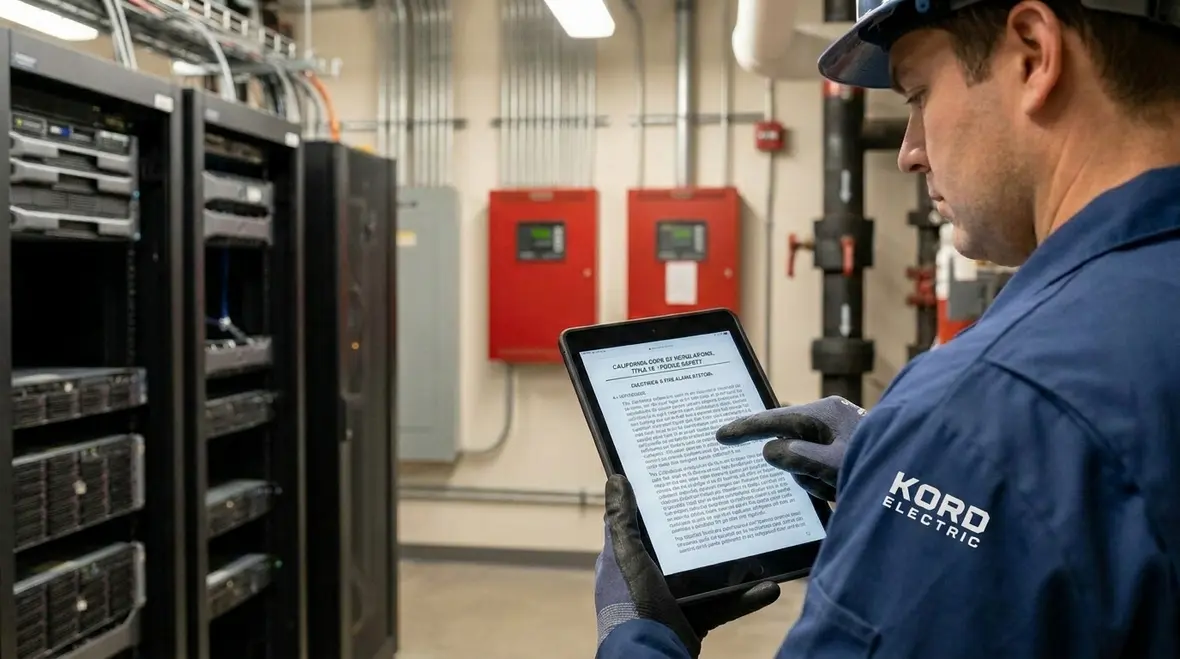
Third person explanation helps everyone stay calm, so here is the plain meaning. California Title 19 electrical requirements tie electrical design and installation practices to fire alarm system performance. In other words, the wiring does not just have to work during normal days, it has to work when conditions become harsh. This includes power loss scenarios, interference risks, and the need for consistent signal paths.
Our technicians and expert service staff spend time reviewing the intent of the rules before they touch a single conduit. That approach reduces surprises later. Then they document how conductors route through the building, how devices connect, and how the system stays supervised. As a result, the system operates as designed and supports the chain of notification, from initiating devices through control and signaling outputs.
For facility teams that like to cross reference, many owners also review resources such as the NFPA 72 overview from Kord Fire Protection to see how national fire alarm standards work alongside California Title 19 electrical requirements in real commercial environments.
That combination of state rules, referenced codes, and practical field experience gives commercial and industrial facilities a wiring approach that is not just compliant on paper but built to function when the environment is noisy, hot, crowded, or under stress.
Wiring Methods and Circuit Integrity That Keep Signals Honest

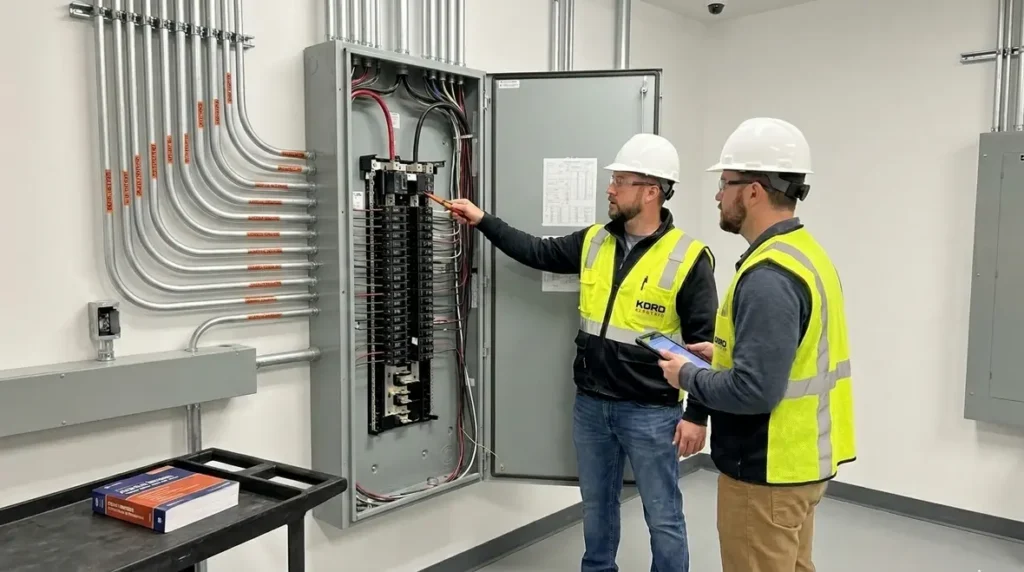
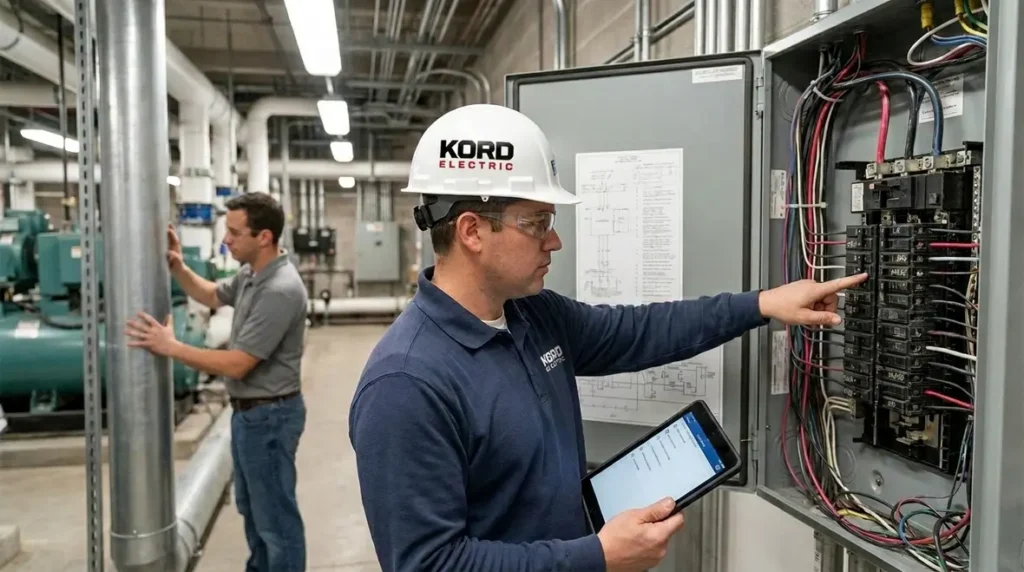
When people hear “wiring,” they often picture something quick, like stringing Christmas lights. Fire alarm wiring is not like that. It needs discipline. For commercial and industrial facilities and major property buildings, Kord Electric follows electrical design practices that protect circuit integrity along the full path. That means proper wiring methods, secure routing, and reliable terminations at devices and panels.
In practice, we reduce failure points by planning how conductors travel through spaces that experience vibration, moisture, heat, and building movement. We also pay close attention to where wiring crosses other systems. Consequently, we manage separation and avoid interference that can distort signals or create nuisance behavior. This is especially important in facilities with heavy mechanical activity, busy tenant spaces, and complex ceiling layouts.
Our technicians explain the logic step by step. First, they show the conductor layout. Next, they show how the control panel supervises the wiring. Finally, they connect that supervision to the electrical requirements so stakeholders understand what happens during normal monitoring and during alarm conditions. If someone says “it should be fine,” our staff gently replies that fire alarms do not accept “should be fine” as a compliance plan.
For teams who want to see how these wiring choices affect day to day reliability, Kord Fire Protection’s guide to fire alarm signal circuit troubleshooting and their article on fire alarm signal integrity connect the dots between clean wiring methods, circuit integrity, and clear communication from devices back to the panel.
Planning Wire Paths Before the First Conduit Is Installed
Title 19 aligned projects start with planning, not improvisation. That means tracing routes that avoid sharp bends, minimizing splices, and selecting raceways that match the environment. In high traffic or exposed areas, we focus on protection from impact and mechanical damage. In sensitive technical spaces, we emphasize signal separation and shielding so the alarm system does not have to compete with motors, drives, or data cabling.
Power, Grounding, and Protection for Reliable Operation
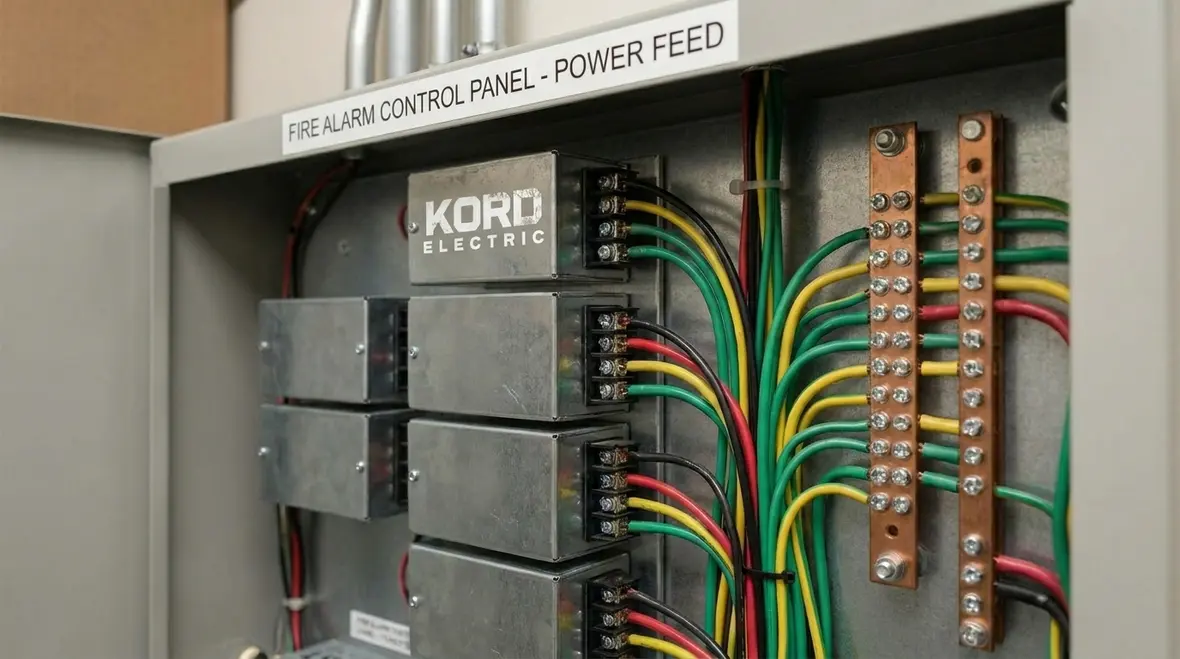
Power and protection matter because fire alarm systems sit in a high expectation job category. They must provide dependable operation under abnormal conditions. Therefore, Kord Electric focuses on how power feeds the system, how grounding supports safe operation, and how circuit protection supports continued performance. We coordinate electrical design with the fire alarm components so the system behaves predictably.
Grounding is not a box to check. It directly affects signal reference points and reduces risks from electrical faults. Additionally, power loss events require that systems maintain function through designed backup power arrangements. Our expert service staff makes those requirements easy to understand by walking clients through what supports panel operation, what supports notification circuits, and how the system detects trouble states.
Because our projects target commercial and industrial facilities and major property buildings, we also consider how the electrical infrastructure supports large loads and demanding environments. In that setting, careful coordination avoids conflicts with other building electrical systems. And yes, we keep an eye on details that busy teams sometimes miss, like label quality, routing clarity, and how devices get addressed and verified.
Backup Power, Battery Health, and Title 19 Expectations
California Title 19 electrical requirements work hand in hand with fire alarm standards that expect systems to keep running through outages. That is where batteries, charging circuits, and transfer between primary and secondary power take center stage. Kord Fire Protection highlights the connection between battery health and system reliability in their article on fire alarm system reliability and battery health, along with a deeper dive into scheduling inspections in their fire alarm battery maintenance schedule guide.
In practical terms, that means our field teams treat batteries, overcurrent protection, and grounding as one system. Each piece either supports or undermines the quiet promise that the alarm will work when the main power does not. We design and wire with that promise in mind.
Supervision, Signaling, and Device Connections Under the Electrical Rules
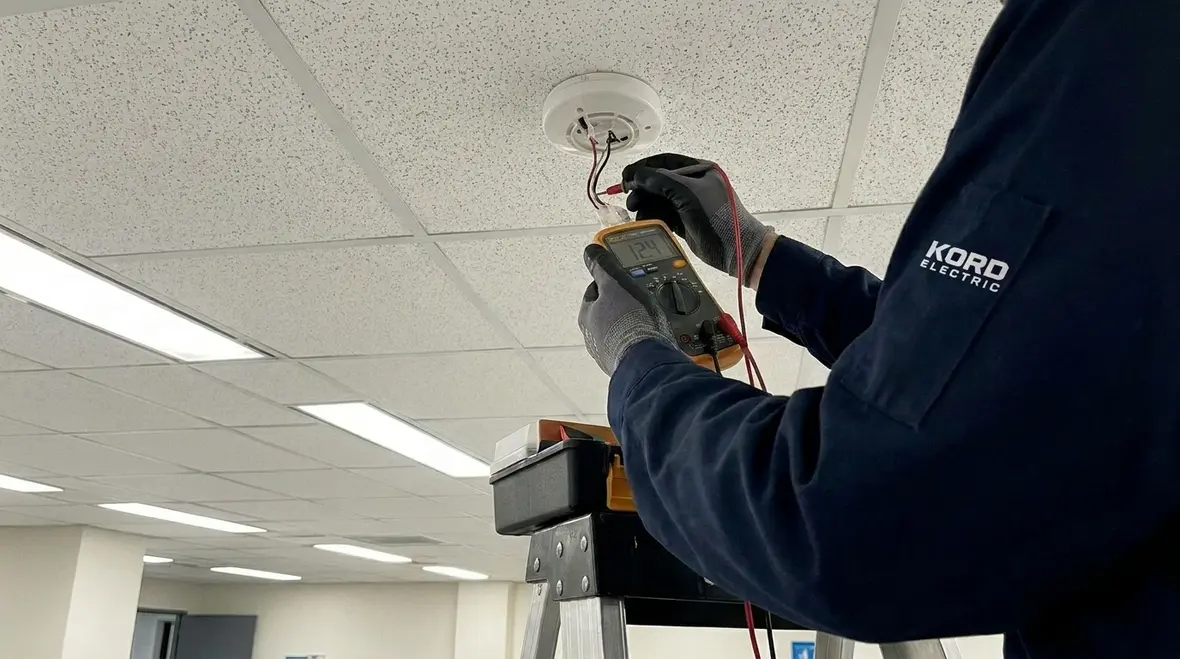
Fire alarm performance depends on supervision and accurate signaling. That means the system must detect open circuits, ground faults where applicable, and other abnormal conditions before a fire forces the issue. In addition, notification signals must operate reliably across the building so occupants and responders get clear alerts.
Kord Electric installs systems with careful attention to device connections, polarity, terminal integrity, and labeling. Then we verify that the control panel interprets each circuit as intended. Our technicians perform checks that go beyond “it powers on.” They verify that device supervision works, that trouble conditions register correctly, and that alarm sequences activate as designed.
To keep communication steady, our staff explains the flow. First comes the initiating devices, like smoke or heat detection. Then the control panel interprets signals. After that, the system activates notification appliances. Because each step depends on the electrical design, we tie the checks directly to the California Title 19 electrical requirements and the relevant wiring and termination expectations. This prevents the classic situation where the system works during one test and then surprises everyone during the next.
From Trouble Signals to Clear Action Plans
Supervision does not stop with construction. Over the life of a building, trouble signals, intermittent faults, and noisy circuits will eventually show up. Kord Fire Protection breaks down what those alerts really mean in their guide to fire alarm trouble signal meanings, and they walk through how monitoring keeps watch 24/7 in their article on what fire alarm monitoring is and how it works. Wiring that satisfies California Title 19 electrical requirements gives those monitoring teams clean signals to interpret, not noise to untangle.
Inspection, Documentation, and Keeping Projects Moving
Commercial and industrial projects often run on tight schedules. However, skipping inspection readiness costs time later. Therefore, Kord Electric builds documentation into the workflow. We ensure that as-built labeling, wiring charts, and device lists match what we install. We also confirm that circuit pathways and terminations align with the approved plan.
Inspections go smoother when documentation tells a consistent story. Our expert service staff helps facility teams understand what inspectors look for, and we prepare the jobsite accordingly. Consequently, we reduce rework caused by unclear labeling, missing verification records, or mismatches between design intent and installed conditions.
We also coordinate with other trades, since major property buildings rarely involve only one discipline. Then we make sure fire alarm wiring stays protected through construction phases. That matters because a cable that gets damaged during rough-in may still “look fine” but fail under supervision, which is the kind of failure that shows up at the worst time. Not the fun kind. The expensive kind.
Using Preventive Electrical Maintenance to Protect Fire Alarm Wiring
Once a fire alarm system is installed to Title 19 expectations, the work shifts toward keeping that performance steady. Kord Electric’s electrical preventive maintenance services help large facilities catch developing issues early: loose terminations, deteriorating insulation, or overloaded circuits that could affect fire alarm branches as well as general power. Pairing documented installation with structured maintenance reduces the odds that a hidden electrical problem undermines an otherwise compliant fire alarm network.
For property teams interested in how hidden wiring and panel issues can grow over time, the Kord Electric blog on hidden electrical risks in commercial buildings shows what can happen when unseen circuits are left alone for too long. The same quiet risks that affect distribution panels, feeders, and branch circuits can also threaten fire alarm pathways if they are never revisited after the final inspection.
FAQ: California Title 19 and Fire Alarm Electrical Requirements
Ready to Meet California Title 19 Fire Alarm Standards?
Kord Electric supports commercial and industrial facilities and major property buildings with disciplined fire alarm electrical installation work. We use California Title 19 electrical requirements as a foundation for wiring method choices, grounding practices, circuit protection, and supervision verification. Our technicians and expert service staff explain each step in clear language, so decisions stay informed and inspections feel less like a mystery show. If a project needs a reliable partner that follows the rules and documents the work, call Kord Electric today and let us plan the next steps.
For facilities that want a broader, long term strategy around their power infrastructure, Kord Electric’s electrical preventive maintenance programs and related commercial services help keep panels, feeders, and life safety circuits aligned with evolving code expectations, including California Title 19 electrical requirements and the standards that support them.
When you are ready to align fire alarm wiring, power quality, and preventive maintenance under one coordinated plan, the Kord Electric team is set up to help you move from “should be fine” to documented, verifiable compliance.