California Title Twenty Four Lighting Requirements
California has its own way of keeping energy use honest, and for commercial sites that means following california title 24 lighting requirements commercial buildings. In the introduction to our own compliance conversations, we tell building owners and facility managers that Title 24 affects how interior and exterior lighting gets designed, installed, and documented. That includes things like power limits, controls, lighting zones, and verification steps. If you run a commercial or industrial facility, you already feel the pressure of utility costs and inspection timelines, and Title 24 adds another layer. Still, we make it manageable. We walk you through the rules with our technicians and expert service staff, so the process does not feel like deciphering a comic book written in legalese. (Yes, we have seen that look during walkthroughs.)
What Title 24 lighting compliance means for commercial and industrial sites
In plain terms, Title 24 sets minimum performance standards for lighting in order to save energy while keeping spaces safe and usable. For commercial and industrial facilities, the key point is that compliance ties into both design intent and on site proof. We explain this to clients because many people assume lighting rules stop at the fixture selection. However, the state cares about the full system. It cares about how much power the system uses, how well it controls that power, and how reliably it delivers light across the space.
Our technicians and expert service staff typically start by looking at the building type, schedule of occupancy, and the layout of areas. Then we connect those details to the lighting approach that meets california title 24 lighting requirements commercial buildings. If the project involves new construction, tenant improvements, or lighting retrofits that trigger compliance requirements, you need to plan early. Otherwise, your schedule gets hit like a rogue sequel nobody asked for.
Which lighting areas and systems Title 24 covers
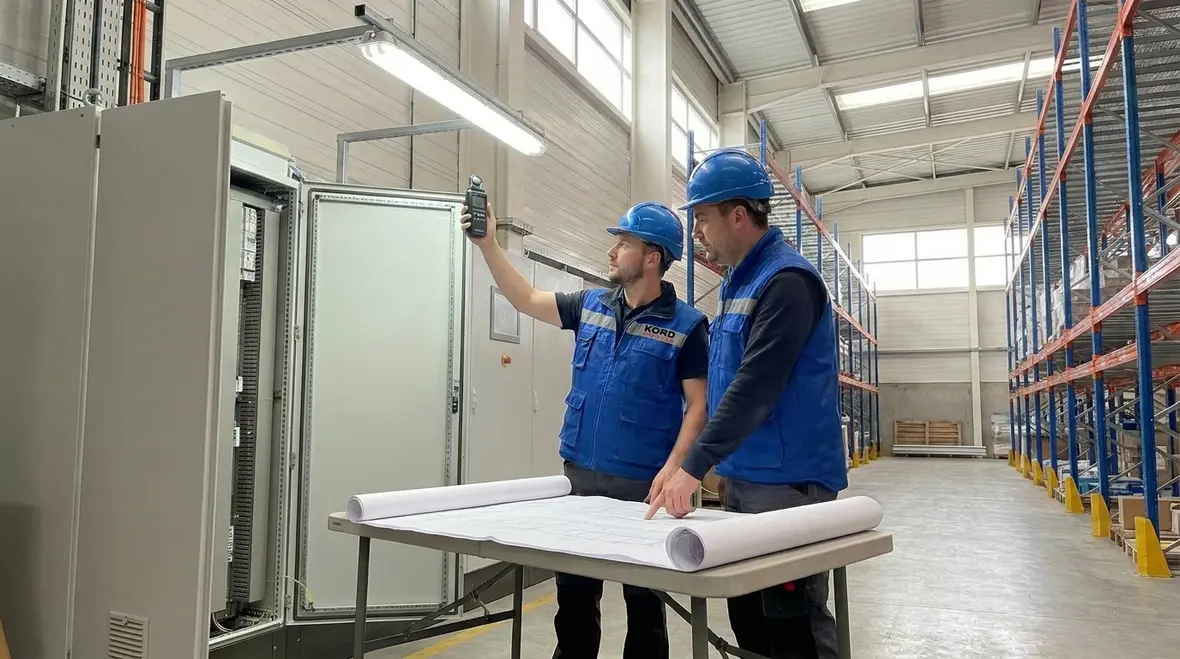
California rules do not treat lighting like one size fits all. Instead, Title 24 addresses the lighting systems that most directly affect energy use and occupant experience. For major property buildings and industrial facilities, the scope often includes interior lighting, exterior lighting, and the controls that manage them. We also pay attention to how different zones behave, because the standard expects spaces to dim or turn off based on occupancy and time, depending on the application.
When our team reviews a project, we usually separate the work into manageable parts. First, we identify the controlled areas and the expected use patterns. Next, we check the installed components and their settings. Finally, we confirm that the controls strategy matches the plan and the requirements. This is where some facilities get stuck. They install efficient fixtures, but the control logic does not match the required behavior. Then the energy savings never show up, and the paperwork fails to align with reality.
For teams who want a broader perspective on how this plays out across real projects, we often recommend pairing this article with our in depth California Commercial Title 24 Lighting Compliance Guide, which shows how standards translate into day to day decisions for property managers.
Control strategies that pass inspections without drama
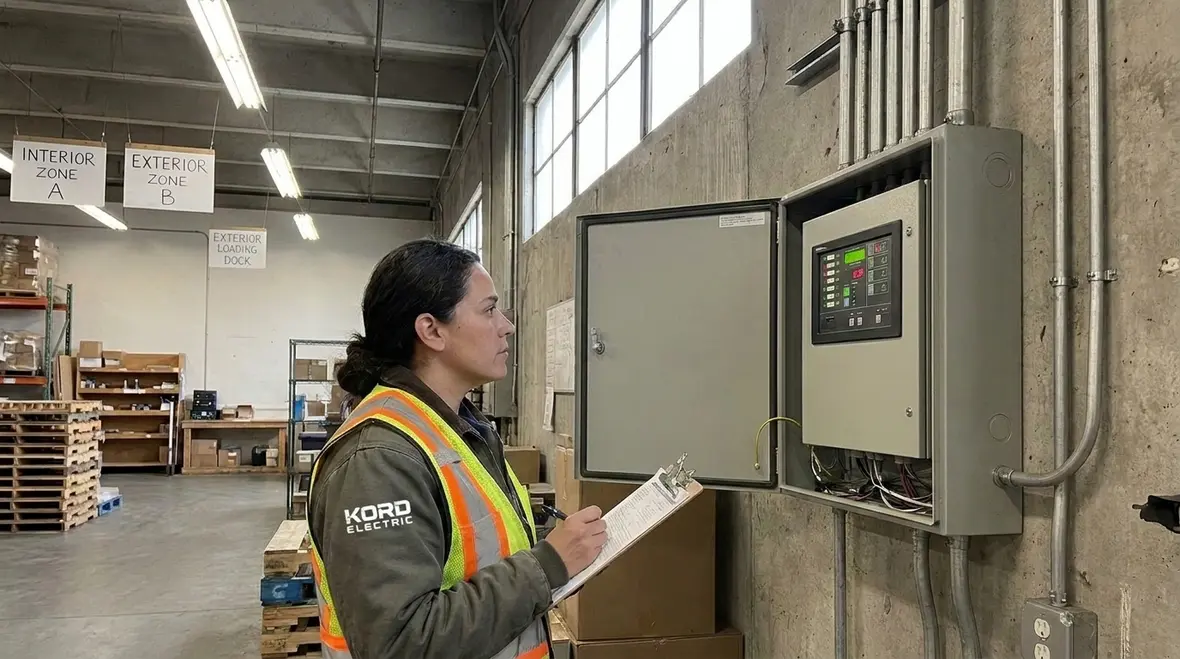
Controls often decide whether a project moves smoothly or becomes a long series of “next week” calls. Title 24 tends to reward systems that reduce lighting when spaces are unoccupied or when daylight can do the job. Therefore, we help teams think in terms of sequences and setpoints, not only hardware.
Common control approaches include occupancy sensing, time scheduling, and dimming where appropriate. For example, many interior spaces need lighting to reduce output after a period without detected motion or after a scheduled off time. In addition, some projects benefit from daylight responsive controls when the design supports them. Our technicians explain the logic step by step, so facility staff understand how the system should behave. That way, maintenance teams can troubleshoot instead of guessing. And yes, we have heard the classic line: “It’s not broken, it’s just moody.” In most cases, it is actually following the control settings.
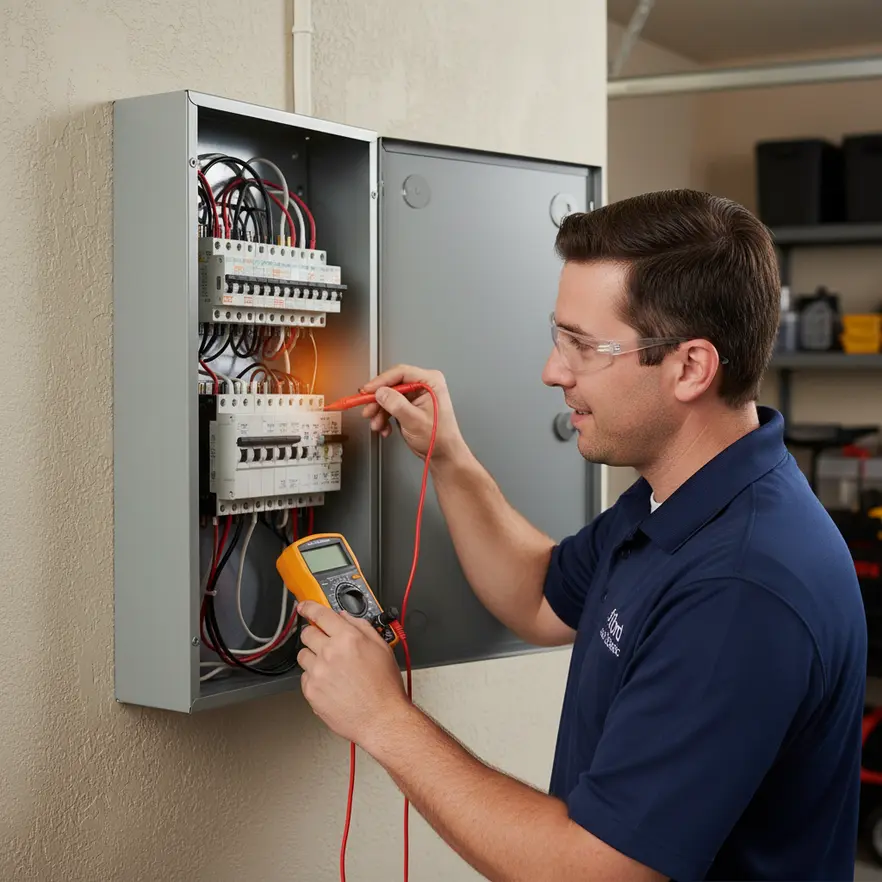
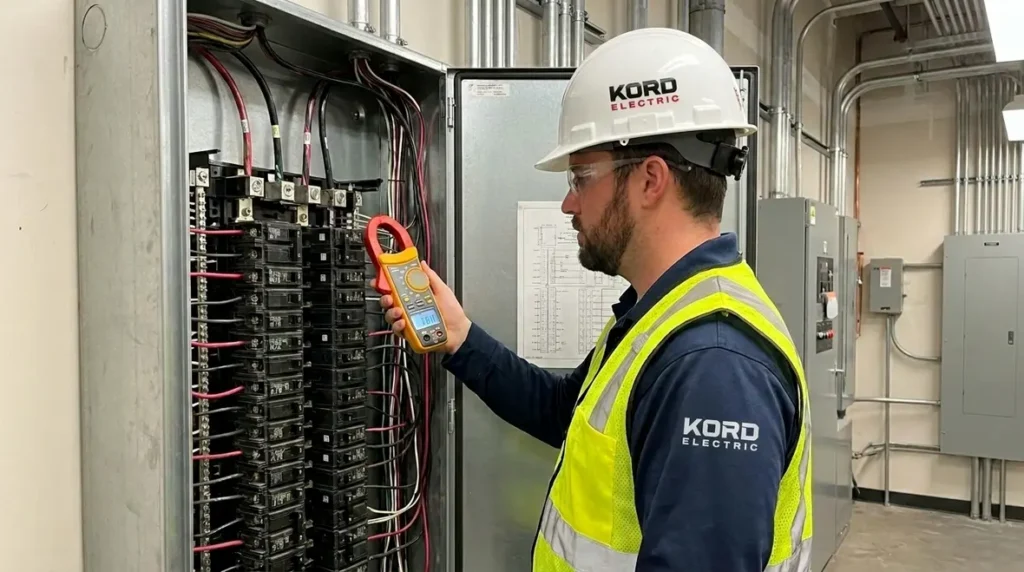
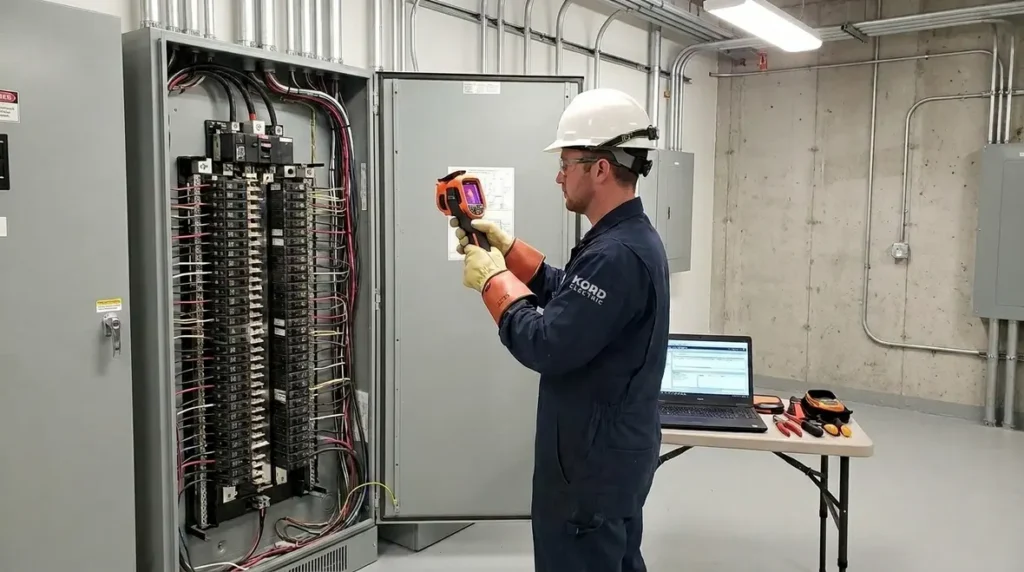
We also emphasize commissioning and functional testing. Title 24 does not just want equipment on the wall. It expects the system to operate as intended. When we coordinate service with installation teams early, we prevent the late surprises that force rapid rework.
Linking control strategies to real world ROI
Well planned control logic does more than satisfy an inspector. It cuts wasted runtime, stabilizes comfort, and gives your team a clearer picture of how different zones behave over time. When we align controls with your actual schedules, we often see the same pattern: fewer overrides, fewer “why are the lights on?” complaints, and a smoother path through verification.
How we handle power limits, lumens, and lighting zones
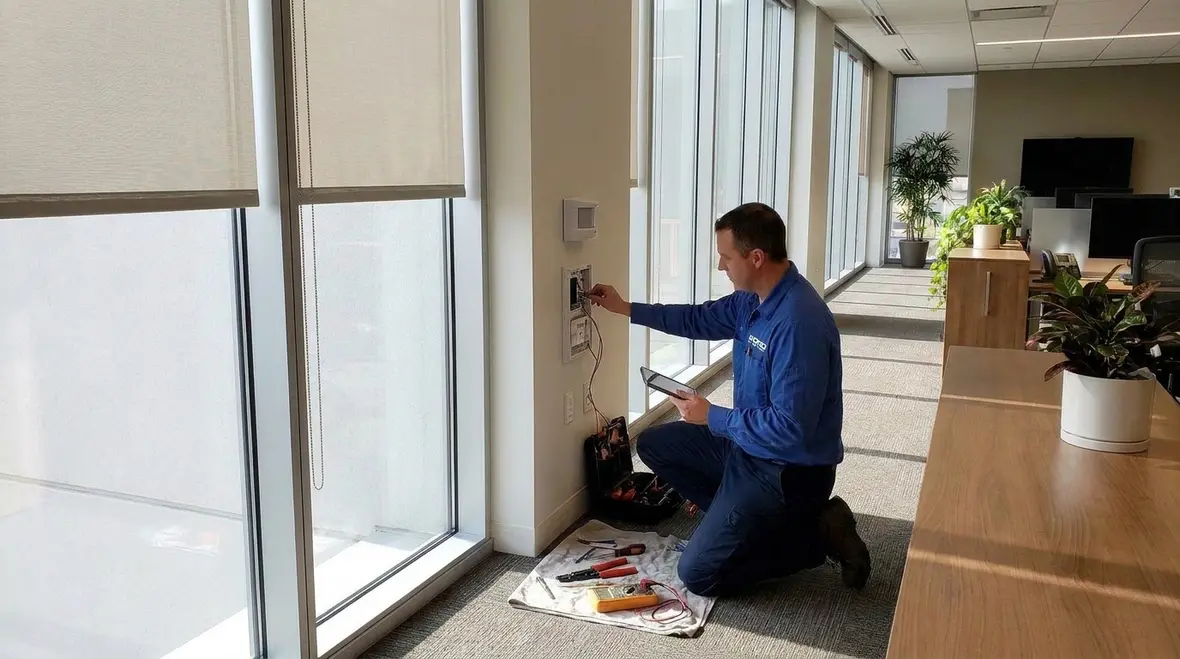
Energy rules connect to how much light gets delivered and at what power. For commercial and industrial sites, the path to compliance often includes meeting power density limits or calculation methods that translate fixtures and controls into an allowed outcome. We focus on correct zone planning and accurate fixture data so the lighting layout behaves as the compliance path expects.
In practice, this means we verify fixture outputs, wattage, driver settings, and any special modes. Then we map those elements to the lighting zones defined for the project. If your building has mixed uses like offices, corridors, warehouse sections, and loading areas, zoning must reflect how each area gets used. We do not treat warehouses like conference rooms, and we do not treat day shifts like night shifts. Title 24 assumes the building will operate with real usage patterns, not an imaginary schedule pulled out of thin air.
Our expert service staff also helps clients avoid a common mistake: swapping fixtures after the design phase without updating the compliance path. If you change to a different wattage or output model, it can alter the total system performance. We guide teams to plan substitutions early so compliance stays intact.
Why zoning discipline matters in california title 24 lighting requirements commercial buildings
For large properties, zoning discipline is what keeps the entire system from drifting off course. When zones reflect how people actually work, energy models match reality, inspections move faster, and day to day operation feels intuitive instead of random. That combination is exactly what the california title 24 lighting requirements commercial buildings framework is trying to encourage.
Documentation, verification, and what your team needs ready
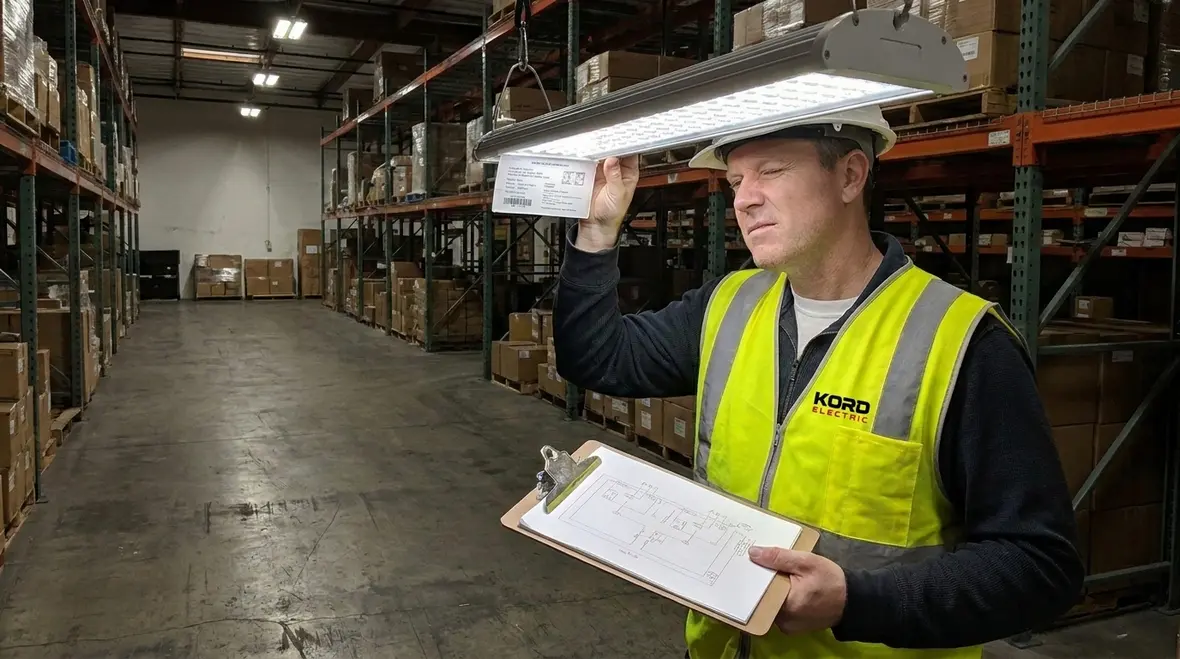
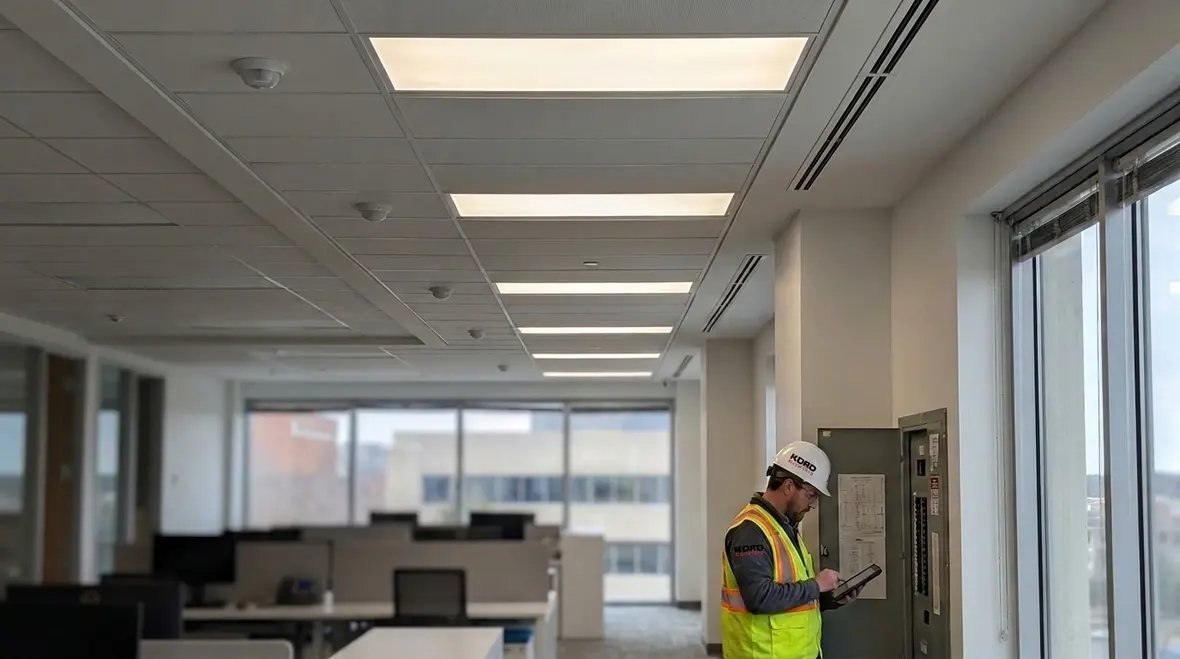
Even when the lighting system works great, documentation can make or break the compliance process. Title 24 projects rely on proper verification steps, and that means the right information exists when inspection or submittal happens. We help teams prepare the details that reviewers ask for, including lighting system descriptions, control intent, and installed component information.
Because we focus on commercial and industrial facilities and major property buildings, we understand how these projects flow. There is design, then installation, then verification. We coordinate with stakeholders so the information does not get lost between trades. Meanwhile, our technicians explain what they check during functional testing, so your facility team knows what to expect.
Additionally, we recommend a plan for ongoing maintenance. Lighting systems rarely stay identical forever. Lamps change, drivers fail, and controls sometimes get adjusted during tenant turnover. When you maintain the system within the intended behavior, you protect compliance outcomes and avoid the situation where the building “passes” during one moment and drifts out of compliance later.
Keeping paperwork and field conditions aligned
A consistent maintenance and documentation plan keeps your Title 24 story straight. Specification sheets, control narratives, test forms, and as built drawings should match what your facilities staff actually sees in the field. When they do, inspections feel like a confirmation, not an interrogation.
Typical retrofit scenarios in major buildings and industrial facilities
Retrofitting existing spaces can be the most cost effective option, but it also creates the most confusion if the scope gets defined poorly. In many major properties, upgrades include replacing luminaires, adding controls, upgrading to LED, or modifying sensor coverage and time schedules. For industrial facilities, the work may involve brighter task areas, warehouse controls, dock lighting, and exterior upgrades that help safety while cutting energy waste.
We often see two retrofit realities. First, an owner wants to improve lighting quality and energy use right away. Second, the facility operations need the work without long downtime. So we plan around access windows and coordinate with safety requirements. Then we connect the scope to california title 24 lighting requirements commercial buildings so the retrofit aligns with the same compliance principles as new work.
In addition, we pay attention to the “unknown unknowns,” like hidden wiring constraints, sensor placement limits, and mismatched control zones from earlier projects. Our technicians handle these issues by verifying field conditions before finalizing adjustments. That keeps the work from turning into guesswork. And if a change impacts the compliance logic, we bring it up early. Nobody likes a surprise that shows up after the electrical is already closed up like a locked lunchbox.
Retrofits that support broader performance goals
Done correctly, retrofit scopes do more than meet code. They can support safety, reduce maintenance, and open the door to smarter automation. If you want to explore how lighting automation stacks on top of code compliance, our commercial lighting automation ROI and payback guide walks through how control upgrades translate into measurable returns.
FAQ: California Title 24 lighting requirements for commercial projects
Why choose Kord Electric for lighting compliance support
When you run a commercial or industrial facility, you need lighting that works and documentation that holds up. That is why we support major property owners with planning, retrofit guidance, and field verification through our technicians and expert service staff. We explain the process clearly, coordinate with project teams, and keep the system aligned with performance expectations. If you want to reduce energy waste and avoid compliance delays, contact Kord Electric today for a consultation and a practical plan built for your facility schedule.
Next steps for California facilities
If your building portfolio includes offices, warehouses, or mixed use commercial space in California, a structured Title 24 plan protects you from costly surprises. Many teams start by comparing current conditions to best practices in resources like our Title 24 lighting compliance guide for commercial buildings. From there, we build a tailored roadmap that lines up design, controls, documentation, and maintenance.
When you are ready to move from planning to action, our Los Angeles County electrical services team can support everything from focused lighting control retrofits to full code driven upgrades across larger properties.
Whether you are looking at a single tenant improvement or a multi building program, aligning with california title 24 lighting requirements commercial buildings standards early keeps your project on schedule, stabilizes long term operating costs, and gives your inspection team fewer reasons to reach for the red pen.