How Often Should Commercial Electrical Systems Be Inspected
In a commercial building, power failures never show up with a calendar invite. They arrive quietly, then they escalate, then everyone suddenly becomes an electrician in their own imagination. So the real question is how often should commercial electrical systems be inspected, and the answer depends on how hard the building works and how well the system has been cared for. We at Kord Electric help owners and property managers stay ahead of problems by scheduling inspections with practical timing and clear reporting. Meanwhile, our technicians and expert service staff explain what they find in plain language, because nobody wants a surprise repair bill that feels like a plot twist from a sitcom.
Commercial electrical systems inspection schedule that fits real buildings
Why commercial systems need a real inspection rhythm
Most facilities do not fail all at once. Instead, they drift out of spec: connections loosen, insulation weakens, and components get warmer than they should. Therefore, the inspection rhythm matters because it catches issues before they become heat, arcing, or downtime.
In general, many commercial and industrial facilities plan inspections on a recurring basis. For example, we often support schedules that look like this: frequent visual checks and test verification at regular intervals, plus more detailed reviews during planned maintenance windows. Of course, the right pace changes with the building type, the age of equipment, the occupancy load, and how critical the systems are.
As our team goes onsite, our technicians follow a process that looks beyond the obvious. They look at how the system behaves over time. Then they document what they saw, what it means, and what comes next.
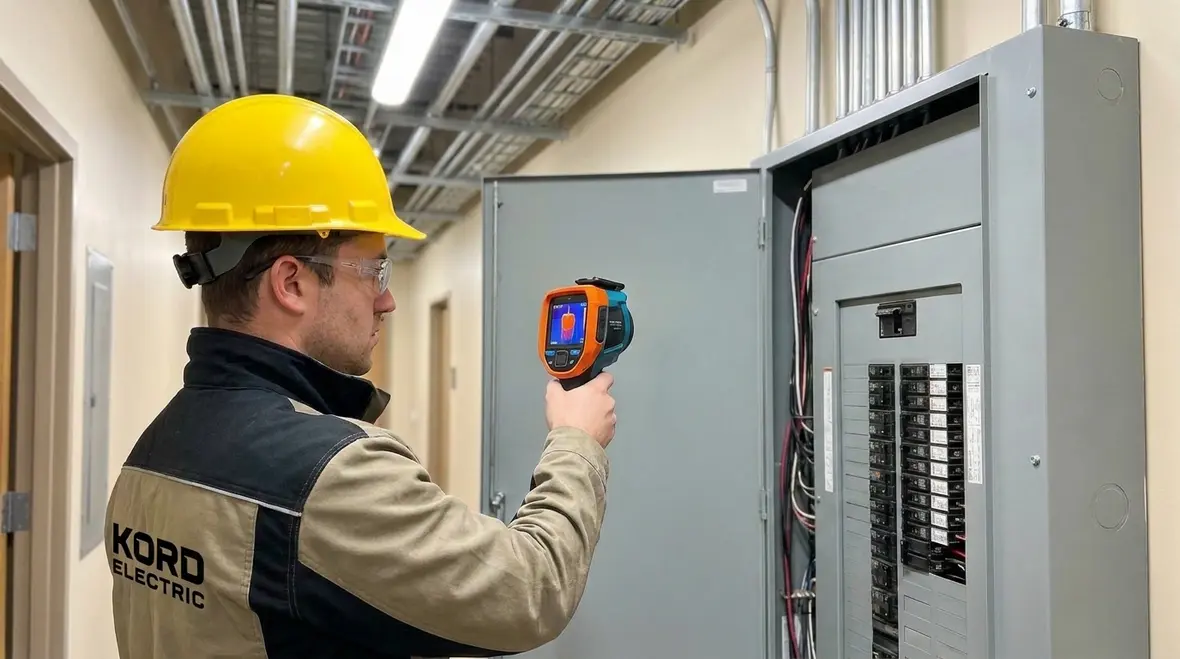
For owners and managers who want to turn that rhythm into a repeatable program, Kord Electric’s commercial and industrial electrical maintenance plans show how structured inspections, testing, and documentation support long term reliability across larger portfolios.
Why inspection timing matters for safety, uptime, and budgets
Electrical risk does not wait for your budget cycle
Electrical equipment does not care about your quarterly goals. It cares about heat, moisture, vibration, and how current moves through conductors and connections. When these factors shift, the system can degrade faster than you expect.
So we advise owners to think of inspection timing as risk control, not paperwork. Regular checks reduce the chance of:
- Loose terminations that create hotspots
- Damage that hides inside panels and conduit runs
- Problems that interrupt operations or delay tenants
- Upgrades becoming emergency work instead of planned work
And yes, emergency repairs always cost more. They also bring the kind of chaos that makes people ask, “Who moved the generator?” like it is a practical magic trick.
Additionally, consistent inspection history helps during audits and insurance reviews. When others need proof that you manage risk, your records become a shield. We build those records with you in mind.
Connecting inspection timing with preventive maintenance
Inspection timing works best when it is tied to a broader preventive maintenance strategy. When commercial properties align their inspections with NFPA 70B style maintenance ideas and manufacturer guidance, they get fewer surprises and a cleaner story for insurance, lenders, and regulators. Kord Electric’s NFPA 70B electrical panels and switchgear maintenance guidance shows how disciplined maintenance and well timed inspections keep new and existing gear operating as designed over the long haul.
How we plan inspections for commercial and industrial facilities
Tuning inspection scope to how your facility actually runs
At Kord Electric, we treat every major property building like a living system. Hence, we align our inspection plan with how you run your facility. A warehouse with high vibration loads is different from a hospital wing, and a data heavy tenant buildout is different from a typical office floor. Even if both have the same panel brand, the stress patterns change.
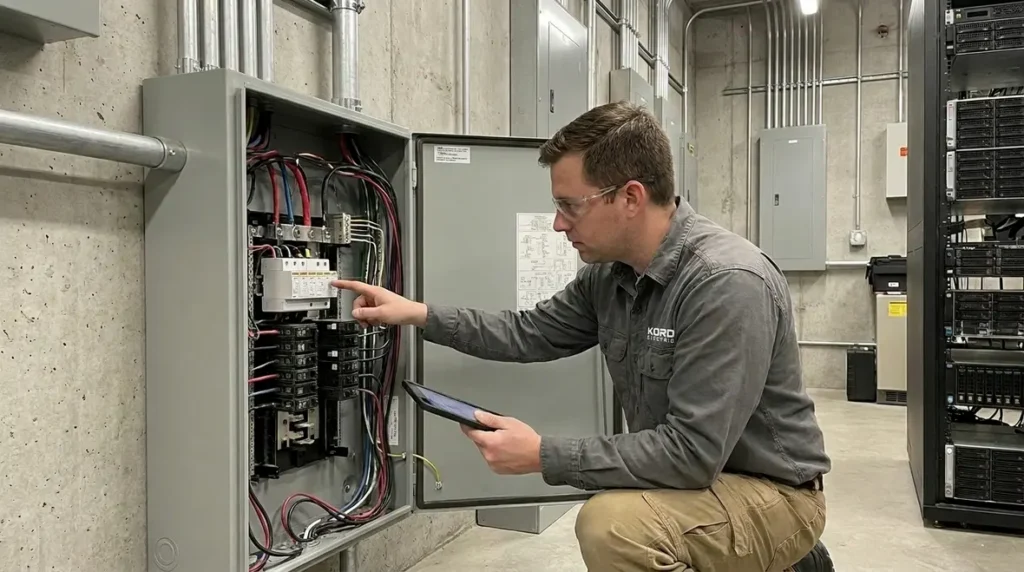
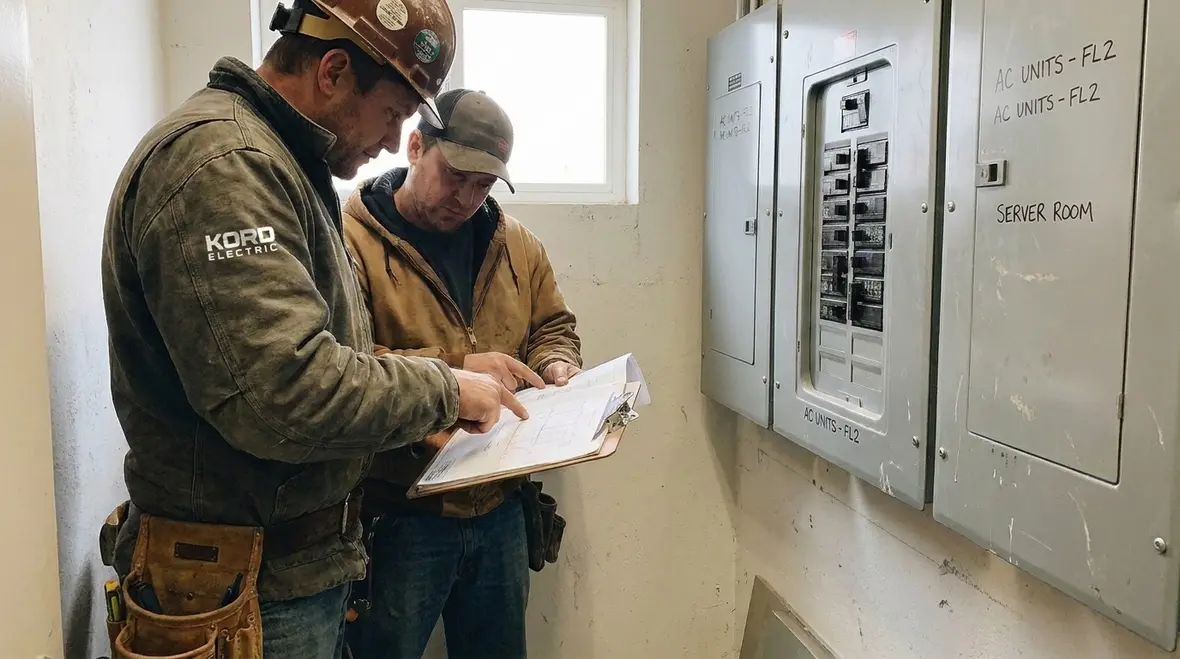
Our expert service staff starts by reviewing existing documentation and prior findings when available. Then we walk through the electrical distribution path: from service equipment to panels, feeders, and branch circuits, and onward to grounding and bonding.
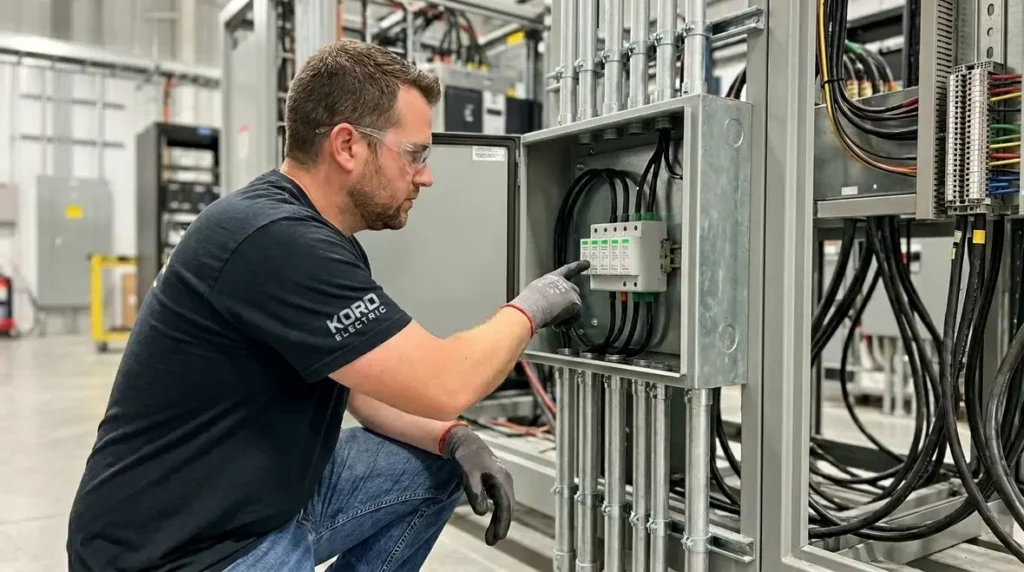
During the work, we also watch for common warning signs such as heat discoloration, unusual sounds, corrosion, damaged labeling, and inconsistent installation quality. Then we check whether protective devices behave as expected and whether the system’s safety features stay reliable over time.
To keep this simple, we focus on what matters most for commercial electrical performance: dependable power delivery, safe operation, and predictable maintenance planning.
If your operations also rely on backup generators or UPS systems, it is smart to connect the inspection plan with your broader continuity strategy. Kord Electric’s emergency power for business continuity design guidance explains how clear inspection and testing routines support stable transfers, reliable backup power, and calmer responses when the utility side misbehaves.
What preventive maintenance actually looks like onsite
Turning observations into action in the field
If you have ever watched a “maintenance” visit that mainly involved looking around and shrugging, you understand why real preventive work matters. Good inspections connect observations to action. That is exactly what we do.
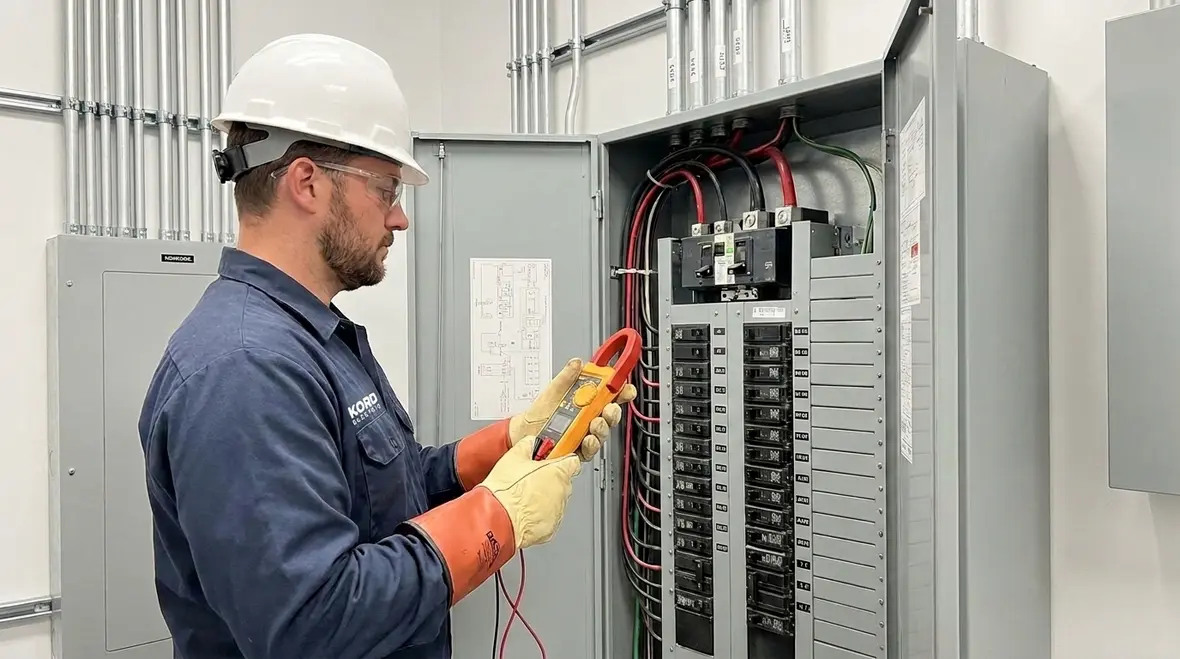
In our preventive maintenance approach, we support owners with structured work that can include periodic inspection of electrical panels, verification of connections, and review of system components for wear. You can see the general outline in our preventive maintenance page here: Electrical Preventive Maintenance.
From our experience, preventive maintenance improves outcomes when it includes the details that people skip. We help ensure:
- Panels and electrical enclosures stay clean and properly sealed
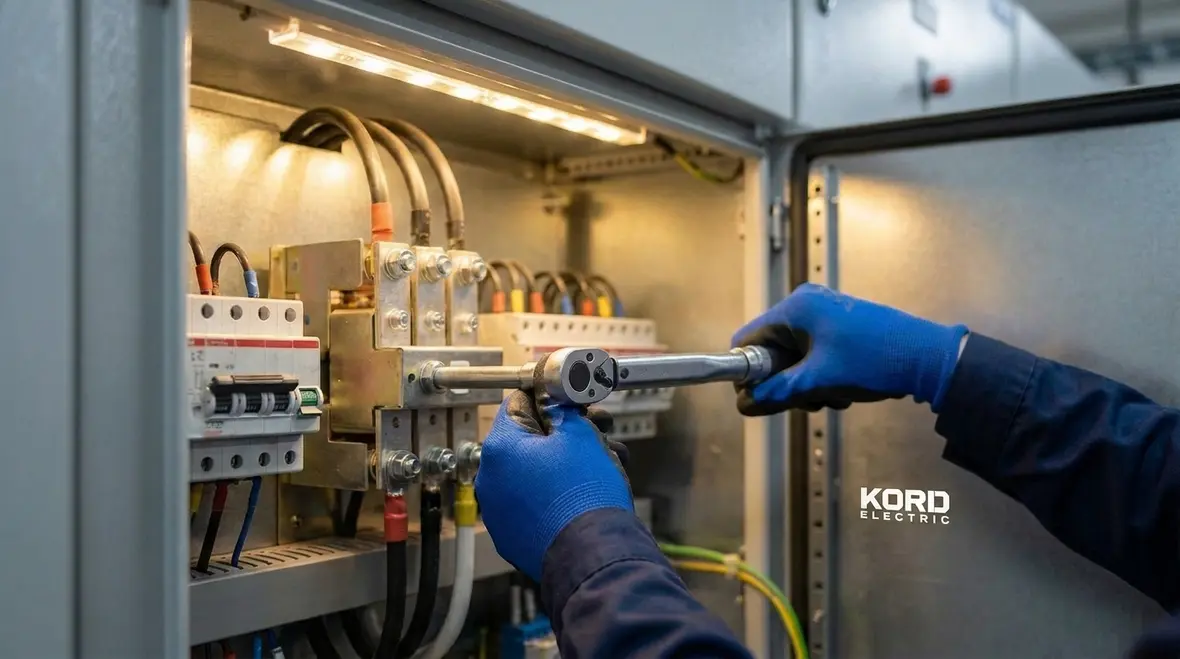
- Torque and connection integrity support stable current flow
- Grounding and bonding remain intact and correctly connected
- Protective devices match the load requirements and operate correctly
- Documentation stays accurate so future service stays faster
Then, just as important, our technicians explain what we found and why it matters. We keep it calm, clear, and practical, like a steady narrator guiding a thriller away from the cliff edge.
When preventive work is tied to a clear playbook, facility teams can move from “we hope it is fine” to “we know where we stand.” That is why many owners pair electrical inspections and preventive maintenance with resources like Kord Electric’s data center power reliability and uptime design and commercial backup power solutions content, which show how maintenance, design, and backup systems all reinforce each other.
Factors that change the answer for how often should commercial electrical systems be inspected
Why there is no one size fits all inspection frequency
When people ask how often should commercial electrical systems be inspected, we understand they want a simple frequency. However, the truth is that inspection frequency depends on conditions and risk level. In other words, you cannot copy a schedule from one building and assume it fits.
Here are the main factors that shift the timing we recommend for commercial and industrial properties:
- Building use and load profile: manufacturing, medical, and heavy power environments often need tighter intervals
- Equipment age: older systems may need more frequent checks to catch slow deterioration
- Environmental exposure: moisture, dust, corrosive agents, and temperature swings raise risk
- Vibration and mechanical stress: affects connections and components over time
- History of issues: recurring breaker trips, nuisance alarms, or prior hotspots signal the need for closer monitoring
- Criticality of power: life safety loads and business critical systems require stricter management
- Expansion and remodeling: new tenants, added equipment, and panel additions change system behavior
In addition, we consider how your facility plans downtime. When you can schedule work around normal operations, you can inspect more effectively. When you cannot, we may prioritize targeted areas first, while still building a path toward full coverage.
How to build a safe inspection plan without interrupting operations
Coordinating electrical inspections with real world schedules
Commercial leaders often worry that inspections slow production. Yet if you plan the work, inspections become a predictable part of operations instead of a disruption.
First, we coordinate with facility leadership to understand schedules, peak operating times, and areas that cannot lose power. Then we define scopes that match those realities. For instance, we can focus on reachable sections during low demand windows, while planning deeper verification during broader maintenance periods.
Next, we provide clear findings and recommendations. Our technicians do not just report “replace this” and disappear. They explain the risk level and the urgency. Then they help you decide what to handle now, what to schedule next, and what to monitor.
Finally, we keep the process structured so it stays easy for your team. When building staff needs the “why,” we can answer it. When finance needs the “what does it cost over time,” we help present options that prevent bigger losses later. Nobody wants to pay for the same surprise twice, and we do not do repeat surprises on our watch.
For properties across the region, especially those coordinating multiple sites, Kord Electric’s broader portfolio of services — including Los Angeles County electrical services — helps align local inspection work with portfolio level maintenance, upgrades, and capital planning.
FAQ
Call Kord Electric for a maintenance plan you can trust
Turn inspection questions into a clear, repeatable plan
When you run a commercial or industrial facility, you cannot afford mystery failures. Kord Electric helps you answer how often should commercial electrical systems be inspected with a real plan based on your building’s risk, age, and operating needs. Our technicians and expert service staff explain findings clearly and guide next steps that protect safety and uptime. If you are ready to turn electrical maintenance from guesswork into control, call us today and schedule a site assessment.
If you also need help coordinating inspections with future upgrades, load growth, or backup power improvements, our team can connect your inspection plan to related offerings like electrical infrastructure upgrade planning and commercial backup power strategies. That way, every inspection you complete feeds directly into smarter decisions about what to repair, what to replace, and when to invest in new capacity.