Electrical Fire Prevention for California Businesses
If a business wants to stay open, it also has to stay safe. That is why we put real time into electrical fire prevention california businesses can rely on. In the state of California, electrical fires do not announce themselves. They start quietly, usually from small problems that grow fast when people ignore signs like heat, burning smells, or repeated breaker trips. Meanwhile, building owners focus on payroll, schedules, and supply chains, and honestly, those are not small tasks. Still, electrical issues do not care how busy a manager is. They care about wear, heat, and time. We have our technicians and expert service staff walk teams through what they need, what they can fix now, and what they should plan for next.
Electrical fire prevention for commercial buildings: what risks show up first
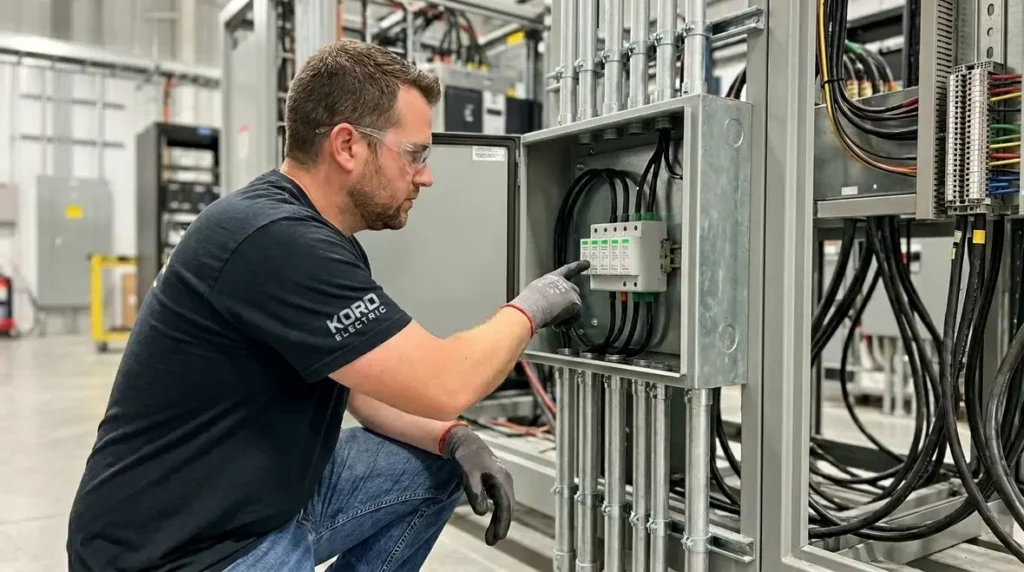
Commercial and industrial sites tend to look stable, even when hidden risks are building behind the walls. However, the first stage of trouble is often easy to miss. For example, we regularly see insulation that has aged, loose connections, and overloaded circuits that run beyond their intended load. In addition, many facilities add equipment over time, then forget to update electrical capacity. That is when the system starts acting like a kettle on high heat, except the kettle is inside your equipment room and the whistle is smoke.
In California, heat and humidity changes also play a role. Furthermore, dust, vibration, and moisture can affect components in ways that seem minor at first. Over time, that damage can turn into arcing. Arcing then produces heat, and heat then feeds damage into nearby wire insulation, dust, or stored materials.
Our team at Kord Electric focuses on commercial and industrial facilities and major property buildings. Because of that, we look at the whole electrical environment, not just a single panel or outlet. We track where loads connect, how power flows, and which areas attract heat in the real world, not the brochure world.
Signs of electrical problems you should act on immediately
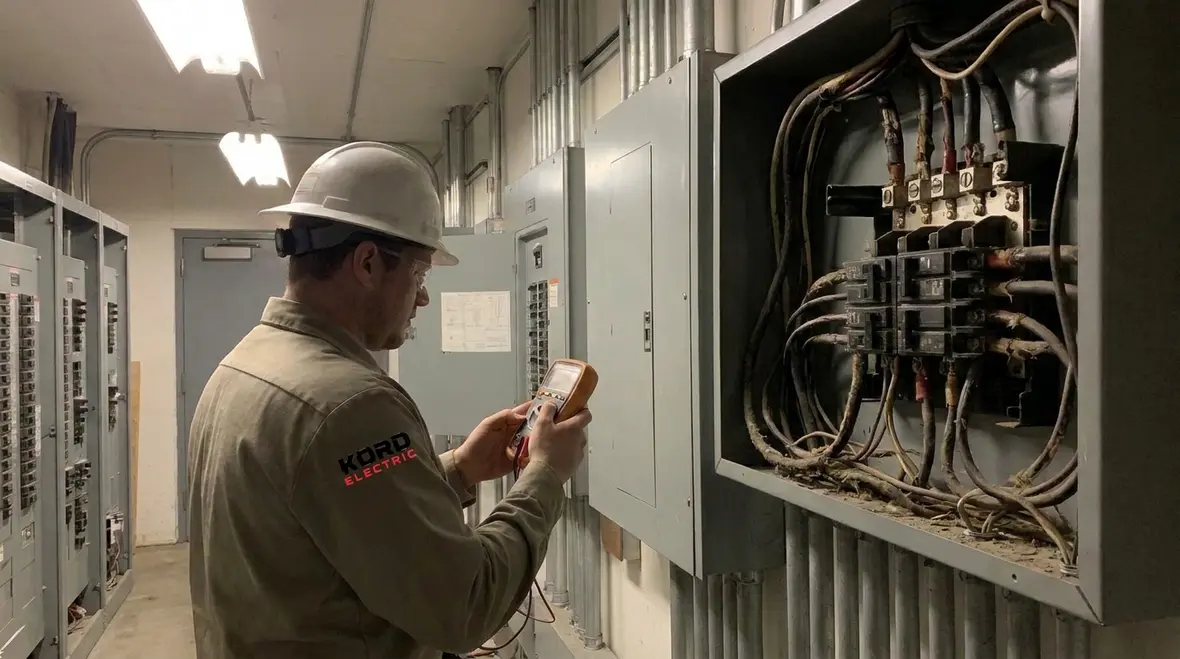
Most people only notice an electrical problem when it looks like a movie scene. But in business, you do not get a dramatic warning; you get a slow decline. To stay ahead, we recommend teams watch for early signals that point to a failing connection or overheating conductor.
Common signs include:
- Breakers that trip more often than they used to, especially when conditions seem normal
- A burning smell near panels, transfer switches, or electrical closets
- Warm or hot spots on enclosures, junction boxes, or cable runs
- Flickering lights in one area that keep coming back
- Buzzing or crackling sounds from breakers, transformers, or bus bars
- Visible discoloration around panel covers or conduit entry points
Then there is the part people underestimate: repeated nuisance trips. If breakers trip, the system is warning you. However, if staff resets them again and again without investigation, the failure grows. Our technicians explain the difference between a simple reset and a real fault, and they document the findings so leadership can make decisions with clear facts.
If your facility has already seen warm panels, mysterious flickers, or unexplained shutdowns, it may be time to look at deeper risk. For a closer look at how unseen issues build up, many property teams also review guidance like the Kord Electric article on hidden electrical risks in commercial buildings, which digs into how concealed problems turn into fire hazards when they go unchecked.
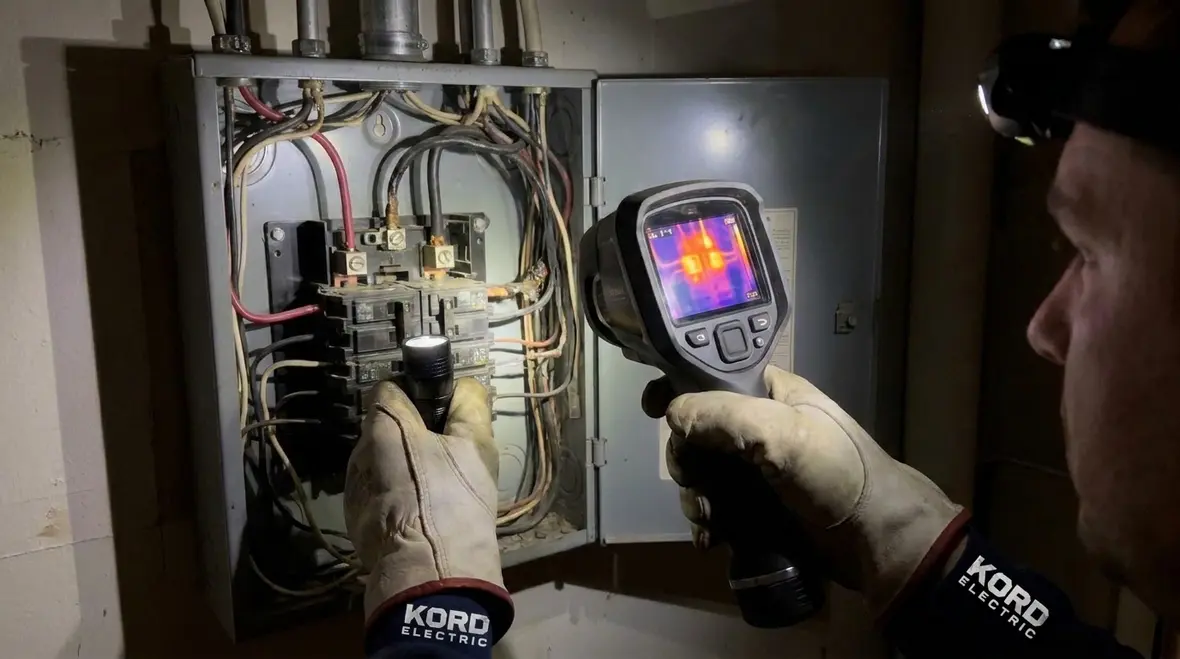
How inspections prevent costly failures in California
Inspection should not be a yearly ritual where everyone hopes for the best. Instead, we guide facilities toward inspections that match the real operating conditions. That means looking at equipment ratings, reviewing loading patterns, checking terminations, and verifying that protective devices work the way they were meant to.
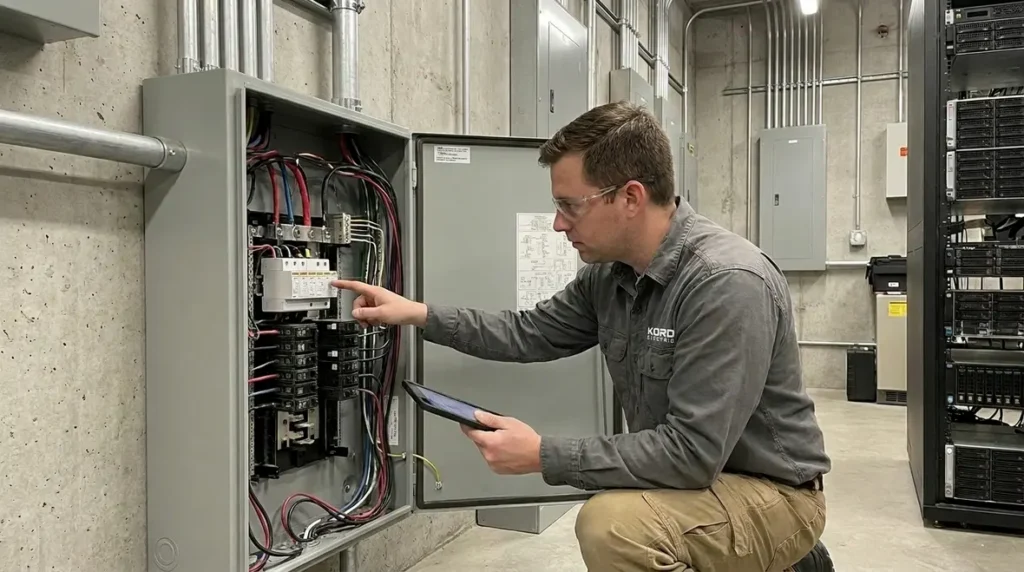
Our expert service staff often starts by mapping the facility’s electrical layout. Then, we review where critical loads connect, such as HVAC systems, pumps, refrigeration, lighting panels, and process equipment. After that, we check for signs of heat stress and perform targeted testing where it matters most.
It is not about catching everything at once. Rather, it is about reducing the odds that one weak connection becomes the spark that stops your operations. In a major property building, a short downtime event can disrupt tenants, deliveries, and maintenance schedules. Therefore, prevention turns into planning, and planning turns into fewer surprises.
When we find issues, we do not leave teams with vague advice. We explain what caused the problem, what it risks, and what the repair will change. Then we coordinate steps in a way that fits business needs, because the lights and power have to stay on while work gets done.
For organizations that want a deeper structure around inspections, testing, and documentation, Kord Electric also lays out how planned service works over time in their guide to commercial and industrial electrical maintenance plans, which pairs naturally with electrical fire prevention in California businesses that run critical operations.
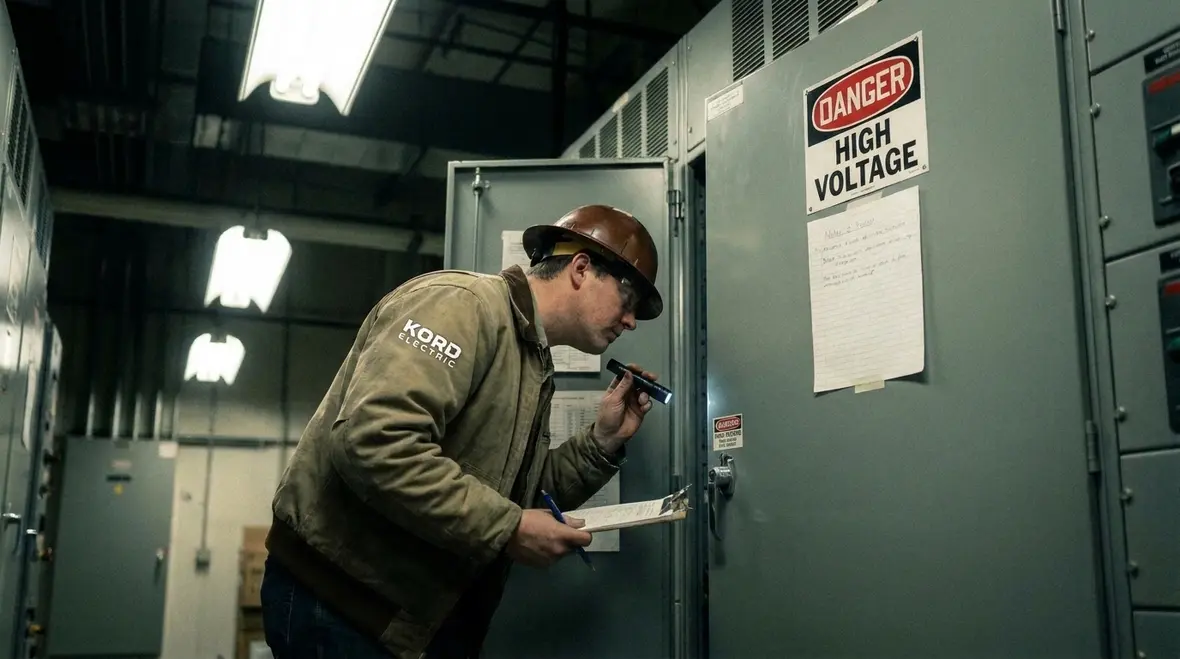
Inspections that match real-world operating conditions
Every facility runs differently. A cold storage warehouse, a high-rise office, and a production plant all stress electrical systems in unique ways. We adapt inspection scopes and intervals to match those realities. That can include more frequent checks on high-cycling equipment, focused reviews on aging panels, or seasonal inspections ahead of peak summer loading in California.
Electrical maintenance that actually reduces fire risk
Maintenance sounds simple. In practice, many businesses do just enough to stay compliant, and not enough to stay safe. At Kord Electric, we focus maintenance on the items that most often fail in commercial and industrial settings: connections, terminations, load balancing, and protection.
Here is the practical approach we recommend for electrical fire prevention california businesses without turning your operation into a shutdown party.
- Tighten and inspect connections at panels, switchgear, and junction points, especially where vibration and heat have cycles
- Verify load balance so one phase does not carry more heat than the others day after day
- Inspect protective devices to ensure breakers and fuses match the design and respond correctly
- Check conductor condition around cable entries, terminations, and areas with past moisture exposure
- Review panel labeling and routing because confusing systems cause dangerous mistakes during future work
Additionally, we help teams manage changes. When new equipment installs, the electrical system should review capacity and distribution. Otherwise, the new load can push older components past safe limits. Our technicians walk facility managers through how to track upgrades so the power system stays updated like the rest of the business.
When maintenance programs become more structured, they do more than reduce fire risk. They also support uptime and planning. That is where resources like Kord Electric’s insight on electrical fire prevention for commercial buildings and related safety-focused content help teams connect day-to-day tasks with long-term risk reduction.
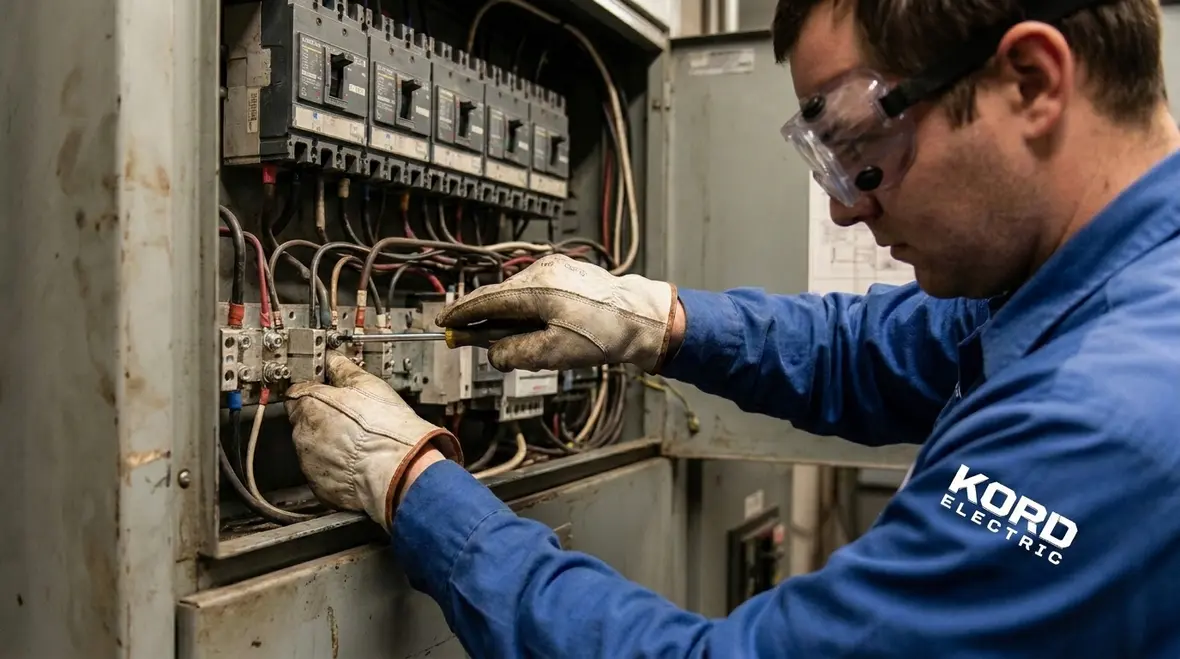
Linking maintenance to audits and ongoing risk control
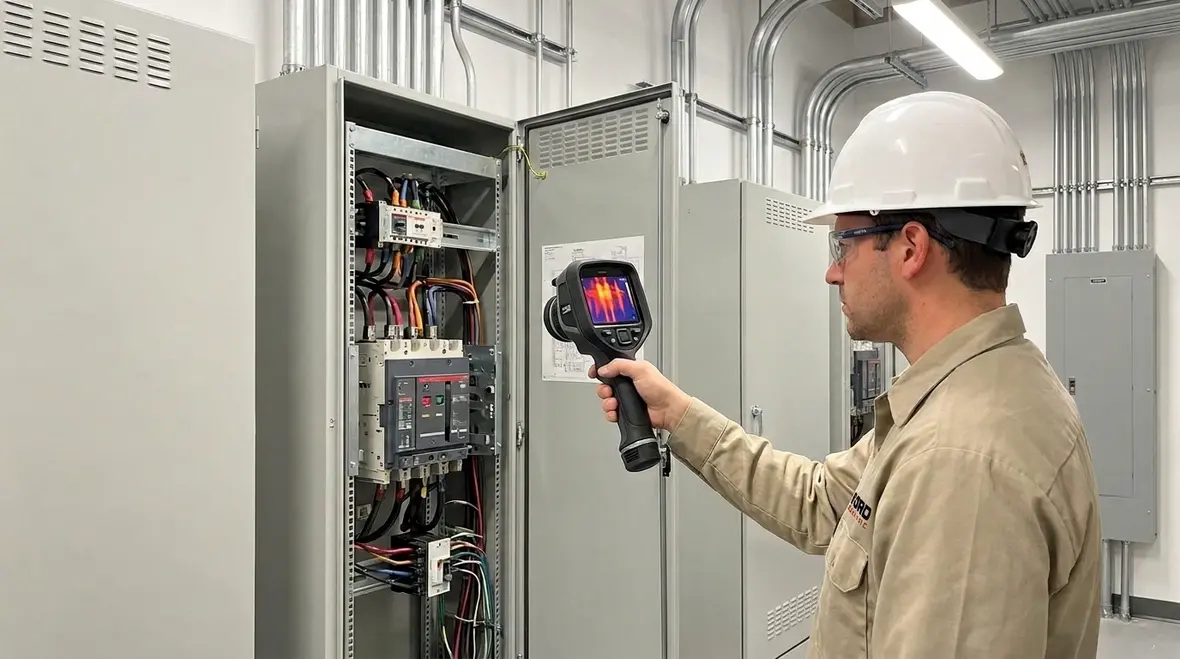
Maintenance work should feed directly into your risk picture. Findings from torque checks, thermal scans, and breaker testing become input to broader reviews like a commercial electrical safety audit for risk control. When those loops stay tight, your team avoids surprises and treats fire prevention as an everyday practice, not an emergency scramble.
Safe electrical upgrades for major property and industrial sites
Upgrading is not just a matter of “bigger” panels or “newer” wiring. A safe upgrade fits the building’s electrical plan and operating patterns. So, we design and service for how the facility runs, not for how it used to run before someone bought a new machine.
For industrial and major property buildings, we commonly address these areas during upgrades:
- Distribution improvements to reduce long runs and manage heat at connection points
- Switchgear condition checks and selective repairs so critical power stays reliable
- Arc flash safety planning so staff can work without taking unnecessary risks
- Grounding and bonding verification for stable protection under fault conditions
- Panelboard and component replacements when components show heat stress or aging
We also help clients plan upgrades around business timelines. That matters because operations do not pause on command. Therefore, our scheduling and service approach focuses on minimizing disruption while still doing the job the right way. Think of it like replacing parts on a running engine, except we do it with a plan and not with vibes.
In some cases, upgrades focus on capacity and stability as well as safety. When a facility outgrows its original infrastructure, Kord Electric guides owners through steps similar to those outlined in their article on upgrading commercial electrical service capacity, which helps ensure that growth does not quietly push systems toward overload and fire risk.
Emergency readiness and staff training that prevents second disasters
Even with strong prevention, the unexpected happens. However, readiness can limit damage and protect people. We encourage businesses to set clear steps for electrical incidents: how staff reports heat or burning smells, when to evacuate, and who contacts service teams.
Training matters because not every employee has the same background. Yet everyone can learn basic “stop and call” behaviors. For example, if a person smells something hot near a panel, the correct response should not include guessing, poking, or resetting devices repeatedly. Our technicians and expert service staff often explain how to recognize warning signs and how to avoid actions that turn a small fault into a larger one.
Also, after any incident or near miss, the facility should treat it like data. We help teams document what happened, identify likely causes, and plan corrective steps. This is how a business prevents the same event from returning a week later, like a pop song you did not ask for but cannot escape.
When emergency planning connects to proactive projects like energy efficiency upgrades, maintenance programs, and backup power strategies, facilities see fewer surprises. Many California businesses look at articles such as Kord Electric’s guidance on commercial backup power solutions for continuity to understand how emergency systems and fire prevention share the same goal: keep people safe and operations steady.
FAQ: electrical fire prevention for California businesses
Ready to strengthen electrical fire prevention for your facility?
Kord Electric helps commercial and industrial facilities and major property buildings reduce electrical fire risk with inspections, maintenance, and targeted upgrades. Our technicians and expert service staff explain the findings in plain business terms, then guide you through next steps that fit your schedule. If you want fewer shutdown surprises and safer power distribution, reach out today. We will review your system, identify the weak points, and build a plan you can feel good about. Your facility deserves steady power, not stress.
For California companies that operate across multiple sites or rely heavily on continuous operations, it also helps to understand how local service coverage supports long-term fire prevention. Kord Electric’s dedicated Los Angeles County electrical services give businesses a way to connect inspections, upgrades, and emergency response across the region, so electrical fire prevention becomes part of a complete reliability strategy.
If you are building a broader roadmap that ties electrical fire prevention, risk control, and system reliability together, it can be useful to connect this work with structured auditing and planning. Many facility leaders start with resources like Kord Electric’s articles on safety audits, backup power, and energy efficiency, then bring those ideas into a facility-specific plan for electrical fire prevention California businesses can count on year after year.