Commercial Building Electrical Audit for Uptime
Why a Commercial building electrical audit keeps modern buildings steady
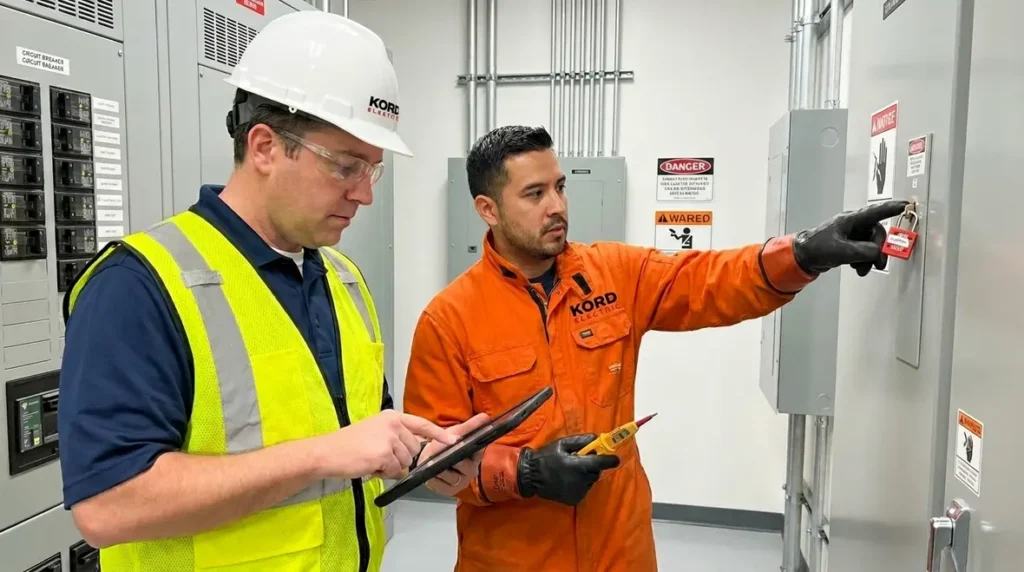
At Kord Electric, we focus on commercial and industrial facilities and major property buildings, because that is where safety, uptime, and cost control truly matter. We routinely recommend a Commercial building electrical audit as the first step in understanding what is working, what is degrading, and what can fail before it fails. In the introduction, we spell it out plainly: an electrical audit is not paperwork for the sake of paperwork. Instead, it is a clear, technician driven look at the system that powers offices, plants, lobbies, elevators, HVAC, production lines, and life safety gear.
And yes, we have heard the joke before: “If it has power, it must be fine.” That joke is funny right up until a breaker trips at 2 a.m. and someone is staring at a dark sign that cost more than their car payment. So, we take the audit seriously, and we explain the results in plain language, delivered by our technicians and expert service staff.
Spotting hidden risks before they become headline news
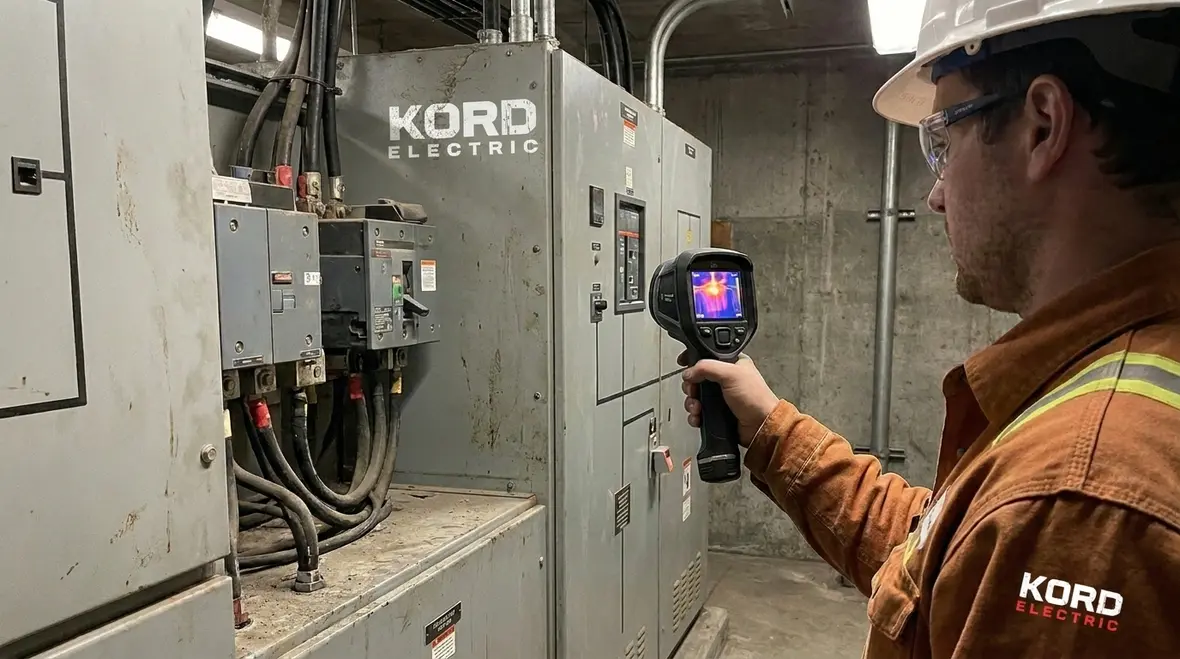
Electrical problems do not always announce themselves with sparks and smoke. More often, they build slowly through heat, vibration, moisture, and time. As equipment ages, insulation breaks down, connections loosen, and load patterns shift. Then, what begins as a small abnormal condition can turn into arcing faults, nuisance outages, or major component failure.
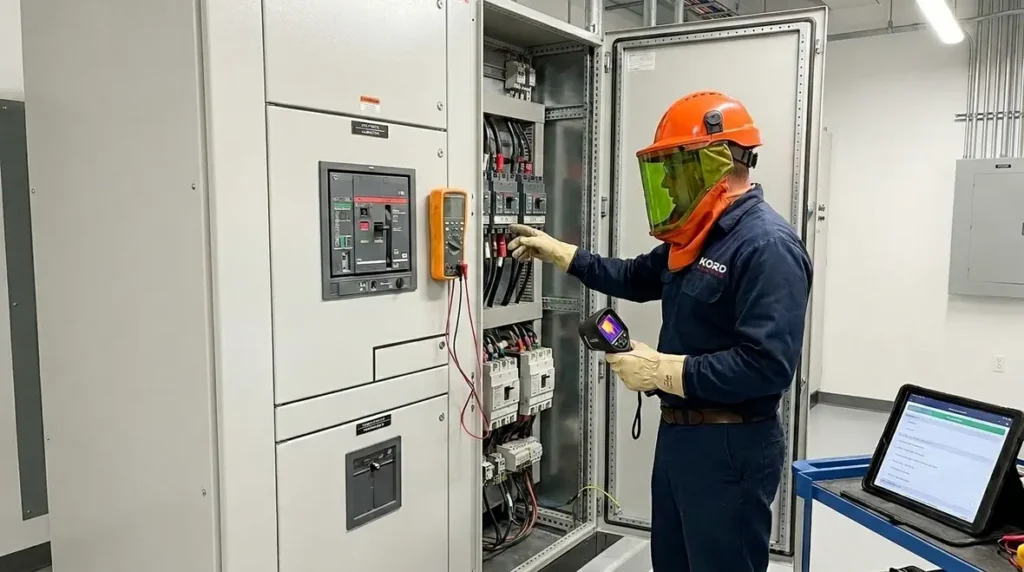
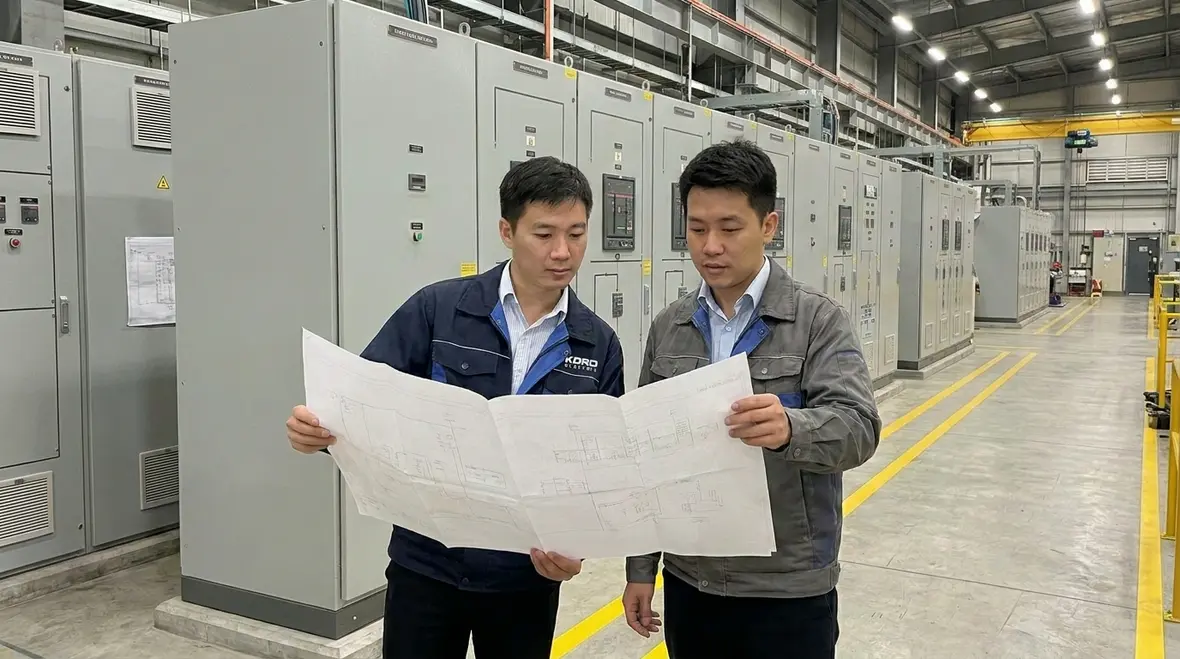
During a Commercial building electrical audit, our team examines distribution panels, switchgear, feeders, grounding systems, and life safety power paths. As we review the data, we also compare what the building should do against what it actually does. For example, if a facility has grown from tenant changes or new equipment, the electrical load profile may quietly drift. Meanwhile, corrosion in bus bars or worn terminations can create hotspots that worsen under demand.
To keep it calm and clear, our technicians explain what they find, why it matters, and what the next steps look like. In other words, we do not just point out problems. We help others understand how the problem shows up in real life, like a symptom you can track before it becomes an emergency.
Protecting uptime, safety, and budgets
For commercial and industrial sites, downtime is not a “small inconvenience.” It is lost production, delayed operations, angry customers, and sometimes safety risk. In addition, many electrical failures spread through the system. If a feeder or connection fails, it can pull down downstream equipment and increase repair scope.
That is why we emphasize regular audits. They reduce surprise expenses and help others plan repairs in phases. When our expert service staff documents conditions early, building owners and facility managers can schedule work during planned windows. Therefore, costs flatten over time instead of spiking during crises.
Safety is the other major reason. Electrical incidents can lead to shocks, arc flashes, and fire spread. By identifying worn components, incorrect torque, missing protective labeling, and unsafe bonding or grounding conditions, we support safer operations. Also, we help building teams align the system with accepted requirements and best practices.
And yes, we like boring reliability. Reliability is the kind of boring that pays dividends, like a well run thermostat and a sensible lunch break.
What our technicians typically check in modern systems
In commercial buildings today, electrical infrastructure is not just cables and panels. It powers complex loads, backup sources, controls, and data heavy environments. Many modern facilities include variable frequency drives, energy management systems, and critical loads that must stay online.
We use a methodical approach that connects directly to the realities of modern building electrical systems. For a deeper look at how systems function in contemporary buildings, you can review Commercial Electrical Systems for Modern Buildings on our blog at Kord Electric. Then, our team applies those concepts to your specific site.
During an audit, our technicians commonly evaluate these areas:
- Service entrance and distribution including switchgear, breakers, bus bars, and panel schedules
- Load performance to understand how the building uses power during normal and peak operation
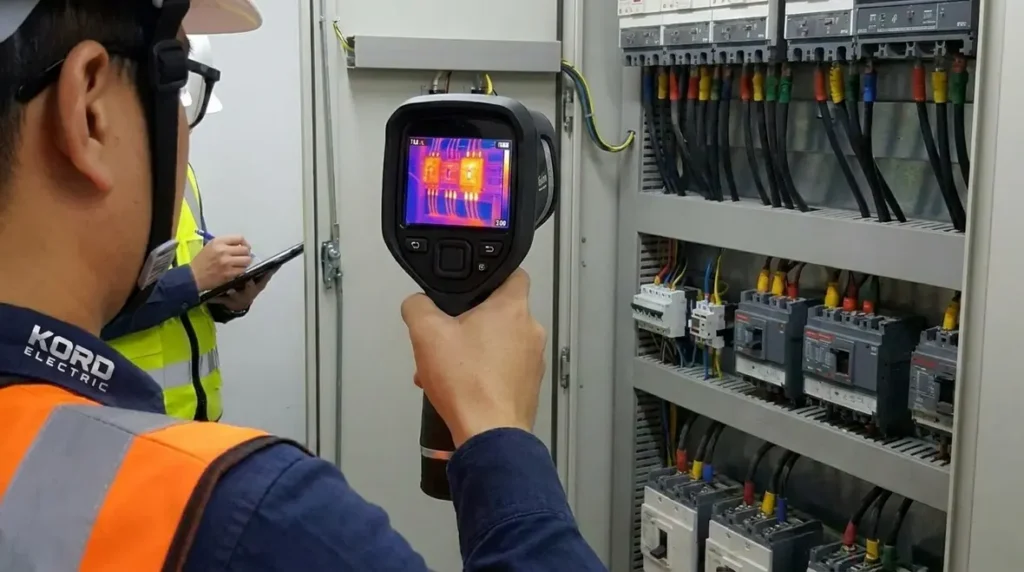
- Thermal and connection health using data driven checks to find hotspots and weak points
- Grounding and bonding to confirm safety paths work as intended
- Life safety and critical circuits so egress and essential functions stay protected
- Surge protection and protective devices to limit damage from transients
As we perform these checks, we focus on what matters for commercial and industrial facilities: predictable performance, clear documentation, and practical recommendations. Most importantly, we explain each finding in business friendly terms so the facility team can act with confidence.
How often should commercial sites run audits
There is no single magic date on the calendar, because buildings behave differently. However, most facilities benefit from audits on a repeat schedule, especially when loads change or systems age. Generally, we recommend regular reviews based on risk level, equipment age, and operational demands.
For example, a high usage industrial plant that runs heavy motors, welders, or production lines needs a tighter focus than a low load space. Likewise, a major property building with frequent tenant improvements can see load shifts and wiring additions that create new weak points.
Then, consider events that call for an earlier audit. If you experience recurring breaker trips, persistent nuisance alarms, flickering lights, unusual heat at panels, or repeated maintenance on electrical gear, do not wait. Schedule an assessment. Also, if you install new equipment, expand floors, or change HVAC systems, we align the electrical infrastructure with the new reality.
When our expert service staff sets the plan, we use what we learn during the audit to recommend a sensible timeline. We do not guess. We measure, document, and guide.
Turning audit findings into action plans
An audit only helps if it leads to clear next steps. Therefore, Kord Electric turns results into a practical plan that others can execute. We prioritize issues based on safety impact, failure risk, and effect on critical operations.
Typically, we separate recommendations into categories so facility teams can decide quickly. Some items are immediate, especially those tied to safety and major failure potential. Others fit into a near term maintenance window, while lower risk items can be scheduled for later. Even when a repair is not urgent, we show the path forward and the reasons behind the priority.
We also help others connect electrical findings with building operations. For instance, if thermal issues appear on specific feeders that supply a certain area, we can recommend load balancing or targeted inspection. Similarly, if grounding conditions look off, we explain how that affects protective devices and safety pathways.
Meanwhile, we keep documentation usable. Building teams need a record they can hand to contractors, review during budget cycles, and use to plan future upgrades. In other words, we give others more than a list. We provide clarity.
Commercial and industrial benefits of a steady audit program
When a facility runs routine electrical infrastructure audits, the benefits show up in daily operations. Systems run smoother, maintenance becomes smarter, and repairs get planned instead of rushed. At the same time, owners gain a clearer view of long term electrical health, which helps with capital planning.
In addition, other teams benefit too. Safety managers receive more confidence in protective systems. Facilities staff spend less time chasing intermittent faults. Even leadership teams get better budgeting because risk decreases and repair schedules become predictable.
And if you are thinking, “We already have inspections,” we respect that. However, regular audits dig deeper than a surface check. They look at how the system performs under real conditions. That is the difference between “looks okay” and “will still work when it matters.”
Besides, electricity does not care about our optimism. Electricity cares about heat, load, and aging. So we act before the building tells us the lesson the hard way.
How electrical audits support broader commercial services
A Commercial building electrical audit also connects naturally with other services your facility may already depend on. When our technicians document panel conditions, feeder performance, and life safety circuits, we often uncover opportunities to streamline upgrades or bundle repairs with planned work. For facilities in Southern California, these insights pair especially well with regional service programs that focus on uptime, tenant comfort, and life safety coordination.
For example, when we identify aging gear, overloaded circuits, or recurring nuisance trips during an audit, we can coordinate follow up work through dedicated regional offerings such as Los Angeles County electrical services for commercial and industrial properties. That way, your team moves directly from findings to implementation with a partner that already understands how your building behaves under real load.
This combined approach keeps more of your planning under one roof. Instead of juggling multiple vendors who each see only a slice of the system, your facility gains a unified view of compliance, reliability, and everyday operations. Over time, that makes every future Commercial building electrical audit faster, clearer, and more valuable.
FAQ
Ready to reduce risk and plan smarter repairs
If your facility runs critical operations, power reliability cannot be a guess. Kord Electric can help you move from “we think it is fine” to measured, technician driven clarity. We conduct thorough assessments for commercial and industrial sites and then guide your next steps with priorities that make sense for safety and budgets. Contact us today to schedule a Commercial building electrical audit and get an action plan your team can actually use.
When you are ready to pair consistent uptime with long term planning, our audit work also connects naturally with broader commercial electrical system strategies. By aligning regular assessments, targeted maintenance, and forward looking upgrades, your building can move toward the same kind of calm, predictable performance that our technicians aim for in every project.