Commercial Lighting Control ROI for Retrofits
When a building owner asks about Commercial lighting control ROI, we answer with numbers, not vibes. In the first pass, our team at Kord Electric looks at energy costs, demand charges, labor, and the way occupants use spaces. Then we translate those inputs into a simple ROI model you can actually defend in a meeting. After that, we add the real world factors that spreadsheets love to ignore, like commissioning time, sensor placement, and control logic. In other words, we help others see what the savings look like after the retrofit is installed and used the way your people actually use the building.
How we calculate Commercial lighting control ROI for retrofits
To calculate ROI, we start with the baseline and the plan. First, we document current lighting power, fixture types, and control settings. Next, we estimate how many hours each area operates and what part of that time lights run at full output. Then we apply the expected reduction from dimming, scheduling, occupancy, and daylight harvesting. After that, we convert those savings into dollars and compare them to retrofit costs.
Our certified technicians explain every step, because we have seen what happens when a model becomes a black box. A good ROI calculation should feel like a roadmap, not a mystery novel where the villain is an “estimated” utility rate.
- Baseline energy use: watts per square foot multiplied by operating hours
- Projected energy use: reduced watts from controls and dimming strategies
- Utility impact: energy savings times the local electricity rate
- Extra benefits: reduced maintenance and improved comfort
- Cost inputs: equipment, wiring, controls integration, and labor

Kord Electric’s retrofit and controls team ties this math directly into how your electrical infrastructure already supports your building. If you are also evaluating how lighting controls interact with broader commercial electrical systems in modern buildings, it can be helpful to pair this ROI approach with a bigger-picture look at how power distribution, panels, and automation work together across your facility.
Measure use the way your building actually behaves
We know schedules on paper rarely match schedules in reality. Therefore, we gather data by reviewing floor usage, tenant operations, maintenance logs, and system run schedules. If you have motion patterns, we align controls to how people move, not how they are supposed to move. If you have daylight from a bank of windows, we set up photosensing so your lights do not fight the sun like two superheroes with different plans.
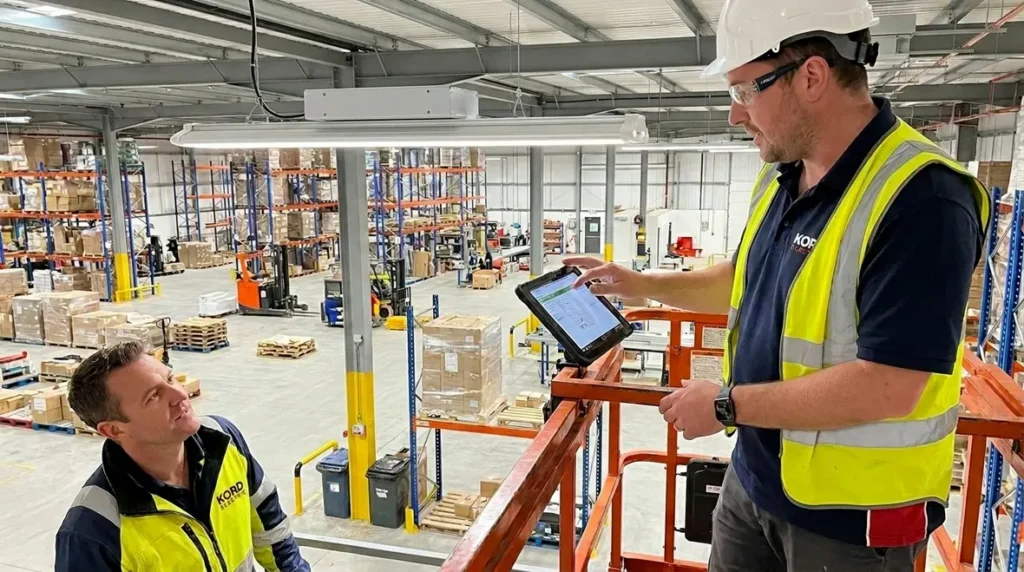
At Kord Electric, our expert service staff often walks facility teams through site observations and control zones. For example, we may identify that offices stay busy in mornings, then calm down in afternoons. As a result, occupancy and schedule logic deliver savings without making occupants feel like they are working in a cave.
When you align control zones with actual room functions, the ROI tends to get stronger because the savings match the building’s rhythm. And yes, that is the part most people skip. They guess first, then try to fix later. We do the opposite.

Model savings beyond kWh, including demand and maintenance
Energy savings usually anchor the ROI story, and that makes sense. Still, we expand the model because commercial and industrial sites often have more than one cost driver. For many facilities, reduced lighting load can also reduce peak demand exposure, which matters when tariffs and demand charges show up like pop quizzes.
Additionally, we include maintenance. Smart lighting controls can reduce relamp frequency by lowering run time at partial output. Even when your fixtures already use long life lamps, the control approach still shortens the number of hours you operate at full power, which can extend component life and reduce service calls.
When we build your numbers, we consider:
- Peak demand reduction from controlled dimming during occupied periods
- Reduced hours at full output through scheduled and occupancy-based dimming
- Lower maintenance events due to reduced operating hours
- Potential reduction in HVAC load when lighting heat drops
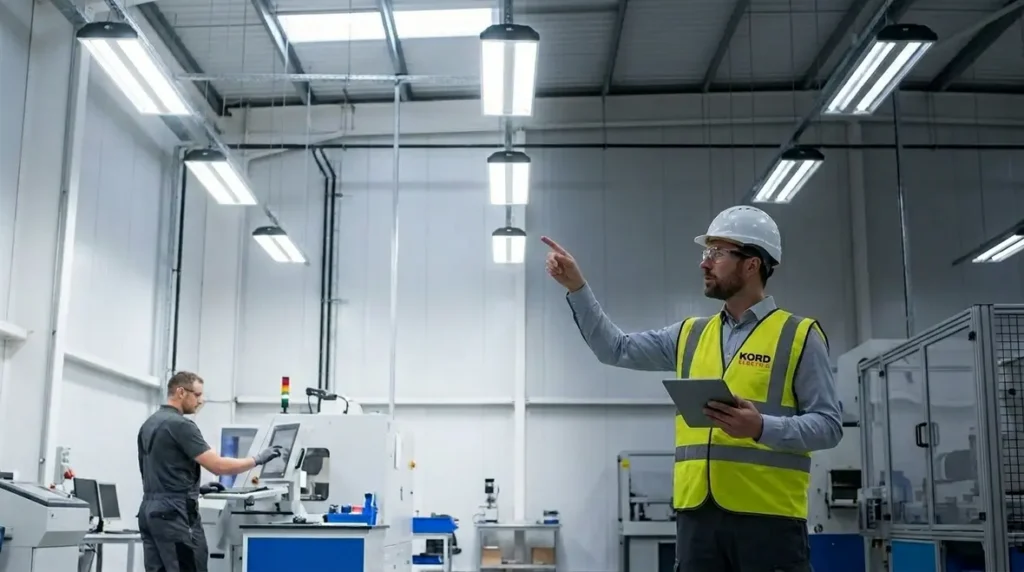
Then we make sure the assumptions hold up for your property type, including office buildings, manufacturing facilities, warehouses, campuses, and other major propertie buildings. We do not design this approach for small residential work. We stay focused on commercial and industrial environments where controls pay off.
Estimate project costs with real installation factors
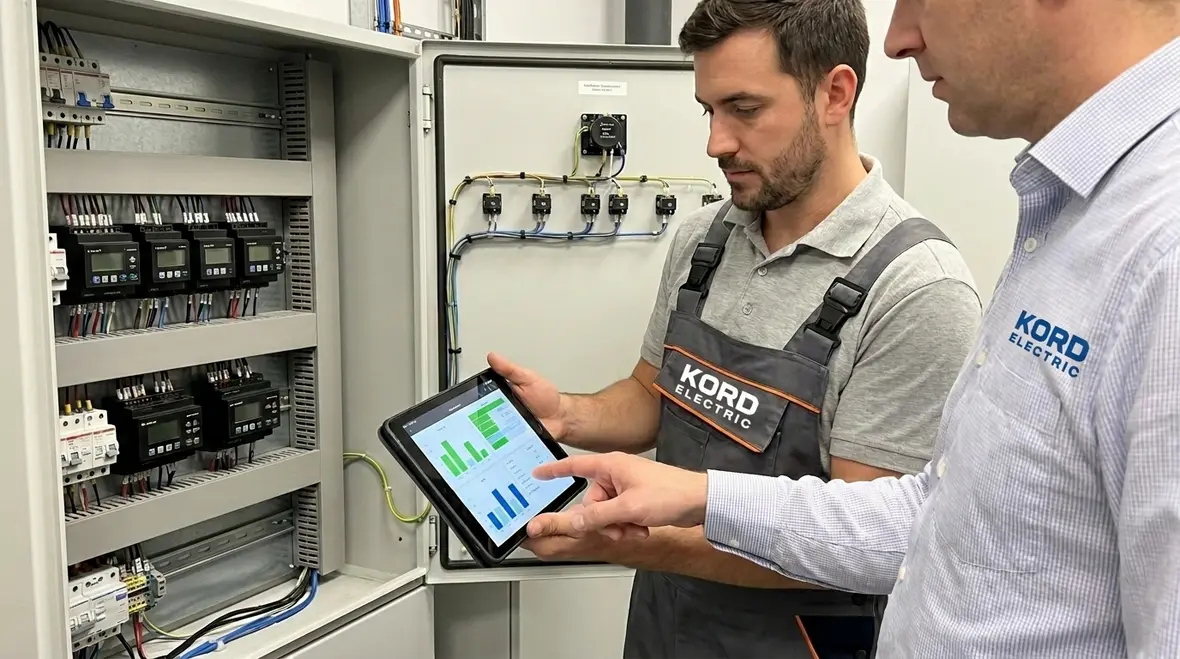
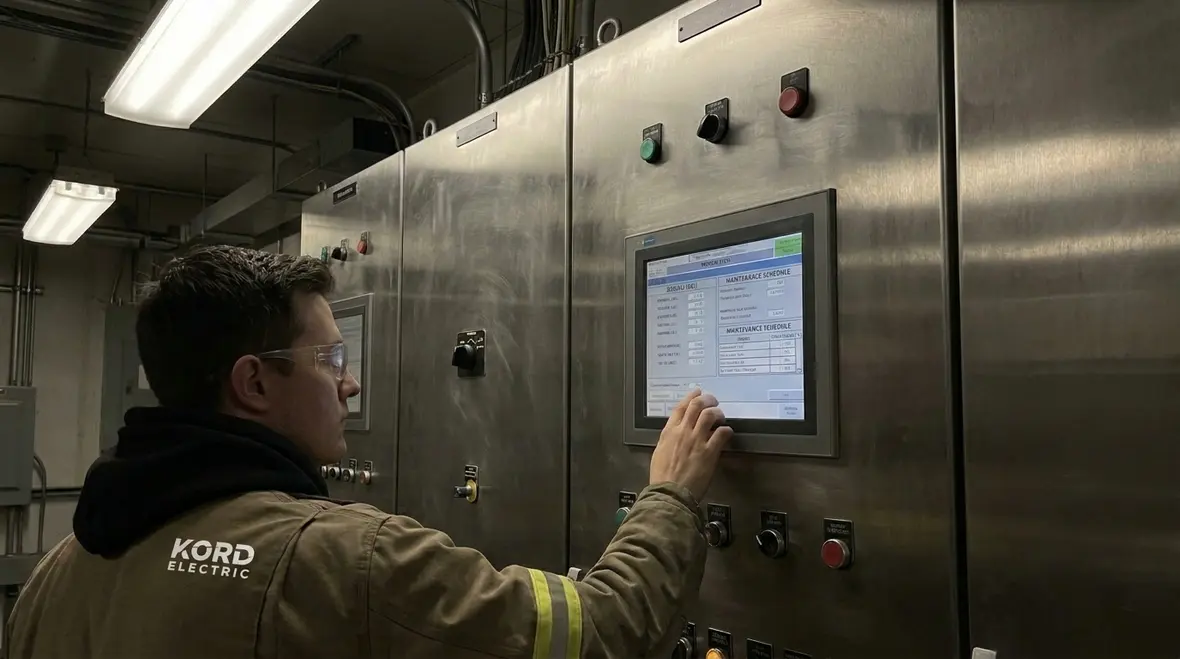
ROI fails when costs get simplified. So we itemize your retrofit costs the way your project will actually run. That means we account for site conditions, conduit needs, panel work, control wiring, and integration with your building management system when required. We also include time for commissioning and testing, because smart control performance depends on how well it is set up.
Our technicians explain the installation path in plain terms. That matters because a facility manager might not care about the wiring details, but they do care about downtime windows, occupancy impacts, and how the work coordinates with other trades.
In our cost model, we separate:
- Hardware costs: fixtures, sensors, controllers, network devices
- Electrical work: panels, breakers, wiring, mounting, labeling
- Integration work: BMS interfaces, gateways, configuration changes
- Commissioning: testing, tuning, documentation, training for staff
If you want a clean ROI, you need clean scope. We help you define scope early so the project does not turn into a “we will fix it later” situation, which is basically how budgets go to retire early.
Stress test the assumptions so ROI holds up in the real world
After we build an initial Commercial lighting control ROI model, we pressure test it. We ask what happens if schedules shift, if occupancy patterns differ from our walkthrough, or if daylight is blocked by seasonal changes. We also review utility rate assumptions and consider escalation over time.
Next, we run sensitivity checks. For instance, if savings land at the low end, does the payback still look reasonable? If the retrofit costs rise due to site complexity, does the project still meet your financial goals? We make these comparisons because executives rarely fund projects based on best case scenarios, and they usually dislike when someone says, “Trust us.”
At Kord Electric, our service team also checks control strategy risks. We look at sensor placement height, field of view, reflections from finishes, and how zoning avoids overlapping control behavior. Then we tune setpoints and delay times so the building saves energy without annoying occupants. After all, comfort is not a luxury feature. It supports adoption, and adoption supports the math.
Turn ROI into a decision package for owners and facilities
Once we confirm the numbers, we organize them into a decision package that facility leaders can use. We present baseline usage, projected reductions, costs, payback time, and lifetime value. We also explain the control strategy so the project does not become a science experiment run by the HVAC system.
We provide clear outputs such as:
- Estimated annual savings by area or zone type
- Payback period based on your installed cost
- Control narrative that connects actions to results
- Commissioning plan and ongoing service expectations
- Risks and mitigation steps, explained without drama
To keep this grounded, we align the package to the property’s operational style. A manufacturing floor behaves differently than an office corridor. A warehouse with high bay lighting behaves differently than a lobby. So we build ROI models that reflect those differences instead of using one generic template for every building, like a chain restaurant serving one sauce for every dish.
For facility teams looking at broader system upgrades in parallel with lighting controls, resources like Kord Electric’s article on commercial electrical systems for modern buildings can help connect the dots between control strategies, electrical distribution, and long-term capital planning.
FAQ
Conclusion and next step with Kord Electric
ROI is not a guess, and it should not feel like guesswork. We at Kord Electric help commercial and industrial property teams measure current lighting use, model realistic savings, and build a decision package that stands up to scrutiny. Our technicians and expert service staff explain assumptions in plain language, then we validate control performance during commissioning. If you want Commercial lighting control ROI numbers you can trust, contact Kord Electric to schedule a site review and a tailored retrofit plan.
For building owners and facility leaders across the region, our Los Angeles County commercial electrical services team can also coordinate lighting control retrofits with broader electrical upgrades, maintenance, and compliance work so your project supports the rest of your infrastructure instead of working in a silo.
If your portfolio includes multiple properties or complex sites, we can connect your lighting retrofit planning with other services like electrical preventive maintenance and code-focused upgrades, helping you manage risk, improve comfort, and support your long-term capital plan.