EV Charger Load Management for Commercial Growth
Kord Electric sees scaling commercial EV charging as a math problem with real people inside it. That is why we build EV charger load management into every design from day one, so a tenant can add vehicles without turning your electrical system into a stress test. In other words, we plan for growth now, not after the breakers trip and everyone acts surprised. Meanwhile, our technicians and expert service staff walk clients through what is happening, why it matters, and how to keep charging reliable across shifts, seasons, and changing demand.
Plan the electrical capacity before the first plug goes in
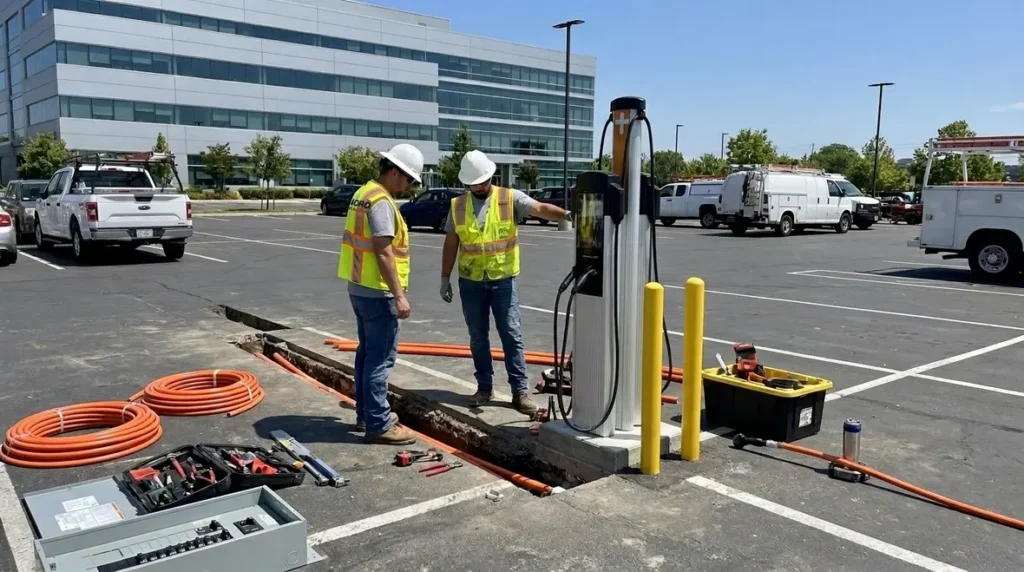
When commercial and industrial facilities add chargers, the fastest way to lose control is to “wing it” at the panel. We recommend starting with load planning that matches how the building actually behaves, not how it behaves on paper. Then, we map the charging growth path the property will take in phases, because most owners do not stay at one fleet size forever.
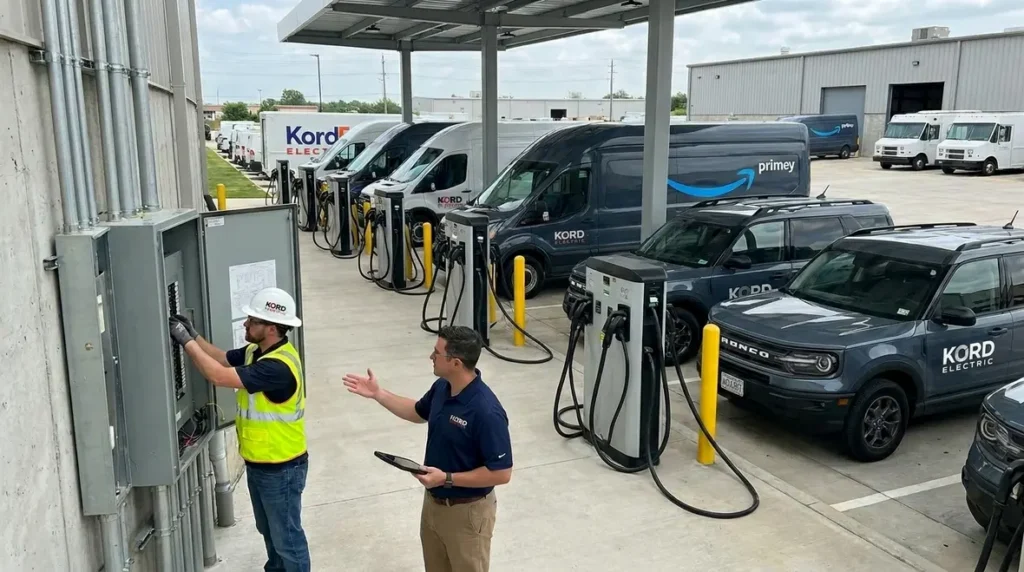
At Kord Electric, our team reviews service size, distribution equipment, transformer limits, and panel headroom. Next, we compare baseline building loads with projected charging profiles by site zone, such as docks, parking decks, and fleet bays. As a result, smart load management becomes a tool, not a gamble. And yes, we have seen “mystery trips” blamed on everything from ghosts to bad vibes. Usually, it is simply a capacity plan that did not match reality.
Handle peak demand with smart load management strategies
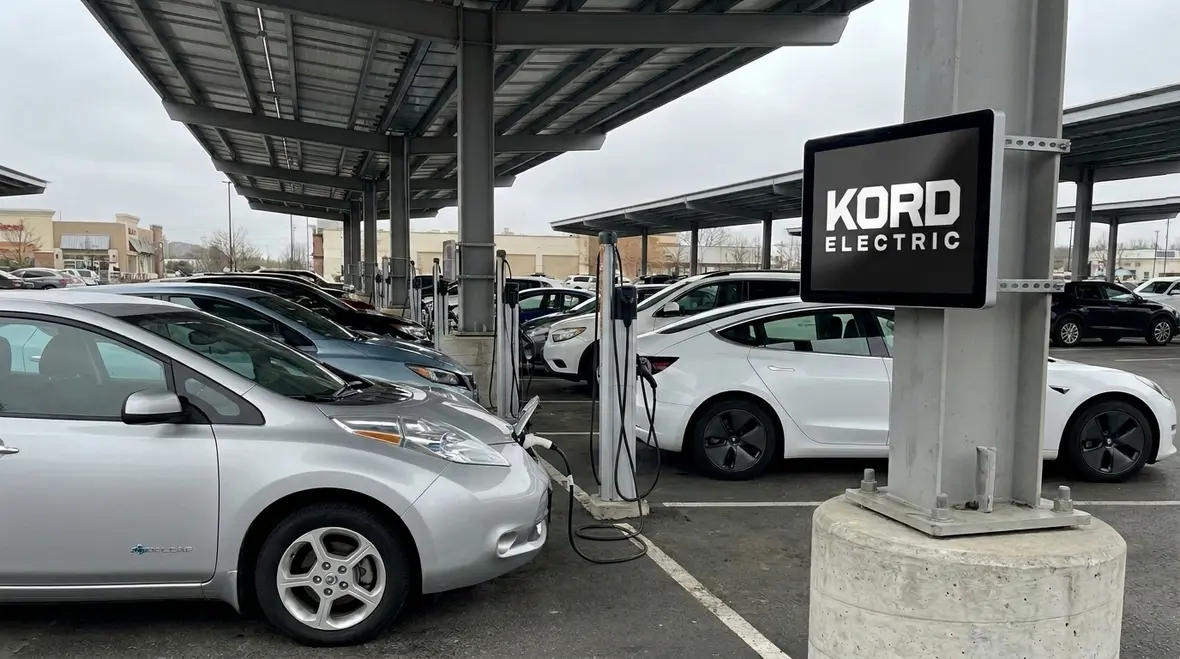
Most sites face the same challenge: charging can overlap with other heavy use, like HVAC peaks, production cycles, or evening lighting and cooking loads. Therefore, EV charger load management focuses on peak demand control so chargers do not compete with the building. Instead, the system moderates energy use across the property.
In practice, smart strategies include these approaches, each tied to how your site operates:
- Dynamic scheduling so chargers ramp up within limits, even when multiple vehicles arrive at once.
- Load balancing across circuits, so one area does not get overloaded while others sit idle.
- Time of use coordination for facilities that can shift charging windows.
- Priority rules that respect critical fleets first, then allocate remaining capacity to other users.
Our technicians explain these concepts in plain language during walkthroughs, so owners and site managers can speak to their decision makers with confidence. Just as importantly, we help others understand that this is not “turning chargers down.” It is allocating capacity the way a good building operator allocates cooling and power.
Why hidden electrical risks matter more with EV expansion
Scaling charging often exposes weaknesses that were already present, but easier to ignore when the load was lighter. Kord Electric frequently sees this pattern during commissioning and upgrades, and we connect it directly to hidden electrical risks in commercial buildings.
Our team points clients to the kind of issues outlined in our blog on hidden electrical risks in commercial buildings. In short, we look for concerns like elevated temperatures at connections, aged wiring insulation, overloaded feeders, and inadequate terminations. Additionally, we check grounding and bonding integrity because EV charging adds new current paths and steady loads that can reveal problems over time.
Then we ask a practical question: what happens when chargers increase the continuous load? If a connection runs hot now, it will run hotter later. If a breaker trips occasionally, it may start tripping more often. And if the busbars or feeder capacity is already tight, the site can face expensive downtime.
So, before chargers scale, we perform targeted electrical evaluations. That approach prevents the “we installed chargers and now the building feels haunted” situation that nobody wants. It also protects uptime, which is the real bottom line for commercial and industrial facilities.
Design for growth, not for a single day
Successful EV rollouts plan for later additions. Therefore, we size and lay out infrastructure to support future charger growth without forcing major rework. We also account for how the facility changes with new tenants, new shifts, or new fleet routes.
In our builds, we prioritize:
- Modular electrical architecture that makes future expansion simpler.
- Space and conduit planning so added equipment does not require invasive rerouting.
- Monitoring readiness so the system can collect data for tuning.
- Clear labeling and documentation to reduce service time and confusion.
Next, we coordinate with building operations so scheduling and commissioning happen with minimal disruption. When we tune the charger behavior after installation, we adjust based on actual site data, not guesswork. That is where EV charger load management becomes a living system that improves over time instead of staying stuck in its first settings like a playlist you refuse to skip.
Use monitoring and tuning to keep performance steady
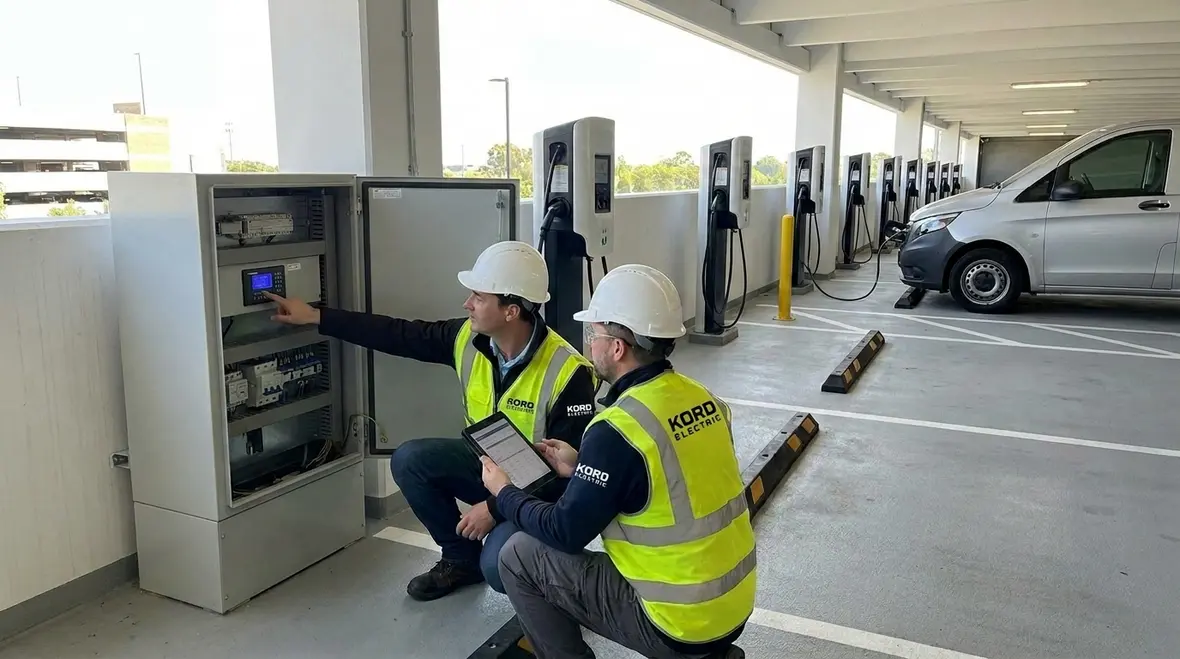
Smart control is most effective when it stays connected to real conditions. That is why we emphasize monitoring for commercial and industrial sites where stability matters. With visibility into current draw, charger status, and utilization patterns, teams can make better decisions.
Additionally, monitoring helps us tune the system as the facility changes. A warehouse that sees high arrivals during one shift may shift patterns after a process update. A property may add vehicles in spring, then slow in winter. Then, as demand changes, the control logic should change too. We help sites keep that adjustment simple.
When our expert service staff explains the monitoring report, they translate data into actions. For example, they may recommend minor schedule changes, circuit reassignment, or adjustments to priority settings. Meanwhile, this reduces the risk of underuse, overloading, and repeated service visits.
And yes, it also reduces the “I guess the system is broken” calls. Not because the chargers never fail, but because most performance issues show up as patterns before they become emergencies.
Coordinate site operations with charging behavior
Load management works best when it matches the rhythms of the building. Therefore, Kord Electric treats charging control as part of site operations, not an afterthought. We learn when vehicles arrive, which fleets need faster turnaround, and which areas have the strictest uptime requirements.
Then we help stakeholders align charger settings with real workflows, such as:
- Setting priority for time sensitive fleet vehicles
- Limiting charging during peak building demand windows
- Using arrival patterns to plan charging ramp rates
- Coordinating with maintenance schedules so downtime does not spread
At the end of the day, owners want dependable service and clean billing, while facility managers want fewer disruptions and clear control. Our approach balances both. We also keep communication direct, so the people who run the property understand what we change and why.
Connect EV charger load management to a broader reliability strategy
For many commercial and industrial properties, EV charger load management is one piece of a larger power and reliability plan. The same infrastructure that supports charging also supports critical equipment, lighting, and life safety systems. That is why teams often pair charger projects with targeted preventive maintenance, power quality improvements, or updates to monitoring and controls.
When those pieces work together, facilities avoid the trap of treating each project as an isolated upgrade. Instead, charging, distribution, and maintenance line up under one strategy. Property leaders who want a deeper dive into ongoing reliability planning can explore Kord Electric resources such as their coverage of commercial and industrial electrical maintenance programs, or articles that walk through how voltage fluctuations in commercial and industrial facilities affect equipment performance and uptime.
For organizations that manage multiple buildings or campuses, this connected approach also makes it easier to replicate successful EV charger rollouts from one property to the next. Once a working playbook is in place, future expansions feel less like experiments and more like well-rehearsed moves.
Planning EV charger load management for multi-site and high-growth portfolios
Some portfolios do not just want a few chargers at one facility. They want an EV strategy that can stretch across warehouses, logistics hubs, municipal yards, and office campuses. In those environments, EV charger load management becomes a way to apply consistent electrical standards while still respecting each site’s unique load profile.
Kord Electric often helps leaders develop phased roadmaps that sequence work across properties. Early phases might focus on foundational upgrades at locations with the tightest capacity, while later phases layer in more chargers where power is easier to access. At each step, we treat load management as a core design decision instead of a last-minute software add-on.
As those roadmaps evolve, they often intersect with regional goals and permitting timelines. Commercial and public agencies in places like Los Angeles County, for example, may combine EV charging work with broader Los Angeles County electrical services to keep inspections, documentation, and system upgrades aligned under one umbrella.
How EV charger load management supports commercial budgets
Electrical capacity upgrades can be one of the largest line items in a charging project. When you control how chargers share power, you often control when and whether you need major service or transformer work. EV charger load management does not erase every upgrade, but it can defer or right-size them, especially for properties that will scale over time instead of all at once.
In practice, that might mean using dynamic scheduling and priority rules to keep demand within an agreed threshold, or designing charger groupings that can be expanded in modules as new vehicles come online. It is the same mindset Kord Electric brings to topics like commercial EV charging installation cost planning, where careful design keeps budgets grounded in reality instead of surprise change orders down the line.
When financial planning, incentives, and infrastructure all move in the same direction, stakeholders gain a clearer story to bring to executives, boards, or public agencies. Instead of asking for a blank check to “add chargers,” they can point to a staged EV charger load management plan that ties each phase to specific demand levels, operational needs, and risk reduction goals.
FAQ
Ready to scale charging the right way with Kord Electric?
If your commercial or industrial facility plans to expand EV charging, Kord Electric helps you do it with smart electrical planning and reliable EV charger load management that protects uptime. We start with a capacity and risk review, then design control strategies that match your operations. Our technicians and expert service staff explain each step clearly, so your team knows what is happening and why.
From there, we help you move from concept to installation with coordinated design, permitting support, and field execution that respects your schedules. If you are ready to turn planning into a real project, you can explore how Kord Electric’s dedicated commercial EV charger installation services bring engineering, construction, and long term performance under one roof.
Whether you are upgrading a single site or building a roadmap for multiple properties, the combination of EV charger load management, proactive electrical planning, and clear communication keeps your rollout steady instead of stressful. Contact Kord Electric to plan your next phase and keep charging growth smooth.