
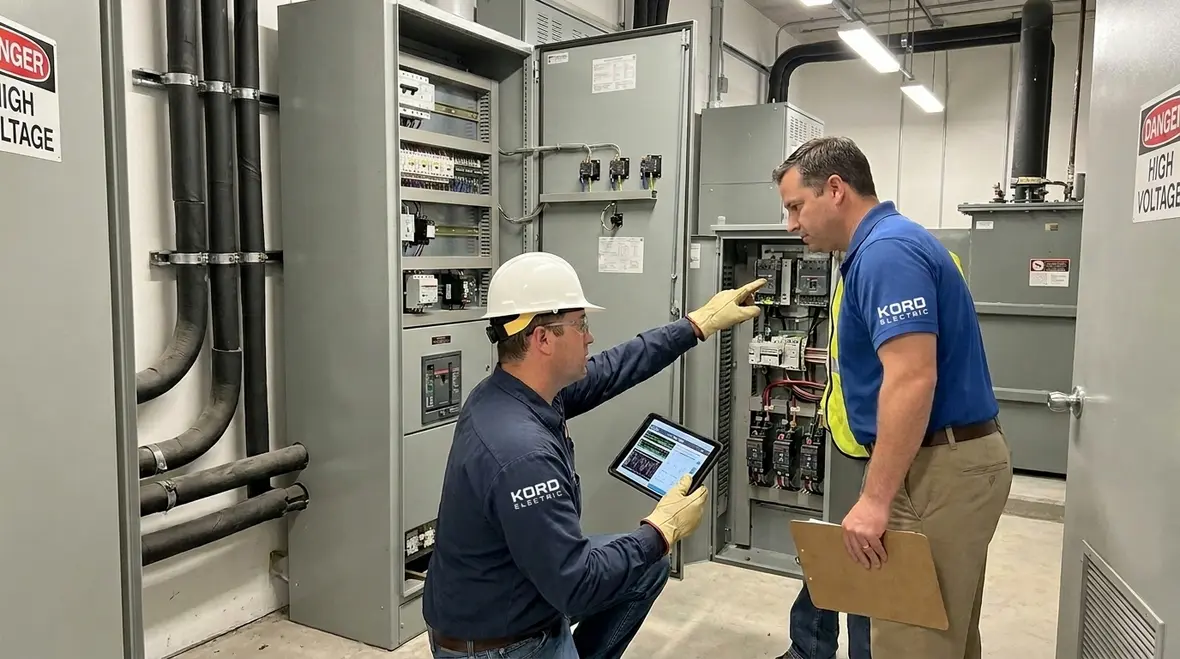
Commercial Building Electrical Infrastructure Upgrades
Electrical Infrastructure Upgrades Start With the Right Evaluation
At Kord Electric, we support major property buildings and commercial and industrial facilities with commercial building electrical infrastructure upgrades that actually hold up under real-world load. We do not sell vague promises. Instead, we evaluate what exists, what fails, and what will fail next year because physics has a sense of humor. Then we help others plan an upgrade path that fits their facility, their schedule, and their risk level.
We send experienced technicians who explain each finding in plain language. In other words, we make sure decision makers understand the why, not just the what. So, whether a building owner is updating controls, adding tenants, or expanding production, our process gives them clarity before the first breaker gets opened.
Step One: Assess Load, Growth, and Real Demand
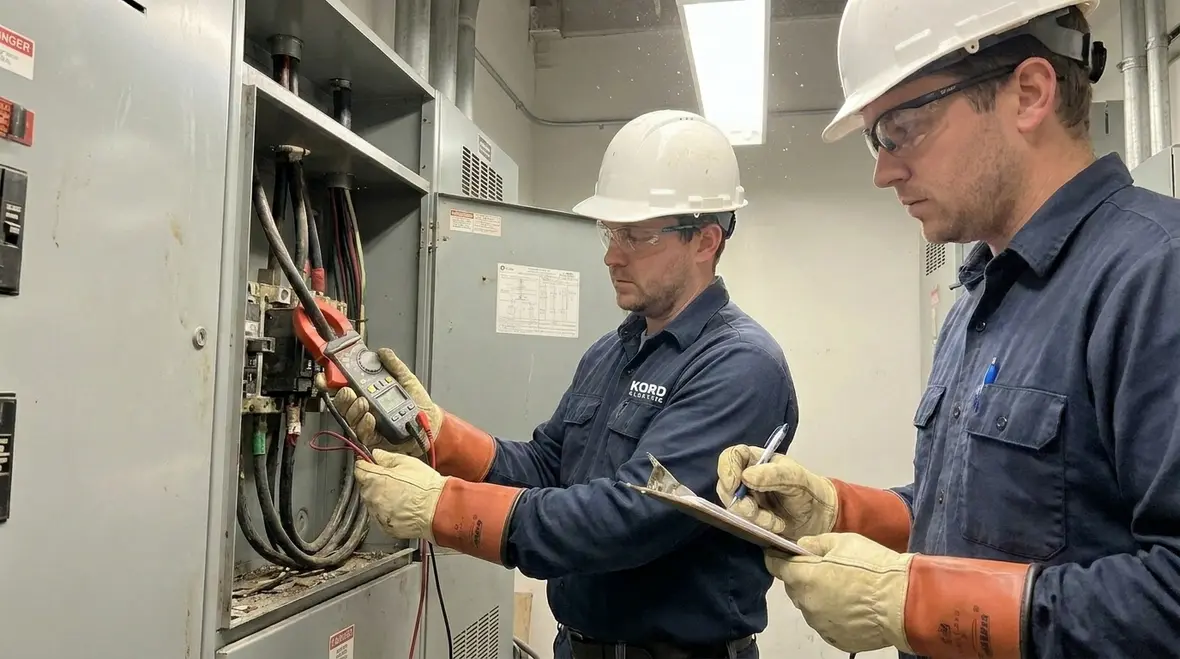
First, our team looks beyond nameplate ratings and marketing numbers. We review current electrical demand, peak usage timing, equipment schedules, and how operations change across the day and the week. Then we compare that picture against future plans like added production lines, HVAC changes, new retail footprints, or higher occupancy in office areas.
At this stage, our technicians also map the building load shape. In other words, we look at not just how much power a facility uses, but when it uses it. Suddenly the upgrade plan stops feeling like a guessing game. It becomes a timeline based on measurable demand.
We also listen. Others may think load studies are just paperwork, but anyone who has watched a data center run hot in the afternoon knows that timing matters. Once we understand the facility’s rhythm, we can predict whether the system can handle tomorrow without tripping breakers, overheating conductors, or stressing transformers until they behave like old machinery in a sitcom.
Step Two: Verify Distribution Equipment Condition and Capacity
Next, we inspect the distribution system components that quietly carry the daily burden. That means main switchgear, panelboards, switchboards, bus ducts, transfer switches, and feeder paths. We check for signs of aging like corrosion, loose connections, damaged insulation, and overheated hotspots. Then we confirm capacity using the actual configuration, not the “best case” diagram.
Our expert service staff explains what they see as they go. For example, when we find nuisance tripping patterns, we explain whether the issue comes from load imbalance, grounding problems, bad coordination, or equipment wear. And yes, we keep it business casual. No lectures. Just clear guidance.
In addition, we evaluate protective device coordination. So if one component fails, the rest does not fail with it like dominoes. Proper coordination limits damage, reduces downtime, and improves safety for people and equipment.
Step Three: Identify Power Quality Issues Before They Become Costly

After capacity and condition checks, we focus on power quality. Harmonics, voltage sags, surges, and frequent transients can damage sensitive loads and shorten equipment life. In commercial and industrial settings, those effects show up in motor drives, HVAC controls, variable frequency drives, data systems, and lighting systems.
To stay accurate, we use testing and field measurements rather than assumptions. Then we translate the results into practical impact. Others may hear “harmonics” and picture a math problem. Our technicians explain how that distortion shows up as overheating, motor noise, nuisance alarms, or degraded performance.
Additionally, we review grounding and bonding practices. Good grounding improves fault performance and stabilizes the system. Weak bonding can create stray currents, noisy control signals, and unsafe conditions. So we address these issues early, when corrections are simpler and cheaper.
Step Four: Evaluate Safety, Code Compliance, and Arc Flash Risk
Safety is not a side task. It sits at the center of our evaluation. We review code compliance for commercial and industrial facilities and major property buildings, and we look closely at labeling, conductor sizing, breaker ratings, and system protection logic.
Then we assess arc flash risk. This matters because the “safety” of a building’s electrical system is only as real as its protection settings and operating procedures. We help others understand where risk is higher and how upgrades can reduce exposure. In other words, we aim for a plan that protects workers, not just equipment.
We also consider safe access and maintenance. If a team cannot safely work on equipment, operations slow down. And downtime always costs more than people expect, like ordering premium coffee and discovering the line is three blocks long. We prefer a plan that avoids drama and supports steady operations.
Step Five: Plan the Upgrade Path With Minimal Downtime
Once the evaluation is clear, we help others plan how to upgrade without shutting down the facility like a bad movie marathon. We coordinate with operations teams to schedule work windows, sequence outages, and reduce risk to critical loads.
Our staff typically creates a phased approach. That might include upgrades to feeders first, then distribution panels, then controls and protective devices. Or we may recommend targeted improvements that stabilize performance while work continues. We also consider temporary power options when needed.
Furthermore, we document everything in a way that supports decision making. So stakeholders can compare options, understand tradeoffs, and select upgrades that match budget and timeline. At Kord Electric, we treat planning like a power system: it needs correct inputs or the output fails.
How We Communicate Findings and Explain Next Steps
Evaluation means little if the results do not land. Therefore, we communicate findings using a clear structure. Our technicians walk others through system observations, measurement outcomes, and recommended actions. We explain what needs attention now, what can wait, and what will likely become a problem if left alone.
We also provide practical guidance on how commercial building electrical infrastructure upgrades connect to operational goals. For example, a facility focused on reliability may prioritize protective device upgrades and coordination. A property with tenant expansion may focus on capacity and distribution planning. A site with frequent downtime may need power quality improvements and equipment testing.
And because people have questions, we do not dodge them. If an owner asks, “What will this change during operations?” we give a straight answer. If a manager asks, “Why does this cost more than a quick fix?” we explain the long-term impact. We prefer calm clarity over vague sales talk.
Featured FAQ for Commercial Electrical Upgrade Planning
Key Takeaways and Next Steps With Kord Electric
Commercial and industrial facilities deserve electrical upgrades built on real measurements and clear planning. Kord Electric evaluates load, distribution condition, power quality, and arc flash risk, then we help others design a phased upgrade path that protects safety and supports steady operations. If you are planning an expansion, replacing aging equipment, or reducing downtime, we can guide the process from assessment to implementation. Contact Kord Electric today and let our expert service staff explain your options in plain language, with no drama and no guesswork.
For facilities planning larger modernizations or complementary work, pairing these Los Angeles County commercial electrical services with structured maintenance and emergency response can create a stronger, more resilient electrical strategy over time.
Many property leaders also explore how ongoing maintenance supports reliability and long term system health. Resources such as Kord Electric’s insights on hidden electrical risks in commercial buildings and their dedicated electrical preventive maintenance services provide additional context on how evaluations, upgrades, and routine service work together to keep critical infrastructure stable.
When upgrades are on the horizon, combining careful planning, realistic scheduling, and clear documentation helps every stakeholder stay aligned. From emergency response to long range upgrades, Kord Electric builds programs around how facilities actually run day to day, so commercial building electrical infrastructure upgrades support both present operations and future growth.


