Emergency Power Solution for Businesses Kord Electric
When commercial and industrial operations cannot pause, Kord Electric delivers an emergency power solution for businesses that keeps lights on, equipment running, and critical systems stable. In the opening moments of a real outage, seconds matter. Therefore, we focus on systems that transfer quickly, protect sensitive loads, and help facility teams recover without panic. Our approach stays steady, calm, and practical, even when the power does not. And yes, we have all seen the “the lights flickered, so everything is fine” logic. It is not. It is hope dressed as engineering.
How Kord Electric designs emergency power for commercial reliability
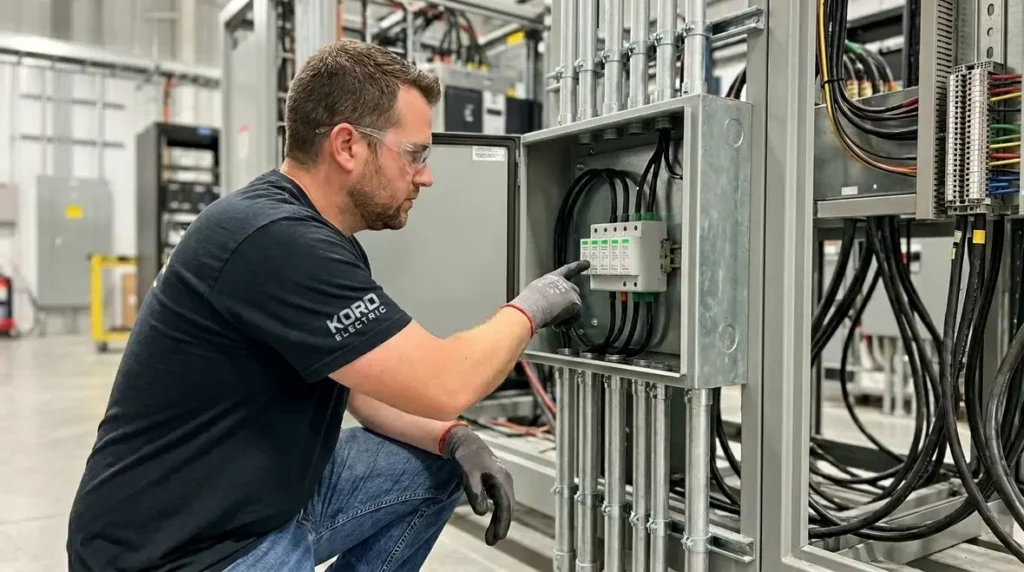
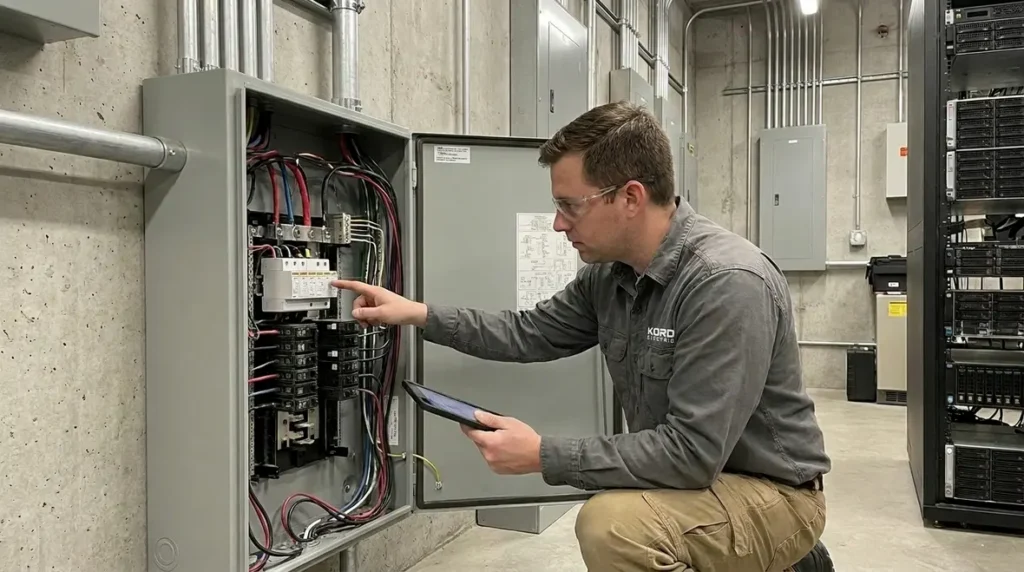
In business, interruptions often turn into expensive delays. Kord Electric plans emergency power systems that match how a facility actually operates, not how it wishes it operated on paper. First, our team evaluates the site load profile, including HVAC needs, production equipment, refrigeration, fire alarm circuits, controls, and any network or process systems that cannot restart casually. Then we map what must run immediately versus what can wait.
Because every major property behaves differently, we build a plan around transfer time, power quality, and runtime goals. We also account for start behavior, inrush currents, and the reality that some equipment does not like sudden changes. Our technicians and expert service staff explain the reasoning as we go, in plain language that an operations manager can use during planning meetings. If someone asks “Why is this breaker here,” we do not answer with mystery. We answer with the job it performs.
And just like a good pop song needs the right beat, standby power needs the right sequence. If the timing is off, the result is not “no big deal.” The result is downtime and troubleshooting after the fact, which is never a fun night shift.

For facilities that want deeper context on emergency failures before planning upgrades, Kord Electric also breaks down common outage causes and standby gaps in their article on emergency power failures in commercial buildings, which pairs naturally with the emergency design approach described here.
What happens during an outage and how we keep systems stable
During an outage, facilities face two major challenges. First, voltage can dip or disappear entirely. Second, control systems can restart in a messy way, especially when multiple loads return at once. Kord Electric uses a structured approach so the facility experiences controlled power restoration. That means our emergency power solution for businesses typically prioritizes critical loads and manages transfer behavior to reduce shock to connected equipment.
We also plan for power quality. Generators and transfer switches need proper sizing and tuning so sensitive electronics do not suffer from unstable voltage or frequency. Even when a system “works,” poor quality can damage parts over time. So we verify that the power source supports the loads that matter most to operations.
Our technicians then walk clients through the outage path in a way that helps them communicate internally. They explain which systems should remain online, how alarms and controls behave, and what operating staff can expect during the first minutes. This matters because the best emergency plan is the one people understand before it is tested under stress.
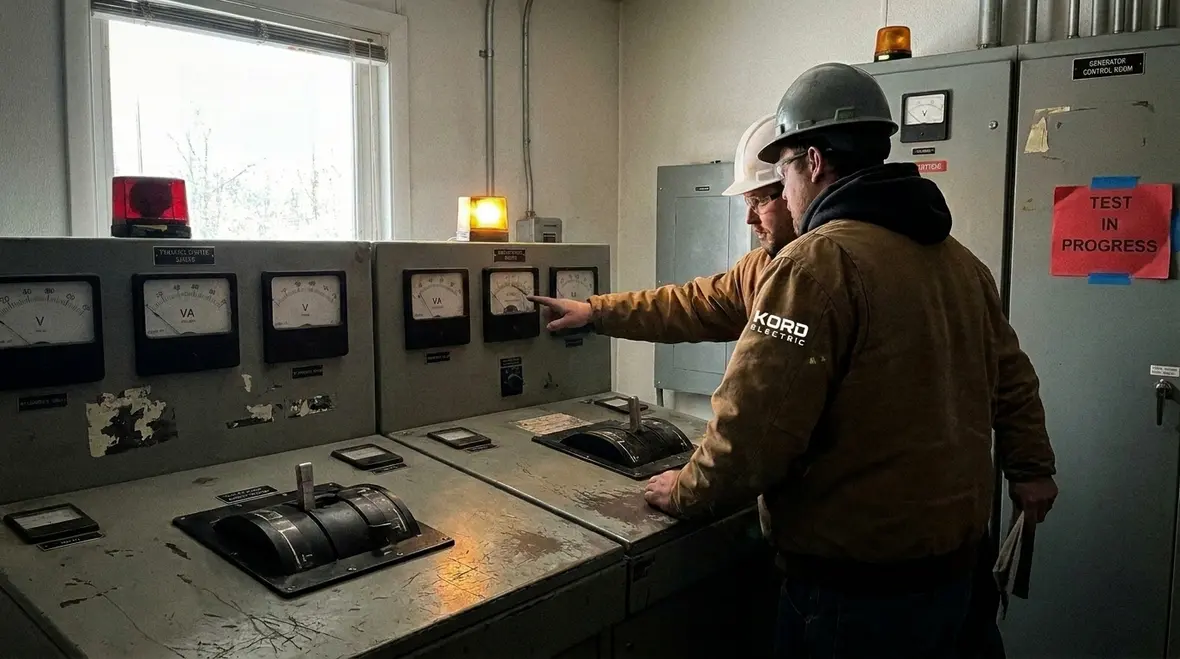
For many commercial and industrial properties dealing with recurring voltage dips rather than full outages, this planning often ties into broader power quality services such as voltage fluctuation diagnostics and corrections, which help protect sensitive equipment between full-scale emergencies.
Choosing between standby generators and UPS for industrial and major properties
Facilities usually need a combination strategy. In many cases, UPS provides short ride-through for controls, servers, and communication equipment. Meanwhile, standby generators cover longer duration loads. The right blend depends on how fast the facility must maintain power and what equipment requires stable voltage without interruption.
Kord Electric helps businesses choose without guesswork. We start with the actual critical load list and the minimum runtime requirements. Then we compare how each technology supports it. If a facility’s control systems need to stay alive until a generator fully picks up, UPS can prevent risky dropouts. If certain processes can tolerate brief transfer but not long downtime, generators can carry the load.
And if anyone says, “We will just shut down safely,” we politely remind them that safety does not pay invoices. Safe shutdown still costs money, and sometimes it costs more than keeping operations running.

For organizations that also rely heavily on process controls, switchgear, and panelboards, combining UPS and generator planning with NFPA-driven maintenance from resources like Kord Electric’s NFPA 70B electrical panels and switchgear maintenance guide helps keep emergency power components aligned with broader reliability goals.
Load management, transfer switches, and runtime planning that prevent surprises
Runtime planning is where many projects get simplified too early, and that is how unpleasant surprises show up. Kord Electric takes time to model how long the system must operate under different load conditions. For major property buildings, we consider peak demand seasons, simultaneous HVAC requirements, and the way occupancy changes throughout the day.
Load management also plays a big role. When the system has limited capacity or when fuel planning requires restraint, we implement a staged approach. That can include shedding non critical loads in a planned sequence while critical systems stay powered. As a result, the facility retains essential functions while the generator operates within its designed range.
Transfer switches then become a key part of reliability. We evaluate transfer logic, ratings, and installation conditions to match the facility’s electrical architecture. Our expert service staff explains what to monitor after installation so maintenance teams know what “normal operation” looks like. That way, when something changes, they catch it early, not after it turns into a costly shutdown.
To keep all of this organized over the life of a building, emergency power planning often pairs well with structured electrical preventive maintenance programs that include generator and ATS inspections, emergency lighting testing, and thermal imaging, so runtime assumptions remain accurate instead of drifting away from reality.
Installation and commissioning that keep commercial teams in control
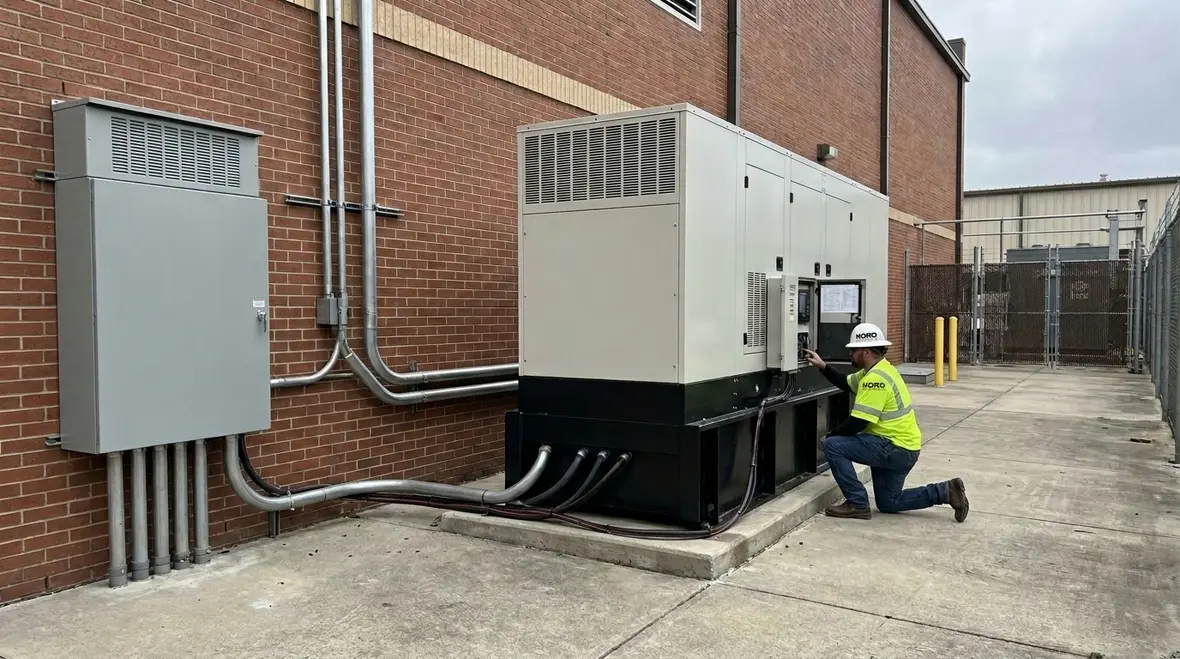
Many businesses fear the installation period because it can disrupt operations. We handle that concern by planning the work around the site schedule. Kord Electric coordinates installation steps so critical circuits stay protected as needed. Then we commission the system using structured testing procedures, including verification of controls, alarms, transfer behavior, and load performance.
During commissioning, our technicians do more than flip switches. They confirm that the system responds correctly under simulated conditions and that the facility team can operate it confidently. In addition, we document the setup clearly and review the key points with the client. We keep the process understandable because facility managers and maintenance supervisors need answers, not vague assurances.
And yes, we also know people will ask about the noise. Generators make noise. That is biology. What matters is siting, ventilation, and compliance with operational expectations, so the system supports the building instead of turning it into a daily annoyance.
For properties that plan to integrate EV infrastructure or other new loads at the same time, Kord Electric can coordinate emergency power commissioning with projects like commercial EV charger installation so new equipment ties cleanly into both normal and standby modes.
Maintenance programs that protect performance year after year
Emergency power systems do not become reliable by wishing. They become reliable through maintenance and testing. Kord Electric provides service designed for commercial and industrial facilities and major property buildings, where uptime and safety requirements stay high. We recommend inspection and performance checks that keep key components in top condition, including battery systems, ATS operation, generator health, fuel system readiness, and load behavior.
Because wear can be subtle, we track signs of deterioration before failure occurs. We also schedule testing so facilities can validate the system without disrupting critical operations. And if something needs adjustment, our technicians explain the change in practical terms, including why it matters and what it prevents.
Transitioning from “set it and forget it” to proactive service is the difference between equipment that works and equipment that performs. In other words, we do not treat emergency power like a decorative plant. We treat it like the lifeline it is.
Many of these maintenance tasks fit naturally into a broader reliability roadmap that can also cover panel labeling, NFPA 70 compliance, and routine inspections. Resources such as Kord Electric’s electrical panel labeling best practices guide and their explanation of NFPA 70 National Electrical Code requirements help keep the paperwork side aligned with the real equipment.
Emergency planning for staff, alarms, and operational recovery
Even with a strong emergency power solution for businesses, recovery depends on people knowing what to do. Kord Electric supports planning beyond hardware. We help clients understand alarm signals, the meaning of transfer events, and how the facility should respond during the initial outage window. This training supports operations and helps teams avoid confusion when conditions are already stressful.
We also encourage clear procedures for restart and handoff. For example, certain processes may require an orderly sequence to prevent overload. Instead of letting staff improvise, we guide them through a structured approach that aligns with the electrical and operational design.
So when power returns, the facility does not experience a chaotic “everyone press the button at once” situation. It follows the plan. The result is fewer secondary issues, faster stabilization, and a more confident leadership team.
For factories and high-demand industrial environments, this operational planning can be combined with the kind of structured investigation described in Kord Electric’s electrical system troubleshooting for factories checklist, helping teams respond calmly when alarms or power quality events appear.
FAQ
Ready to protect uptime at your facility
If a power outage would disrupt your production, safety systems, or critical building operations, Kord Electric can help you design, install, and service an emergency power solution built for commercial and industrial facilities and major property buildings. Our technicians and expert service staff guide the process from load planning to commissioning and ongoing maintenance. Contact Kord Electric now to schedule a reliability assessment and get a practical plan that keeps your business operating, even when the grid does not cooperate.
For facilities operating in and around Los Angeles, Kord Electric’s dedicated Los Angeles County electrical services provide regional support that aligns emergency power design with local grid conditions, permitting requirements, and the real-world timelines of commercial and industrial operations.
Whether you are responding to a recent outage, planning upgrades around new loads, or building a long-term roadmap that blends emergency response with preventive maintenance, Kord Electric treats emergency power as part of a complete reliability strategy. That way, the next time the utility has a bad day, your operations do not have to.