
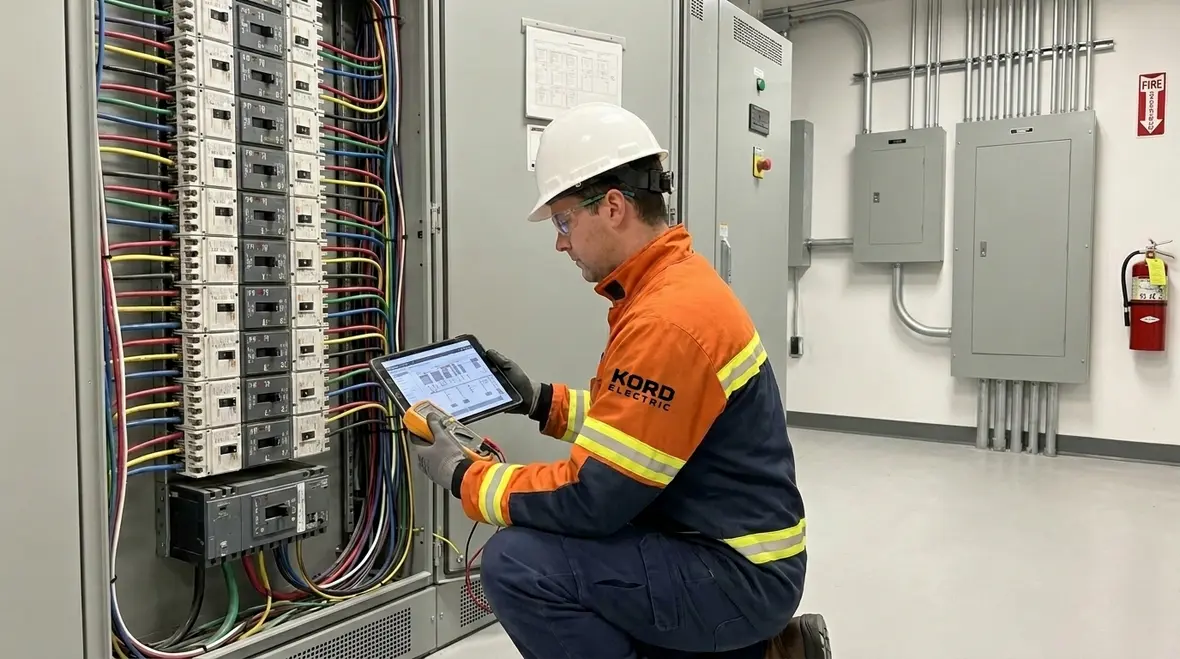
Commercial Electrical Load Balancing Services
At Kord Electric, we focus on commercial electrical load balancing for large commercial and industrial facilities where one overloaded circuit can turn into a full day of delays. In the first place, our teams plan for steady power across the building, so equipment runs the way it was designed to run. Then we monitor patterns as the load shifts from morning traffic to late night operations. Because in a major property building, electricity does not sit still, and neither should the plan.
Now, let’s walk through how we help owners and facility managers optimize load sharing in ways that feel calm, clear, and practical. And if you have ever heard someone say “the lights flicker, so we will just live with it,” well, we hear that too. We do not live with it. We fix it.
Why commercial load balancing becomes critical in large facilities
In major facilities, electrical demand swings based on occupancy, production schedules, HVAC cycles, and even seasonal changes. If one panel, bus, or feeder carries more load than its neighbors, you get voltage drop, heat buildup, nuisance alarms, and premature wear on breakers and motors. Over time, that becomes downtime, and downtime is the one thing nobody budgets for.
When we handle commercial electrical load balancing, we aim for even load distribution across phases and circuits. However, we do it with intelligence, not guesses. Our approach considers how loads connect, when they run, and how they respond during peak hours. Plus, our technicians and expert service staff explain what they find in plain language, so stakeholders understand the “why,” not just the “what.”
Start with a load map, not a guess
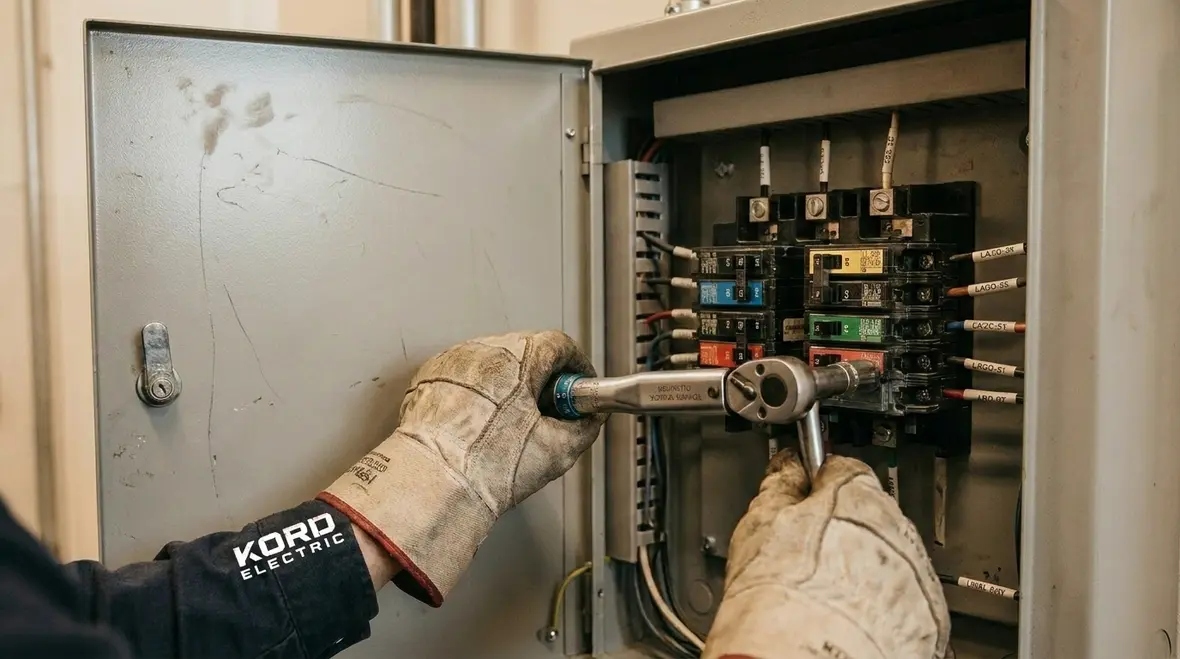
Before any balancing plan begins, we build a load map. In other words, we identify what loads exist, where they connect, and how they behave over time. We look at panels, switchgear, transformers, feeders, and distribution equipment. Then we track loads by phase and by operating window. This step matters because many facilities have old wiring changes, tenant add ons, and “temporary” equipment that never left.
Next, our technicians verify the data during site walkthroughs. We compare what the drawings say versus what the building actually does. And if that sounds like extra work, it is the kind of work that saves time later. It is like checking the tires before a highway trip. Sure, you can drive anyway, but you will hate yourself the first time you feel vibration at speed.
To support our process, we align our planning with a preventive maintenance mindset. We do not treat electrical health like a fire drill. We plan ahead using the same care described in our electrical preventive maintenance approach on our site.
How we balance phases for stable power
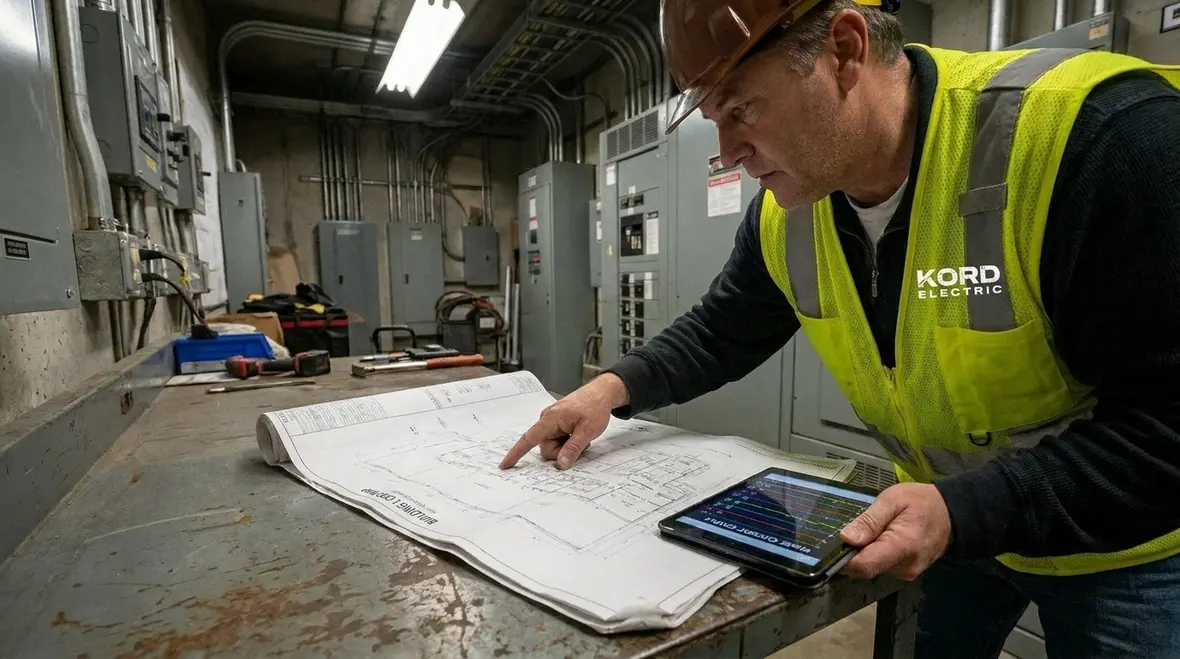
Phase balancing sounds simple, yet it often involves careful, site specific moves. We typically target distribution so three phase loads share current more evenly. Then we reduce unplanned hotspots in panels, bus bars, and connections.
In many facilities, the building starts out balanced, but later operations shift. For example, a large kitchen or warehouse area may run a big motor load on one phase, while office equipment grows on another. HVAC cycles then add another layer of change. So we treat balancing as an ongoing control effort, not a one time “fix and forget.”
Our expert service staff explains the likely impact of phase changes, including how motors, drives, and feeders may respond. We also document what we adjust so facility teams can see what happened, when it happened, and why. This helps the next service visit go faster, and it helps owners avoid surprise costs.
Strategic panel and feeder tuning for peak hours
Balancing is not only about equalizing numbers. We also tune distribution strategy for peak periods. That means identifying what drives demand spikes, then aligning distribution so one part of the system does not become the “heavy lifter” every day.
In practice, we may reassign circuits between panels, adjust feeder loading priorities, or sequence how loads connect. We pay attention to critical loads like life safety systems, process equipment, and major refrigeration. We also account for starting currents from motors and compressors, because those brief surges can stress components.
Meanwhile, we keep safety and compliance in the foreground. We coordinate work windows, verify ratings, and ensure terminations and breakers can handle the changed load. If you have ever watched a superhero land on a building without checking the foundations, do not copy that. We check the foundations.
| Peak driver | Balancing tactic we apply |
| HVAC ramp up | Phase and circuit review to reduce uneven current draw |
| Motor start spikes | Feeder planning and load distribution for steadier demand |
| Tenant or operational shifts | Update load maps and document new connections |
| After hours equipment | Adjust timing and distribution to protect peak stability |
Preventive maintenance that supports load balancing
Load balancing can only perform as well as the equipment around it. Therefore, we tie our planning to preventive maintenance routines that protect switchgear, breakers, bus systems, and connections. When equipment degrades, even a good load plan can struggle.
Our technicians follow a preventive maintenance approach that includes inspection and verification of key components, so abnormal heat, loose connections, or wear do not sneak up on you. Additionally, we pay attention to how changes in load patterns can reveal weakness sooner, like a smoke detector doing its job. In the long run, this reduces faults and helps facilities keep power quality steady.
Just as importantly, we involve our expert service staff in the communication. We explain what we find, what we recommend, and how it supports both reliability and load balancing. So decisions feel grounded instead of rushed, and that keeps operations moving.
Monitoring, reporting, and keeping balance over time
Once we optimize distribution, we do not walk away. We set up monitoring and reporting that lets facility teams see trends. That way, when the building changes, the plan updates with it. In large commercial and industrial facilities, “steady” can still mean seasonal drift, new equipment, or a shift in shift schedules.
We also track alarms, load profiles, and power quality signals that point to imbalance or stress. Then we compare that with what the building should do under normal operation. As a result, we catch problems early, before they become outages or expensive emergency work.
Our approach stays practical. We focus on what the facility needs to act, not on reports that look good but do not help. And our technicians explain the results in simple terms so the team can plan the next step, whether it is a circuit review, a maintenance adjustment, or an equipment check.
For facilities that want an organized, long term strategy, commercial and industrial electrical maintenance plans can complement balancing work and keep infrastructure aligned with growth, upgrades, and safety standards.
If your facility is planning broader upgrades, whole building rewiring, or code-driven improvements, pairing commercial electrical load balancing with structured support can smooth the process. Articles like the rewiring cost guide for commercial electrical systems and guidance on commercial and industrial electrical maintenance plans show how these strategies work together behind the scenes.
And for major property portfolios or regional operations across Southern California, Kord Electric’s dedicated Los Angeles County electrical services provide a central point of contact for complex projects, from code upgrades to system expansions.
Frequently asked questions about load balancing in commercial systems
Conclusion: choose a steadier power plan with Kord Electric
When you run a large commercial or industrial facility, you need electricity that stays steady, not electricity that improvises. Kord Electric builds load maps, optimizes phase and feeder distribution, and supports the plan with preventive maintenance practices that protect the whole system. Then our technicians and expert service staff explain the findings in clear terms, so your team can act with confidence. If you want commercial electrical load balancing that holds up through peak hours, contact us today for a facility assessment.
Whether you are planning targeted upgrades or a full system overhaul, pairing load balancing with structured electrical preventive maintenance and broader commercial electrical services gives your facility a steadier foundation. That way, power distribution stops feeling like a mystery and starts feeling like a calm, predictable part of your operations.


