
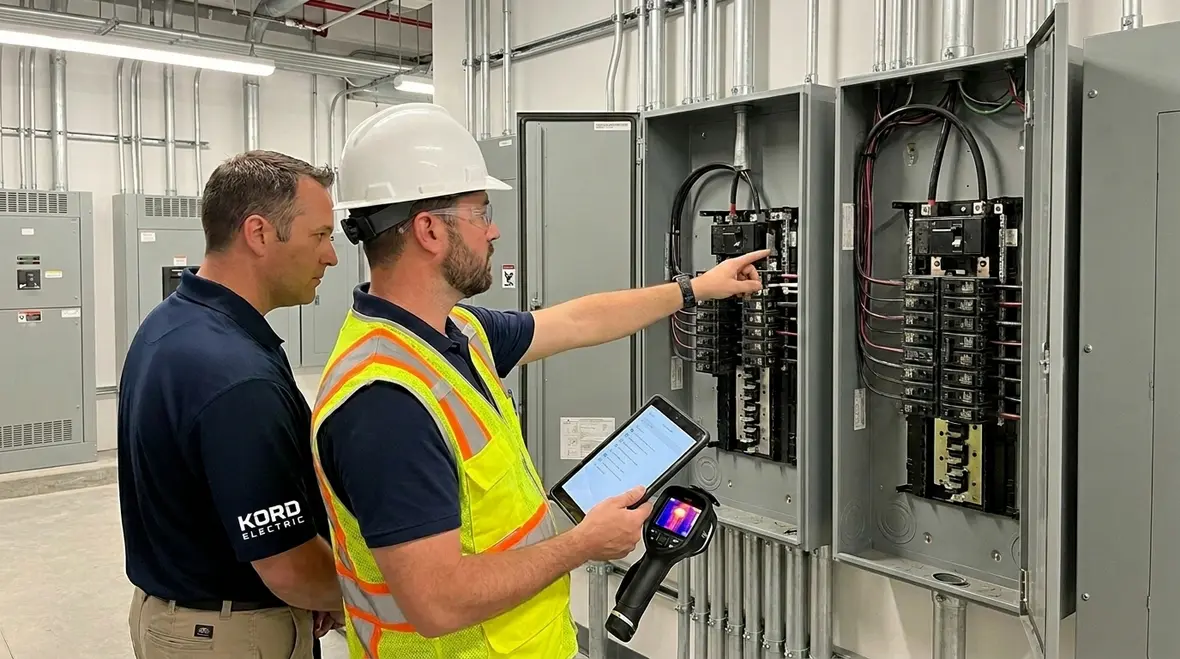
Commercial Electrical Audit Checklist for Facilities
Commercial Electrical Audit Checklist Starts Here for Facility Managers
At Kord Electric, we use a commercial electrical audit checklist to help facility managers protect power, people, and production. Within the first pass, our team verifies service capacity, reviews protective devices, checks grounding and bonding, confirms panel condition, and maps out unsafe or unreliable circuits. We also document wear, spot heat, and flag abnormal signs before they become emergency calls. Then we schedule the next steps, so you do not run your operations like a sitcom plot where the breaker decides to fail right on cue.
Facility managers often ask for the same thing: clarity. So we bring a clear process, and our technicians explain what they find in plain business language. Meanwhile, our expert service staff keeps the audit practical, since nobody wants a binder full of facts they cannot act on.
What Facility Managers Should Audit in Week One
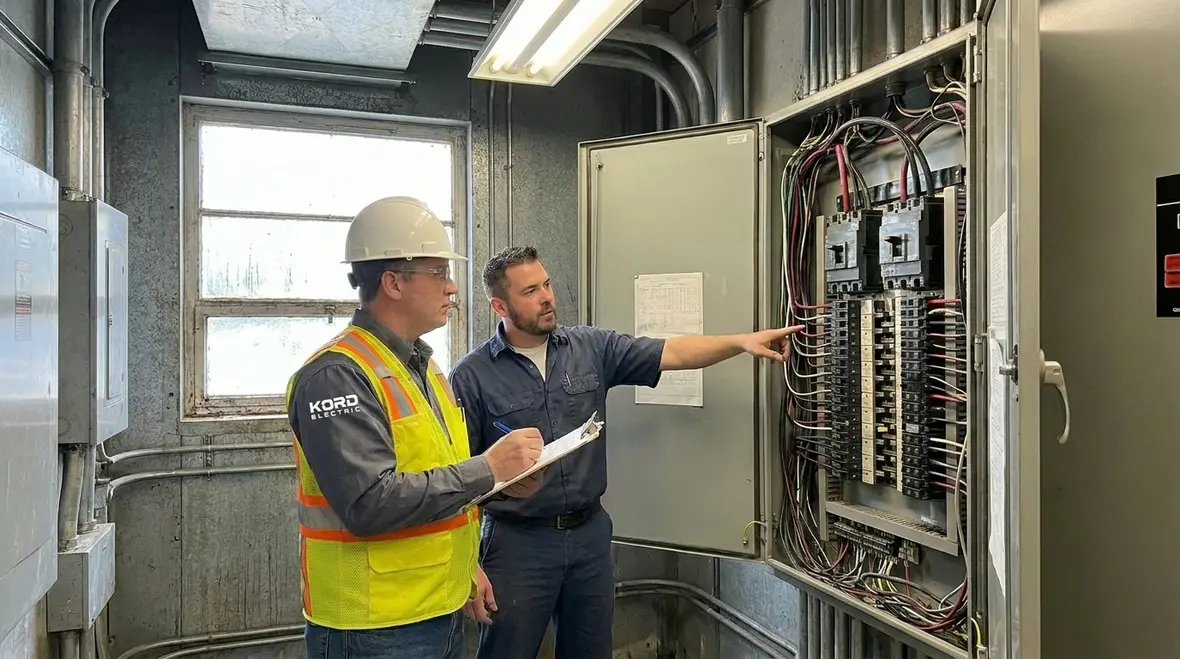
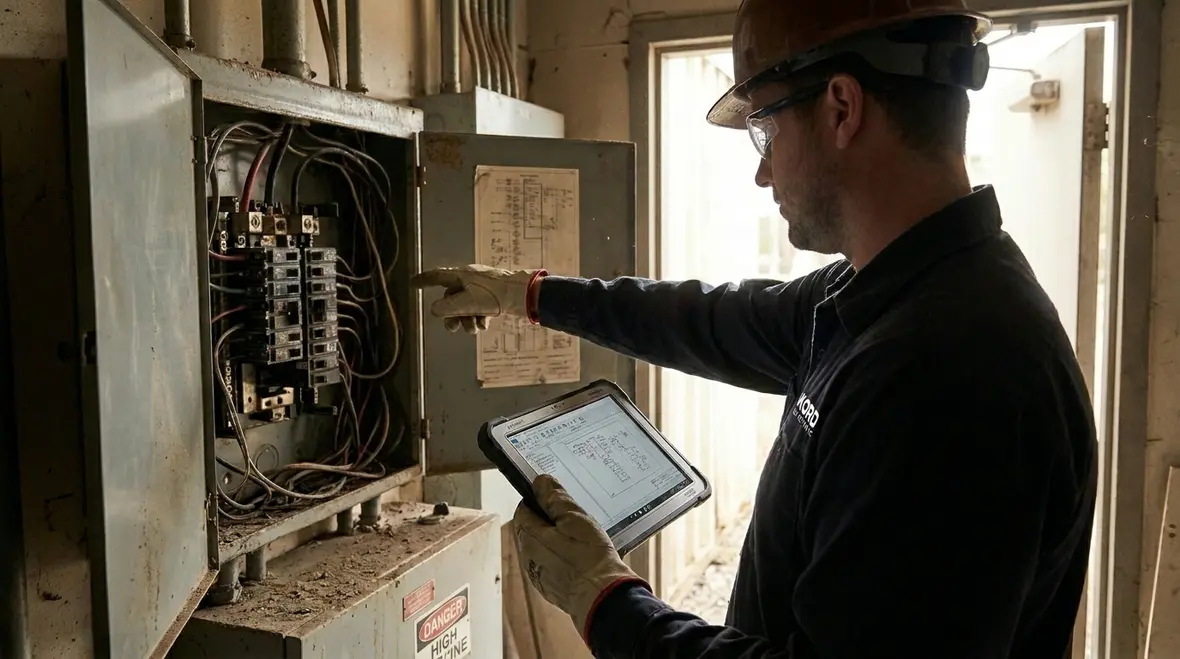
A good audit begins fast, but it should still be thorough. First, we focus on the electrical room and the path of power from utility to equipment. Then we confirm that the facility has clear labeling, correct circuit naming, and documented single line diagrams that actually match reality.
Next, we check for heat signatures and mechanical problems that you cannot ignore. We look at panel doors, torque on terminations where accessible, and signs of overheating on bus bars and breakers. Even if your operation feels steady, aging components can drift quietly for months.
After that, we confirm protective coverage. We verify breaker ratings, check for nuisance trips that hint at deeper issues, and review coordination between upstream and downstream devices. If you experience random shutdowns, this part of the commercial electrical audit checklist usually explains why. And yes, we do hear the “it worked yesterday” line more often than we would like. Electricity has a long memory.
Grounding, Bonding, and Code Alignment That Actually Prevents Problems
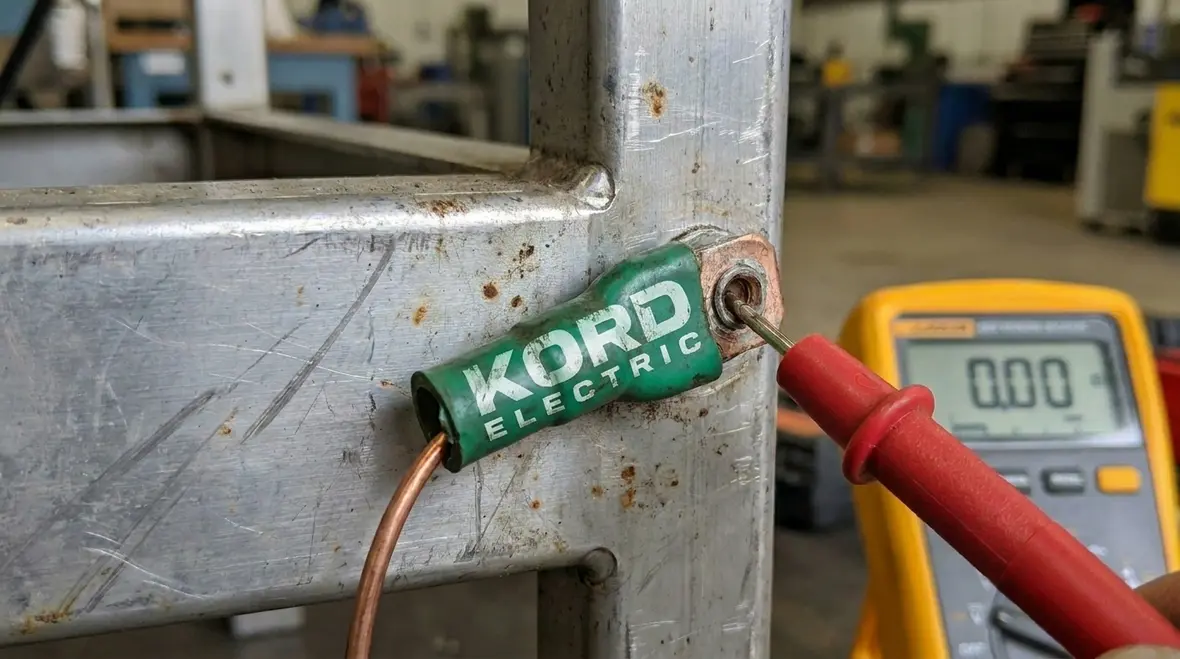
Now we move into the invisible work that saves you when the visible work fails. Proper grounding and bonding protect equipment and people, and they also reduce nuisance faults that slow down operations. Therefore, during our audit we verify bonding paths, continuity, and whether metallic raceways and equipment frames maintain the right connections.
We also inspect grounding electrodes and the physical condition of ground conductors. If corrosion or loose connections show up, we document it. Then we recommend repairs that match the facility’s risk level and downtime constraints.
In addition, we review whether the facility’s electrical systems remain aligned with applicable requirements. Other vendors sometimes stop at “looks fine.” We do not. We compare conditions to expected setup, so facility managers get actionable next steps rather than vague comfort. Our technicians walk through findings with your team, so others in the building understand the why, not just the what.
Panelboards, Breakers, and Switchgear Checks That Cut Downtime Risk
Panelboards, distribution equipment, and switchgear sit at the center of commercial and industrial power. So when they degrade, the results show up as flicker, trips, overheating, or partial outages. Consequently, we inspect physical condition, bus integrity indicators, and the overall operating environment.
We check labeling and directory accuracy, because incorrect circuit ID causes delays during troubleshooting. Then we evaluate mounting integrity, moisture exposure, and airflow blockages. If your electrical room feels warm, that is not “normal.” Heat is a data point.
Switchgear deserves extra attention. In facilities where continuity matters, we verify that mechanical and electrical aspects align with safe operation. We also look for signs of arcing, contamination, or water intrusion. Where appropriate, we include preventive steps based on the service plan. You can find a similar framework reflected in our electrical preventive maintenance approach, because prevention beats reaction every time.
Infrared, Load Patterns, and Harmonics: The Stuff That Hides in Plain Sight
To keep this useful, we use test results and observations together. First, we perform thermal checks to spot hotspots at terminations and connections. Then we pair those findings with load behavior. Even if panels look clean, unequal loading can stress components. If motors run at odd cycles or variable loads spike throughout the day, we want to know.
Next, we review power quality signals when your facility shows symptoms like flicker, high neutral currents, or repeated breaker events. Harmonics can overheat transformers, stress neutrals, and cause equipment to behave like it is tired. If your process equipment complains, the electrical system often gets blamed unfairly. We aim to prove or disprove the real story.
Additionally, we evaluate surge risk and protective device behavior. Where the building has sensitive production equipment, we check coordination and protective strategy. Our expert service staff explains what each test means and what actions reduce risk. In short, we translate technical results into a plan your operations team can follow.
Documentation, Findings Priority, and the Repair Plan You Can Schedule
Facilities fail in two ways. Either the electrical system degrades until it breaks, or the audit stops at documentation with no path forward. We avoid that second option. Our process organizes results so you can plan work by risk, impact, and effort.
We classify findings by urgency and consequence. For example, we treat safety and fire risk items as immediate priorities. Then we handle reliability items that can lead to shutdowns. After that, we include improvement items that reduce future wear and support better long term performance.
We also provide a clear repair plan with recommended sequencing. Therefore, if you have production constraints, we help you schedule work around downtime windows. Meanwhile, our technicians speak directly with facility leadership so decisions move faster than a coffee line on a Monday morning.
How Kord Electric Communicates With Your Team During the Audit
We do not just hand off results and disappear. Instead, we work as a partner for commercial and industrial facilities and major property buildings. Our technicians walk the electrical rooms, point out what they see, and explain how each condition affects operation and safety. Then they help your team understand what is urgent and what can wait.
Also, we keep communication steady. We document clearly, and we update stakeholders as we progress. If your building has a property manager, a maintenance lead, and an operations group, we make sure they receive the same story in a way they can act on.
And because audits can feel like a very expensive scolding, we keep it practical. We make sure the commercial electrical audit checklist translates into tasks, owners, and timelines.
When you want this level of clarity on a broader scale, it often helps to pair your audit with ongoing reliability work such as Los Angeles County electrical services that understand local facilities, industrial schedules, and the way real buildings age under load.
Frequently Asked Questions
Ready to Protect Your Facility and Your Schedule?
If you manage a commercial or industrial building, you cannot afford surprise electrical failures. Kord Electric will perform a structured commercial electrical audit, document findings with clear priorities, and give your team a repair plan that fits your operating reality. Our technicians and expert service staff explain results in plain language and help you schedule next steps. Contact us today to set up an audit and move from guesswork to dependable power. Your equipment will thank you, and so will your maintenance budget.
To keep those gains over the long term, many facility leaders roll audit findings into a broader reliability strategy such as dedicated regional support and ongoing services through our commercial and industrial programs. That way, the same team that builds your commercial electrical audit checklist also helps you maintain panels, test protective devices, and plan upgrades before they affect production.
If you are ready to align your facility’s next steps with a reliable service partner, explore how our Los Angeles County electrical services support plants, distribution centers, and complex properties across the region with practical, schedule-aware solutions.
From there, you can extend the same disciplined mindset into ongoing care, pairing your audit with structured programs like electrical preventive maintenance so your system stays ahead of wear, not behind it.


