Warehouse Lighting Safety Standards Guide
Warehouse lighting safety standards: where safety and speed actually meet
At Kord Electric, we treat warehouse lighting safety standards as a real, on site rulebook, not a suggestion. We focus on clean visibility, safe access, and reliable controls for commercial and industrial facilities and major property buildings. Our team applies practical requirements for glare control, proper mounting heights, correct light levels, and safe wiring paths. Then we move beyond “it turns on” and into “it keeps people safe and keeps work moving.” Because in a warehouse, a dark aisle does not stay a dark aisle. It becomes a slow down, a near miss, and sometimes a claim. And nobody wants to play that game of lighting roulette.
Before we touch specs, we explain the risks we often see in the field. You can almost hear the building thinking, “It’s probably fine,” while we quietly disagree. In the rest of this guide, we show how smart warehouse lighting planning reduces hazards and improves workflow, and how our technicians walk others through the why, not just the what.
How dim zones and glare create hidden risks
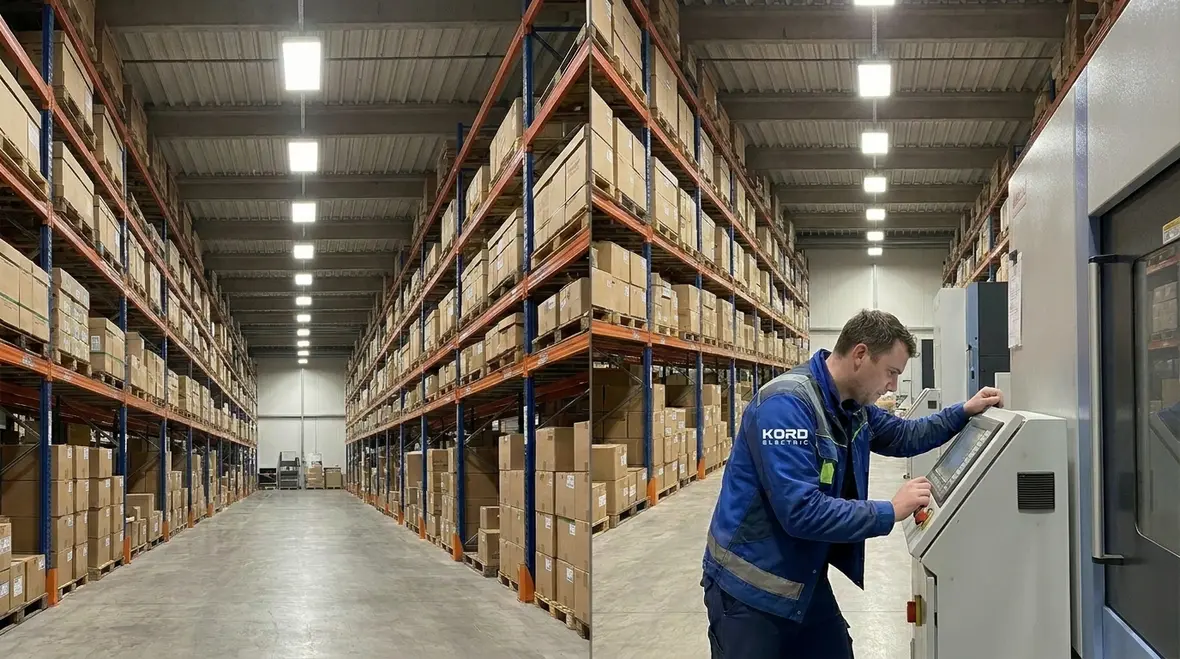
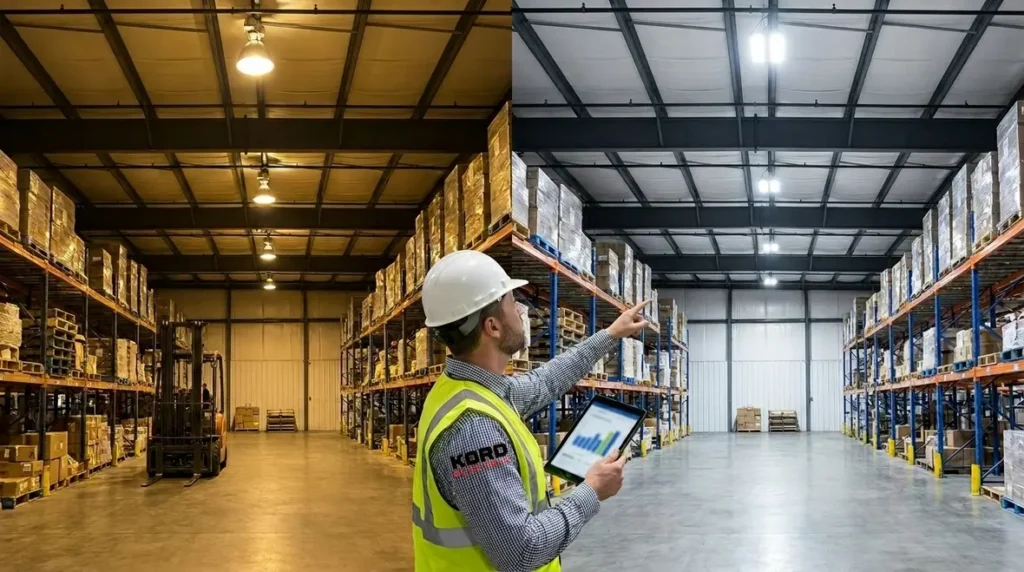
First, a warehouse does not fail in one dramatic moment. Instead, it breaks down in small ways. Uneven light levels create dim zones near racking, dock doors, stairs, and loading lanes. In those areas, a worker can misjudge a pallet edge, trip on a cable, or miss a floor marking. Meanwhile, glare from poorly aimed fixtures can reflect off glossy floors, safety vests, and moving machinery. As a result, people squint, slow down, or stare at the wrong thing. And yes, that is how “one quick move” becomes “another incident report.”
Second, the type of lighting matters. Older fixtures may flicker, fail early, or shift in color in a way that makes it harder to spot hazards. Also, poorly shielded lights can spill upward or outward, which wastes energy and reduces useful illumination where it is needed most. Then we see another pattern: maintenance is delayed because nobody feels the urgent need when the space is only “mostly lit.”
Third, we connect these points back to commercial electrical risks we have discussed before, including concealed faults and wiring wear that can develop when systems operate in tough environments. In many facilities, the lighting circuit shares space and pathways with other equipment, which means overheating or damaged insulation can hide in plain sight until it suddenly matters. Our technicians explain what they see and how to fix the problem before it grows. In short, good lighting design reduces stress on eyes and also helps teams notice hazards sooner.
Designing for visibility, traffic flow, and safe access
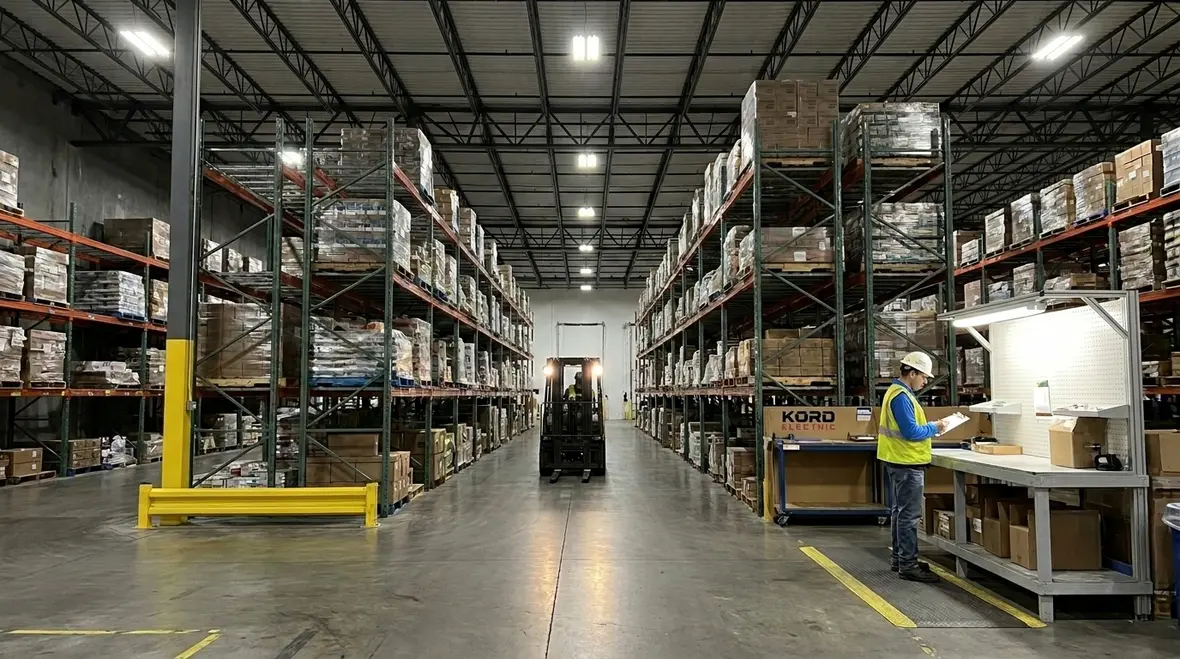
Next, we design warehouse lighting for how the space actually moves. We do not plan around a floor plan only. We plan around people, forklifts, carts, and the daily routes that matter. For instance, the lights near warehouse aisles must support safe lane recognition. Lighting near mezzanines and stairways must support step clarity. Dock and door areas must reduce shadows so workers can see where they step and where cargo settles.
Then we account for the way height changes the outcome. If fixtures sit too high, light spreads too wide and corners get dim. If they sit too low, glare and hot spots can show up fast. Because of that, our team often follows layout rules that match mounting height, beam spread, and reflectance of walls and floors. We also look at lighting grid spacing and fixture aim. Small changes here can improve uniformity and reduce the “bright and dark stripe” effect that many facilities suffer from. For facility leaders who want to see how inspectors and codes view these details, resources like Kord Electric’s lighting installation code compliance guide help connect warehouse lighting safety standards to real world enforcement.
After that, we consider task areas separately. Packing stations, labeling zones, and inspection tables do not need the same light distribution as aisle paths. So we avoid one size fits all plans. We can set up targeted lighting so workers see product labels and defects clearly, while the rest of the warehouse remains evenly lit. This supports quality and reduces rework.
Upgrading fixtures and controls to boost efficiency
Once visibility is built, efficiency becomes the next lever. Many warehouses waste energy because they run lights at full output all day, even when activity is lighter. That is not a moral failing, it is just a system that never got tuned. With the right upgrades, we reduce waste while keeping safety intact.
Controls play a major role. We can recommend occupancy sensing for offices and low traffic zones, plus time based schedules for areas that follow predictable shifts. We can also apply daylight strategies near exterior windows, so interior lights do not fight the sun. Then we ensure the controls work smoothly with warehouse routines, so lights do not blink on and off like a bad theme park ride.
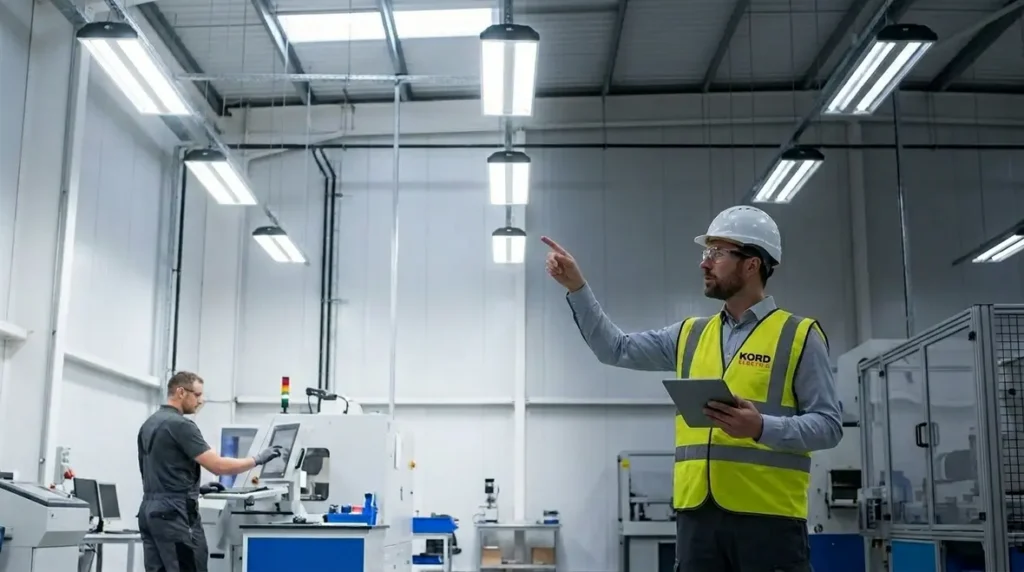
Fixture selection matters too. Modern LED options can lower heat output, last longer, and maintain output more consistently than older systems. However, we still plan carefully. If someone picks the cheapest fixture and ignores distribution, they can get glare and uneven light. Instead, we choose products and configurations that support safe coverage, good color rendering, and predictable maintenance intervals. Our technicians also explain what the upgrade changes for operations, so facility managers know what to expect during the transition.
Electrical safety: the wiring side of good lighting
Now we move to the part people often forget: lighting is an electrical system, and electrical systems live or fail in the details. When wiring gets stressed by heat, vibration, dust, or frequent switching, the risk grows over time. We have seen commercial buildings where lighting circuits share routes with other power loads, and those shared pathways can amplify heat buildup. Over time, insulation can weaken, connections can loosen, and hidden faults can develop behind panels or in hard to access runs.
In fact, our technicians point to the kinds of concealed problems we cover in our earlier discussions of hidden electrical risks in commercial buildings. For facility leaders who want a deeper dive into those issues, Kord Electric’s article on hidden electrical risks in commercial buildings walks through how unseen faults grow and why they deserve real attention. We explain that “hidden” does not mean “safe.” It usually means “waiting.” Common issues include poor connections, damaged insulation, aging components, and overloaded circuits that do not show symptoms until they do.
So when we evaluate lighting, we also evaluate the support system. We look at the condition of panels and circuit components that feed lighting loads. We review routing and physical protection for wiring in areas where forklifts, carts, and racks create risk of abrasion. We check grounding and bonding where needed, and we verify that switching and control wiring follow safe layout rules. Then we document our findings so others can plan corrective work without guesswork.
And just to make it clear, this does not mean we scare anyone. We simply treat electrical safety like it matters, because it does. A warehouse should not operate on vibes and hope.
Maintenance planning so lighting stays safe month after month
Lighting performance does not end at installation. After the upgrade, the real work begins: maintenance. Lamps and drivers age. Dust gathers on lenses and reflectors. Controls may require testing. If a facility waits until everyone complains, then safety takes the hit first.
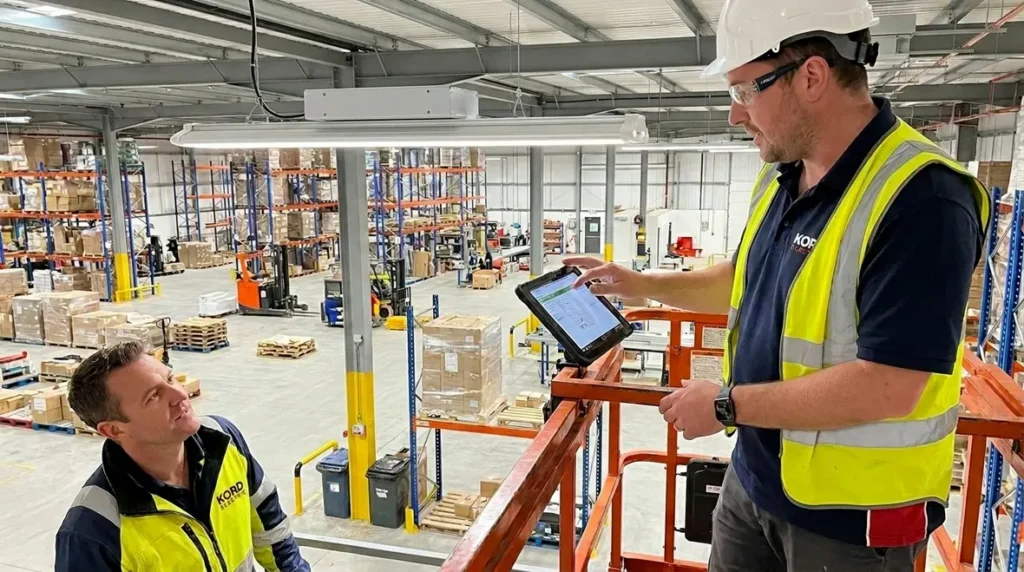
Our approach includes a maintenance plan that fits how commercial and industrial teams operate. We advise on inspection cycles for fixtures and controls, plus tracking for failures. We also recommend safe access practices for maintenance work, because working on a lighting system often puts people near energized parts and high locations. Our technicians explain the steps and the safe boundaries so the crew can handle the task without cutting corners.
We also help others build a “notice early” routine. If one section starts dimming, we flag it. If a control behaves strangely after a shift change, we investigate. That kind of early action prevents the all at once outage that can stall operations. When lighting stays reliable, productivity stays steady.
Finally, we encourage feedback from the floor. Workers notice shadows, glare, and inconsistent behavior faster than a spreadsheet. So we connect their observations to the electrical and optical cause. In other words, we make maintenance practical, not theoretical. For facilities that want structured support beyond lighting alone, Kord Electric’s electrical preventive maintenance services help organize inspections, testing, and documentation across key systems.
Implementation and compliance for major facilities and fast rollouts
For large commercial and industrial sites and major property buildings, implementation needs structure. Power down windows must align with operations. Teams need clear labeling and safe work steps. And changes must not disrupt critical workflow more than necessary.
We often start with a site walkthrough and an illumination assessment that measures how light behaves across aisles and work areas. Then we review the existing electrical setup to understand load capacity and switching behavior. After that, we provide an upgrade path that matches the facility schedule, so others can plan outages and staging without guesswork.
Because these projects can touch many areas, we coordinate installation sequencing to keep safety coverage consistent. When we add fixtures, we confirm aim and spacing, so the lighting grid supports uniformity. When we add controls, we test sensor reach and timing so lights respond correctly. And throughout, our technicians explain what they do and why, so facility leaders and maintenance teams understand the full system, not just the final look.
Also, compliance is not treated as a checkbox. We focus on safe operation, proper wiring practices, and system behavior that supports warehouse lighting safety standards in the real world. That means fewer surprises for inspectors and fewer headaches for operations. For facilities across Southern California, Kord Electric’s broader Los Angeles County electrical services support warehouse lighting safety standards alongside panels, distribution, and emergency response.
FAQ
Conclusion: let’s light your warehouse the right way
If your warehouse lighting feels “good enough,” we recommend a closer look. At Kord Electric, we help commercial and industrial facilities and major property buildings improve safety, reduce risk, and run smoother with smart design, proper electrical checks, and a maintenance plan that actually sticks. Our technicians explain each step so your team knows what changes and why. Reach out to us for an on site review and a practical upgrade path that supports both people and performance. Let’s make the lights work as hard as your operation does, because darkness never clocked in.
If you are planning a broader upgrade that touches distribution, labeling, or emergency response, remember that Kord Electric’s services span far beyond lighting alone. From preventive maintenance programs to emergency electrical services, the same safety-first mindset that drives warehouse lighting safety standards also guides the way we protect panels, feeders, and critical loads across your facility.
Whether you manage a single warehouse or a portfolio of major properties, your teams deserve lighting that helps them move faster, safer, and with fewer surprises. When you are ready to trade “probably fine” for a clear, documented plan, our crew is ready to walk the floor, measure the details, and build a warehouse lighting strategy that actually matches how your operation runs every day.