Industrial Circuit Breaker Maintenance Guide
In this guide, Kord Electric explains industrial circuit breaker maintenance to help facilities avoid surprise trips, sluggish protection, and the kind of downtime that turns payroll into a sad comedy. We focus on commercial and industrial sites, as well as major property buildings, where one failed breaker can quietly take an entire floor out of service. And yes, we get it, electricity does not care about anyone’s schedule. Still, others can reduce risk by staying ahead of heat, wear, and connection issues. That is what our technicians and expert service staff do every day, and they explain what they find in plain terms, without the “trust me bro” vibe.
Why industrial breaker failures feel sudden and expensive
Most major sites do not plan for outages. However, breaker problems often start as small signals that look harmless at first. A joint that warms slightly. A contact surface that slowly loses integrity. A mechanism that becomes stiff from dust, vibration, or age. Then, one day, the system reacts during a fault event the way it was meant to, and that is when the trouble becomes obvious.
When protection devices fail, the results can be more than an equipment issue. Power can drop for systems tied to the same feeder. Safety controls can behave differently under abnormal conditions. Operations lose time, and sometimes they lose product. Meanwhile, repairs often require shutdown windows, specialized parts, and the kind of troubleshooting that makes maintenance teams earn their coffee.
We help others prevent that chain reaction by treating industrial circuit breaker maintenance like an investment, not a last minute fire drill. We do it with structured inspections, measured testing, and documentation that management can actually use.
What we check during industrial circuit breaker inspection
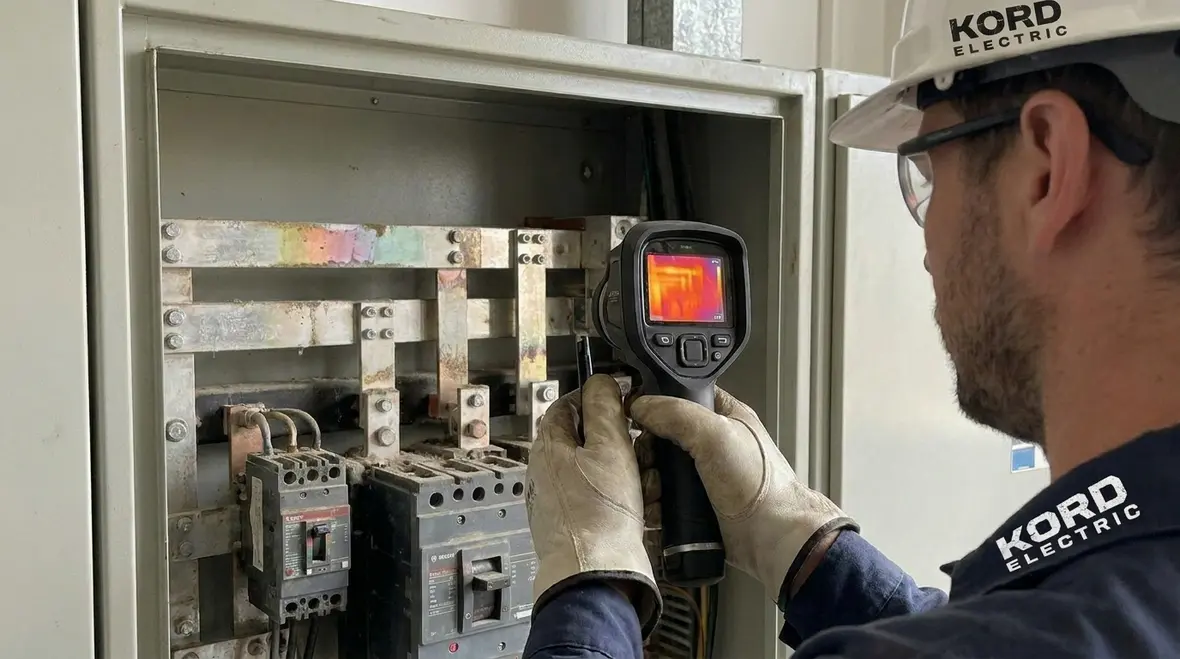
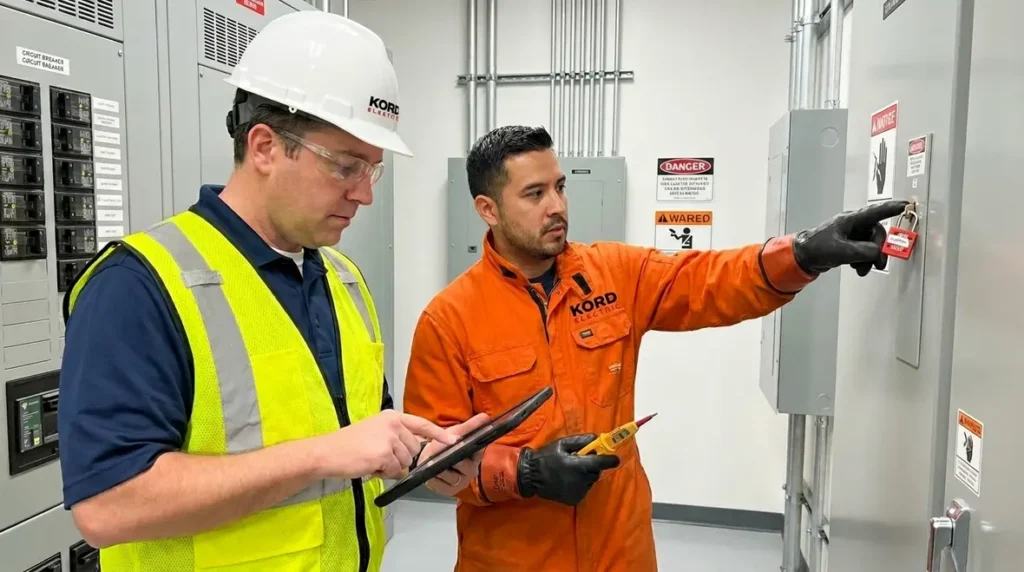
Our expert service staff starts with condition, not guesses. Then they move methodically, because the breaker tells its story through heat marks, wear patterns, and mechanical feel. Importantly, we focus on commercial and industrial buildings, where reliability matters and the load profile can change quickly.
Typical checks include these areas:
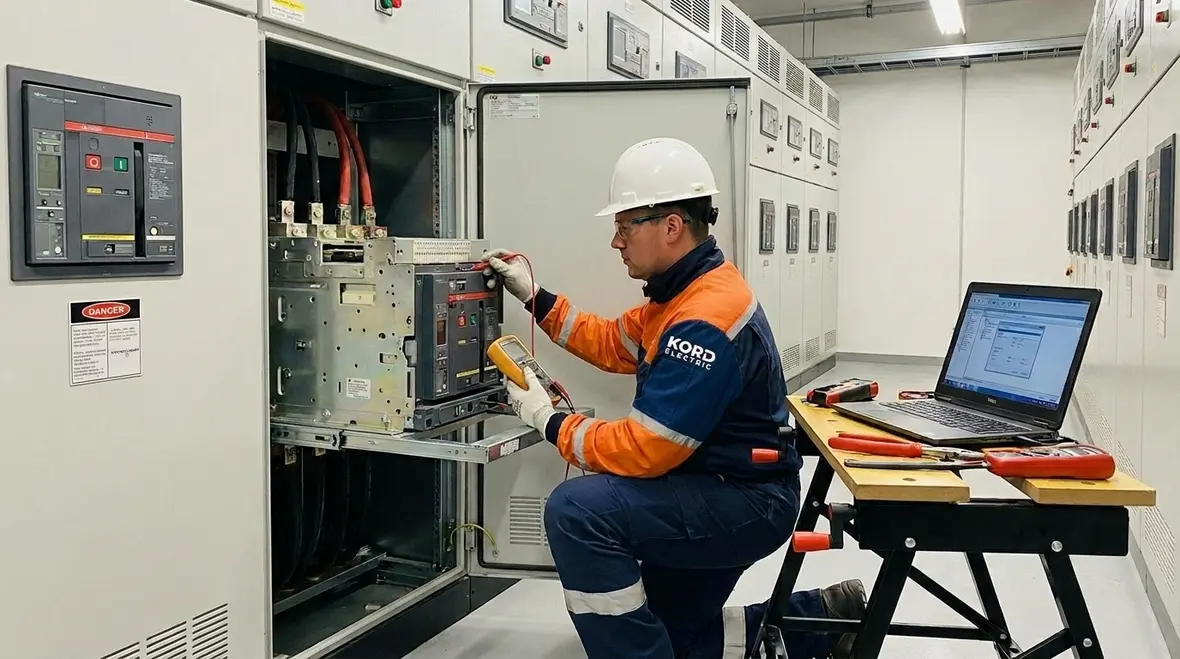
- Mechanical operation: We verify the mechanism moves smoothly and returns correctly, since a slow trip or failed close can create confusion during emergencies.
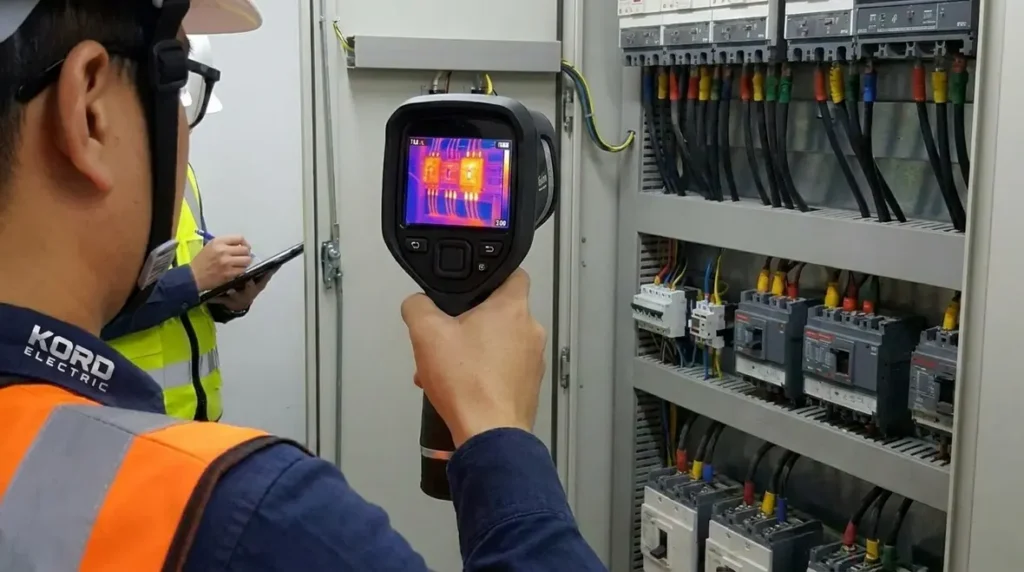
- Contact condition: We inspect contact surfaces and measure contact resistance where applicable, because increased resistance turns into heat under load.
- Terminations and connections: We look for looseness, corrosion, and discoloration. In the field, a small connection fault can act like a slow leak in a pipeline.
- Arc management parts: We check components that control arcing and protect the breaker chamber so faults clear with the right behavior.
- Trip unit health: We evaluate protective functions and settings against the system requirements, not just the nameplate.
And then, we do the part people usually skip: we communicate. So our technicians explain what they find, why it matters, and what we recommend next. If a condition can worsen quickly, we tell the truth early. If it is stable, we say so. That calm approach saves time and avoids “fix it just in case” spending.
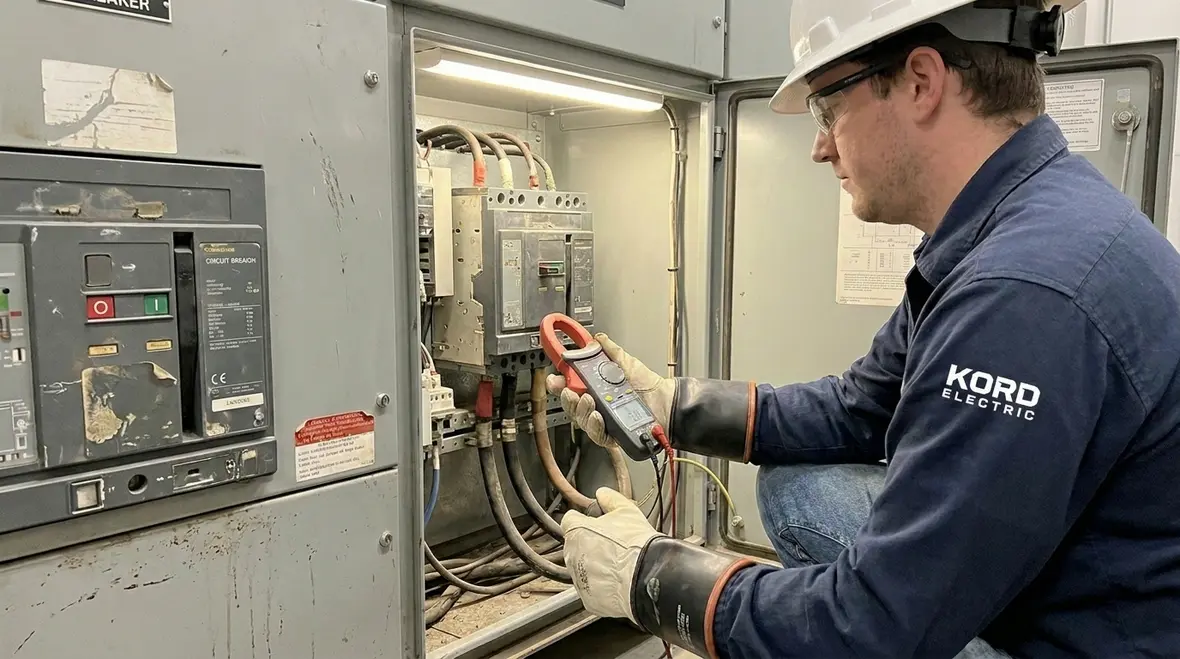
How voltage fluctuations stress breaker components over time
Voltage issues do not only affect motors and lighting. They also stress protective and switching equipment. In fact, when voltage rises and falls outside expected tolerance, the current waveform can behave differently. That means more heat, more torque stress on downstream equipment, and more frequent stress on breaker trip and contact systems. Kord Electric has covered voltage fluctuations in commercial and industrial settings, and the takeaway is simple: repeated electrical stress can add up quietly, then show up as nuisance trips or performance drift.
Now, nobody wants to hear that “power quality” sounds like a buzzword. But in the plant and the building, power quality is the difference between stable operation and a system that never feels quite right. When voltage dips occur during starting loads, protective devices may see unusual conditions. When surges return after dips, contacts and insulation face extra stress cycles.
That is why we pair breaker maintenance with power quality awareness. We do not treat the breaker as an island. Instead, we look at the broader electrical environment: load changes, feeder behavior, and events that can trigger wear even when the breaker looks clean. You can have a breaker that passes a basic visual check, yet still drift in performance because the system around it has been acting up.
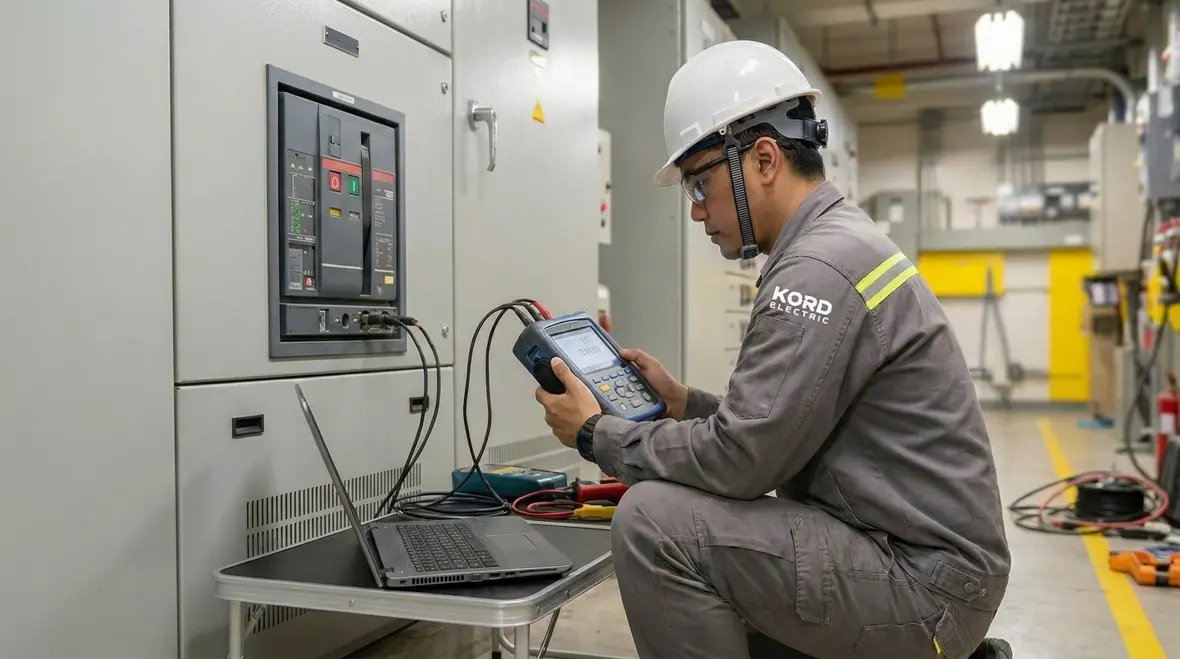
Testing methods that reduce surprises during outages
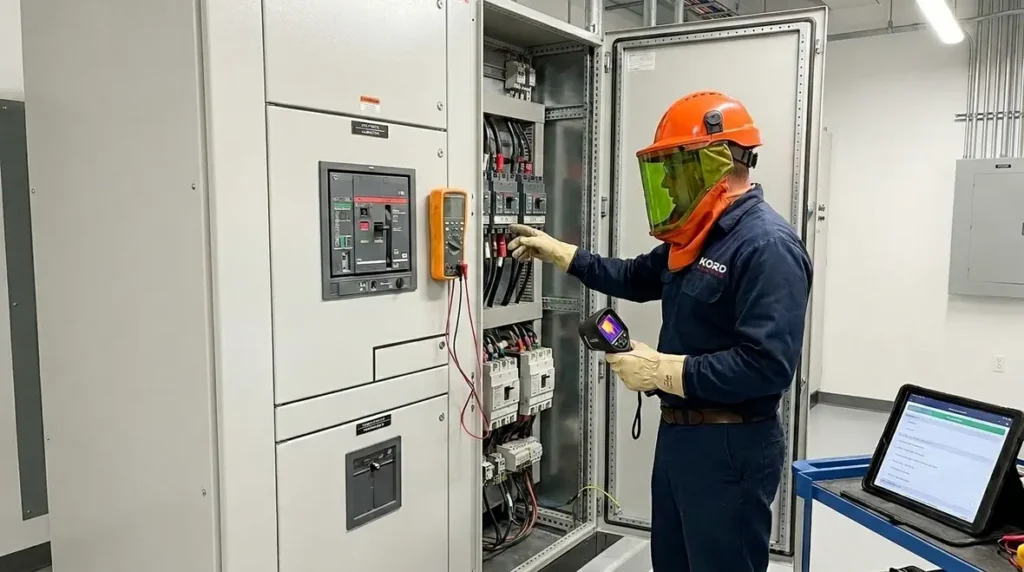
Visual inspection is necessary, but it does not catch everything. Therefore, our approach includes testing that confirms performance. We choose methods based on breaker type, system design, and facility needs. Then we schedule work in a way that respects operations, especially for major property buildings that cannot simply shut down and “figure it out later.”
Here are common testing categories we use during industrial breaker maintenance programs:
- Contact resistance checks: These help detect looseness or degradation that produces heat before it becomes damage.
- Insulation and condition evaluation: We look for signs of insulation aging or contamination that could lead to faults.
- Trip timing and functional checks: These verify that protection responds when it should, with the right timing and behavior.
- Control circuit and wiring inspection: We verify that control power and wiring remain stable, because control failures can mimic trip problems.
- Calibration verification for trip units: We confirm settings and logic match the system study and protection philosophy.
Our technicians keep the process clear. They also keep it practical. If a test indicates a component is nearing end of life, we do not bury it in a report. We explain the risk in human terms, with next steps that fit a real maintenance calendar. In other words, we prevent the classic scenario where an outage happens and someone says, “We didn’t know that could fail.” Sure. None of us did. That is why we do this work before the bill shows up.
Preventive maintenance schedules that match how facilities actually run
There is no single calendar that fits every commercial or industrial building. We base schedules on operating conditions, fault history, and environmental factors. For example, a manufacturing floor with frequent load swings sees different stress than a quieter facility with steady loads. Also, some sites face more dust, humidity, or vibration, all of which can affect breaker mechanisms and connections.
We typically consider these drivers when building a maintenance plan:
- Duty cycle and load profile: Frequent starts, large motor loads, and production shifts increase switching events and heat exposure.
- Temperature and environment: Hot rooms, humidity, and contamination accelerate wear and insulation aging.
- System changes: New equipment or rewired feeders can change currents and stress patterns.
- Performance history: Past nuisance trips, close issues, or alarms can indicate a trend.
- Protection requirements: Coordination needs influence how we test and verify settings.
Once we set the plan, we align it with operations. Transitioning from “reactive” to “predictive” is how facilities reduce downtime. And importantly, we keep the documentation strong, so future teams can understand what changed and why.
Even better, our expert service staff shares plain language guidance that helps others schedule wisely. We tell facility leaders what to watch for between visits, and we suggest priorities based on risk rather than fear.
When to repair, when to replace, and how we decide
Facilities do not like surprise costs. However, waiting too long can cost more, especially when replacement parts become scarce or when a failure forces emergency shutdown. Therefore, we evaluate breaker condition and performance to guide the decision.
During our assessment, we look for clear indicators that a component can be restored versus replaced. For instance, mechanical wear that affects operation speed or trip reliability usually needs serious attention. Likewise, high contact resistance can signal damage that worsens under load. If arc components show wear beyond safe limits, we recommend service with urgency.
We also consider the bigger electrical system. If the feeder arrangement, trip settings, or coordination plan no longer matches the facility’s protection needs, a repair alone may not solve the core problem. So we may recommend adjustments to ensure the breaker still clears faults in a way that protects equipment and personnel.
And yes, we use that calm, authoritative tone for a reason. People make better decisions when they know the facts. We explain the “why,” not just the “what.” That is how Kord Electric helps others avoid the maintenance version of jumping into a pool without checking the depth. It is exciting for about five seconds, and then it becomes a problem.
For facilities that want to go beyond one-off fixes, pairing this kind of decision-making with structured electrical preventive maintenance keeps breaker health aligned with the rest of the system. That way, repairs and replacements support a broader reliability plan instead of becoming scattered line items.
FAQ: Industrial breaker maintenance for commercial and industrial sites
Our call to action for facilities that want fewer outages
If your commercial or industrial site relies on dependable electrical protection, Kord Electric can help you reduce downtime and protect equipment with planned industrial circuit breaker maintenance. Our technicians and expert service staff inspect, test, and explain findings in clear business language, so you can schedule repairs with confidence. Reach out to us to discuss your breaker lineup, operating conditions, and any signs of nuisance trips or performance drift. Then we will build a maintenance path that keeps your power stable, your teams calm, and your schedule intact.
For facilities across the region, especially those operating on tight production timelines, pairing this work with dedicated Los Angeles County electrical services ensures your maintenance and troubleshooting partner understands industrial load profiles, shift work, and real-world outage costs. When you align breaker care, system planning, and regional support, outages stop feeling like random events and start looking like risks you already have covered.
If you are also tracking recurring voltage swings, nuisance trips, or unexplained equipment stress, you can connect this maintenance roadmap with focused support for voltage fluctuations in commercial and industrial facilities so breaker performance and power quality move in the same, stable direction.