
Commercial Electrical Distribution Reliability
How Kord Electric Builds a Reliable View of Your Electrical Distribution
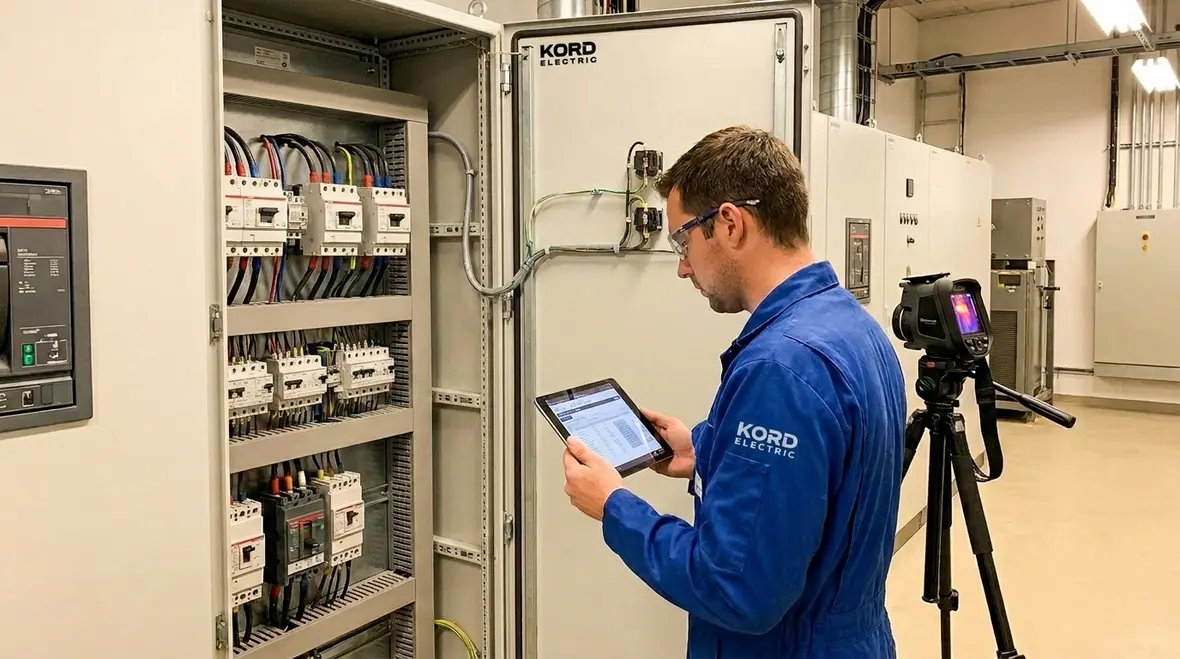
In commercial and industrial buildings, electrical problems do not politely announce themselves. They show up as nuisance alarms, random downtime, and expensive repairs that make the maintenance budget look like it ran a marathon. That is why Kord Electric starts with our Commercial Electrical Service Reliability Assessment and the practical question behind it: is your distribution system stable enough to support your loads, your uptime targets, and your people?
We take a methodical look at how power enters, how it travels, and how it behaves under real conditions. Then our technicians and expert service staff explain what they find in plain business terms, so others in your organization do not have to guess. And yes, we do use humor sometimes, because nobody should fall asleep while learning about switchgear. Yet we keep the tone calm and the analysis sharp.
Step One: Confirm the Design Matches the Real Load
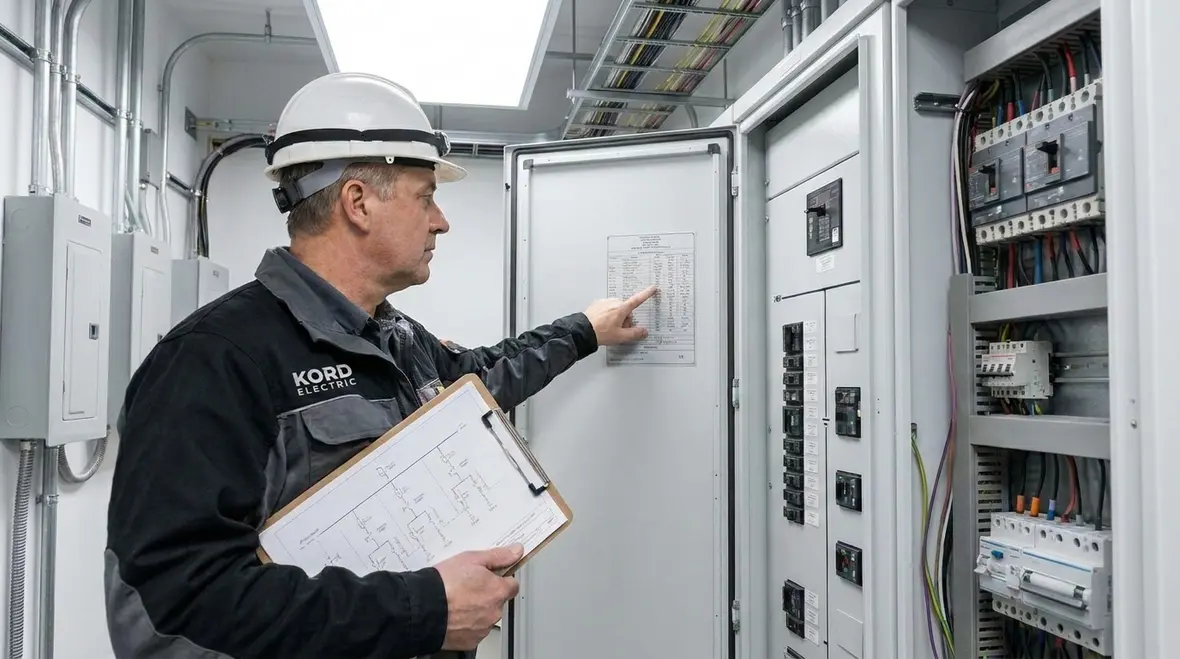
First, we check whether the system design still fits how the building operates today. Many facilities add equipment over time, and the distribution story can quietly change. A properly sized system should carry both normal and peak loads without chronic stress. However, if equipment has been replaced, expanded, or repurposed, the original assumptions may no longer be correct.
Our team reviews single line diagrams, nameplate data, and load history. Then we compare that information to your actual operating profile using available data and onsite verification. Additionally, we ask facility leadership about changes such as new HVAC staging, expanded production lines, EV charging, or after hours operation.
When our technicians explain this phase, we do it in a steady way: electrical distribution systems care about load diversity, startup surges, and how often peak conditions occur. In other words, it is not just “how much power,” it is “how the power moves through time.” That is where reliability either earns its keep or starts costing you money.
Step Two: Inspect Power Quality and the Signs It Leaves Behind
Next, we evaluate power quality because it affects equipment life, protection behavior, and operational stability. When voltage dips, harmonic distortion, or transient events show up, the system may still “work,” but it works like an old truck running on prayers. You might not notice every day, yet components wear faster and failures become more likely.
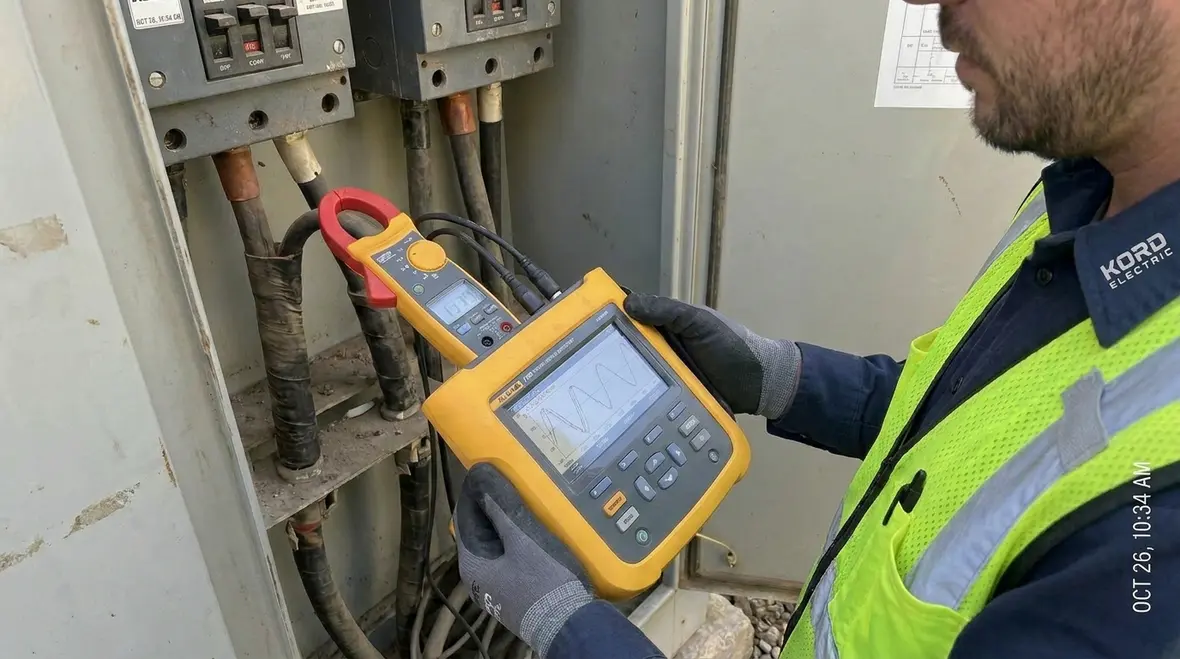
Our electrical reliability experts look at common symptoms. We examine flicker complaints, nuisance tripping patterns, and trending data from monitoring devices. Then we verify with measurements where it counts: at feeders, at key distribution boards, and near sensitive loads.
To keep the process grounded, we translate findings into operational impact. For example, harmonics can overheat neutral conductors, and undervoltage can cause motor control issues or degraded performance in drives. Meanwhile, repeated voltage sags can trigger protection devices in ways that seem random until you see the patterns.
When our service staff shares results, they also outline what comes next, including whether the best fix is operational tuning, equipment replacement, or targeted mitigation. That clarity reduces guesswork for property managers and electrical decision makers.

Step Three: Evaluate Protection Coordination and Trip Behavior
Now we move from “power” to “responses.” Reliability depends not only on supplying energy but also on how the system isolates faults. When protection coordination is wrong, the building pays the price. Either faults spread farther than they should, or protection trips too broadly and knocks out unrelated areas. Both outcomes are costly, especially for industrial and major property buildings where downtime hurts.
We review protective device settings, breaker types, relay coordination studies, and any recent changes that might affect selectivity. Then our technicians test or verify behavior using field data and, when needed, targeted functional checks. Additionally, we compare what protection is supposed to do versus what it has been doing in real events.
Our expert service staff explains coordination like a traffic system. Selectivity keeps cars from blocking the whole highway when there is a small accident. In electrical terms, it means the nearest device clears the fault while upstream devices stay available. And yes, when coordination fails, the building experiences “the whole street gets shut down because one mailbox caught fire.”
Step Four: Look at Aging, Thermal Stress, and Mechanical Health
After that, we focus on physical reliability. Aging gear and poor thermal conditions can turn small issues into major failures. The most common problem is not a dramatic explosion; it is gradual deterioration. Loose terminations, worn insulation, contamination, moisture, and overheating can all build up silently.
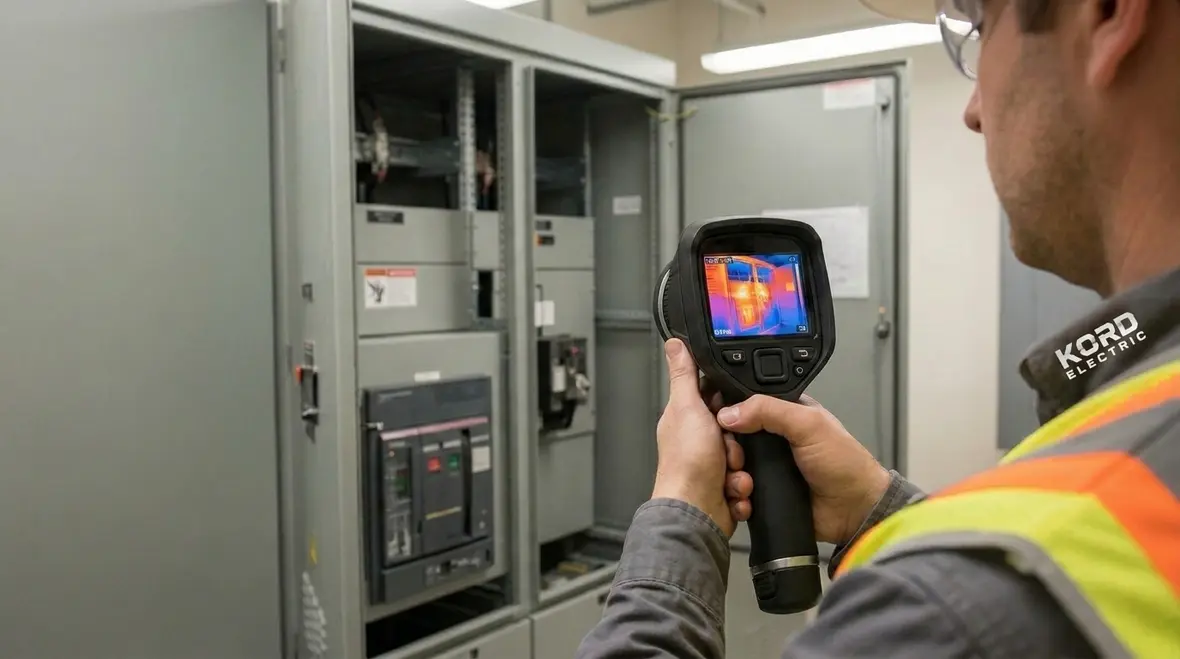
We conduct visual inspections and targeted diagnostics. We evaluate terminations, bus connections, breaker mechanisms, and cabinet condition. Then we pair those observations with test results where available, such as infrared imaging and routine electrical checks. Importantly, we connect findings to failure modes: what could fail next, how fast it might progress, and what operational symptoms you could see before failure.
Our approach also respects the business realities of commercial and industrial facilities. We plan work to limit disruption. Moreover, we coordinate with your maintenance schedules so the assessment does not become a surprise outage. In this phase, we also document what is urgent versus what can be scheduled, which helps property leadership plan with confidence.
Step Five: Validate Monitoring, Maintenance, and Documentation
Reliability is not a one time inspection. It is a routine. So we review how your team monitors the system, how maintenance is tracked, and how documentation supports quick decisions during incidents. If history is missing, response becomes slower and less accurate. If alarms are ignored or misunderstood, problems stay hidden until they get loud.
Our technicians evaluate whether trend data exists for key parameters, how alarms are prioritized, and whether maintenance records show patterns. Additionally, we check if your service intervals align with the system’s operating conditions. Heavy duty environments often need more frequent attention than generic schedules suggest.
Then we help close the loop. For example, after we identify a risk, we recommend a maintenance action that matches the risk level. Our expert service staff also trains facility staff on what the equipment signals mean, so the building does not rely on one person who knows everything. When knowledge spreads, reliability improves. When it concentrates in one brain, reliability becomes a single point of failure. That is great for comedy, not for electrical systems.
How the Commercial Electrical Service Reliability Assessment Handles Real Buildings
In our experience, the best reliability work reflects real operations, not just ideal calculations. Our Commercial Electrical Service Reliability Assessment combines design checks, power quality review, protection strategy evaluation, and equipment condition verification. As a result, the report tells a full story: what works, what is at risk, and what should be addressed first.
We also tailor recommendations for commercial and industrial facilities and major property buildings. That means we focus on uptime, safety, and practical fixes that fit your workflow. Instead of pushing vague upgrades, we help you prioritize. First, we target the biggest reliability threats. Then, we align improvements with maintenance planning, budget cycles, and operational constraints.
Most importantly, we explain the findings clearly. Our technicians and expert service staff do not talk like textbooks. They walk through the “why,” the “what,” and the “when,” so your team can make informed decisions and keep the building running.
FAQ
Conclusion and Call to Action
If your commercial or industrial distribution system feels like it is “mostly fine,” that is often when reliability issues hide the best. Kord Electric helps you find the real risks through our Commercial Electrical Service Reliability Assessment and a clear plan to address them. We bring experienced technicians, calm expert explanations, and practical priorities that fit your building. Reach out today so we can schedule an evaluation, identify what needs attention first, and keep your power dependable. Nobody wants a surprise outage. Let us prevent the sequel.
To go deeper on how reliable electrical systems keep commercial buildings operating safely and efficiently, explore our related article on the importance of reliable electrical service in commercial buildings. When you are ready to move from reading about reliability to improving it, our team is ready to help.
If you are planning upgrades, expansions, or system improvements, consider pairing your assessment with Kord Electric’s dedicated commercial electrical services, so recommendations move smoothly into design, installation, and long term support.


