
Commercial Electrical Infrastructure Upgrade Signs
Kord Electric helps commercial and industrial facilities stay powered and protected by delivering commercial electrical infrastructure upgrades that reduce risk and support modern operations. In this guide, we walk you through the key signs your electrical system is aging, strained, or simply not keeping up. We also explain what our technicians and expert service staff look for on site, because guessing is for mystery novels, not for your main switchboard. Then we show practical next steps, so your team can plan repairs instead of reacting to outages. After all, nobody wants their building to behave like a faulty remote during a big presentation.
What signals a worn electrical system in a commercial building
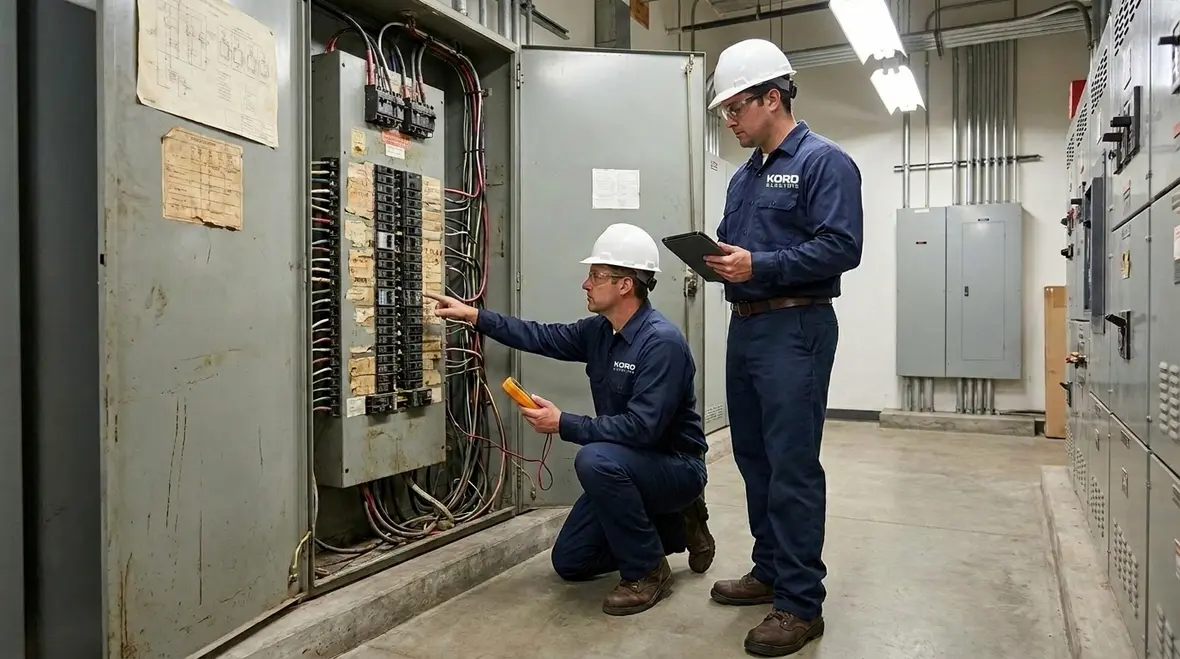
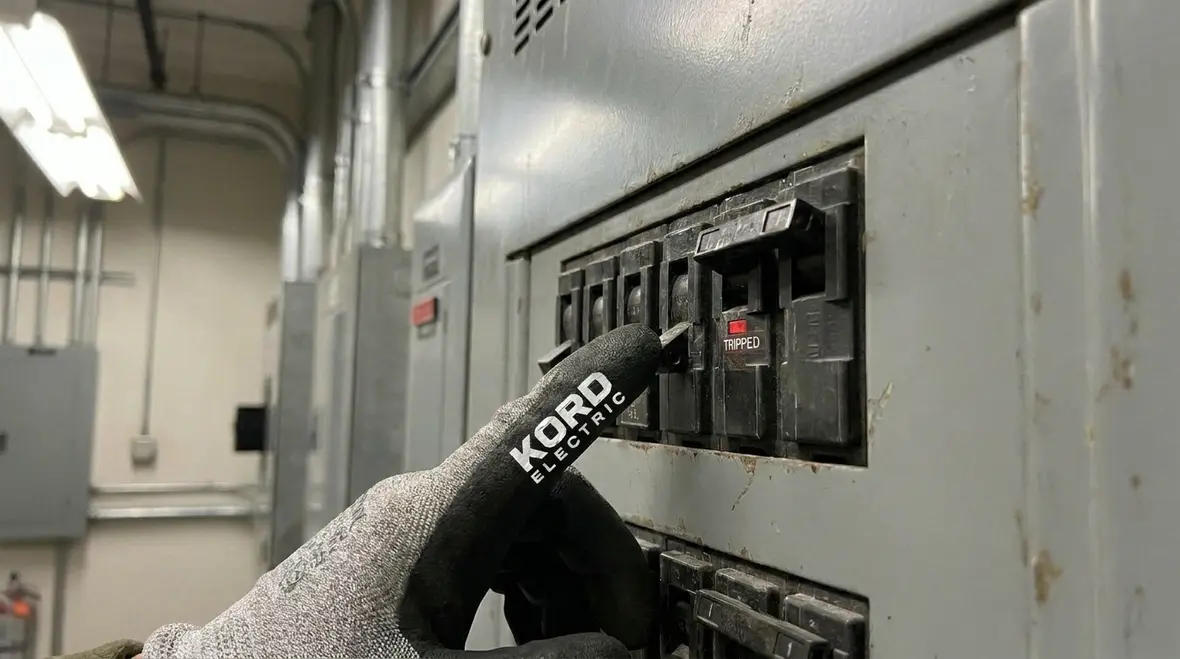
Most facility managers do not wake up one morning and think, “Today seems like the day our electrical infrastructure retires early.” Instead, the problems show up slowly. First, you may notice flickering lights in shared spaces or production areas. Then you may see breakers trip more often, especially during startup cycles for HVAC, motors, or processing equipment. If voltage readings drift, equipment runs hot, or staff hear buzzing and arcing sounds near panels, those signals point to a system that needs attention.
And while some issues are annoying, others are dangerous. For example, loose connections can create heat, heat can degrade insulation, and degraded insulation can lead to failures. Meanwhile, an outdated grounding system can make protective devices less effective. As a result, the building feels like it is “just struggling,” but in reality it is trending toward higher risk.
For many property managers, these early warning signs raise the question of when to move from quick fixes to a more strategic plan. Resources like Kord Electric’s guide on hidden electrical risks in commercial buildings help put those symptoms into context and show how small issues can evolve into larger failures over time.
Because electrical systems support everything from lighting and HVAC to data rooms and production equipment, treating “minor” flicker or nuisance trips as background noise can quietly erode uptime and safety margins. A structured review gives you a clearer picture of whether your facility is dealing with isolated annoyances or early signals that deeper commercial electrical infrastructure upgrades are coming due.
1) Electrical symptoms that show up before failures
Our expert service staff often tells clients the truth in plain language: electrical problems rarely announce themselves with a dramatic soundtrack. They show up as patterns. Consider the following indicators we commonly observe in commercial and industrial facilities:
- Frequent breaker trips or nuisance alarms that occur more than you would expect
- Lights dimming when large equipment starts, such as compressors, pumps, elevators, or loading bay doors
- Burning smells near panels, transformers, or distribution gear
- Panels that run warmer than normal, even after routine load changes
- Higher-than-usual maintenance calls tied to motors, drives, lighting controls, or standby systems
Next, we pay attention to the “paper cuts” that become chronic. If staff have to reset equipment more often, if electricians log repeated repairs at the same locations, or if the building’s power quality has shifted, you likely need commercial electrical infrastructure upgrades rather than endless patch jobs.
Instead of waiting for a major failure, facility teams can use these patterns as a checklist to start conversations about testing, maintenance, and replacement. Pairing early warning signs with a structured electrical preventive maintenance program helps catch issues before they escalate, which is why many commercial and industrial facilities build recurring inspections into their long term reliability plans.
Connecting everyday symptoms to real risk
The challenge for many teams is that day-to-day symptoms blend into operations. A tripped breaker gets reset. A flickering light gets replaced. A motor that runs hot gets a fan pointed at it. Each action solves the moment without addressing the infrastructure behind it.
Over time, this “fix it in the field” approach can mask underlying trends like overloaded circuits, weak terminations, or aging switchgear. Kord Electric often works with facilities that have lived with subtle electrical discomfort for years, only to discover that a targeted combination of commercial electrical infrastructure upgrades and preventive maintenance dramatically improves stability, safety, and productivity.
2) Power quality problems that disrupt operations
Power quality sounds like a fancy phrase, but it can hit your bottom line quickly. Harmonics, voltage sags, and transient spikes can stress sensitive loads like computers, PLCs, control systems, security equipment, and modern HVAC strategies. Even if your building stays online, poor power quality can shorten equipment life and cause unpredictable performance.
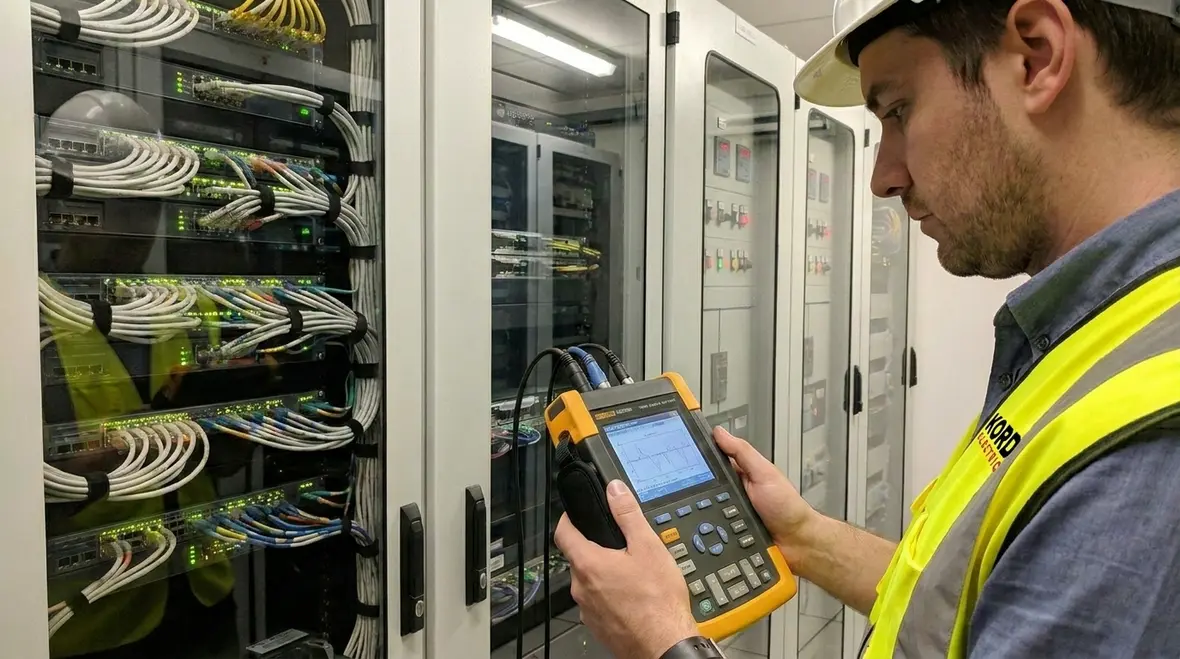
We also see that production and service teams blame the equipment when the real culprit is electrical variation. For instance, a line may stop due to a drive fault that appears “random.” However, measurement often reveals a pattern tied to specific startup events or generator transfers. Therefore, our technicians use targeted testing rather than guesswork, and we explain what the numbers mean in practical terms.
When we recommend upgrades, we focus on the parts that stabilize power delivery: proper distribution design, improved protective coordination, and modernization of panels and switchgear where conditions require it. In other words, we help you stop feeding your equipment a diet of inconsistent power, the same way you would not keep a runner on a treadmill that speeds up randomly.
How voltage instability quietly reshapes maintenance
Unstable voltage does more than trigger alarms. It often reshapes your maintenance schedule without anyone naming the cause. Drives fail sooner than expected. Control boards show “mystery” damage. Servers or networking gear reboot at the worst possible time. Meanwhile, staff chalk it up to bad luck or manufacturer issues.
In reality, many of these headaches trace back to underlying power quality. Facilities that diagnose and correct voltage fluctuations early often avoid repeated component failures and overtime-heavy repairs. That is why an increasing number of commercial and industrial properties combine monitoring, documentation, and targeted commercial electrical infrastructure upgrades to keep sensitive equipment running on a more stable foundation.
3) Outdated panels, switchgear, and components
Commercial and industrial systems age faster than most people realize. A panel that worked fine twenty years ago may now struggle with increased loads from new machinery, lighting retrofits, EV charging, building automation, or tenant buildouts. Additionally, components become harder to support because replacement parts are less available and maintenance becomes more labor intensive.
Here are the practical signs we look for in the field:
- Switchgear that has reached end-of-life performance based on condition checks
- Rusted enclosures, degraded labels, or missing torque records
- Wiring that shows insulation wear, improper terminations, or repeated repairs
- Inconsistent labeling that makes troubleshooting slow and risky
- Protective devices that no longer coordinate with the loads and fault conditions
At Kord Electric, we do not just point at the problem and walk away. We walk your team through what is happening, what it costs to keep operating like this, and what a better path looks like. Our technicians explain the options clearly, so others in your organization can make a confident decision without having to become electrical historians overnight.
Why aging infrastructure makes simple work harder
As infrastructure ages, even simple work becomes more complex. A straightforward panel changeout can turn into a documentation hunt. A minor breaker replacement morphs into a compatibility puzzle. When you layer modern loads on top of outdated equipment, the time required to diagnose and repair issues grows steadily.
That is one reason many commercial properties choose to pair broader commercial electrical infrastructure upgrades with other capital projects like lighting retrofits, commercial kitchen renovations, or solar integration. Addressing panels, feeders, and protective devices at the same time as visible upgrades helps lock in reliability and reduce future surprises behind the walls.
4) Safety and code risk hidden behind “it still works”
In commercial environments, safety issues rarely announce themselves as a fire drill. Instead, they hide behind “it still works.” Yet as protective devices weaken and components age, the building loses margin. That means less protection during faults, less reliability during load changes, and more exposure for workers and assets.
We commonly see risk areas tied to:
- Improper grounding and bonding that reduces fault clearing effectiveness
- Damaged insulation or deteriorated connectors at terminations
- Overloaded circuits that run above intended design levels
- Missing or obsolete surge protection for sensitive equipment
- Conductors and busbars with signs of heat damage
Moreover, many facilities face expansion or tenant changes without matching electrical capacity. As a result, the system operates at higher stress while building managers assume “the electrician would have said something.” Sometimes they did, but the decision may have been delayed. Therefore, we help you move from reactive maintenance to planned improvements that align with real usage.
From quiet noncompliance to confident inspections
Code requirements evolve, but infrastructure does not update itself. Over the life of a building, small additions, undocumented changes, and quick fixes can leave systems technically out of step with current standards even if they appear to work. That gap becomes most visible during inspections, insurance reviews, or after an incident.
By planning commercial electrical infrastructure upgrades with code alignment in mind, facility teams can move from hoping everything passes to knowing what stands behind every panel door. A clear upgrade path reduces anxiety during AHJ interactions and creates a record that future managers and owners can rely on.
5) Planning upgrades around load growth and real budgets
One reason facilities hesitate is cost uncertainty. However, we treat planning as risk management. We start by understanding your facility’s demand patterns, equipment lists, operating schedules, and future growth. Then we consider what upgrades will do beyond “turning things on.” We focus on reliability, safety, and easier maintenance so your team spends less time troubleshooting and more time running the business.
During a site review, our expert service staff explains the upgrade path in a way that supports decision-making. For example, we may discuss staged improvements that reduce downtime, prioritize the highest risk equipment first, and coordinate work with operations. That way, upgrades do not feel like a surprise boss fight with no save points.
We also factor in how your building changes over time. If you add production lines, expand office space, integrate energy management systems, or install charging stations, your electrical distribution must handle it. Consequently, upgrades that improve capacity and power stability support growth without constant emergency calls.
Staging work instead of gambling on downtime
For many industrial and commercial facilities, shutting down operations is the most expensive part of any electrical project. That is why staged commercial electrical infrastructure upgrades make such a difference. By sequencing work during planned outages, nights, or slower production windows, teams reduce unplanned downtime while still moving toward a stronger electrical backbone.
This approach also supports real-world budgeting. Instead of one massive, disruptive project, property leaders can align phases with fiscal cycles, tenant improvements, or other capital work. The result is a path that respects both financial and operational constraints without leaving critical risks untouched “until next year” forever.
6) How we assess your site and recommend a smart upgrade path
We use a structured approach that keeps the process clear and repeatable. First, our technicians review available documentation and past service history. Next, they inspect equipment condition, evaluate labeling and workmanship, and look for signs of overheating or wear. After that, we perform field measurements where needed to identify power quality issues and actual performance limits.
Then we translate findings into recommendations that match your goals. Some clients want maximum uptime, others want faster troubleshooting, and many want fewer safety concerns. Regardless of the priority, we provide practical next steps, including which areas to address first and what outcomes to expect. Additionally, we explain the reasoning so your stakeholders understand why we recommend the work, not just what we propose.
And yes, sometimes clients ask if they can “wait a little longer.” We can talk about tradeoffs, but we do it responsibly. Waiting may be cheaper today, yet it can increase risk tomorrow. Electrical systems do not care about calendars. They care about heat, load, and time.
For facilities in and around Los Angeles, a comprehensive evaluation also ties into the broader service footprint. When you coordinate upgrades with dedicated Los Angeles County electrical services, you tap into a team that understands local code requirements, utility conditions, and the specific demands of regional commercial and industrial properties.
Linking routine service, maintenance, and upgrades
The most resilient facilities treat service calls, preventive maintenance, and upgrades as connected chapters in the same story. Inspection findings inform maintenance plans. Maintenance reports highlight candidates for replacement. When patterns emerge, they feed directly into the scope for commercial electrical infrastructure upgrades that address root causes instead of symptoms.
This feedback loop makes it easier to communicate with leadership. Rather than asking for budget based on vague risk, facility teams can reference real data: thermal imaging results, breaker trip logs, voltage readings, and documented component condition. The conversation shifts from “we think something might be wrong” to “here is what is happening and what it will cost to ignore it.”
FAQ
Ready to reduce risk and stabilize power for your facility
Our clients choose Kord Electric when they want calm, confident answers and real plans they can act on. If your facility shows signs like flicker, nuisance trips, heat, or power quality problems, we will assess the system and explain the next steps in business terms. Then we help you move forward with practical commercial electrical infrastructure upgrades that support safety, reliability, and growth. Call us today to schedule a site evaluation and get a clear path forward.
Whether you manage a single commercial building or a multi-site industrial portfolio, a structured plan beats guesswork every time. When you are ready to turn scattered symptoms into a clear roadmap, Kord Electric’s commercial and industrial specialists are here to help you translate electrical data into decisions that protect uptime, budgets, and the people who rely on your facility every day.
From emergency power failures to long-term modernization projects, the same principles apply: understand the infrastructure you have, identify where it no longer matches how your facility operates, and upgrade with intention. When the right team is watching the details, you can spend less time worrying about unseen risks and more time focusing on the work your building was built to support.


