Commercial Electrical Surge Protection for Uptime
Kord Electric protects the systems that keep your building working, and our Commercial electrical surge protection starts that protection from the moment power enters your facility. In plain terms, surges act like electrical “blinks,” and they can quietly shave years off equipment, damage control boards, and disrupt operations when you can least afford it. Therefore, we help commercial and industrial facilities and major property buildings prevent those hidden jolts before they turn into expensive downtime. Still, not every business treats surge risk as a real threat, and that is where we step in. Meanwhile, our expert technicians explain what they find, why it matters, and what to fix so your uptime does not depend on luck. Because luck is great for poker, but terrible for motor drives.
How surge events threaten business continuity and uptime
In commercial and industrial buildings, power does not just feed lights. It runs pumps, HVAC controls, elevators, fire systems, access control, manufacturing equipment, and data networks. When a surge hits, it can travel through the electrical panel, then split into multiple paths, eventually stressing sensitive components. As a result, your facility may keep running at first, but the damage can build quietly like water under a locked door.
We typically see two kinds of impact. First, there is immediate failure, where a circuit trips, a controller resets, or equipment stops mid cycle. Second, there is hidden degradation, where the equipment still operates but with reduced reliability. Over time, that means more service calls, more “why did it do that?” moments, and a steady rise in maintenance costs.
Also, many business owners focus on outages, yet surges often arrive without any obvious downtime. A surge can happen during a lightning event, a utility switching action, or even a large motor start within the building. Then, your operations feel fine. However, inside the control cabinet, the electronics take the hit.

Why power quality problems shorten equipment life
We spend time explaining this part with our service staff because it changes how people think. Equipment life depends not only on wear from use, but also on the electrical stress applied to it. When the voltage spikes, current jumps, and insulation systems get stressed. Even if the surge looks brief, the energy can transfer into boards, sensors, and power supplies.
For example, variable frequency drives, PLCs, and network switches often run at tight tolerances. Therefore, when voltage and transient spikes rise above expected ranges, components can weaken. Then, a later event can push them from “still working” into “now failing.” That is why a business can experience a pattern: one small event followed by a cluster of failures weeks or months later.
Moreover, surge-related stress can increase heat in electronics. Heat then accelerates aging in capacitors and semiconductors. In other words, the equipment might function, but it does not function as long. It is like wearing a heavy coat in summer. You can do it, but you will not like how it ends.
What our technicians look for in commercial panels
At Kord Electric, we do not treat surge protection as a single box that gets installed and forgotten. Instead, our technicians evaluate the facility’s electrical layout, power distribution paths, and the loads that are most exposed. Then we match protection to the building’s actual needs. This approach helps avoid the common mistake of installing protection in the wrong place or at the wrong level.
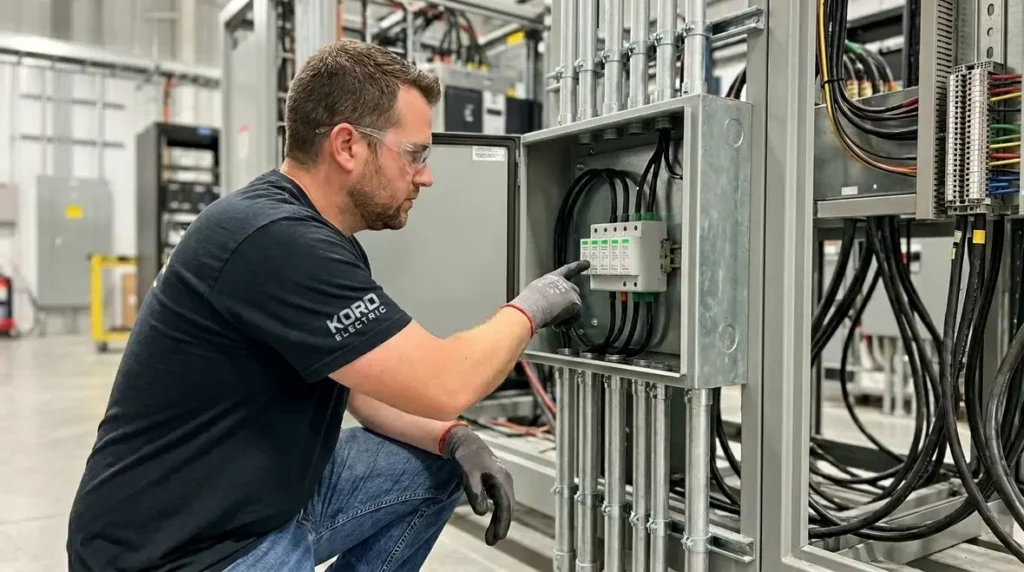
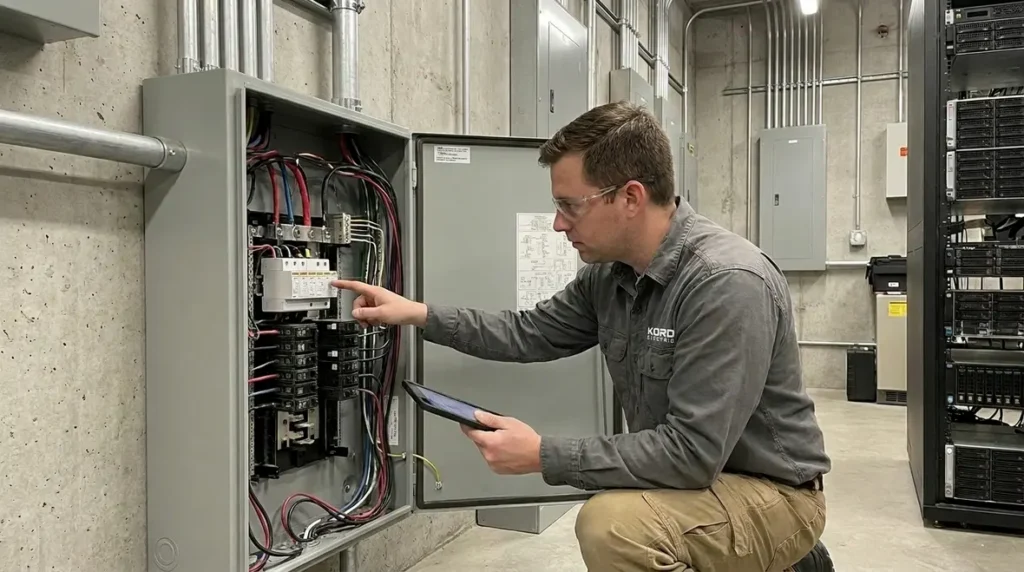
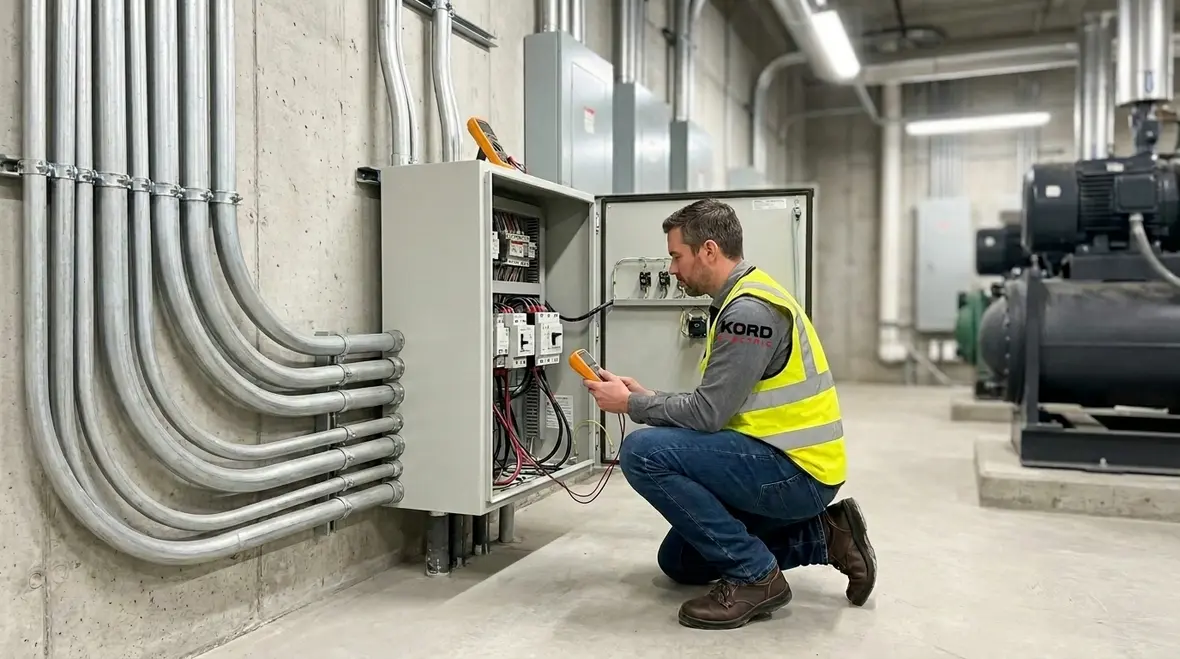
During site assessment, our expert service staff often checks for signs of weak protection and inconsistent grounding. They also review how surge energy could enter and where it could concentrate. If the building has multiple panels, transformers, or long feeder runs, the risk profile changes. Likewise, if the building hosts sensitive equipment or high starting loads, we pay extra attention.
In addition, we look at coordination. That means how different protective devices work together so surges get diverted without causing nuisance trips. A well coordinated system reduces the chance of outages during abnormal events. And frankly, no one wants their production line to stop because a surge protector “overreacted.” That is not protection. That is drama.
Hidden electrical risks in commercial buildings we routinely uncover
In commercial facilities, some surge risk hides behind normal operations. As our team explains in our blog on hidden electrical risks, issues like improper connections, aging components, and gaps in protection can leave equipment vulnerable long before anyone notices a failure. Therefore, the building can look fine while the electrical system quietly drifts into riskier territory.
For instance, loose terminations and damaged insulation increase resistance and create hot spots. Those hot spots can worsen with each surge event, which means more heat, more stress, and more failures. Additionally, poor bonding and grounding practices can allow surge energy to find unintended paths. When that happens, equipment may receive higher transient voltage than expected.
We also see that some sites lack proper documentation. When maintenance histories are unclear, it becomes harder to plan upgrades. Then the facility runs on assumptions instead of evidence. Our technicians close that gap by identifying conditions, explaining the likely effects, and recommending improvements that support reliability for commercial and industrial facilities and major property buildings.
How commercial electrical surge protection reduces costly downtime
Our approach to Commercial electrical surge protection aims at one outcome: keep critical systems operating when surges show up. Surge protectors provide a path for transient energy, limiting the voltage spike that reaches sensitive equipment. However, the effectiveness depends on placement, system coordination, and integration with the rest of the electrical system.
When we install protection properly, we reduce the chance of control board failure, network instability, and premature motor drive issues. This means fewer unexpected service interruptions and fewer “wait for parts” delays. Also, it helps your building support consistent performance across seasons and operating cycles. Many facilities run more equipment during peak demand months, and that is when electrical stress often feels worst.
Additionally, surge protection supports planned maintenance strategies. When equipment fails less often, your team can schedule service based on real needs instead of emergency calls. In business terms, that stabilizes budgets and improves operational planning. In human terms, it means fewer sleepless nights. And yes, even executives deserve sleep.
Best practices to pair protection with solid electrical management
Surge protection works best when the rest of the electrical system stays healthy. Therefore, we pair upgrades with practical electrical management steps for commercial and industrial facilities and major property buildings. That includes checking terminations, verifying grounding and bonding, reviewing protective device settings, and ensuring the system stays coordinated.
We also help facilities plan for ongoing inspections. A building is not static. New tenants add loads. Equipment changes. Panels get expanded. Meanwhile, the electrical environment evolves. So we recommend periodic reviews so protection stays matched to current equipment demands.
Furthermore, we emphasize load awareness. If a building runs large motors or frequent switching, transient behavior can become more frequent. In those cases, our technicians may recommend additional measures and design adjustments to reduce risk at the source. Then the facility benefits from a layered plan, not a single point of defense.
Finally, we explain what to expect after an installation. Surge protection can include indicators and monitoring options. When appropriate, we help staff understand what those signals mean and when to plan service. That way, the system stays protected, and others do not guess like it is a mystery novel.
Planning across multiple sites and major properties
Many organizations operate more than one building across a campus or portfolio of properties. In those cases, Commercial electrical surge protection works best when it is planned as a coordinated strategy rather than a one-off project at a single panel. Our team routinely helps facility leaders prioritize the riskiest locations first—such as main service equipment, critical data rooms, and elevator or life safety systems—and then phases work across additional panels and buildings.
That portfolio-level view pairs well with broader compliance and power quality planning. Resources such as Kord Electric’s articles on commercial electrical compliance and hidden risks help teams justify upgrades, budget for multi-year improvements, and align surge protection with preventive maintenance so each visit to a panel moves the whole facility in a safer direction.
FAQ about surge protection for commercial and industrial buildings
Final word from Kord Electric: protect uptime before you need it
Surges do not announce themselves. They strike fast, stress quietly, and then your equipment pays the price later. With Kord Electric, our expert service staff evaluates your panels, grounding, and electrical paths, then we install commercial electrical surge protection designed for your building’s real loads. Do not wait for the next random reset or burnt control board. Contact us for a commercial-focused assessment, and we will help you build a calmer, more reliable power system.
For facility teams responsible for multiple buildings or critical environments across Los Angeles County and beyond, partnering with a commercial-focused contractor matters. Kord Electric’s dedicated Los Angeles County electrical services support covers everything from everyday service calls to complex power quality and surge protection projects, so your uptime strategy extends from the service entrance all the way to the last control cabinet.
If you are already thinking about other power quality issues—such as hidden wiring risks, code compliance, or voltage swings—consider combining your surge protection project with a broader review of your commercial distribution system. That way, when the next storm front, utility switching event, or equipment change arrives, your building is prepared instead of surprised, and your uptime feels like a choice instead of a lucky break.