Industrial Lighting Efficiency Strategies Guide
At Kord Electric, we help commercial and industrial facilities maximize energy efficiency in large scale industrial lighting systems by tightening the link between design, controls, and maintenance. We focus on smart upgrades that cut waste, improve light quality, and keep operations steady, even when the building runs like a machine that never sleeps. In our approach, energy savings do not come from guesswork. Instead, we build Industrial lighting efficiency strategies into real work orders, measurable field checks, and disciplined routines. And yes, our technicians explain things in plain language, because nobody should need a PhD just to understand why a fixture is acting up. If your lights feel like they are aging faster than your equipment, that is usually a signal we can fix.
Industrial lighting efficiency strategies begin with the right light plan
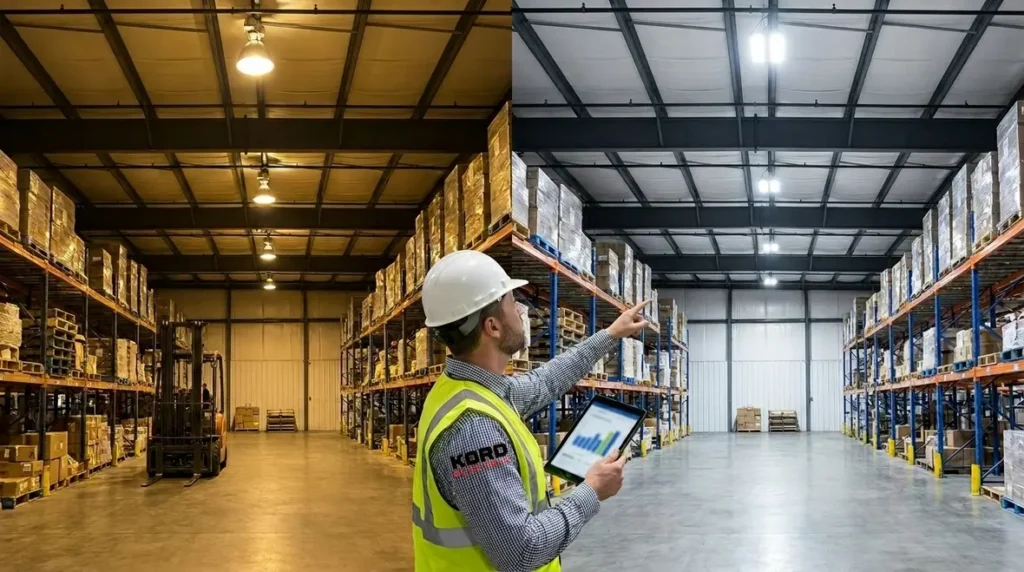
When teams chase savings, they often start with bulbs. We start with the layout. Large scale sites include warehouses, production floors, parking decks, loading bays, and offices stacked over each other. Each zone needs a different mix of brightness, glare control, and uniformity. Therefore, we verify the actual tasks in each area before recommending any change.
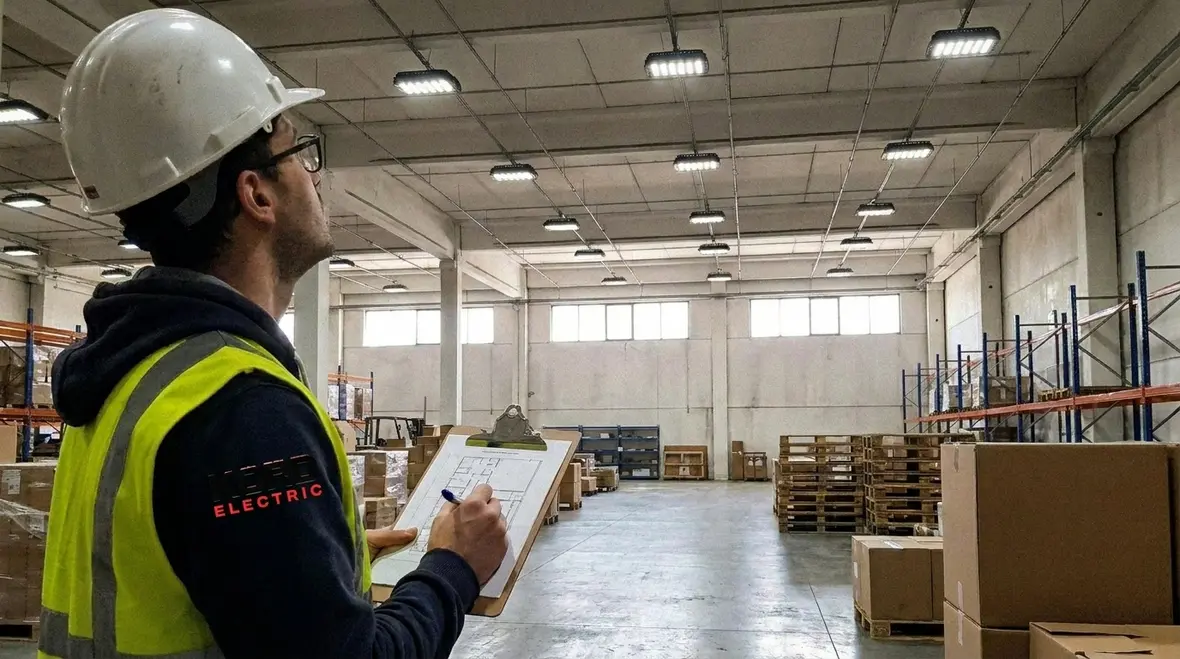
In practice, we map usage patterns by hour, season, and occupancy. Then we align lighting levels to what the workforce really does. For example, a shipping line that runs at full output at 6 AM does not need the same output at 10 PM. Likewise, a corridor used mainly for foot traffic should not be lit like a stage show. If your lighting plan treats every space like it is the main event, you will pay for it, slowly, like a long subscription you forgot you bought.
Next, we check fixture spacing and reflectance. Even a high quality LED can waste energy if it is aimed poorly or installed with outdated assumptions. As a result, we ensure the system delivers what it promises.
This is also where smart Industrial lighting efficiency strategies connect with broader planning. For many facilities, it makes sense to coordinate lighting layout evaluations with a structured electrical preventive maintenance program, so panels, feeders, and controls all support the new design. Kord Electric walks facilities through that process step by step, aligning lighting goals with the preventive roadmap outlined in our electrical preventive maintenance services.
How we cut wasted electricity with smart controls
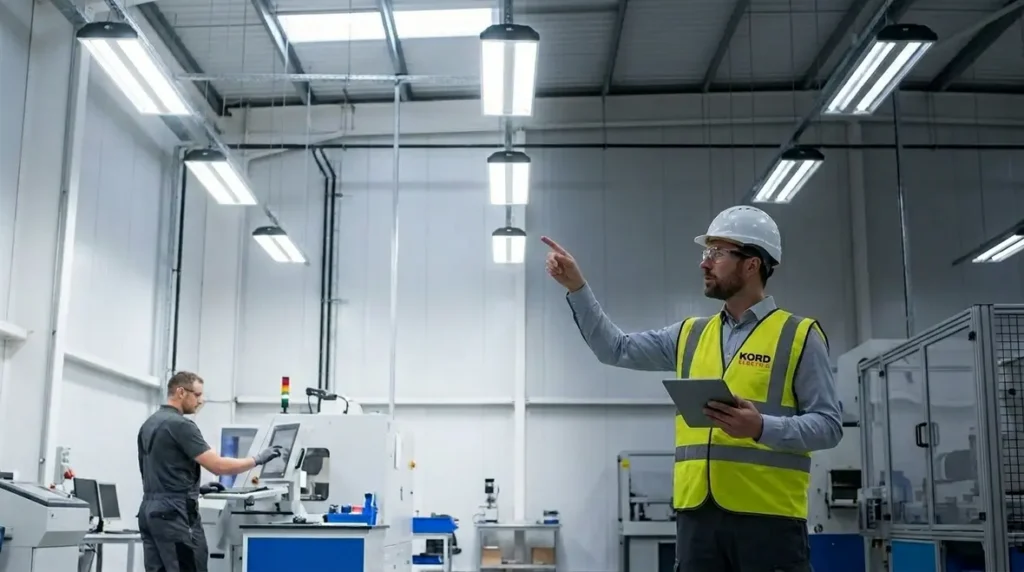
After the light plan, controls usually deliver the biggest quick wins. We install and verify occupancy sensing, daylight harvesting, and scheduling logic. This means lights dim when the space is empty and brighten only when the job requires it. However, not every control system behaves the same in every building. So our technicians test how the sensors react to real movement, not just the theory in a brochure.
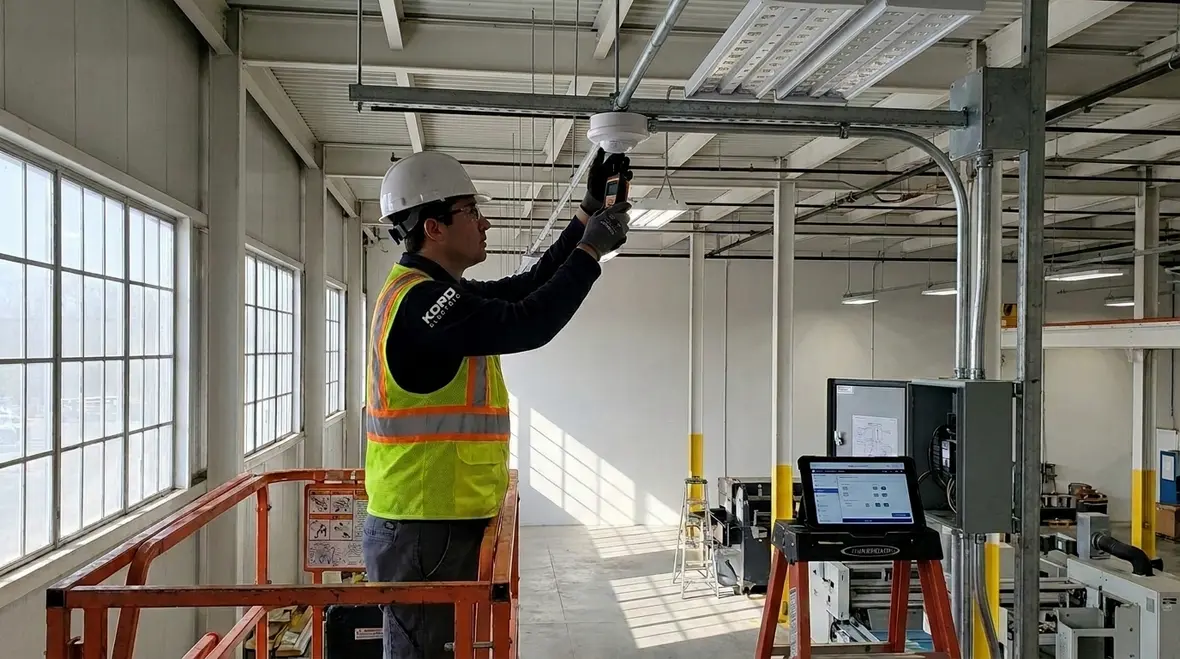
We also pay attention to control zoning. If controls group too many areas together, the system stays bright longer than it should. On the other hand, overly tight zoning can create frequent switching, which can irritate occupants and stress drivers. Therefore, we balance comfort, savings, and equipment health.
Many facilities also run at different modes. A plant may shift from two shifts to three, or a property may add holiday operating hours. We set schedules that match those realities, then we verify the system still follows the plan after updates. Because building management systems do not always behave like we want, we confirm performance in the field.
For buildings that want controls to do more than just turn things on and off, Industrial lighting efficiency strategies often include automated scheduling tied to production needs, demand response programs, or code requirements. That is where dedicated services like Kord Electric’s automated control upgrades and automated lighting control benefits come into play, helping facilities let the system do the thinking while managers focus on operations.
Why fixture maintenance protects performance and savings
Energy efficiency is not a one time event. Over time, dirt, dust, and minor damage reduce output. Lens fogging, clogged vents, and failed optics can cut light levels and force building staff to compensate by turning systems up. Then the facility ends up using more power than it intended. That is the part people miss. They celebrate the LED upgrade, then forget the system needs care.
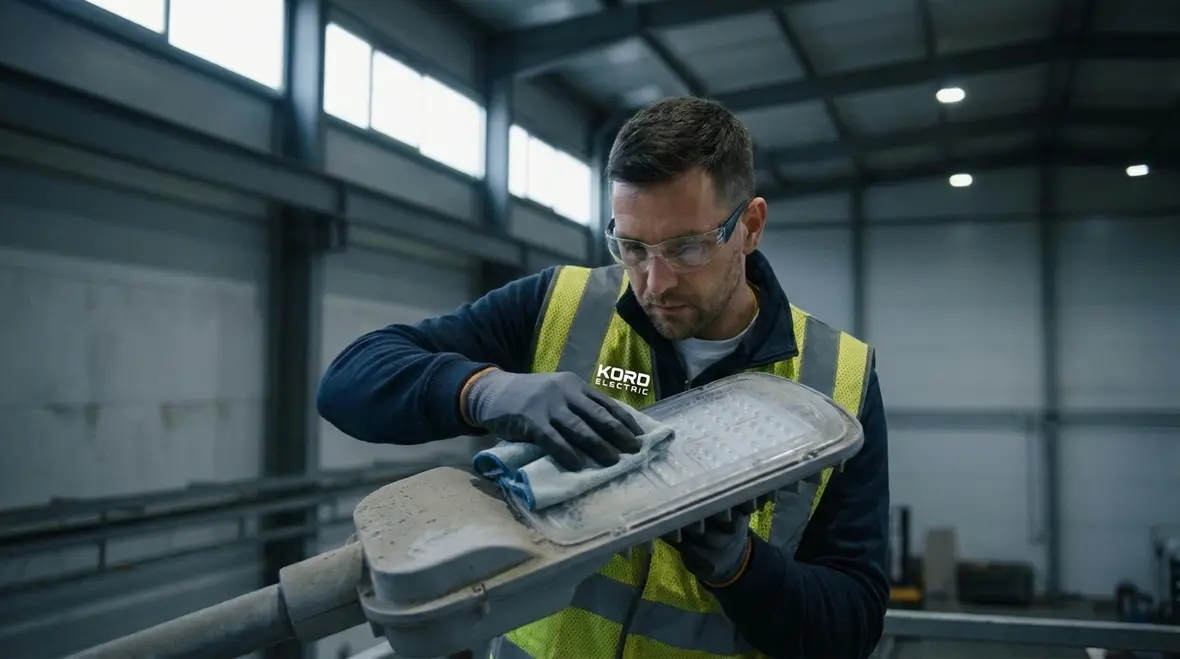
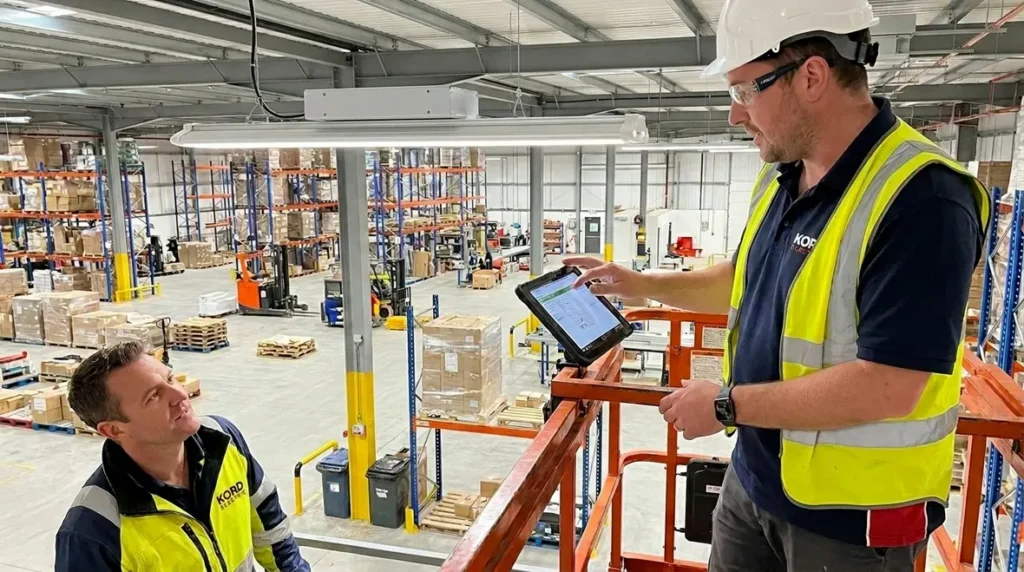
This is exactly why Kord Electric emphasizes preventive maintenance for electrical and lighting performance. Our teams follow routines that reduce surprises and keep the lighting output stable across the year. During service visits, technicians inspect drivers, verify connections, and evaluate component condition. They also check for thermal issues, because heat quietly steals efficiency. When we catch problems early, we avoid the costly moment when half the area goes dark during peak production.
In our preventive maintenance work, we focus on what actually affects energy use and reliability. You can review the general approach in our preventive maintenance guide at https://kordelectric.com/electrical-preventive-maintenance/. In plain terms, we help facilities stay ahead of wear, so the lighting system keeps performing at the efficiency level you paid for.
And if anyone tells you maintenance is optional, we politely remind them that time does not stop just because a fixture is still hanging on the ceiling. Time always collects.
For properties spread across multiple sites or major portfolios, Industrial lighting efficiency strategies often connect to broader commercial and industrial electrical maintenance plans. Bundling lighting checks with panel inspections, infrared scans, and code compliance reviews gives organizations a single, disciplined framework instead of scattered repair tickets.
Optimize LED drivers, wiring, and power quality
Once the fixtures are in the right places and controls work, the next savings come from electrical integrity. Large scale lighting systems depend on stable power. If voltage dips, harmonics, or loose connections appear, drivers run less efficiently. Light output can drop, and failures show up sooner. Meanwhile, the facility pays for energy that does not translate into usable light.
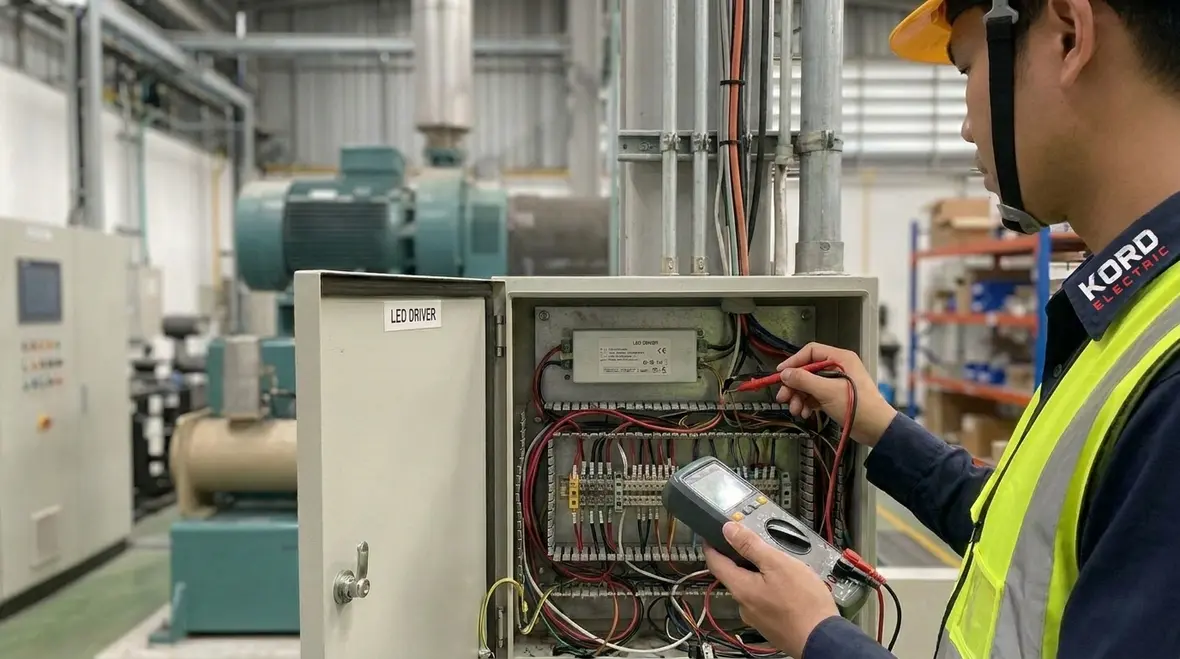
Therefore, our technicians verify wiring conditions and check for issues that affect voltage stability. We also check for components that drift out of spec, like worn terminals or damaged housings. In environments with vibration, moisture, or frequent forklift traffic, these concerns show up faster.
Power quality also matters. If the site experiences irregular load patterns, the lighting system can suffer even if the fixtures themselves are modern. We address the electrical side so the lighting stays efficient and consistent. This is not glamour work, but it is the kind of work that keeps lights dependable. And dependable lights mean fewer disruptions, fewer emergency calls, and fewer angry supervisors asking why the area looks dim.
Some facilities pair these checks with targeted inspection programs that look for hidden electrical risks before they affect Industrial lighting efficiency strategies. That might include thermal imaging, power quality analysis, or panel labeling improvements that make it faster to isolate problem circuits without shutting down the entire floor.
Retrofit vs replacement: a practical decision framework
Industrial sites often face a tough question: do we retrofit existing fixtures or replace them fully? We treat this as a facility specific decision, not a generic rule. Retrofitting can work well when housings are in good shape and drivers and optics can be upgraded. Replacement makes sense when fixtures are near end of life, when optics are failing, or when the installation does not match the new lighting requirements.
We evaluate the current system in terms of optics, mounting condition, controls compatibility, and expected maintenance needs. Then we compare energy use, output, and lifecycle cost. For commercial and industrial facilities, downtime also matters. So we plan work to minimize operational interruption.
In other words, we do not just ask what is cheapest today. We ask what keeps the site running smoothly tomorrow.
When retrofit or replacement decisions affect code compliance, we also look at how the system fits into requirements like Title 24 and local inspection standards. Done correctly, Industrial lighting efficiency strategies can improve both the energy profile and the compliance story, so future projects and inspections start from a stronger baseline instead of a patchwork of one time fixes.
Measure results: track light levels, power use, and reliability
If you do not measure, you guess. And guessing is how companies end up with “savings” that vanish after the first few months. Our approach includes field checks to confirm that energy use drops and light levels remain within target ranges.
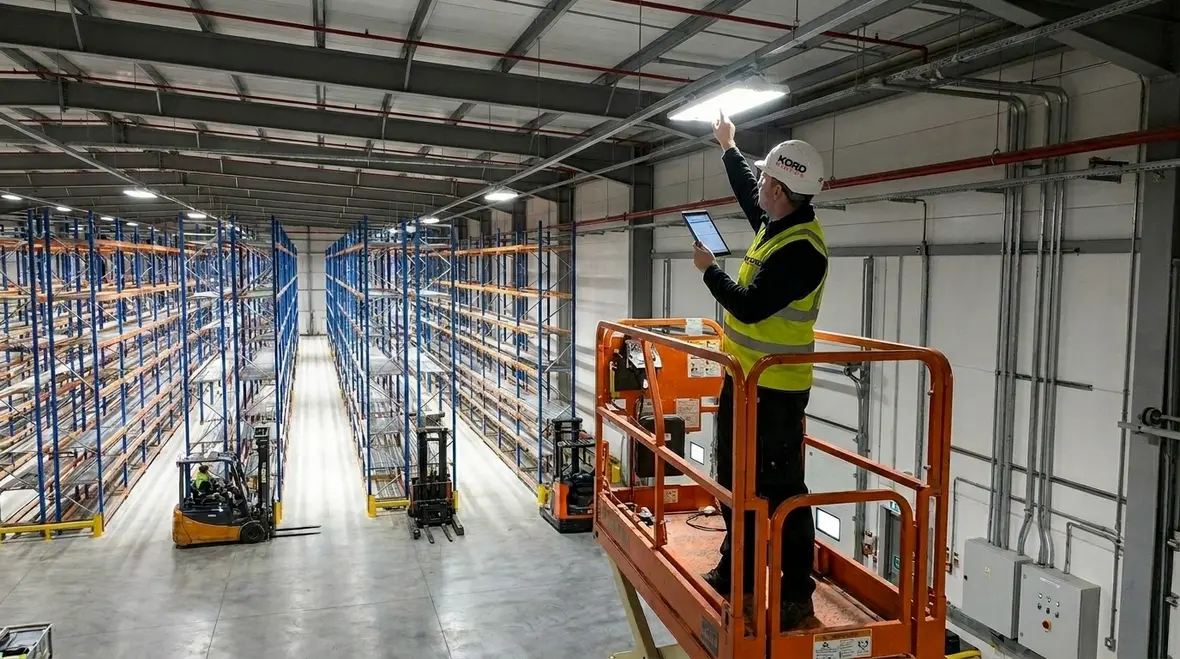
We verify output consistency after changes, then we monitor how the system behaves under real operating schedules. When daylight harvesting exists, we test it across different sun angles and times of day. When occupancy sensors run, we evaluate response time and false on events. This helps prevent comfort complaints that can quietly push facilities to override controls.
We also track reliability signals during service. If we see recurring driver failures in certain zones, we adjust the plan. Maybe the environment runs hotter, maybe airflow is blocked, or perhaps the mounting position reduces cooling. By handling these details, we protect long term efficiency.
One more thing. We communicate outcomes to stakeholders in a way they can act on. Our technicians explain the “why” behind each observation, so leadership can make decisions with confidence, not with mystery.
For organizations looking beyond a single project, Kord Electric can also connect measurement routines with broader commercial and industrial electrical maintenance plans, so Industrial lighting efficiency strategies sit inside a larger reliability framework that includes panels, feeders, emergency backup systems, and code driven inspections.
Where industrial lighting fits into your larger service plan
Industrial lighting rarely lives on an island. In real facilities, it shares space with production equipment, office loads, exterior lighting, and life safety systems. That is why the best Industrial lighting efficiency strategies link back to a well built electrical service plan that covers both routine needs and “things just broke” moments.
Many property teams fold lighting work into ongoing service agreements that include electrical preventive maintenance, troubleshooting support, and targeted upgrades. Others coordinate lighting projects with panel labeling improvements, emergency testing, or compliance driven work like California Title 24 lighting checks. No matter how the roadmap is built, the goal stays the same: fewer surprises, smoother inspections, and a quieter facilities inbox.
If your organization manages multiple warehouses, plants, or major office properties, Kord Electric can help align lighting upgrades with portfolio level objectives instead of treating each site as a separate island. That way, energy savings, inspection readiness, and reliability all move in the same direction, guided by the same Industrial lighting efficiency strategies instead of scattered projects.
For operations in and around the region, our dedicated Los Angeles County electrical services support large commercial and industrial properties that need coordinated lighting, power, and maintenance work handled by one experienced team.
FAQ
Final call from Kord Electric
Energy efficiency in large scale industrial lighting does not happen by accident. We build it through smart zoning, proven controls, and preventive maintenance that keeps output steady. Our technicians explain findings clearly, so your team understands what to fix and why, without the boring guesswork. If you operate a warehouse, plant, or major commercial property, reach out to Kord Electric. Let us audit your current lighting system and map the next steps toward measurable savings and dependable performance.
When you are ready to turn Industrial lighting efficiency strategies into real projects, our commercial and industrial lighting installation services team can handle everything from new layouts and control upgrades to integration with ongoing maintenance plans, so each step fits the bigger picture of how your facility operates.
Whether you are planning a fresh installation, a retrofit project, or a portfolio level efficiency push, Kord Electric can help align lighting, power, and preventive maintenance into one coherent plan that supports your operations shift after shift.