Electrical Preventive Maintenance Checklist Guide
In commercial and industrial life, calm power is not an accident. It is the result of disciplined inspection, targeted testing, and an Electrical preventive maintenance checklist that actually gets used, not filed away. At Kord Electric, our technicians treat preventive maintenance as the quiet engine behind uptime, safety, and long term system health. This guide walks through how a strong Electrical preventive maintenance checklist keeps commercial power steady, why documentation matters, and how to turn yearly inspections into a genuine risk reduction program instead of a box-checking exercise.
As you work through the steps, you will see the same pattern we see in the field: early attention costs less than late repairs. Panels, switchgear, feeders, and control power all tell a story in heat marks, connection quality, and test results. When facilities teams listen to that story once a year, they can plan repairs calmly. When they ignore it, the plot twist usually arrives at 2 a.m. on a holiday weekend. Think of this checklist as your way to stay three chapters ahead.
Why a strong Electrical preventive maintenance checklist keeps commercial power calm
At Kord Electric, we rely on a practical Electrical preventive maintenance checklist to guide our year round work in commercial and industrial facilities and major property buildings. Our technicians use that checklist to spot early trouble, verify safety, and reduce unplanned shutdowns. In the first pass, we look at the big risk items, then we dig deeper where problems hide, like loose terminations and worn components. Think of it like an annual checkup for the building’s electrical system, except the doctor carries a meter and does not ask if you are “still feeling tired.”
Below, our team explains the essential annual preventive steps for commercial electrical systems, based on field experience and on our own technical guidance for panel and switchgear maintenance. If you already follow structured programs like the ones we outline in our commercial and industrial electrical maintenance plans, this checklist will feel familiar. The goal is the same: protect people, protect property, and keep power predictable.
Start with a disciplined site review and safety plan
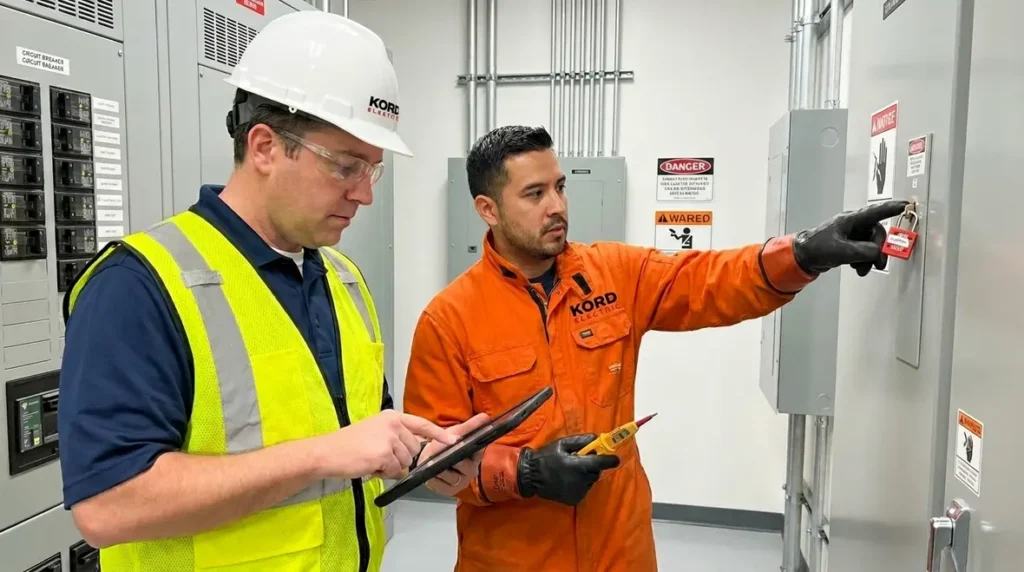
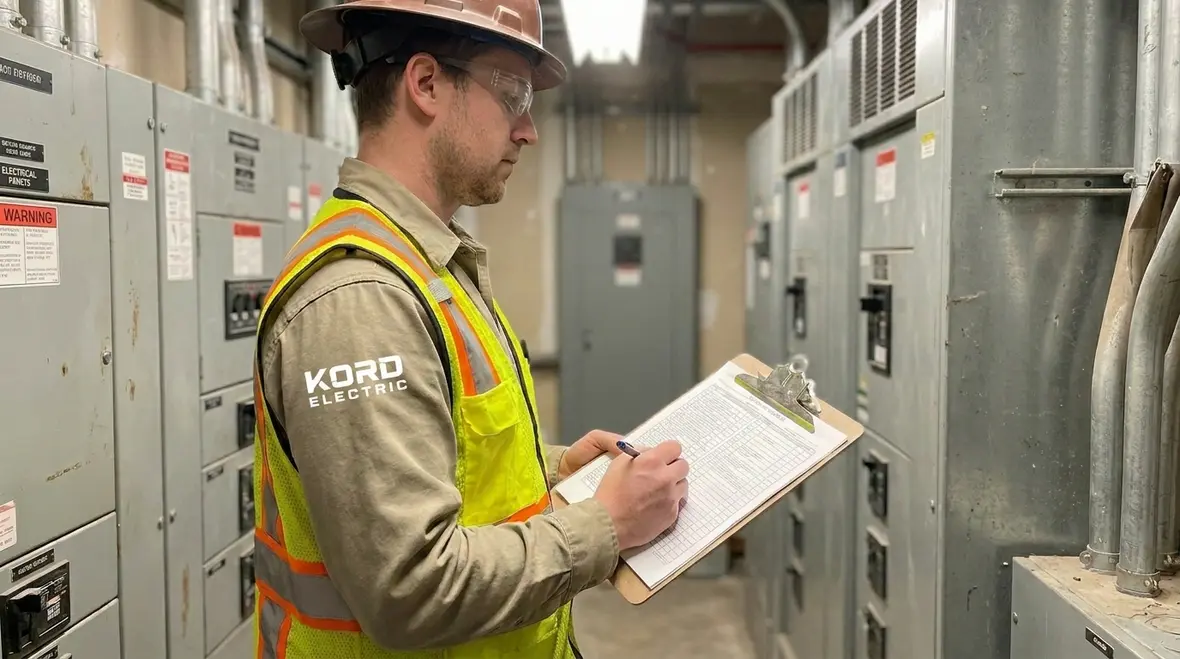
Before anyone touches a panel, we build a clear work plan. Kord Electric technicians begin with a walk through the electrical rooms and the areas fed by those rooms. Then they confirm labels, access paths, and safe working conditions. After that, they align on lockout and test steps that fit the building’s risk level. In other words, we do not “wing it,” even if the service request arrives with that famous line, “it just trips sometimes.”
During the review, we verify the system map, including feeder paths, branch circuits where they matter, and the relationship between main gear, distribution gear, and critical loads. Next, we note any past issues such as nuisance trips, overheating claims, or prior repairs. Finally, we schedule work windows for areas that cannot lose power. This front loaded effort keeps maintenance from turning into guesswork once gear doors open.
We also document everything. That documentation becomes the baseline for next year, and it helps our experts explain what changed, why it changed, and how the risk level changed. When we meet facilities managers, we keep the conversation steady and direct, because the last thing anyone needs is electrical work that feels like a mystery novel. Instead, we outline clear scope, expected outages, and how the Electrical preventive maintenance checklist will move through the building step by step.
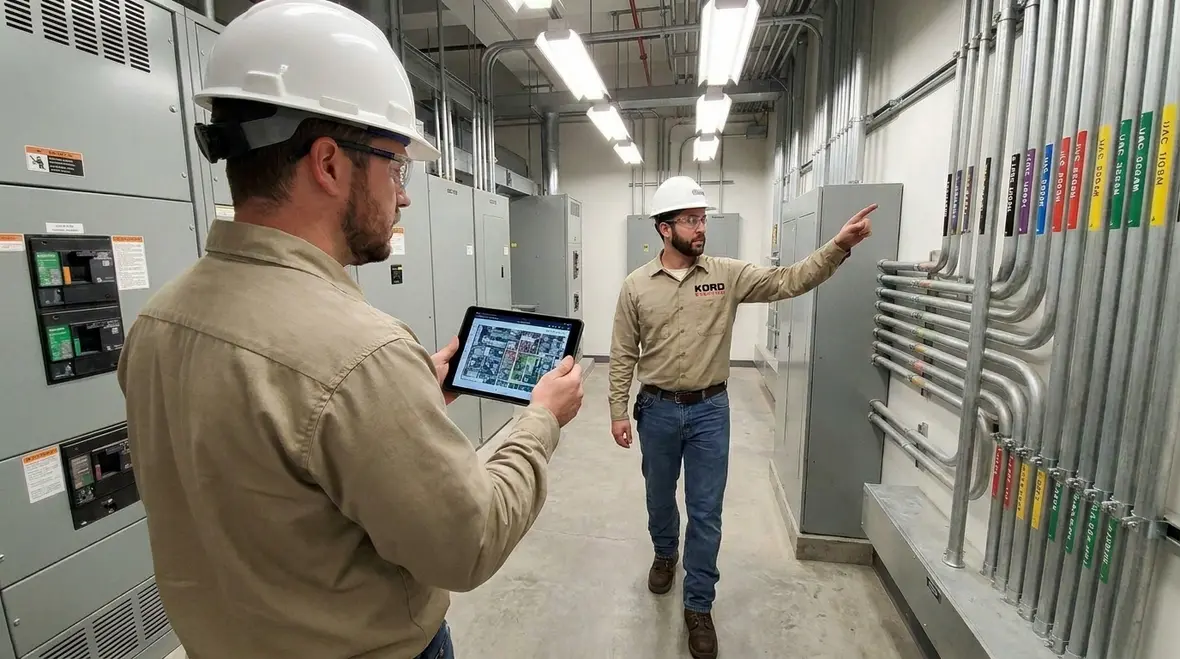
A strong site review also sets expectations around what the crew will and will not do during this maintenance window. For example, if someone asks for a quick remodel circuit while the switchgear is open, we can explain why that does not belong in the same risk profile. Disciplined scope control protects workers and keeps the inspection honest.
Checklist items for the initial site review
- Confirm one line diagrams and panel schedules match the field
- Verify access, working clearances, and egress paths
- Review lockout/tagout procedures for each piece of gear
- Collect history on nuisance trips, overheating, or unexplained shutdowns
- Coordinate outage windows and communication plans with building stakeholders
- Set up documentation templates so findings are captured consistently
Panelboards and switchgear: the annual maintenance steps that matter
Kord Electric follows the same core logic we outline in our NFPA 70B focused guidance for electrical panels and switchgear maintenance. That means we start with condition checks, then we move to mechanical and electrical verification. We do not stop at “it looks okay.” We test what the eye cannot confirm. For facility teams who want a deeper dive into those methods, our article on NFPA 70B electrical panels and switchgear maintenance walks through how those ideas play out in real buildings.
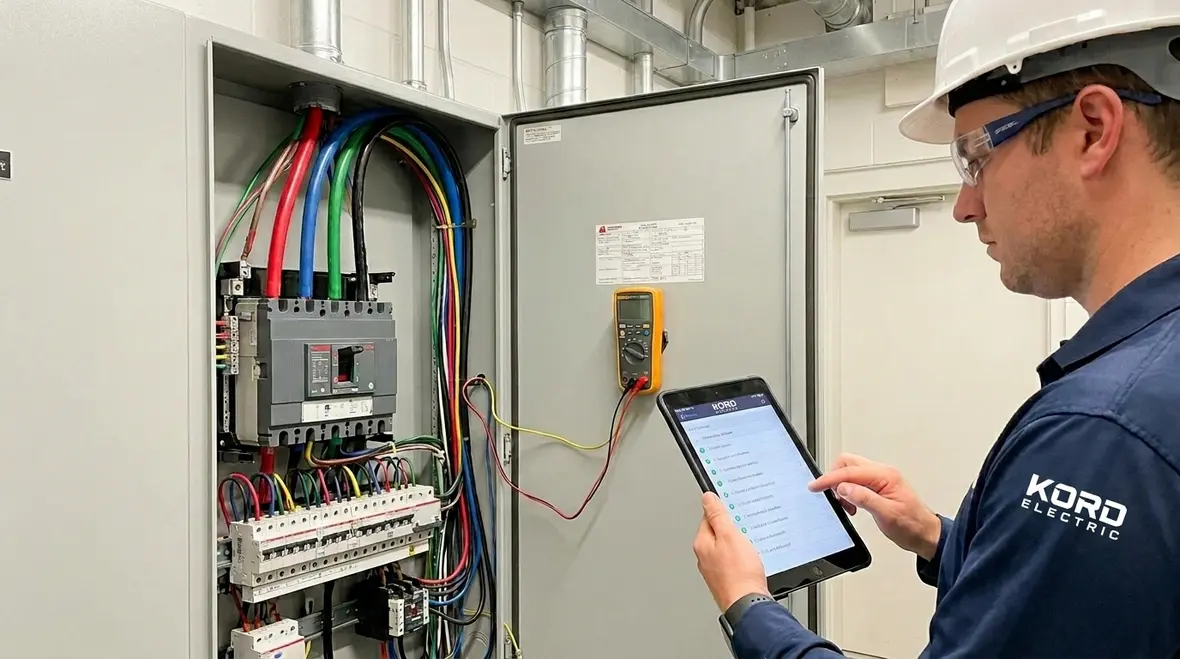
First, we inspect the interior of panelboards and switchgear using safe access procedures. Then we check for signs of heat, discoloration, moisture, or dust buildup. If we find residue or signs of water intrusion, we investigate the source instead of covering it up. A little rust stain on the bottom of a section often turns out to be the first warning of a roof leak that will not stay polite forever.
Next, we tighten or verify terminations as needed. Loose connections often create heat at the connection point, and heat travels like gossip, slowly at first and then all at once. After that, we inspect breakers, racking mechanisms, and switchgear interlocks. We also check for proper alignment and operation so equipment will behave correctly when someone needs to open or close a device under real load, not just during a quiet day.
Then we verify that labeling stays accurate. Proper labels help crews act fast during emergencies, and they reduce the chance that someone turns the wrong circuit back on. Finally, we check for proper ventilation and clearances. A panel that cannot breathe will eventually fail, and commercial buildings do not have time for that drama. When we find stored boxes, ladders, or cleaning supplies crowding clearances, we flag it and help the facility team reclaim the space.
Key checklist items for panels and switchgear
- Open and inspect panel interiors and switchgear compartments using safe procedures
- Look for discoloration, soot, corrosion, or foreign objects
- Verify breaker mounting, racking mechanisms, and interlocks
- Check torque or tightness of key terminations as appropriate
- Confirm labels, directories, and identification are legible and accurate
- Verify ventilation paths and required clearances are free of storage
Verify insulation and terminations with targeted tests
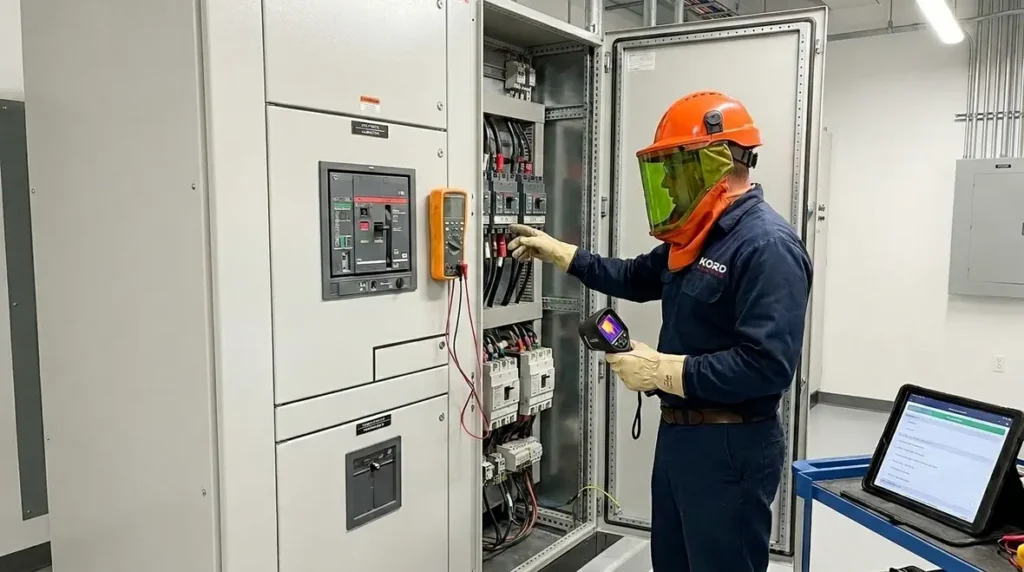
After our physical inspection, we shift to measurement. We choose tests based on the asset type and the symptoms reported. However, the goal stays the same: find problems before they lead to faults, nuisance downtime, or equipment stress. Condition-based testing turns the Electrical preventive maintenance checklist from a simple “look and see” into a measurable health check.
We commonly verify insulation condition with appropriate methods, and we look for abnormal readings that suggest moisture, aging, or contamination. We also inspect grounding and bonding paths, because a weak path can turn a protective system into a “sometimes” system. Then we examine torque on critical connections when safe and appropriate, especially at bus interfaces and feeder terminations where movement, vibration, and thermal cycling can loosen components over time.
To keep the process clear, our expert service staff explains what each test shows in plain language. For example, we describe whether a reading suggests degradation, a connection issue, or an environmental problem. And we follow up with practical actions instead of vague promises. When readings sit at a borderline level, we talk about options: monitor more often, repair now, or schedule replacement during a planned outage window.
Here is the thing about electrical systems. They rarely fail in a neat timeline. Instead, they trend, and tests help us catch the trend early. Facilities that pair this checklist with structured programs like data center specific routines or broader data center electrical maintenance checklists see fewer surprises because they track those trends instead of waiting for one bad day.
Testing elements to include in your checklist
- Appropriate insulation resistance testing on selected feeders or equipment
- Spot checks on grounding and bonding continuity
- Verification of torque on high risk terminations when conditions allow
- Recording and trending abnormal readings for follow up
- Clear explanation of test results and recommended actions
Thermal checks, load balance, and busbar health
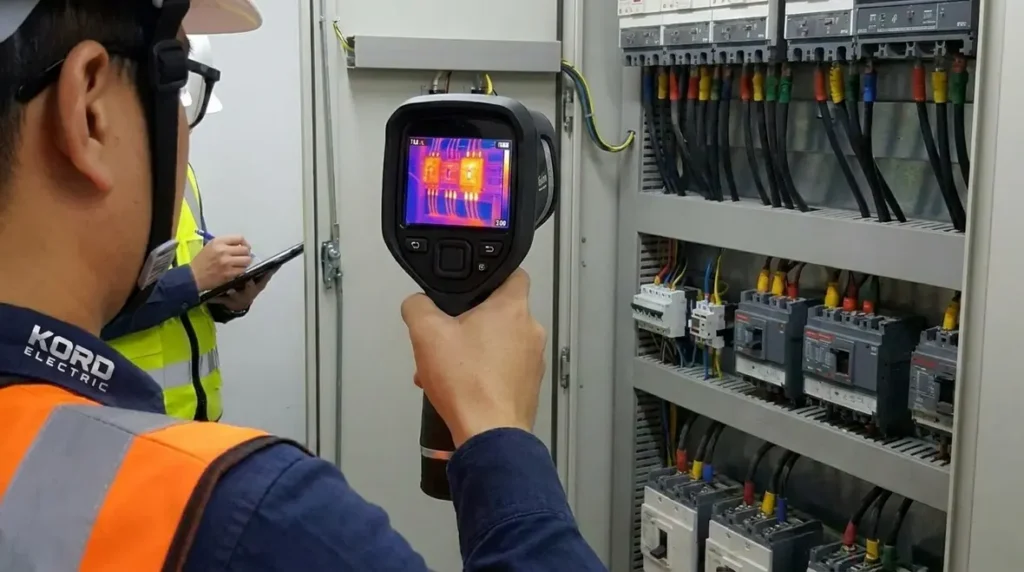
In commercial and industrial facilities, electrical loads change. So we treat annual preventive maintenance like a moving picture, not a snapshot. During our site work, we use thermal inspection where appropriate to locate hot spots. We then correlate those hot spots with load patterns and equipment details, not just mark them and move on.
After thermal review, we check for load imbalance. When phases carry uneven loads, equipment may run hotter than expected, and breakers can age faster. Then we review whether neutral currents look normal for the building’s power profile. We also consider harmonic sources where they exist, like certain drives or large electronic loads. We do not assume. We confirm. The Electrical preventive maintenance checklist forces that discipline, so nobody waves off a hot breaker as “probably fine.”
For busbar systems and major distribution components, we look for heat damage, corrosion, and signs that past repairs did not fully restore condition. If something reads high or looks abnormal, we dig deeper with a targeted plan. Our technicians do not just take a picture. They trace the root cause, whether that means checking for overloading, poor termination, or environmental damage such as moisture and airborne contaminants.
And yes, occasionally we find the kind of issue that feels like a pop quiz nobody studied for. A loose connection here, a missing cover there, and suddenly the building is running on hope. Our job is to replace hope with data, then convert that data into repairs that keep the next year calm instead of chaotic.
Thermal and load balance checklist items
- Perform thermal scans on selected panels, switchgear, and busways during load
- Document hot spots and correlate with nameplate ratings and current
- Check phase loading for balance and review neutral currents
- Investigate harmonic sources where appropriate
- Create follow up actions for any abnormal temperature rise
Control power, emergency systems, and life safety readiness
Many commercial properties rely on more than one electrical system. Therefore, our annual preventive maintenance focuses on control power, emergency power paths, and life safety readiness where required by the facility’s design and risk profile. That includes coordination with fire protection teams and a clear understanding of where responsibilities hand off between systems.
We inspect control circuits, verify proper operation of relays and contactors, and confirm that control components remain clean and secure. Next, we verify that emergency transfer related functions perform as expected within the facility’s operating rules. If the building uses critical systems, we align our test steps with the operational plan so we avoid unnecessary interruptions. For sites with data centers, solar integration, or EV charging, we also confirm how those systems behave during transfer events.
We also review inspection results with owners and facility leadership. Our expert service staff explains the “why” behind each item and what the repair plan should look like. Then we recommend timing and priority, since not every repair must happen the same day, but many do need attention before next peak season.
This section matters because emergency readiness fails quietly until it does not. We would rather catch the quiet failures before the loud ones arrive. Many facilities pair this kind of checklist with dedicated programs and pages like our Los Angeles County electrical services support so they always know who to call when a small concern starts looking like a larger risk.
Emergency and control power checklist items
- Inspect control wiring terminations, cleanliness, and physical condition
- Exercise transfer switches and verify timing where appropriate
- Confirm control power sources are stable and properly protected
- Check interface points with life safety systems for proper status indication
- Review findings with facility leadership and set repair priorities
Document findings, prioritize repairs, and plan the next cycle
A checklist only works when it becomes a living record. Kord Electric organizes findings into clear categories and action steps. We separate immediate safety risks from items that need near term attention, and we also track longer term wear items for planned replacement cycles. Over time, those categories tell a story about where the building is steady and where it needs more investment.
Then we create a plan that makes business sense. We coordinate repair schedules to match building operations. We explain dependencies, like which repairs might require temporary equipment isolation. And we keep communication direct, not confusing. When a facilities manager asks, “What happens if we push this item six months?” we answer with clear risk language, not vague warnings.
Next year’s efficiency improves because the records exist. If we tightened a bus connection this year, we can check it again with context next year. If we found moisture indicators in one room, we can verify building improvements. Over time, our Electrical preventive maintenance checklist turns into a risk reduction tool, not a formality.
In that way, our service staff supports facilities with a steady rhythm instead of surprise emergencies. Facilities that combine this checklist with focused guidance—like NFPA 70B work on panels and switchgear, solar integration planning, or lighting code compliance reviews—build a layered defense against downtime that stretches from the main service all the way to the last fixture on the line.
Turning the checklist into a long term maintenance program
For many organizations, the next step is to formalize these practices into a structured program that covers frequency, asset criticality, and coordination with other projects. That approach lines up closely with the strategies we share in our broader maintenance resources and helps facilities move from reactive repairs to predictable, data informed planning.
FAQ about annual preventive maintenance for commercial electrical systems
Facility leaders often ask similar questions when they first build or refresh an Electrical preventive maintenance checklist. The answers below follow what we see in the field across commercial, industrial, and major property portfolios.
Final word from Kord Electric
If you manage a commercial or industrial facility, you deserve electrical service that runs on evidence, not guesswork. Our technicians use a proven Electrical preventive maintenance checklist to inspect panels, verify key components, and reduce the risk of unexpected downtime. Then we document findings and explain next steps in business friendly terms. Over time, that checklist becomes the quiet backbone of your electrical reliability story.
Whether you are planning your first structured program or refining a mature one, our team can help you connect annual maintenance with broader projects like solar integration, lighting upgrades, or capacity planning. When you are ready to turn “we hope it holds” into “we know where we stand,” Kord Electric is ready to help you build and follow a checklist that matches the real demands of your building.
If you would like support translating this Electrical preventive maintenance checklist into a site specific plan, our commercial and industrial services team can help align the work with your equipment, schedules, and risk profile so every inspection moves your facility closer to calm, predictable power.