Smart Lighting System Integration Benefits
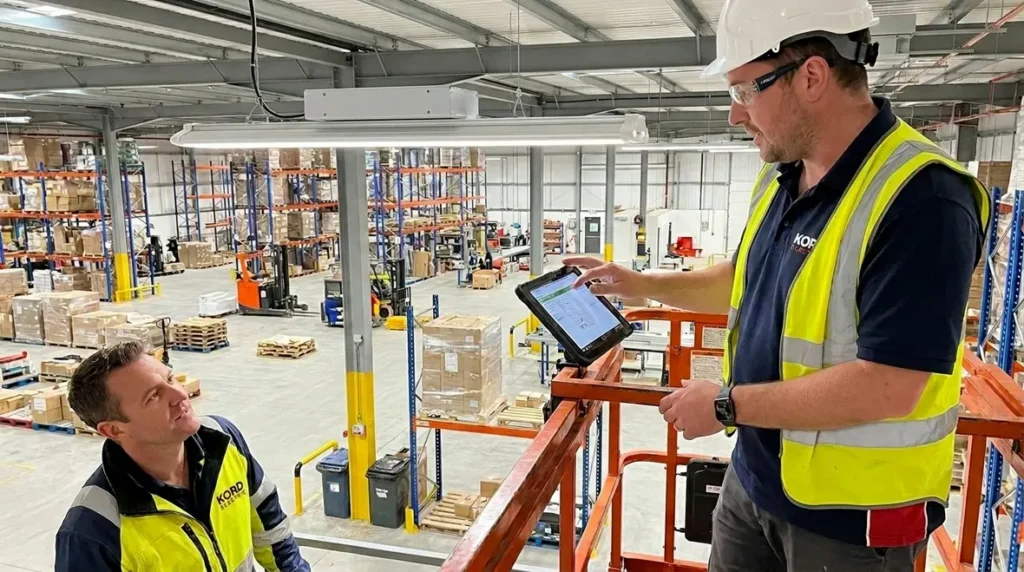
When a commercial or industrial facility wants better control of lighting, Kord Electric helps teams move from old layouts to a modern approach without tearing the building apart. In the best projects, Smart lighting system integration benefits show up fast: steadier performance, easier scheduling, and lighting that responds to real occupancy instead of timers that act like they still live in 2007. And because we work with major property buildings, we design around uptime, code needs, and the way maintenance teams actually operate. Then our expert service staff explains every step in plain language, so stakeholders feel informed instead of left to guess like it is a mystery box.
What does integrating smart controls mean for existing commercial lighting?
In simple terms, it means we connect advanced control elements to lighting systems that already exist. Therefore, we do not replace everything blindly. Instead, we map what is already in place, then we add the right layer of intelligence to it. This can include occupancy sensing, daylight response, zone scheduling, and centralized monitoring, all tuned to your spaces.
Many facilities already have wiring paths, panels, and lighting fixtures that work well. However, those fixtures often lack the ability to communicate. So our technicians evaluate the current architecture, then they choose an approach that respects the building. For example, they may integrate at the driver level where compatible, or they may add control devices where wiring and hardware make the most sense.
In addition, we plan for how people move through the building. Warehouses, office towers, and mixed use campuses do not behave the same way. So we use site data, floor plans, and staff feedback to build control zones that match reality. Think of it like giving the lighting a sense of direction, not just a stopwatch.
How Kord Electric upgrades control layers without disrupting operations
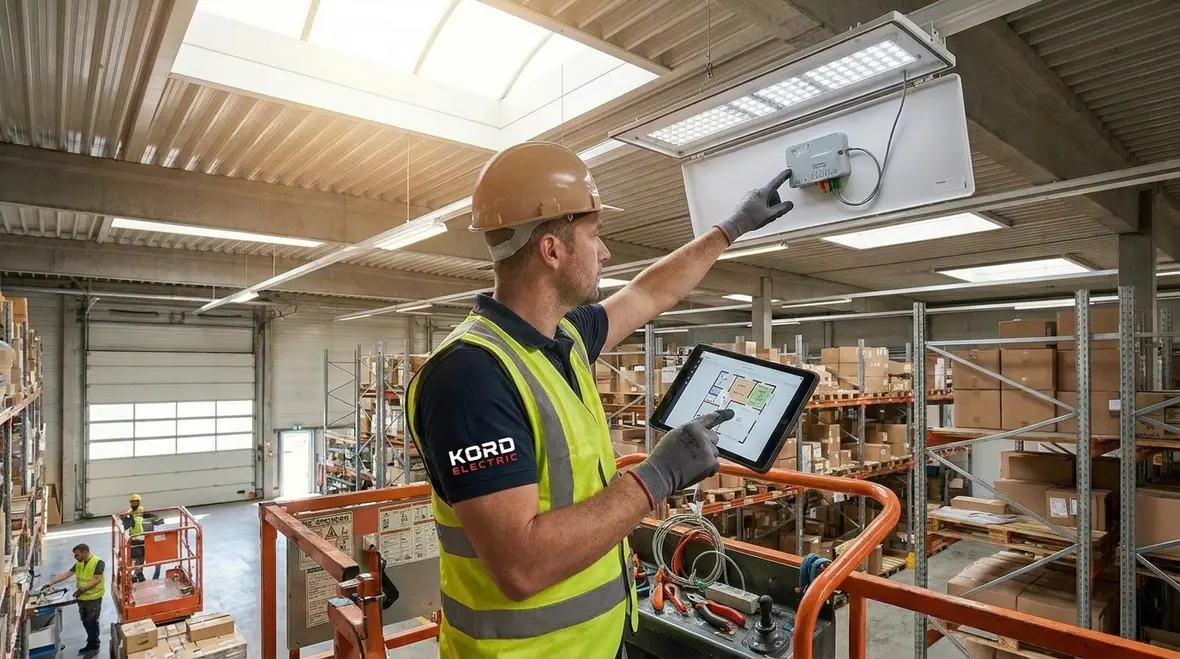
Commercial buildings run on schedules, not on our wishes. So we build upgrade plans that reduce downtime. Initially, we review the facility’s critical hours, tenant needs, and maintenance workflows. Then we schedule work in a way that keeps operations steady, especially in high traffic areas.
Our technicians also protect existing infrastructure. For instance, they verify panel capacity, check control wiring routes, and confirm that dimming compatibility aligns with what the luminaires can safely handle. That step matters because a “smart” system that causes flicker or premature component wear is not smart at all. It is just expensive drama.
Next, we install and commission in stages. Therefore, some zones can be tested while other areas continue normal use. When adjustments are needed, we make them immediately and document what changed. As a result, your teams receive clear records and a system that behaves predictably.
Designing zones that actually match how people use the space
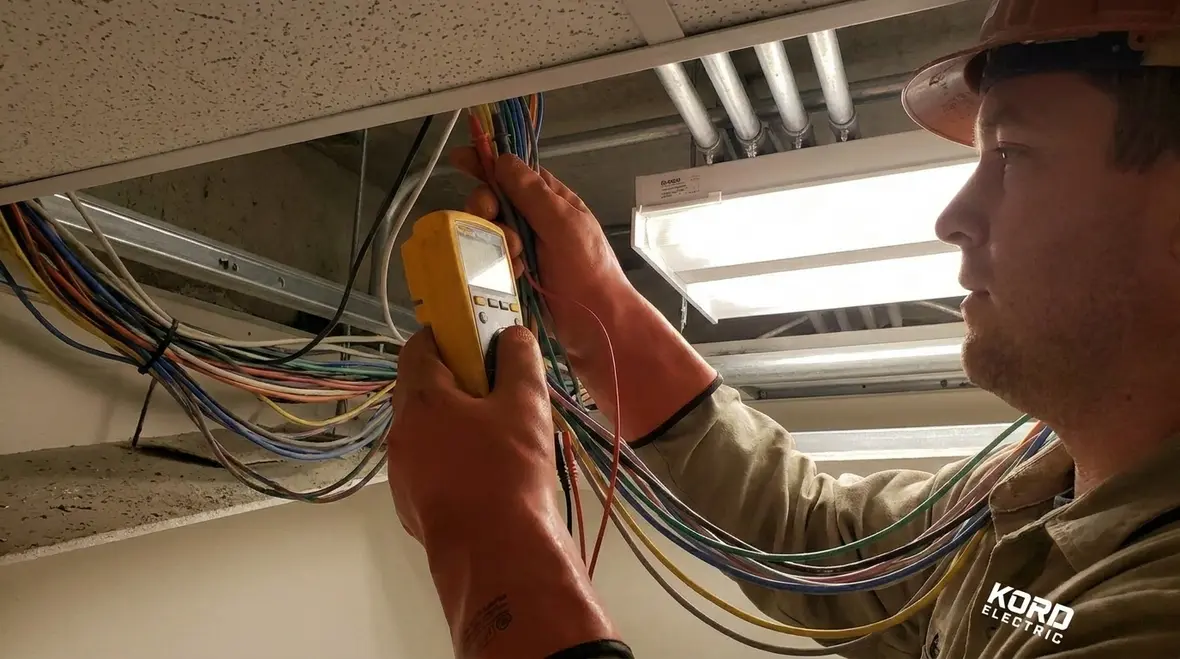
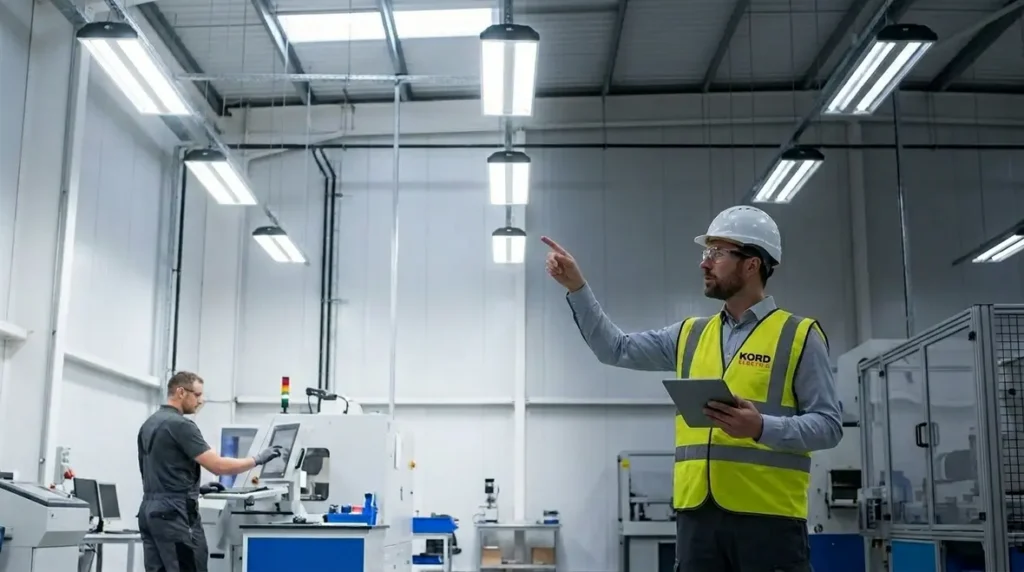
Smart control fails when zones do not make sense. So we design based on how lighting impacts comfort, safety, and productivity. For example, a manufacturing floor needs consistent task lighting, while a corridor benefits from gradual transitions and occupancy based control. Meanwhile, an office suite often needs daylight balancing near windows.
We also consider what building occupants expect. If lighting drops suddenly when a person walks away, you get complaints. Therefore, we program fade rates, hold times, and local overrides so the experience feels stable. Our expert service staff then explains these settings in a way facility managers can understand, so the system does not become a black box you have to reboot like a stubborn laptop.
Additionally, we align zones to real equipment and room boundaries. That means fewer surprises for future maintenance and easier troubleshooting. If a tenant changes their layout, the control approach can be updated with less disruption.
Communication and power considerations for Smart lighting system integration benefits

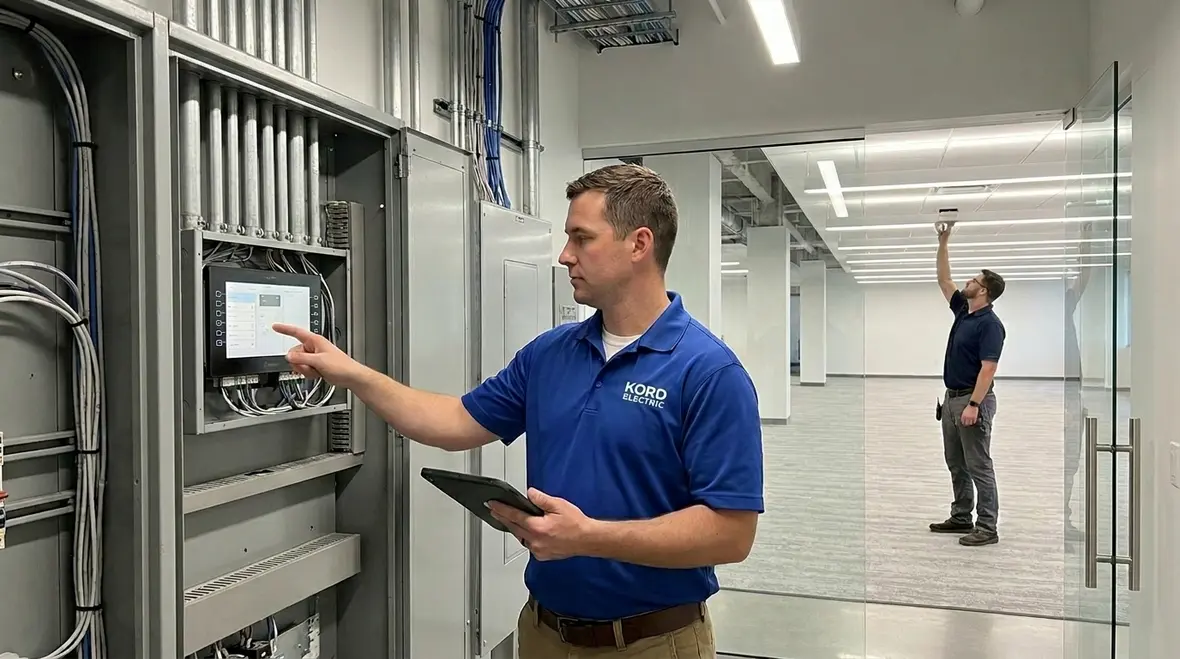
To deliver reliable control, we pay attention to both power and communication. First, we ensure the control signals work with the existing drivers, ballasts, or retrofit modules. Then we confirm that the network layer can handle the environment, including long runs, metallic ceilings, and areas with heavy interference.
In many commercial and industrial facilities, the electrical architecture is layered and mature. So we treat integration like a careful medical procedure. We avoid risky guesses and instead verify compatibility by checking equipment details and conducting targeted tests.
Next, we plan how controls talk to each other and how the building controls communicate upward to management. Therefore, we design pathways for sensor data, control commands, and status feedback. This helps operators understand what is happening and why. Moreover, when a sensor fails, the system can identify the issue quickly rather than leaving the building in a “lights on forever” situation.
Finally, we ensure the system supports safe operation. That includes proper wiring practices, correct labeling, and protection strategies. We also document everything so your maintenance team can service the system without guesswork.
Commissioning, training, and long term maintenance for major property buildings
After installation, commissioning turns a project into a working system. We test each control zone for expected behavior: occupancy detection, dimming response, scheduling, and emergency and life safety considerations where applicable. Then we verify that schedules align with building usage and that manual overrides do not fight the automation.
However, commissioning is not complete if staff cannot operate the controls. Therefore, our technicians provide training that is practical. We show facility teams how to review device status, adjust schedules, and address common issues. Our expert service staff also explains the logic behind the settings so changes feel confident, not random.
For long term success, we also plan for maintenance. Sensors need cleaning, network points need verification, and firmware updates often help systems behave better. So we build a maintenance rhythm that fits your facility, especially when multiple tenants and operations share the same building.
Think of it this way: smart lighting without training is like getting a fancy remote control and never learning which button does what. It looks good on the wall, but it does not help much.
Real world results facilities notice after integration
When Smart lighting system integration benefits take hold, stakeholders usually notice three things: consistent comfort, cleaner control, and measurable operational value. Comfort improves because lighting responds to occupancy and daylight rather than relying on one size fits all settings. Control becomes easier because zones behave predictably, and operators can see what the system is doing.
Operational value shows up when maintenance teams spend less time troubleshooting and less time replacing components due to poor compatibility. In addition, fewer manual overrides can mean fewer “why are these lights stuck on” calls. We cannot promise every building will stop making jokes at 2 a.m., but we can reduce the chaos.
Because we serve commercial and industrial facilities and major property buildings, we also account for how changes happen. Future retrofits, tenant updates, and occupancy shifts are normal. Our integration approach supports adjustments with minimal disruption.
And yes, in the same way a well tuned playlist keeps a workday moving, a well tuned lighting control system keeps a facility running calmly.
How smart lighting integration connects with broader facility strategies
Smart lighting does not live in isolation. In many commercial and industrial facilities, it connects directly to broader energy management, safety, and preventive maintenance strategies. When we integrate controls, we align them with code driven requirements and the real world operations that live behind those rules.
For example, Title 24 and similar standards expect lighting to respond to occupancy, daylight, and scheduling instead of running at full power forever. Smart lighting system integration benefits make that expectation practical. By zoning accurately, calibrating sensors, and verifying communication, we help facilities hit compliance targets without turning daily life into a science experiment.
This is also where integration overlaps with services like commercial and industrial lighting installation services. When new fixtures or layouts are planned, controls can be baked in from the start instead of bolted on later. That combination supports cleaner documentation, smoother inspections, and a system that behaves like one coordinated design instead of a stack of unrelated projects.
Planning Smart lighting system integration benefits for multi site portfolios
Major property buildings and multi site portfolios introduce another wrinkle: consistency. One campus may have mostly LED fixtures with modern drivers, while another still runs older gear that only recently retired its magnetic ballasts. Smart lighting integration has to adapt to each site, but it also has to feel familiar for the teams who manage everything.
We typically start with a pilot area that represents real complexity: mixed use floors, shared corridors, or production areas that cannot go down unexpectedly. From there, we refine the control strategy, naming conventions, and documentation style. Once those pieces work smoothly, scaling across additional sites feels less like reinventing the wheel and more like following a proven playbook that already fits your organization.
The result is a portfolio where lighting feels the same from building to building: predictable behavior, clear scheduling, and consistent ways to request changes. Smart lighting system integration benefits extend beyond a single project and become part of how the entire property group operates.
Smart lighting system integration benefits and preventive maintenance
Once smart controls are in place, preventive maintenance becomes more targeted. Instead of waiting for a tenant to complain about dark aisles or weird flicker, the system can flag offline devices, unusual runtime patterns, or zones that are not behaving as scheduled. That data feeds directly into a maintenance plan that looks ahead instead of reacting.
When smart lighting integration is paired with structured electrical preventive maintenance, facilities gain a clearer view of risk. Technicians can inspect sensors, gateways, and panels on a schedule that lines up with broader electrical checks. Over time, that combination helps reduce nuisance calls, extend equipment life, and keep lighting aligned with both code and comfort targets.
FAQ
Integrate now with Kord Electric
Kord Electric helps commercial and industrial facilities modernize lighting control with a careful, phased approach. Therefore, you get Smart lighting system integration benefits that support comfort, easier operations, and dependable performance without disrupting your building’s daily life. Our technicians handle the details, and our expert service staff explains the system so your team can manage it confidently. If your facility is ready to move beyond basic timers, contact us for a site review and an integration plan built for your architecture.
If you manage properties in Southern California and want these upgrades coordinated with broader electrical work, explore how our Los Angeles County electrical services support lighting control, power distribution, and preventive maintenance under one roof. Aligning smart lighting integration with a trusted regional electrical partner helps keep projects on schedule, compliant, and easier to expand over time.