
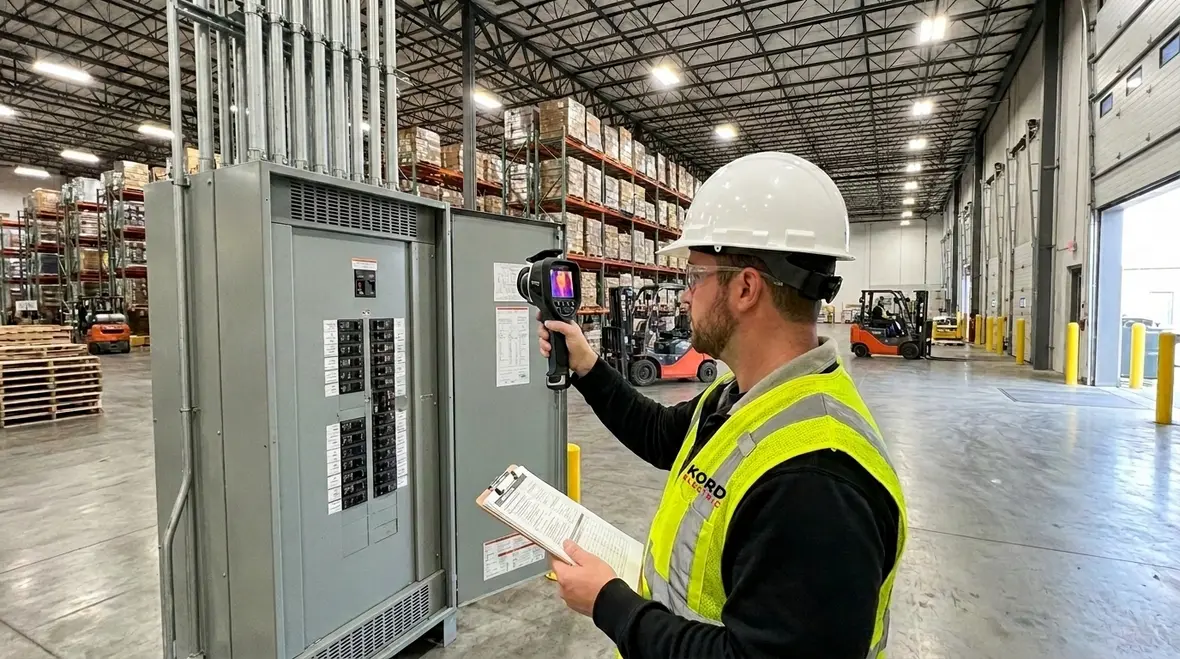
Warehouse Power Distribution Efficiency Analysis
Evaluating Electrical Distribution Efficiency in Modern Warehouse Operations starts with one simple goal: keep power where it needs to be, and stop it from leaking into the ground, the walls, and the waiting invoices. At Kord Electric, we use a Power distribution efficiency analysis to map how energy moves from service entrance to switchboards, feeders, and final loads. Then we measure the gap between what the facility demands and what the electrical system actually delivers. In other words, we hunt down the hidden losses before they become hidden costs. Yes, your warehouse already runs like a machine, but electricity should not.
Our expert service staff explains what we find in plain language, because nobody wants a mystery bill. And if something feels as complicated as a superhero origin story, we slow it down until it makes sense.
1) Why power losses grow in busy warehouses
Warehouses are not quiet environments. They cycle equipment, expand with new racks, add lighting, run cooling, and change layouts faster than a streaming app updates its recommendations. As a result, the electrical distribution system can drift out of alignment with real demand.
When we evaluate electrical distribution efficiency, we look at losses that often grow quietly over time. For example, even if the utility feed stays stable, internal losses can increase due to heat, aging insulation, and connections that loosen slightly. Also, increased power draw from new conveyors or charging stations can push conductors closer to their limits.
So, rather than treating this as a one time check, others should treat it as an ongoing reliability program. Our technicians help others build that habit by showing the practical link between distribution efficiency, equipment life, and downtime risk.
2) The core steps in a Power distribution efficiency analysis
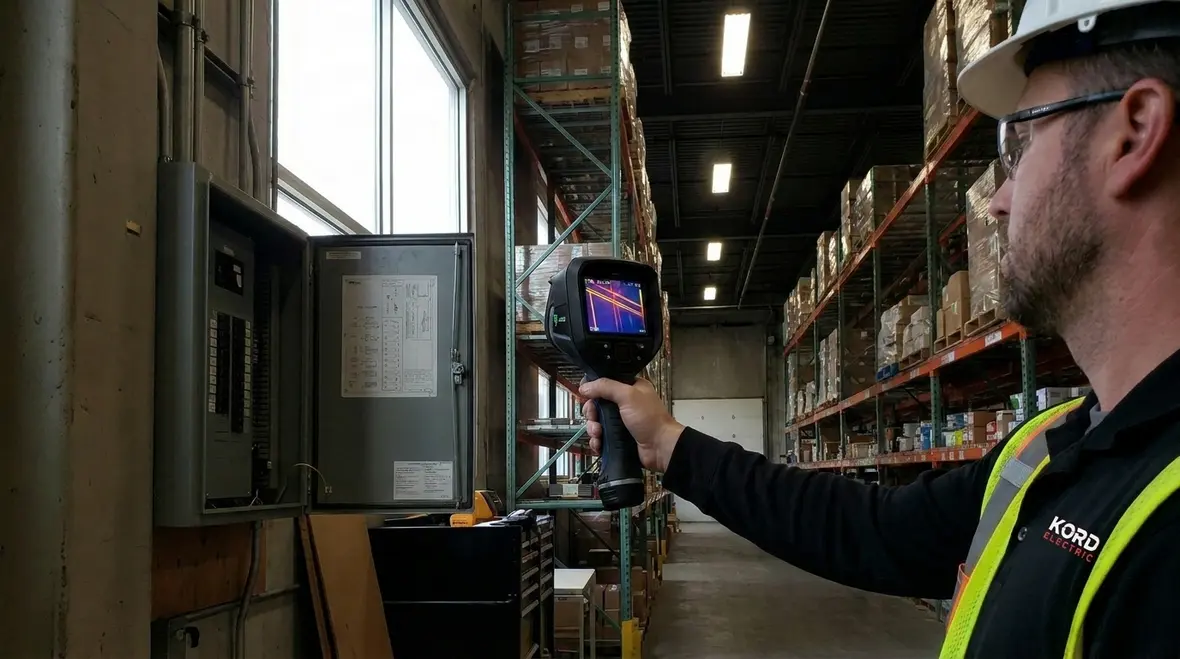
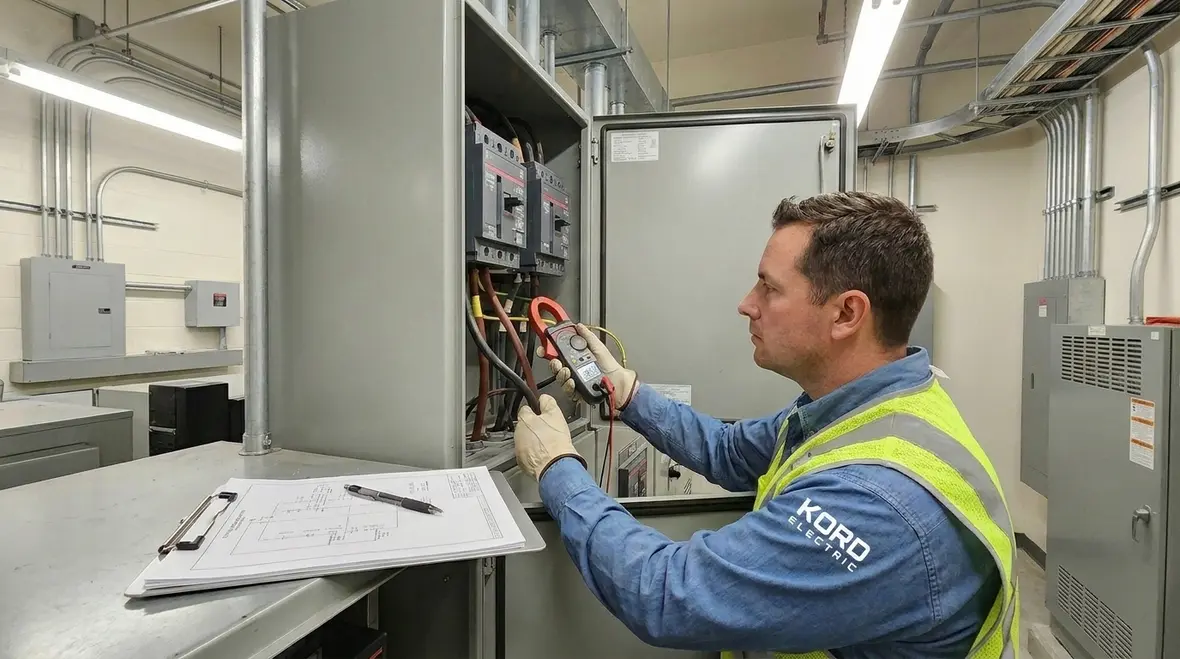
In our approach, we do not guess. We verify. First, our team collects baseline information from the field and the electrical one lines. Next, we confirm load behavior with current, voltage, and thermal observations at the key distribution points.
Then we run the Power distribution efficiency analysis through a structured workflow. This includes identifying where voltage drop rises, where load imbalances appear, and which circuits carry more current than expected. Additionally, we review protective device settings and coordination so the system protects without nuisance trips.
Finally, we translate the findings into a plan that fits commercial and industrial facilities, and major property buildings. That means we focus on actions that reduce losses, support capacity growth, and keep operations moving.
- Map the distribution path from service to panels, transformers, and critical branch circuits
- Measure actual load rather than relying on nameplate guesses
- Check voltage drop and imbalance so equipment runs within healthy limits
- Evaluate heat indicators because heat is where problems start
- Review protection and settings to reduce interruptions
And yes, we sometimes find that the “it worked last year” story does not survive contact with today’s load profile. That is not a tragedy. It is just useful data.
3) How voltage drop and load imbalance quietly hit performance
Voltage drop is one of those issues that feels boring until it starts causing real headaches. When voltage falls along feeders, motors may draw more current to maintain speed and torque. That increases heat and can reduce motor efficiency and lifespan.
Meanwhile, load imbalance becomes a hidden tax on the whole system. If one phase runs heavier than the others, the electrical system deals with extra current on that phase, and neutral or ground paths may see unexpected stress. In warehouse operations, this often happens when new single phase loads get added without updating the system’s balance assumptions.
We also evaluate harmonic distortion when it applies, especially with variable frequency drives, LED retrofits, and modern motor control equipment. Harmonics can worsen overheating, increase losses, and create nuisance trips in some protective setups. Transitioning equipment without re checking distribution performance is like changing your tire size and then acting surprised when the car feels different.
Our technicians explain these mechanisms to facility teams clearly, so decisions feel grounded and not like a magic trick. After all, a good plan is one that the right people can defend.

4) Thermal hotspots, aging connections, and transformer efficiency
Heat tells the truth faster than most reports. Even when readings look acceptable, thermal hotspots may point to loose terminations, corroded connections, or overloaded components. In warehouses, where vibrations and constant cycling exist, connections can shift slightly over time. Then, resistance rises, and the electrical system wastes energy as heat.
We also focus on transformer efficiency and operating conditions. Transformers may run at part load for long periods, then swing into higher loading during peak operations. If ventilation is poor or the operating environment is harsh, temperature increases and efficiency drops.
Additionally, we examine conductor sizing and routing. Long feeder runs, cramped trays, and poor spacing can elevate conductor temperature and raise losses. If the design did not account for the current load growth, the system becomes a victim of its own success.
Our expert service staff works with commercial and industrial facility owners and major property buildings to prioritize fixes that reduce energy waste and support uptime. In other words, we chase the problems that matter most to your daily operations, not problems that only exist in a spreadsheet.

5) Practical upgrades that raise efficiency without stopping operations
The best time to improve distribution efficiency is before the warehouse hits its busiest weeks. However, we understand reality. Facilities often cannot shut down for long periods. That is why we recommend staged improvements.
Depending on the findings, we may suggest targeted capacitor banks for power factor correction where appropriate, conductor upsizing for specific overloaded feeders, or rebalancing strategies for multi phase panels. We also evaluate load scheduling and circuit segmentation to reduce simultaneous peaks.
On the reliability side, we often address connection integrity, torque checks, and thermal inspection points. These actions can reduce resistance related losses and improve safe operation. If controls or motor systems contribute to harmonics or unstable operation, we recommend adjustments that match the facility’s equipment mix.
In facility planning, we keep the commercial and industrial scope at the center. We avoid one size fits all ideas and we focus on upgrades that support warehouses, distribution centers, and major property buildings where uptime and safety lead the list.
And if someone jokes that electricity should just “work harder,” we politely remind them that electricity already works hard. We just help it work smarter.
6) Building a repeatable efficiency program with clear metrics
Efficiency is not a one time project. It is a system habit. Once we complete the initial Power distribution efficiency analysis, we help teams set measurable targets and a schedule for follow up.
We recommend periodic checks at the distribution points that matter most. That includes transformers, main panels, motor control centers, and critical branch circuits. Then, we track trends in voltage, current, temperature indicators, and imbalance levels. When you measure consistently, you catch deterioration early instead of dealing with outages.
Also, we document what changed. When construction teams extend racks or add equipment, they should notify electrical operations. Otherwise, the system quietly drifts again. Our technicians guide how to track load changes so future upgrades align with actual demand.
To keep the program easy to manage, we present findings in business friendly language. We keep it practical: what costs you money now, what costs you risk later, and what you can fix first.
7) Featured FAQ
8) How power distribution efficiency connects to other warehouse upgrades
Power distribution efficiency does not live in a vacuum. In many warehouses, teams are already planning lighting retrofits, automated controls, or even solar integration. Each of those projects changes how power flows through the building, which is why we link our analysis to broader upgrade plans whenever possible.
For example, when facility managers explore California Title 24 lighting retrofit ROI for big warehouse projects, they quickly realize that electrical capacity, breaker loading, and distribution paths shape what is practical, not just what looks good in a spreadsheet. A clear view of how feeders, panels, and transformers behave under real warehouse conditions makes those lighting upgrades easier to design, approve, and phase in.
The same applies when optimizing industrial lighting layouts for efficiency. If new lighting zones or controls shift when and where loads appear, the distribution system feels that change first. A solid Power distribution efficiency analysis gives your team confidence that new circuits, control panels, and loads will land on stable electrical footing.
In other words, distribution analysis becomes the quiet partner to many warehouse upgrades: it keeps the backbone sturdy so every new layer of technology performs the way it should.
9) Power distribution efficiency analysis and regional service coverage
For warehouses and distribution centers in Los Angeles County, the question is rarely “does power matter?” It is “who can help us tune the system without disrupting operations?” Kord Electric’s commercial and industrial crews work across the county on projects that range from targeted distribution upgrades to full scale system evaluations, always with uptime, clarity, and safety at the center.
Whether your facility is planning new conveyor lines, additional charging stations for material handling fleets, or a major lighting upgrade, aligning those changes with a Power distribution efficiency analysis helps you avoid surprises. From main switchboards to the last critical branch circuit feeding a dock door, we focus on how real loads behave—then we design improvements that match that reality.
If you are coordinating multiple projects across a portfolio of properties, our team can also help standardize distribution evaluation checklists so each site gets the same level of attention and documentation. That way, leadership sees consistent metrics and risk reduction across the board, not just on flagship facilities.
When you are ready to align distribution health with the rest of your electrical strategy, start with a focused evaluation, then fold the results into broader planning, including any Los Angeles County electrical services you already have on the roadmap.
10) Conclusion and CTA
If your warehouse power feels like it is running “mostly fine,” that is when losses start acting like a quiet tax. Kord Electric helps commercial and industrial facility teams improve Power distribution efficiency analysis through field measurements, clear reporting, and practical upgrades that protect uptime. Our technicians explain what we find and what to do next, so decisions stay simple and confident. If you want fewer surprises on bills and fewer chances of failure, contact Kord Electric today and schedule an efficiency evaluation for your distribution system.


