Warehouse Lighting Control Strategies That Work
At Kord Electric, we help commercial and industrial facilities run smoother by tightening the way warehouse lighting is controlled. In the first pass, we focus on warehouse lighting control strategies that reduce waste, stabilize quality, and support safer operations without turning your facility into a science project. Next, we align lighting schedules with actual work patterns, then we tune motion and daylight behavior so lights respond like a smart teammate, not like a drama queen. Our technicians also walk through the plan step by step, so others understand what changes, why it matters, and how to keep performance steady over time. Because nobody wants surprises on a site where forklifts already have enough personality.
Warehouse Lighting Control Strategies for Real Operational Wins
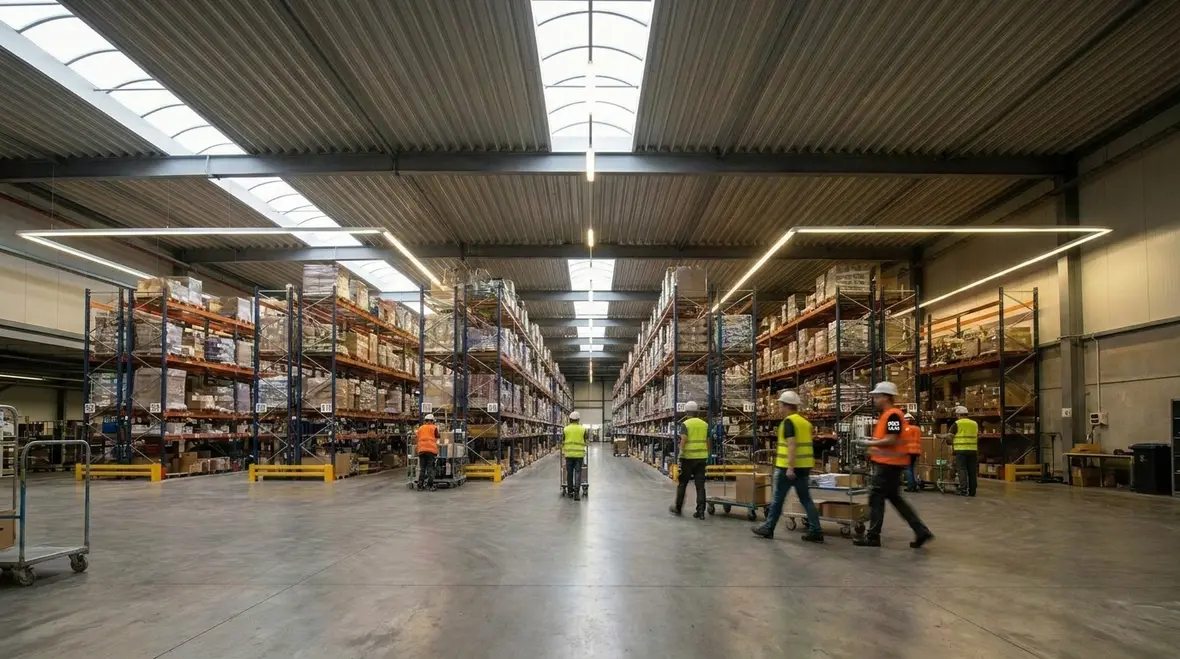
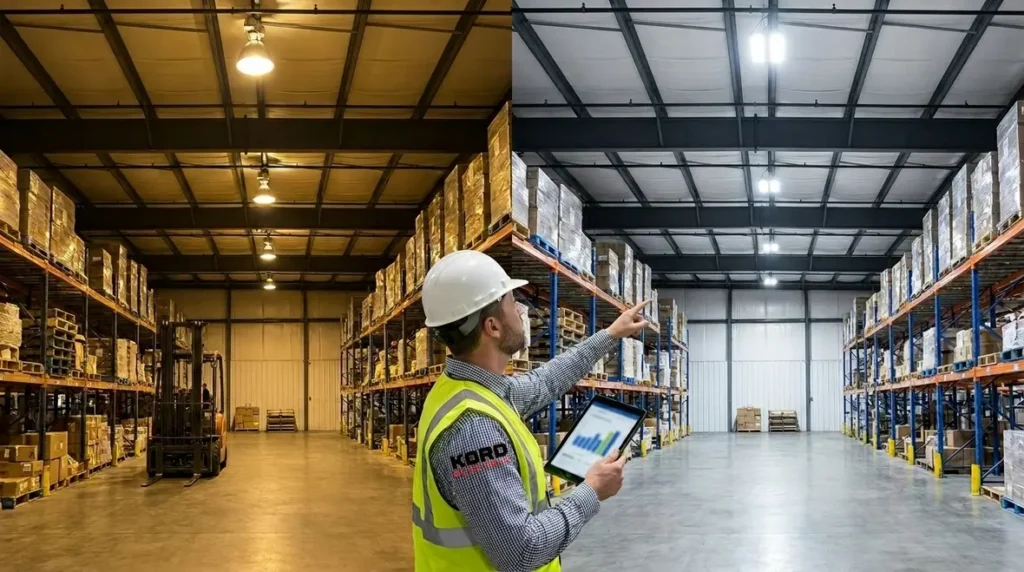
When a warehouse lighting system fights the daily rhythm of a facility, people feel it fast. They turn lights on manually, override schedules, and then the energy bill shows up like an uninvited guest. Therefore, we start by studying how the space actually gets used. We review shift timing, aisle occupancy, door activity, dock work, and areas that sit empty for long stretches. After that, we map the lighting needs to those patterns so control scenes match the work, not the other way around.
Then we implement control logic that supports efficiency at each layer. For example, we coordinate time based rules with occupancy behavior and daylight sensing. In many cases, we also break the space into lighting zones so changes remain local instead of affecting the whole building. This helps avoid over lighting and keeps visibility consistent where it matters most.
To make it simple, we treat control like choreography. Lights should lift when workers enter, hold steady when tasks continue, and dim when the area stays quiet. In other words, the system behaves like a reliable assistant, not like a prank app that keeps flipping switches at the wrong moment.
How Zoning and Dimming Reduce Waste Without Cutting Safety
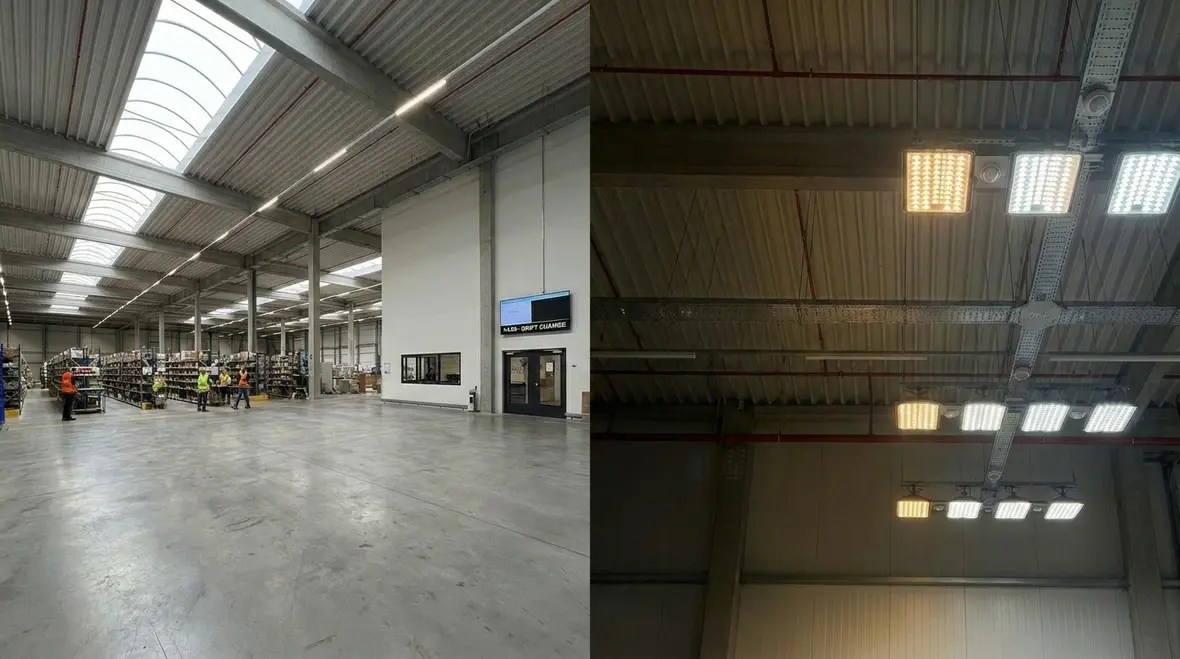
Zoning is where savings start to feel real. However, the key is doing it correctly for warehouses and major property buildings, where lighting must remain predictable for safety and productivity. We design zones around work patterns, not around the building’s original wiring shortcuts. For instance, dock areas and loading lanes often need tighter control than open storage zones. Offices and break rooms get their own logic, while corridors follow occupancy and schedule rules.
Once zoning is set, dimming becomes the performance lever. With well planned dimming, lights can reduce output during low activity and return to full brightness when tasks begin. Additionally, we use control setpoints that maintain acceptable illumination levels for walking, picking, and inspection work. This matters because a warehouse operator does not benefit from energy savings if visibility drops below practical needs.
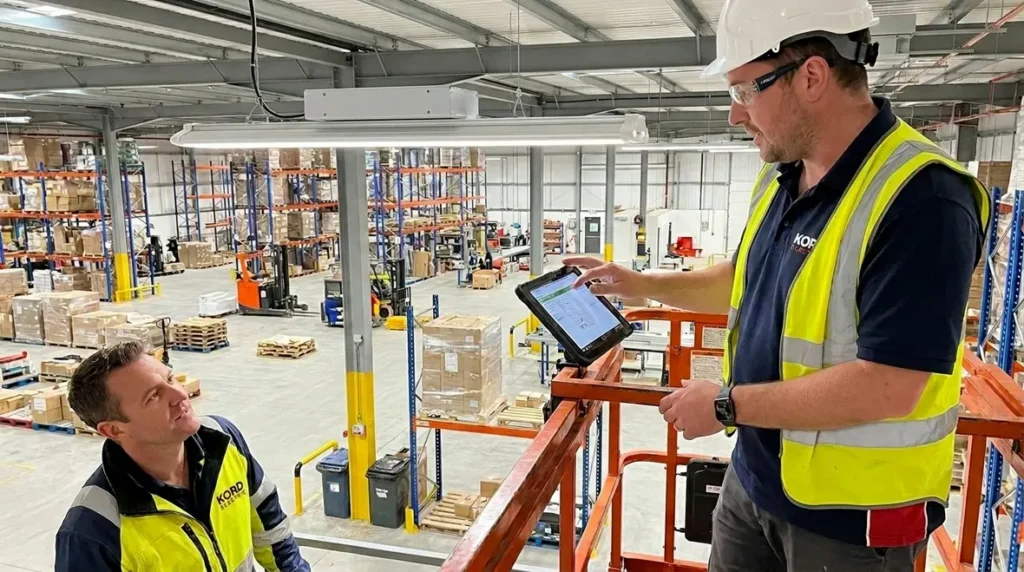
Our technicians explain this with plain language during commissioning. They show what the dimming curve does, how it responds to movement, and how it behaves when daylight changes. Then they help others confirm results on the floor with real examples. That’s how we prevent the “it sounded good on paper” moment that every business eventually meets.
Scheduling, Occupancy, and Daylight: Making Lighting Behave Like a Team
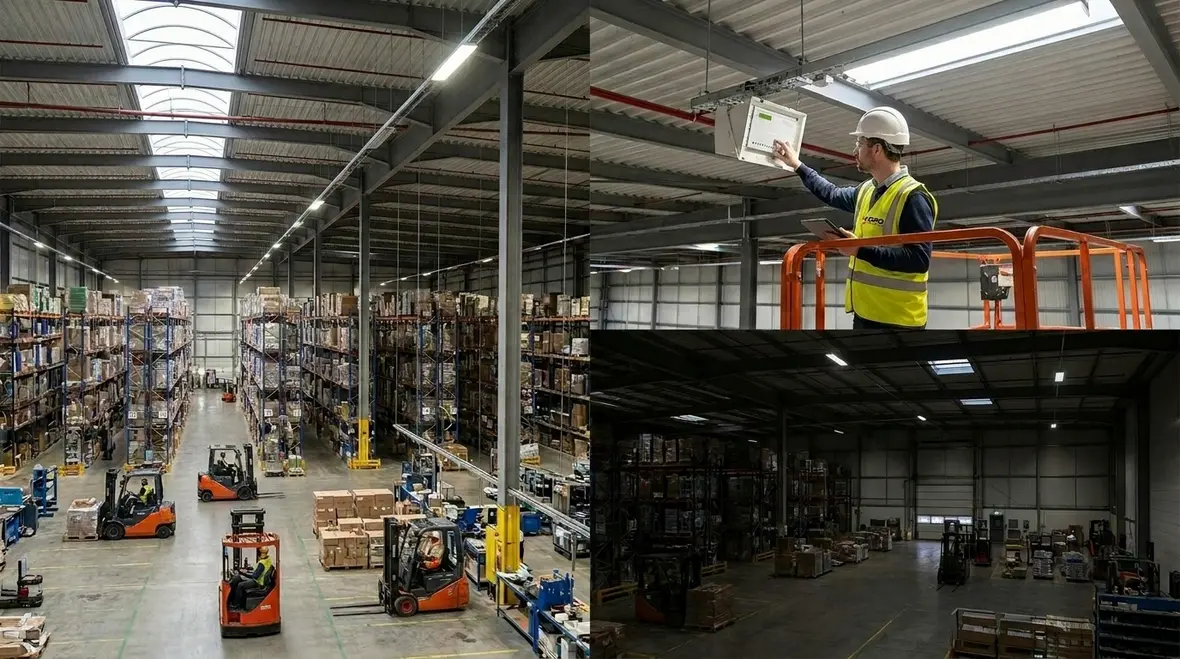
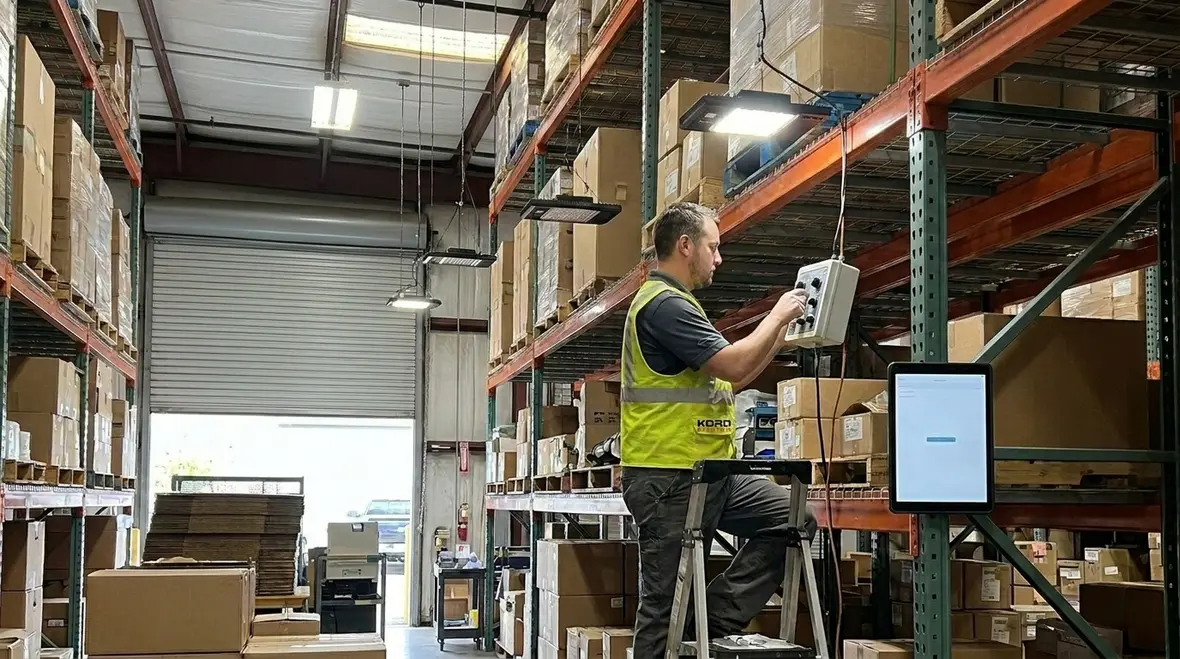
Good warehouse control does not rely on one trigger. Instead, we combine schedule logic with occupancy inputs and daylight sensors where it fits. First, we set schedules around shift changes, cleaning cycles, and expected business hours. Next, we refine the schedule by adding occupancy control in zones where traffic is uneven. Finally, we integrate daylight sensing in areas near skylights, dock doors, or large windows so the system can reduce artificial light when sunlight contributes.
This combination prevents common failure patterns. If you use only time based control, lights may run when no one is present. If you use only motion sensors, the lights may react too aggressively, which can be distracting during slow tasks. By using layered logic, the system can respond smoothly and stay consistent.
We also consider transition timing. Lights should not jump from low to full brightness like a horror movie jump scare. Instead, we set ramp rates that feel steady for workers and cameras, if the facility uses them. Then we coordinate the behavior with security needs and corridor visibility so operations remain comfortable.
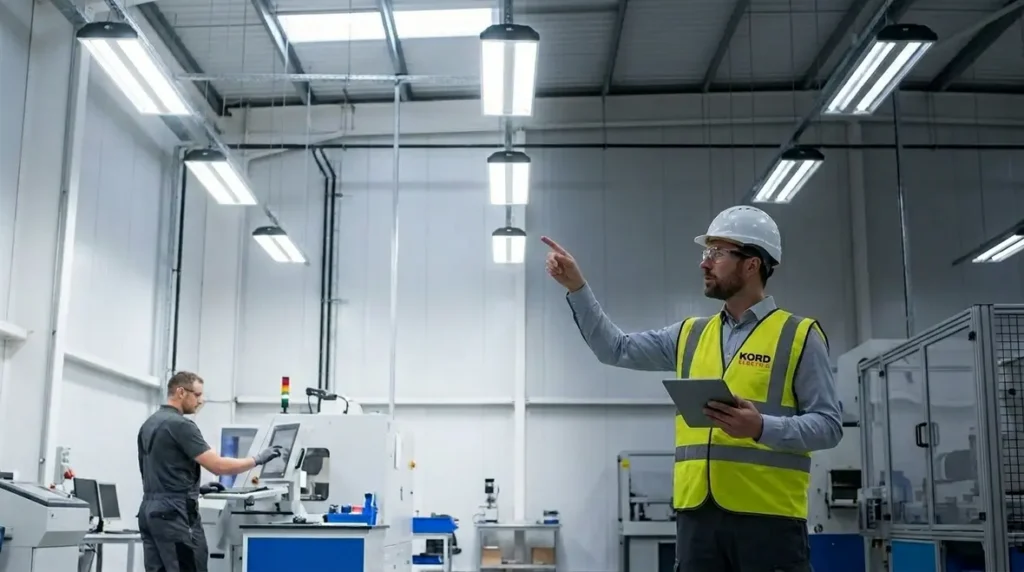
And yes, we explain all of it. Our service staff sits down with facility managers and others who will live with the system. They clarify how adjustments work, what to expect after the first week, and how to handle changes like new racking layouts or shifting inventory zones.
Commissioning and Tuning for Ongoing Reliability
After installation, the work is not done. Many lighting projects fail because controls get installed but not tuned for the site. At Kord Electric, our technicians focus on commissioning that includes verification in real conditions. We test each zone response, confirm sensor coverage, and check that schedules line up with how crews actually work. Then we validate dimming behavior so it maintains usable illumination without flicker or uneven output.
We also tune for local realities. A busy warehouse has airflow changes, dust on fixtures, and seasonal shifts in daylight. Therefore, we account for how sensors perceive motion and how daylight sensing responds to changing sun angles. If an area hosts long duration picking, we adjust hold times so lights do not dim too soon. If a corridor sees brief traffic, we adjust trigger sensitivity so the system turns on when needed, not when someone accidentally walks past.
To keep performance steady, we recommend routine check points. During service visits, we review logged control events and verify that override behavior matches policy. If others report inconsistent behavior, our expert staff returns with a targeted plan, not a guess. That keeps uptime strong and avoids repeated site calls that waste time and budget.
Integration With Building Systems and Operations Teams
Commercial and industrial facilities rarely operate in isolation. Warehouse lighting control often needs to coordinate with HVAC schedules, door controls, security routines, and building automation. When we integrate controls responsibly, lighting can support the full operational picture. For example, a facility may want lighting to align with occupancy patterns already used by other systems. Or it may need corridor lights to follow security modes during after hours.
In these environments, we also pay attention to how others interact with the system. A control interface must be clear for shift leads, maintenance teams, and building operators. If the interface feels like a confusing remote control from a streaming service no one asked for, then overrides become constant. Therefore, we structure scenes and settings to match daily use, so operators can adjust safely and quickly.
When integration is planned well, the facility sees fewer manual workarounds. And with fewer workarounds, energy waste drops and visibility stays stable. In short, we make the lighting system an operational tool, not a separate project that gets ignored until something breaks.
Cost, Energy, and Payback: What Others Should Expect
People often ask about payback, but the real goal is operational efficiency that lasts. Energy savings depend on how much lighting time reduces and how much output dims during low activity. However, the bigger win for warehouses comes from better match between illumination and work patterns. When lighting supports picking, moving, and inspection with the right levels, productivity improves while energy drops.
To estimate value, we review existing fixture types, control coverage, and current operating schedules. Then we build a plan that targets high impact zones first. Typically, entrances, corridors, dock lanes, and large storage areas deliver strong opportunity, especially when those spaces sit idle during parts of the day. For facilities planning larger upgrades, many teams review dedicated services like commercial recessed lighting installation to understand how new fixtures and controls can work together for long term performance.
Our technicians also help others avoid a common trap. Some projects aim for maximum dimming without considering task needs. That can create complaints and lead to overrides, which reduces savings. Therefore, we balance energy targets with safety and comfort, then we tune the system so workers accept it quickly. Acceptance is not a soft factor in warehouses. It is the difference between a system that stays optimized and one that gets defeated by human behavior, like a password policy ignored by everyone.
Implementation Timeline: From Walkthrough to Fine Tuning
We manage rollout in a logical sequence so operations continue with minimal disruption.
- Site walkthrough and control mapping across key zones
- Control plan development for schedules, occupancy behavior, and daylight influence
- Hardware installation coordinated with facility schedules
- Commissioning tests for coverage and dimming response
- Training for facility staff and shift leads on overrides and scenes
- Post install tuning based on real worker feedback
Service Support After Install for Major Property Buildings
We stay involved, because maintenance keeps systems performing.
- Verification checks for sensor alignment and response timing
- Review of control events to spot unusual behavior
- Adjustments when layouts change or operational needs shift
- Support for integration with building management systems
- Clear documentation for others on your operations team
FAQ: Warehouse Lighting Control Strategies
Final Call for Efficient Warehouse Lighting
If a warehouse lighting system feels wasteful, inconsistent, or constantly overridden, it is time to upgrade how control actually works. Kord Electric helps commercial and industrial facilities design, install, and tune warehouse lighting control systems that match real operations. Our technicians explain choices in plain language, then they fine tune behavior so your team gets dependable visibility without energy waste. Contact us today to schedule a walkthrough, build a control plan, and bring calm order to a space that never stops moving.
For multi-site operators and major property buildings across Southern California, aligning lighting with broader electrical upgrades can also streamline projects and cut downtime. When you are ready to coordinate warehouse lighting control strategies with larger infrastructure work, explore how our broader Los Angeles County commercial and industrial electrical services support panels, distribution, preventive maintenance, and more under one organized plan.
Whether you need a focused retrofit in a single warehouse or a campus wide lighting and control redesign, our team treats your facility like a living system, not a one time project. That means clear communication, tuned controls, and support that continues long after the last fixture is hung.