Industrial Power Quality Audit for Manufacturing
How Kord Electric Uses an Industrial Power Quality Audit to Spot Trouble Early
In busy manufacturing facilities, power problems rarely announce themselves with a red flashing light and a catchy jingle. That is why we start with an industrial power quality audit, using it as a structured way to measure what the electrical system actually does, not what we hope it does. Kord Electric brings trained technicians and our expert service staff to review data from key feeders, panels, and sensitive loads. Then, we match measurements to real symptoms on the floor, like nuisance trips, random slowdowns, or equipment that “works fine… until it does not.”
So, while others guess, we verify. And yes, we still get the occasional story like “the lights flicker only when the moon is full.” Power does not care about folklore, but our job is to find the cause anyway.
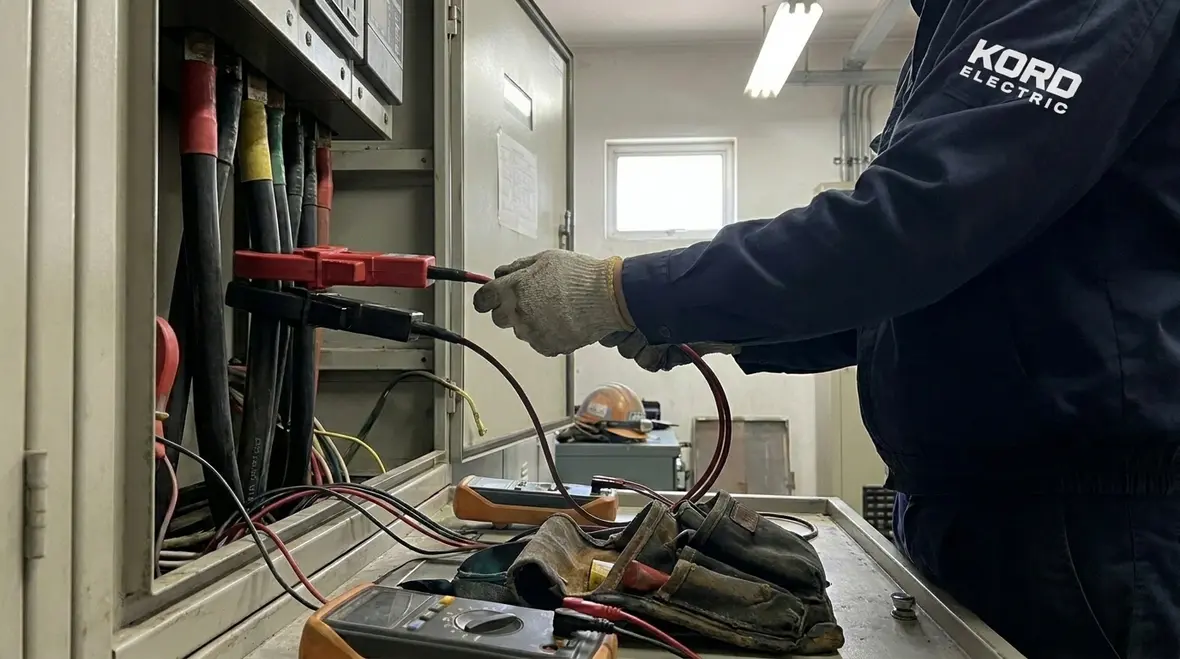
When we perform an industrial power quality audit in a manufacturing environment, our goal is simple: translate complex electrical behavior into clear steps that protect uptime. That includes documenting where disturbances originate, how they move through the system, and which pieces of equipment feel the impact first. By the time we are done, facility leaders know what is happening, why it is happening, and which actions will actually move the needle.
This approach also lines up naturally with broader reliability work, such as structured electrical preventive maintenance programs that Kord Electric delivers for commercial and industrial facilities and major property buildings. When power quality and preventive maintenance work together, plants spend less time chasing random issues and more time running steady production.
Common Power Quality Issues in Manufacturing Facilities
Manufacturing plants often run motors, drives, furnaces, welders, and compressors. When these loads start, stop, or change speed, they can shake the quality of voltage and current. Industrial power quality problems typically fall into a few buckets, and we see them again and again across commercial and industrial facilities and major property buildings.
Voltage sag is one of the most frequent culprits. A sag drops voltage for a short time, and drives or control boards can react like they just received bad news. Voltage swell can also appear, especially when switching large banks or during certain faults. Harmonics are another heavy hitter, especially where variable frequency drives, rectifiers, or modern power supplies create distorted current waveforms.
Next come frequency variations, transient events, and unbalance across phases. If the facility has long feeders, aging conductors, or frequent maintenance shortcuts, the electrical system picks up extra “character,” not in a good way. Then equipment starts acting unpredictable, and the plant team starts doing detective work with coffee and luck. We prefer measurements.
These power quality issues show up in many ways: flickering lighting, control system resets, nuisance breaker trips, or motors that seem to “just fail early” with no obvious cause. Facilities dealing with recurring voltage instability can benefit from data-driven diagnostics similar to what Kord Electric uses when troubleshooting voltage fluctuations in commercial and industrial buildings, where we analyze power quality, load demand, and equipment behavior to identify the real source of trouble.
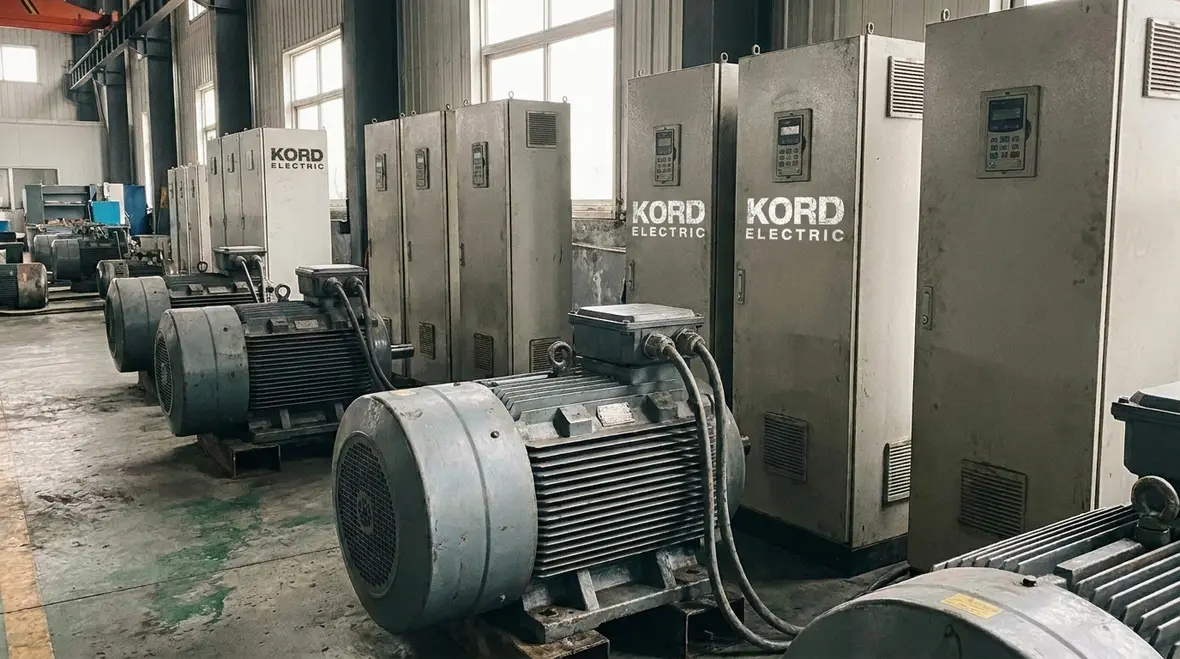
The good news is that, with the right monitoring tools and an industrial power quality audit, these “mystery symptoms” stop looking mysterious. Patterns in the data reveal if the cause is upstream utility behavior, internal load switching, or infrastructure that is simply past its prime.
What Our Technicians Look for During Field Testing
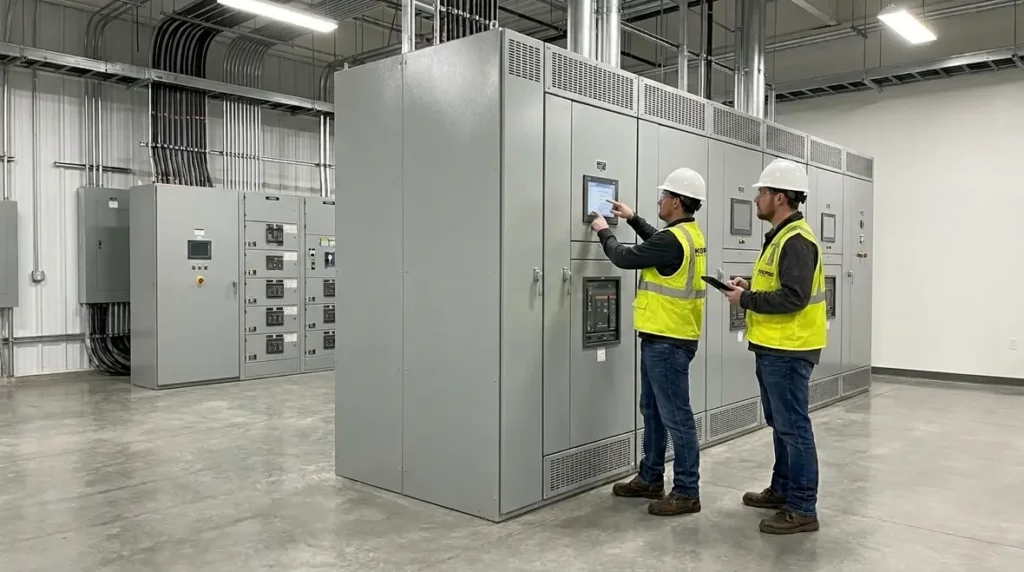
Once our technicians step on site, they follow a method that feels calm even when the facility is not. First, we identify equipment that is sensitive, mission critical, or expensive to replace. Then, we place monitoring equipment at the right points, such as at incoming services, key distribution boards, and near large process loads.
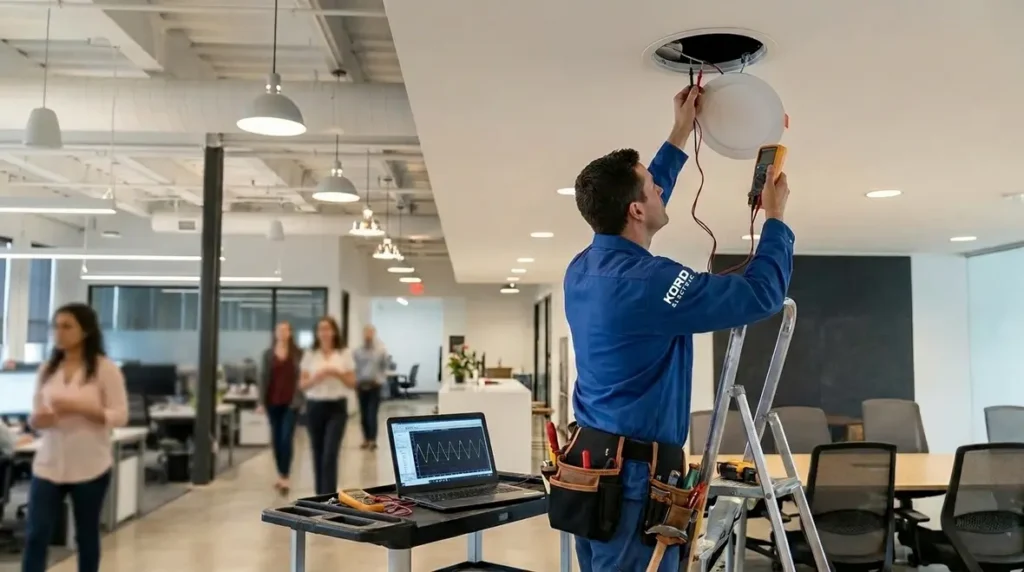
During the industrial power quality audit, our team checks the timeline of events. We do not just grab a snapshot and call it a day. Instead, we look at patterns, such as repeated sags tied to specific production cycles, or harmonic levels that climb whenever certain drives ramp up. We also correlate test results with logs from plant systems and maintenance records.
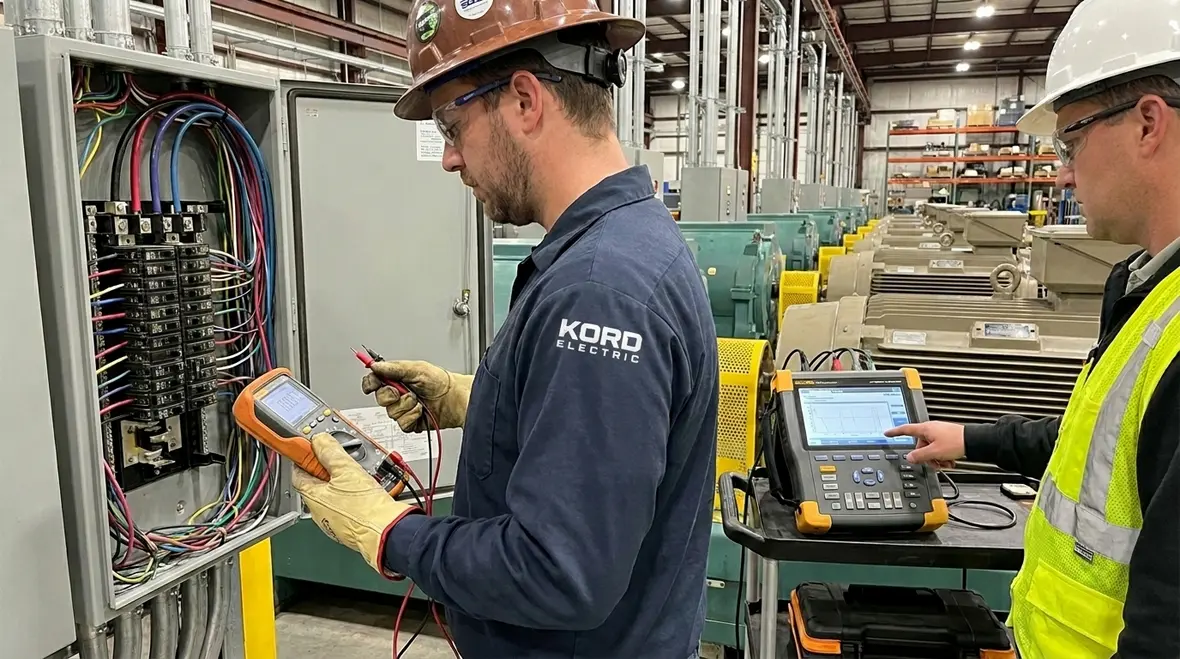
Our expert service staff explains what we see in plain language. For example, if voltage dips line up with motor starts, we show how upstream impedance or transformer capacity can cause the sag. If harmonics spike during welding shifts, we map the waveform impact and discuss mitigation options that fit the process, not just the brochure. And if the issue is intermittent, we plan the monitoring window so we catch it when it actually shows up, not when nobody is running.
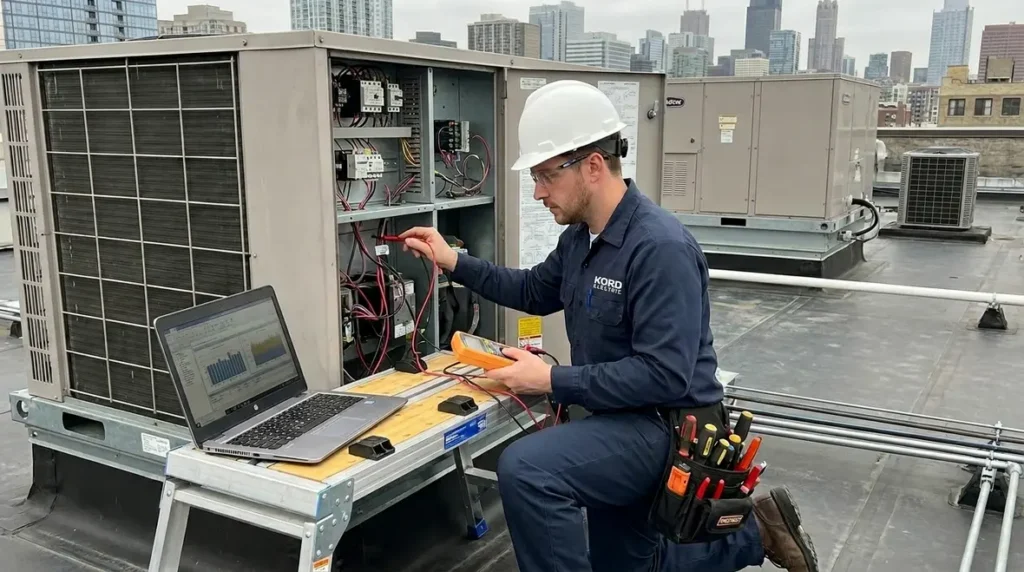
Field testing also gives us a chance to verify how protective devices and grounding perform under real operating conditions. It is one thing to have a single-line diagram that looks clean on paper; it is another to see how breakers, relays, and surge protective devices behave when a plant is running a full production schedule. That real-world insight is what turns measurements into a practical path forward.
Because power quality testing ties directly into long-term reliability, we often recommend pairing the audit with ongoing preventive electrical maintenance. That way, the same facility that captures high-resolution power quality data also keeps panels, switchgear, and connections in a condition that supports the results we just worked so hard to achieve.
How to Link Power Quality Symptoms to Real Root Causes
Facilities do not fail in one dramatic moment. They fail in small ways that add up. Therefore, the key step is connecting symptoms to electrical events. We help others do this by asking practical questions and then verifying the answers through data.
Frequent motor trips often point to voltage sags, unbalance, or overheating caused by poor electrical conditions. Variable speed drive faults can stem from harmonics, DC bus ripple, or transient disturbances. Transformer overheating frequently links back to harmonic currents and poor loading patterns. Control system resets can correlate with momentary voltage dips, especially in panels that share feeders with heavy switching loads.
We also account for grounding and switching behavior. A loose neutral, for instance, can create strange phase behavior in three phase systems. Meanwhile, poorly selected surge protection can leave the facility exposed to transient overvoltage. Power quality issues are like that one coworker who “does not mean harm,” but still breaks the meeting rhythm. They might not be intentional, yet the impact is real.
As data confirms the cause, we prioritize fixes that reduce risk quickly while staying practical for day to day operations. Sometimes that means addressing the worst voltage sag source first; other times it means resolving a grounding issue that silently affects almost every sensitive load in the building.

The same investigative mindset applies when we support higher-stakes environments like data centers and major property buildings. Even there, the process comes back to the same foundation: map the symptoms, capture the events, and prove the cause before investing in major upgrades.
Why Harmonics and Transients Hit Production Hard
Harmonics do not simply distort waveforms. They raise losses, overheat equipment, and can stress capacitors, transformers, and cabling. When harmonics increase, the neutral can carry more current in some systems, which can lead to overheating where it should not happen. In other words, harmonics can turn a well built distribution system into a slow burn problem.
Transients are the other side of the coin. These are brief spikes or dips caused by switching actions, lightning events, or faults. Even a short transient can damage sensitive electronics, degrade insulation, or cause repeated nuisance alarms. Therefore, the facility ends up spending time and money on troubleshooting that feels like chasing smoke with a flashlight.
Kord Electric evaluates where harmonics originate and how they propagate. Then we suggest solutions that match the facility’s power architecture. In some cases, our approach includes filter strategies or design adjustments to reduce harmonic impact. In others, we recommend improvements to surge protection and proper coordination so transients lose their power before they reach the loads that matter.
And just like pop culture villains, harmonics and transients love to show up when nobody is watching. That is why we measure, not guess. By reviewing harmonic spectra and transient waveforms around sensitive equipment, we give maintenance and operations teams a clear picture of which risks are acceptable and which ones could quietly shorten the life of expensive assets.
In facilities where uptime is non negotiable, harmonic and transient control is often coordinated with other upgrades, from lighting improvements to EV charging infrastructure and automation projects. The goal is not to add gadgets for their own sake, but to create a coherent electrical environment where all of these systems can operate reliably at the same time.
Mitigation Strategies That Fit Commercial and Industrial Loads
Once we confirm the issue, we build a plan that respects production schedules and budgets. We never treat power quality as a theoretical art project. We treat it like a business problem, because downtime is expensive and safety matters.
Corrective actions may include load balancing, rerouting or upgrading conductors, adjusting transformer taps, and improving switching practices. When voltage sags come from repeated starting events, we can evaluate the service capacity, feeder impedance, and motor starting methods. We might also discuss soft starters or drive ramp settings when appropriate to reduce the sudden electrical draw.
For harmonics, we consider the source loads and the distribution path. Then we decide whether harmonic filters, mitigation devices, or equipment upgrades fit the facility’s design. When capacitor banks are involved, we verify that they stay within safe operating limits and avoid resonance conditions that can make harmonics worse.
For transients, we focus on protection levels, coordination, and proper grounding. Surge protective devices are not one size fits all, and neither are protection schemes. Our technicians explain the selection rationale so facility leaders understand what changes and why.
Throughout, we keep the conversation practical. We share options, explain tradeoffs, and help others make decisions that protect critical loads without turning the project into a science fair. In many cases, mitigation becomes part of a broader program that also includes electrical preventive maintenance, voltage stability improvements, and targeted distribution upgrades in the areas that carry the heaviest load.
For manufacturing plants and major property buildings across Los Angeles County and Southern California, this kind of integrated approach lines up naturally with comprehensive offerings like Los Angeles County electrical services for commercial and industrial facilities, where troubleshooting, upgrades, and preventive strategies are all coordinated under one roof.
FAQ: Power Quality Issues and Industrial Audits
Final Thoughts From Kord Electric: Fix the Cause, Not Just the Complaint
When a facility team reports flickers, nuisance trips, or strange drive behavior, we do not respond with vague reassurance. We respond with an industrial power quality audit, clear findings, and practical mitigation steps designed for commercial and industrial loads. Our technicians and expert service staff keep the process calm, explain what matters in plain language, and help leaders act with confidence. If you want fewer surprises and steadier production, contact Kord Electric today for an assessment and a plan you can trust.
For many manufacturing and industrial clients, that assessment is the starting point for a broader reliability roadmap. By combining power quality analysis with preventive maintenance, voltage stability improvements, and targeted upgrades to distribution, controls, and critical equipment, Kord Electric helps facilities move from “we are always fixing something” to “we finally have a system we can rely on.” The complaints may sound familiar, but the solution should be tailored to your actual loads, layout, and production goals—and that is exactly what a disciplined power quality program delivers.
If your manufacturing plant, warehouse, or multi-building property is dealing with recurring electrical oddities, now is the time to look beyond quick fixes. A focused industrial power quality audit turns scattered symptoms into a clear story, and from there, into a practical, step-by-step plan.