
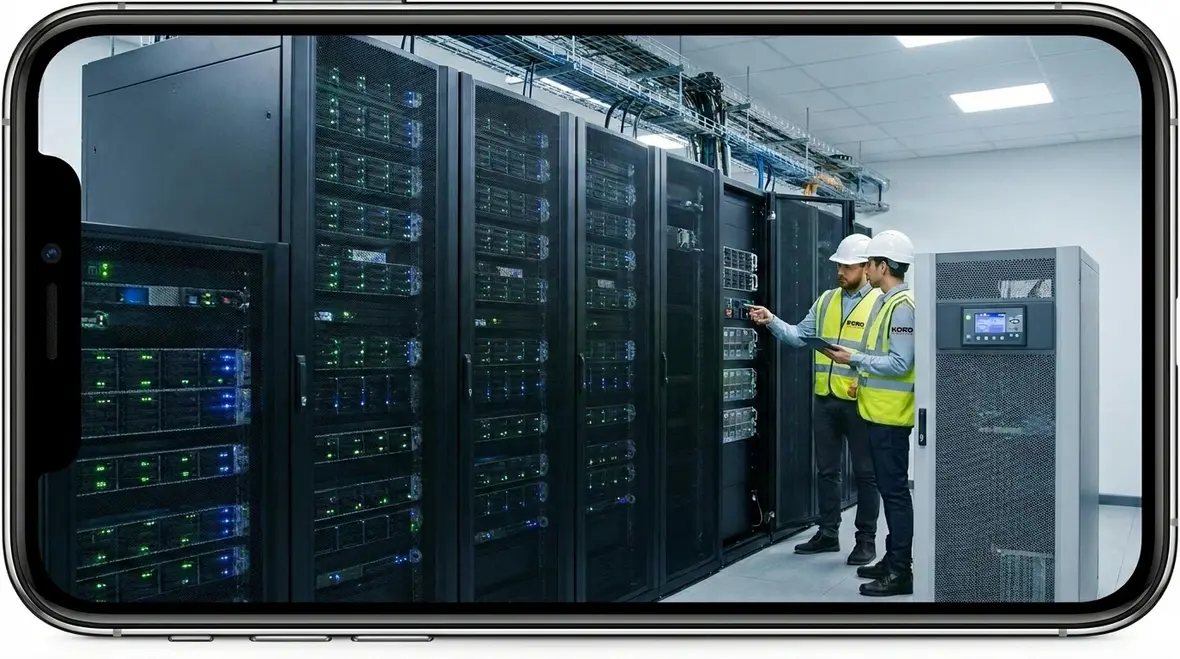
Data Center Uptime Strategies for High Availability
In commercial and industrial data centers, downtime is not just inconvenient, it becomes expensive in real time. At Kord Electric, we build data center uptime strategies into the design from day one. First, we reduce single points of failure with smart redundancy. Then, we make sure critical loads ride through faults with fast transfer paths and clean power. After that, we validate everything through commissioning, monitoring, and service workflows that do not rely on luck. Yes, luck does not belong in power engineering. That is for video games and lottery tickets.
Our experienced technicians and expert service staff explain the plan in plain language, so facility leaders understand what is protected, what is measured, and what happens when something unexpected occurs. And because the grid does not always behave like a textbook, we engineer for the real world.
High-availability power starts with load thinking
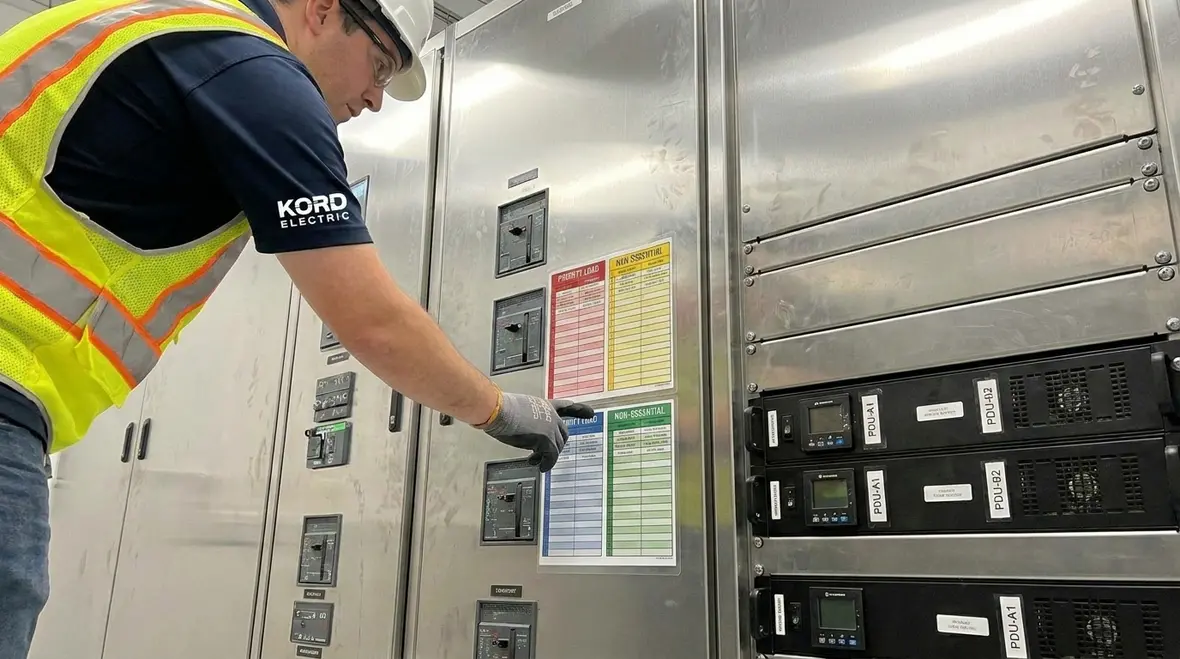
When others discuss redundancy, they often start at the utility meter. We start where it matters most: with the load. Critical IT equipment, chilled water pumps, network gear, and life safety systems all have different tolerance levels. Therefore, we map loads by priority, response time needs, and power quality sensitivity. From there, we build an availability plan that matches the risk profile.
Next, we decide where power should be duplicated and where it can be shared safely. For instance, some systems can accept brief interruptions, while others need near continuous supply. Then we align protection settings and transfer logic so the system does not “hunt” for stability during normal switching. That hunting behavior is like a motion sensor that triggers every time someone walks past. It is technically working, but it ruins the experience.
Our technicians review the electrical one line, verify coordination assumptions, and confirm that the design supports safe maintenance without taking the whole facility hostage. In addition, we focus on testability, so the team can prove reliability without shutting down operations.
For a deeper dive into how upstream distribution choices shape reliability before the first server is powered, many facility teams pair these data center uptime strategies with the principles outlined in Kord Electric’s data center electrical distribution design for reliability article, aligning load priorities with practical one line decisions.
Engineering redundancy that actually delivers, not just promises
Redundancy sounds simple, yet real high availability requires careful design at multiple layers. We typically implement parallel paths for critical power so one component can fail without removing power to the load. For example, we engineer N and N plus configurations depending on required uptime targets, budget, and risk tolerance.
Then we strengthen the “in between” parts. Many failures happen in switching devices, bus ties, transfer mechanisms, and control logic, not in the generator itself. So we design transfer sequences that minimize stress and avoid momentary misalignment. Also, we coordinate breakers and protective relays to clear faults quickly while keeping healthy sections energized.
At Kord Electric, our expert service staff also supports this during commissioning. They verify that panels, ATS equipment, UPS paths, and generator controls operate as designed across realistic scenarios. If a system cannot be tested under practical conditions, it does not belong in a high availability plan.
Redundancy that matches real uptime targets
In practice, this means matching redundancy architecture to specific uptime goals. A data hall that expects near continuous operation needs more than a checklist of backup devices. It needs coordinated N and N+1 paths that avoid awkward single points of failure buried inside switchgear, control transformers, or shared control logic.
The same thinking applies beyond data halls. Many major property facilities use these data center uptime strategies to inform broader commercial electrical upgrades, connecting redundancy decisions with systemwide improvements like those outlined in Kord Electric’s guidance on commercial electrical systems for modern buildings, where uptime, compliance, and future capacity all share the same blueprint.
What we mean by power quality for mission critical loads
Availability is not only about “never going dark.” It also includes keeping power within acceptable limits for sensitive equipment. That is why we treat power quality as part of the uptime strategy, not as an optional add on.
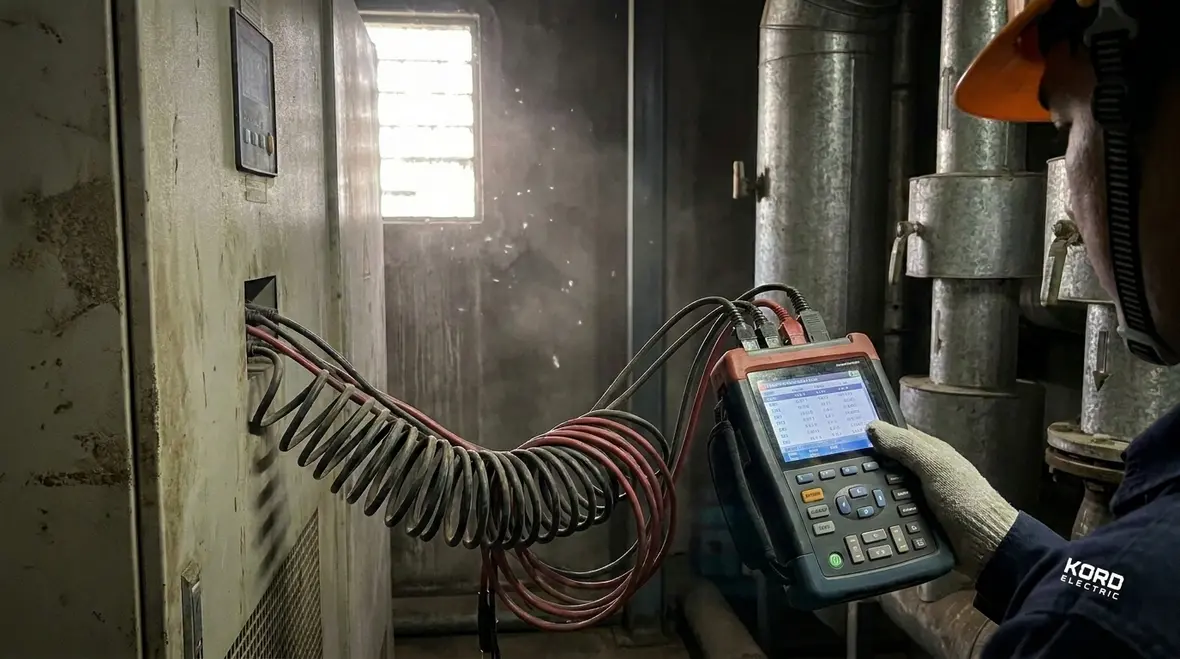
We analyze harmonics risk, voltage regulation, and switching transients. After that, we size and select protection and conditioning devices with the expected load profile in mind. For example, variable frequency drives and modern power supplies can introduce harmonic content. Therefore, we account for distortion so it does not overheat transformers, nuisance trip protection, or degrade UPS performance.
We also design grounding and bonding practices that support stable reference voltages and safe fault clearing. When grounding is done right, troubleshooting becomes faster and safer. When it is done wrong, everyone becomes an amateur detective, searching for invisible problems while the clock keeps ticking.
Power quality as an uptime insurance policy
Because many power quality issues never show up as a complete outage, they tend to hide inside nuisance alarms, premature equipment failure, or mysterious resets. By adding power quality reviews to data center uptime strategies, we give operators a clear way to connect these “small annoyances” to specific corrective actions.
In facilities that blend high density IT with other commercial loads, teams often pair this analysis with lessons from Kord Electric’s data center electrical requirements for uptime content, aligning power quality thresholds with actual equipment behavior instead of generic rules of thumb.
How we design reliability across utility, UPS, and generators
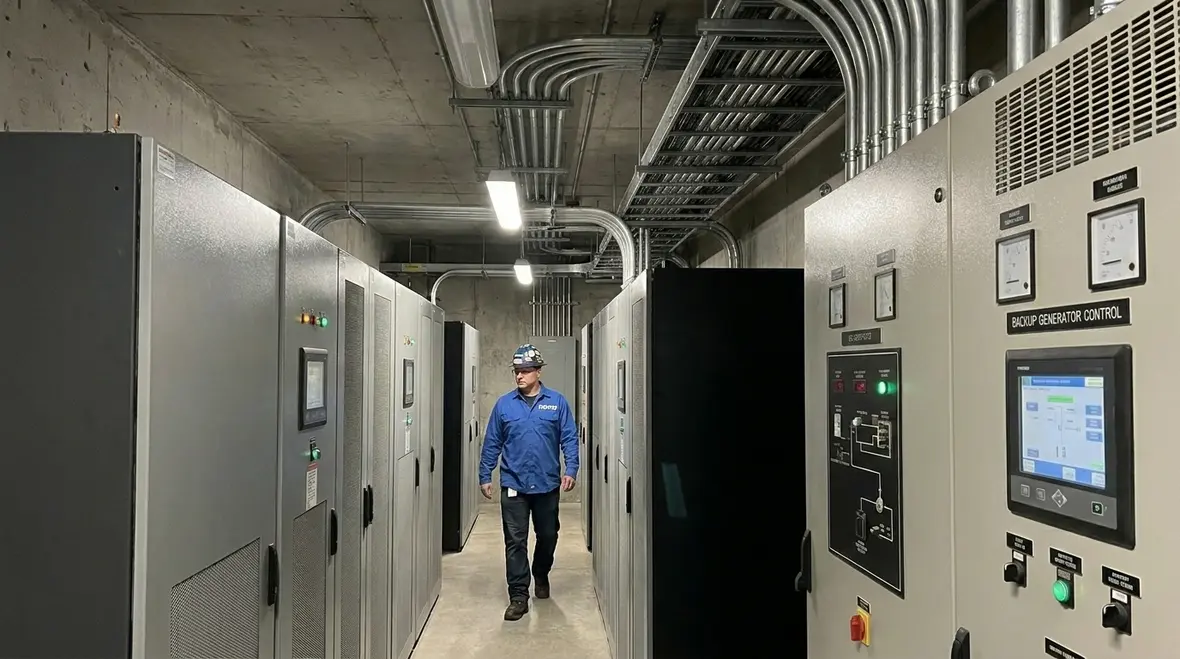
A data center rarely lives on one power source. Instead, it moves through layers: utility supply, UPS protection, generator backup, and distribution that keeps critical equipment online. So we engineer the transitions as a system, not as separate product lists.
First, we establish how the facility rides through utility disturbances. The UPS handles fast events, supports ride through during transfer, and limits exposure to voltage sags and brief outages. Then the generator system picks up during longer events. We design timing and controls so the UPS does not unnecessarily cycle, and the generator does not overload at startup.
Next, we address distribution. We make sure critical bus sections have appropriate fault clearing coordination and that load segments do not back feed in harmful ways. Then we verify that controls and interlocks work during abnormal conditions, such as breaker failure states or maintenance bypass modes.
During service visits, our technicians confirm that the real wiring and labeling match the as built drawings. That sounds basic, yet it is one of the most common causes of slow restoration during emergencies. A power system should be a tool, not a puzzle box.
Coordinating layers of protection for uptime
When we align the behavior of utility feeds, UPS systems, and generators, the result is more than backup power. It is a coordinated chain where each link understands what the others are doing. This is why we fold these data center uptime strategies into broader electrical maintenance checklists, so operators do not treat transfer behavior as a mystery until something fails.
Many facilities connect this layered approach with regular reviews inspired by Kord Electric’s data center electrical maintenance checklist, ensuring that ride through expectations stay aligned with actual test results instead of assumptions from the original project handoff.

Commissioning and service workflows that reduce surprise
Design reduces risk. Commissioning and ongoing service remove surprise. That is where most “uptime plans” either mature or fall apart. At Kord Electric, we create commissioning steps that focus on repeatable verification, not just paperwork.
We test transfer sequences, protective coordination behavior, and operating logic across planned scenarios. Then we verify alarms and monitoring points so operators get clear, actionable information. In addition, we ensure the facility has a maintenance approach that supports downtime reduction during planned outages. Yes, planned outages still hurt, but they hurt less when you plan for them correctly.
Our expert service staff also trains operators and maintenance teams on what to look for. Therefore, if something drifts, the team catches it early, before it turns into a major event. We help clients understand the difference between a warning and a true risk condition, and we document next steps in a way that fits how people actually work on site.
And because data centers change over time, we support updates as loads grow. When capacity increases, protection settings and thermal assumptions can shift. If no one revisits the plan, the system becomes outdated. We keep it current.
Data center uptime strategies that evolve with the facility
Instead of treating commissioning as a one time event, we treat it as the first chapter in an ongoing story about reliability. As equipment is added, retired, or reconfigured, we revisit the assumptions behind the original data center uptime strategies to keep them honest.
For facilities exploring broader upgrade work, it is common to connect these commissioning workflows with insights from Kord Electric’s rewiring cost guide for commercial electrical systems, so long term reliability, capacity, and maintenance planning move forward together instead of in isolation.
Monitoring and fault response with clear escalation paths
Modern facilities rely on monitoring, yet alerts alone do not guarantee uptime. The real value comes from how quickly the right team gets the right data, and how the response plan stays consistent.
We help clients structure monitoring around key signals such as voltage trends, frequency stability, battery health, generator readiness indicators, and protective device events. Then we connect that information to escalation workflows so operations know what to do first, second, and third.
For example, when a transfer event occurs, we want to know whether the change was normal or indicative of deeper issues. Therefore, we define event interpretation rules and ensure the maintenance team can reproduce tests after an incident. That turns a scare into a lesson, instead of a repeat performance.
Our technicians also look at physical realities like heat, cable stress, and cabinet cleanliness. While engineering gets the credit on paper, field conditions often decide the outcome. We check those conditions because uptime does not live in theories. It lives in equipment, installed well and maintained on schedule.
From alarms to action
The best monitoring systems do more than flash warnings. They guide operators through a clear sequence of checks and responses. That is why we embed escalation paths directly into our data center uptime strategies, so every alarm has an owner, a time frame, and a next step.
For organizations that operate mixed portfolios of facilities, the same playbook often supports broader commercial and industrial electrical maintenance plans, creating a shared language around what a “normal” power event looks like and how to respond when conditions shift.
Designing for commercial and industrial buildings that cannot stop
For commercial and industrial properties, power systems support more than servers. They power manufacturing controls, building automation, elevators, security systems, and critical process loads. Therefore, we tailor our approach to the realities of major property buildings, where every trade partner has a schedule, and every outage has business impact.
We also help leadership plan for phased deployment. Rather than forcing full downtime, we create paths that support expansion while preserving safe operation. That means we coordinate distribution upgrades, load additions, and commissioning checkpoints so the facility stays productive throughout.
Additionally, we prioritize compliance and safety practices that reduce risk for staff and contractors. When safety is built in, the team can test and maintain without unnecessary barriers. And when maintenance is easier, the system performs better over time. It is not magic, it is good engineering and good habits.
Extending data center uptime strategies to the whole property
Many owners now view their electrical backbone as one connected system that serves data halls, operations floors, and tenant spaces together. By applying data center uptime strategies across the property, they reduce risk in places where a single misstep could ripple through production lines, logistics operations, or building systems.
For facilities across Southern California and beyond, Kord Electric’s dedicated Los Angeles County electrical services team helps translate these strategies into scoped projects, covering everything from targeted upgrades to full system modernizations.
Call Kord Electric for a high availability power plan
If you want a power system that supports uptime instead of fear, we should talk. Kord Electric engineers high availability power for commercial and industrial data centers and major property buildings. Then we commission, service, and monitor the system with technicians who understand both the drawings and the field. Reach out for an assessment of your current architecture, transfer behavior, and reliability gaps. We will show you what to fix first, what to test next, and how to keep your facility running when the unexpected arrives.
Whether you are planning a new build, scaling an existing hall, or modernizing an aging electrical backbone, our team can align practical data center uptime strategies with your budget, your risk tolerance, and your growth path. From load mapping and redundancy design to commissioning, monitoring, and long term maintenance, Kord Electric helps you turn “high availability” from a buzzword into a measurable outcome.


