
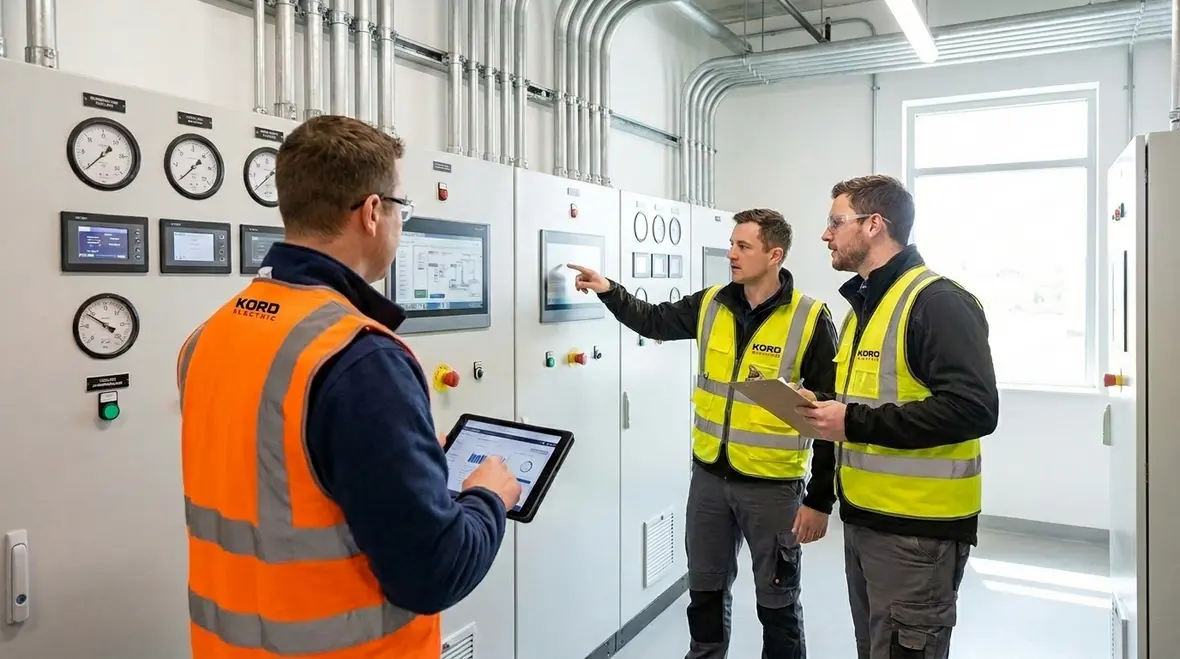
Smart Energy Management Systems ROI Guide
Kord Electric helps commercial and industrial facilities take control of energy with our smart energy management systems. We see it every day: loads run like clockwork, yet electricity bills still act like they have their own personality. Our approach brings visibility, automation, and smarter decisions into how a building uses power. Then, people stop guessing and start managing. And yes, the team explains it in plain language too, because no one deserves an energy audit that sounds like a science documentary.
In this article, we explain the ROI of implementing smart energy management systems, how businesses measure payback, and why our technicians and expert service staff play a key role in making the results last. We also share practical examples tied to major property buildings, warehouses, offices, and industrial sites.
How smart energy management systems pay back in real business terms
When a facility invests in an energy platform, the return rarely comes from one magic button. Instead, it comes from multiple improvements that stack up over time. First, the system reduces waste. Next, it helps operators avoid expensive mistakes like running equipment longer than needed or missing peak demand opportunities. Then, it turns energy data into actions that maintenance, facilities, and operations teams can repeat.
Kord Electric typically focuses on outcomes that matter to property owners and operators. Those outcomes include lower utility costs, reduced demand charges, improved equipment life, and fewer emergency calls caused by “mystery” behavior in electrical loads. Because we serve commercial and industrial facilities, we design our support around operational realities, not theoretical dashboards.
In plain terms, the ROI shows up as either less spending, less risk, or both. And if you have ever watched a building manager chase a bad sensor at midnight, you already understand why “fewer surprises” counts as a return, even if the invoice does not label it.
Where ROI comes from: demand, efficiency, and better control
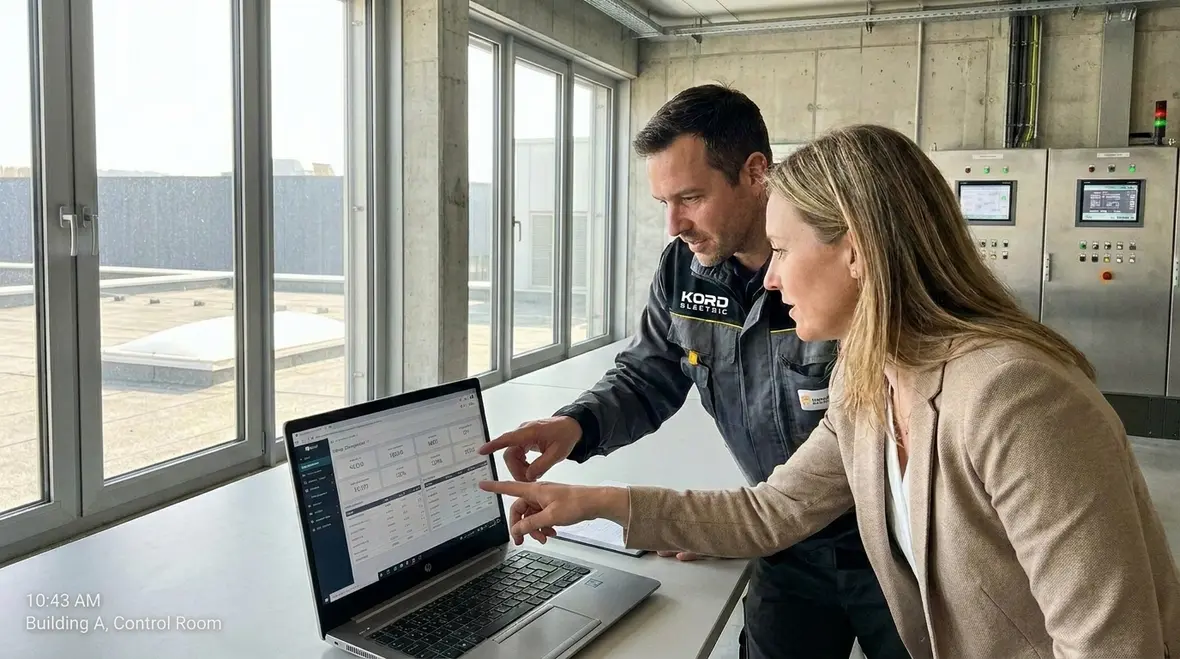
Utility bills contain more than usage. Many commercial and industrial accounts include demand charges and time based rates. Then there is the cost of wasted energy caused by poor scheduling, unnecessary reheat cycles, and equipment that runs when it should rest. Our smart energy management systems help address these layers.
Demand charge reduction. We help facilities manage peak load. For example, the system can coordinate HVAC staging, pump schedules, and other large loads so the building avoids sudden spikes that trigger higher charges.
Efficiency gains. Smart energy management systems monitor performance and detect when equipment deviates from expected behavior. As a result, teams adjust set points, fix control issues earlier, and keep motors, drives, and air systems operating closer to design intent.
Operational control. Instead of manual switching and guesswork, the platform supports consistent schedules and logic. Therefore, buildings perform the same way every day, not just on the days someone remembers the settings.
Our technicians and expert service staff do not just install components. They help teams understand what the data means, then translate it into operating practices. That matters because a system only pays back when people use it correctly, and people only use it correctly when they trust it.
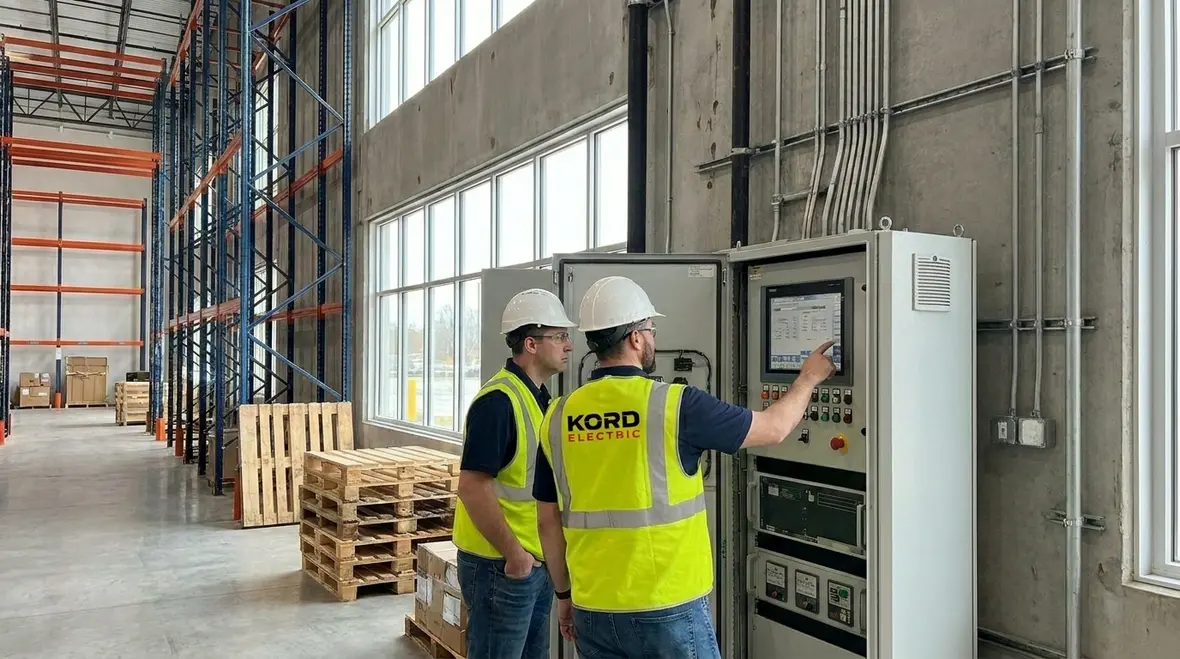
Measuring payback with numbers your finance team will trust
Every building has different tariffs, equipment, operating schedules, and baseline performance. Because of that, ROI must be measured with care. Kord Electric helps clients build a simple measurement approach that stays credible to both operations and finance.
Typically, we start with three steps. First, we establish a baseline of energy use and peak behavior using existing utility data and on site measurements. Next, we map high impact loads, such as HVAC, refrigeration, pumps, and process equipment. Then we track changes against the baseline after implementation.
We recommend separating results into categories that show how the savings happen. For instance, energy reductions show one line item. Peak demand changes show another. Maintenance and reliability improvements may show indirectly through fewer service events or reduced downtime. Finally, we document the timeline, because ROI can improve further after initial tuning.
If a client asks, “When will we see the money,” our answer is direct. Payback often begins within the first period once scheduling and controls align with how the facility actually operates. Then longer savings come through performance optimization and early detection of issues. In other words, the system pays while it learns, not after it gives a full lecture.
For facilities that want to connect ROI with fewer surprises, pairing smart energy management systems with structured commercial and industrial electrical maintenance plans helps keep performance gains and savings on track over the long term.
What a successful rollout looks like in major property buildings
Implementation is where many projects either shine or stumble. The biggest risk is not the hardware. It is misalignment between the system and the facility’s workflow. At Kord Electric, our expert service staff works through the rollout like it is part of normal operations, because for commercial and industrial sites, it is.
We help define control priorities first. For example, we identify which loads can shift safely during peak periods and which loads need tighter control. Then we align the system with existing building management practices, so operators do not feel like they replaced their brain with a black box.
Next, we tune sensors, verify readings, and validate control logic. Then, we train the teams. Our technicians explain what to look for in alerts, how to interpret trends, and how to respond quickly. Because the best system in the world still fails if nobody knows how to use the output.
Finally, we plan for ongoing optimization. The facility changes. Schedules change. Equipment ages. Therefore, the energy platform should not freeze like a Netflix recommendation that never updates. We guide refinements so performance stays strong across seasons.
When teams want rollout support that fits busy facilities, resources like Kord Electric’s guidance on commercial electrician cost planning for large facilities help align budgets, expectations, and schedules before the first device goes online.
Case style examples: ROI in HVAC, motors, and shared systems
Facilities often expect savings from obvious areas like HVAC. However, ROI usually grows from coordinated improvements across multiple systems. Here are common patterns we see across commercial and industrial buildings and major property structures.
HVAC tuning and staging
When a building uses multiple air handlers or variable air systems, the system can reduce unnecessary reheat and improve sequencing. As a result, it lowers energy while maintaining comfort and process needs. Additionally, the platform tracks run times and performance so teams catch issues before they become expensive.
Pumps and chilled water systems
Pump control often drifts over time. With smart energy management systems, teams can verify actual flow and compare it to set points. Then they correct control schedules and logic, which reduces wasted pump energy and prevents overheating or under delivery.
Motors and electrical load management
For industrial operations, power quality and load distribution matter. We help clients monitor electrical behavior, support coordination of large loads, and reduce the chance of running equipment inefficiently. Over time, this improves both energy performance and reliability.
And because our expert service staff stays involved, the facility learns what “normal” looks like. When something deviates, the platform flags it, and the team can respond faster. That faster response often prevents downtime, and downtime has a cost that hits more than just the utility bill.
Risk reduction: the quieter ROI nobody puts on a spreadsheet
Yes, ROI includes savings. Yet it also includes reduced risk. A smart platform creates a record of energy and system behavior. That record helps facilities avoid costly surprises and supports better planning.
For example, earlier detection can reduce equipment stress. Fewer abnormal cycles can extend component life. Better scheduling can lower wear on HVAC systems and pumps. Then improved visibility supports compliance and reporting for some clients, especially where sustainability targets matter.
Moreover, smart energy management systems can support safer operations by helping identify issues like unusual load growth or control failures that might otherwise go unnoticed. And if you have ever had an operator say, “It worked yesterday,” you already know how valuable early signals can be.
Kord Electric helps by explaining findings, not just delivering data. Our technicians walk through trends and show how changes connect to real actions. That turns insights into decisions that protect both budgets and uptime.
For organizations that want to connect risk reduction with broader system resilience, exploring structured support alongside resources like Kord Electric’s insights on hidden electrical risks in commercial buildings can round out the ROI picture beyond just the utility bill.
Bringing ROI and reliability together with broader electrical strategy
Smart energy management systems deliver their strongest returns when they sit inside a larger electrical strategy. That strategy connects everyday optimization with long term upgrades, code compliance, and emergency readiness.
For example, a facility might use the platform to highlight consistently overloaded circuits or aging equipment that runs hot. Those insights can then guide targeted upgrades, informed by resources like Kord Electric’s guides on rewiring costs, panel labeling, and preventive maintenance planning. Instead of guessing where to invest capital, teams use live data to prioritize projects that protect both uptime and ROI.
This is also where regional operating realities matter. Facilities across Los Angeles County, for example, often juggle complex tariffs, aging infrastructure, and dense tenant mixes. Partnering with a team that understands those conditions and offers dedicated Los Angeles County commercial and industrial electrical services helps ensure that smart energy strategies line up with local requirements, grid behavior, and long term growth plans.
FAQ: smart energy management systems ROI for commercial and industrial facilities
Ready to improve ROI with smarter control?
If your commercial or industrial facility wants lower energy costs and fewer operational surprises, Kord Electric can help. We work with your team, explain the findings in plain terms, and deploy our smart energy management systems with a rollout plan that fits real operations. Then we measure results so your stakeholders can see the payback with confidence. Reach out today and let us map your highest impact loads. We will help you turn energy data into savings you can actually feel.
Whether you are focused on trimming demand charges, stabilizing critical equipment, or building a long term plan for upgrades across Los Angeles County, our technicians and expert service staff are ready to support you from first walkthrough to final documentation. Smarter control is not a luxury reserved for new construction; it is a practical tool for every major property, warehouse, industrial facility, and office that wants energy to work harder and quieter in the background.


