

Commercial Electrical Load Balancing Services
At Kord Electric, we focus on commercial electrical load balancing to help facility managers protect performance, lower downtime, and keep costs under control. In the real world, equipment does not fail politely on a schedule, and panels do not “guess” how much power your building will need tomorrow. So we plan for changing demand, uneven phase loads, and seasonal swings. As a result, other teams can stop playing electrical roulette and start running a system that behaves like it was designed that way. And yes, we still find the occasional breaker that trips for reasons that feel personal, but most issues are predictable when loads are managed properly.
How commercial load balancing improves facility efficiency
Load balancing is the process of distributing electrical demand across phases so the building draws power evenly. When it is done well, the electrical system runs cooler, holds voltage more steady, and avoids nuisance trips. Therefore, equipment life improves and operations stay consistent. If load imbalance grows, one phase may carry more current than others, which increases heat in conductors and components. Consequently, thermal aging speeds up, insulation wears faster, and maintenance becomes more urgent.
Also, unbalanced load makes troubleshooting harder. Technicians often chase symptoms, like hot breakers or persistent alarms, instead of the cause. At Kord Electric, our expert service staff uses field measurements and load observations to pinpoint where the imbalance starts and how it evolves during shifts, HVAC cycles, and process loads. Then we translate those readings into practical actions facility teams can understand, approve, and maintain.
Think of it like balancing a playlist. If one speaker gets all the bass, it will sound great for five minutes and then start complaining. Your electrical system does not complain with words, but it does show up with heat, losses, and premature wear.
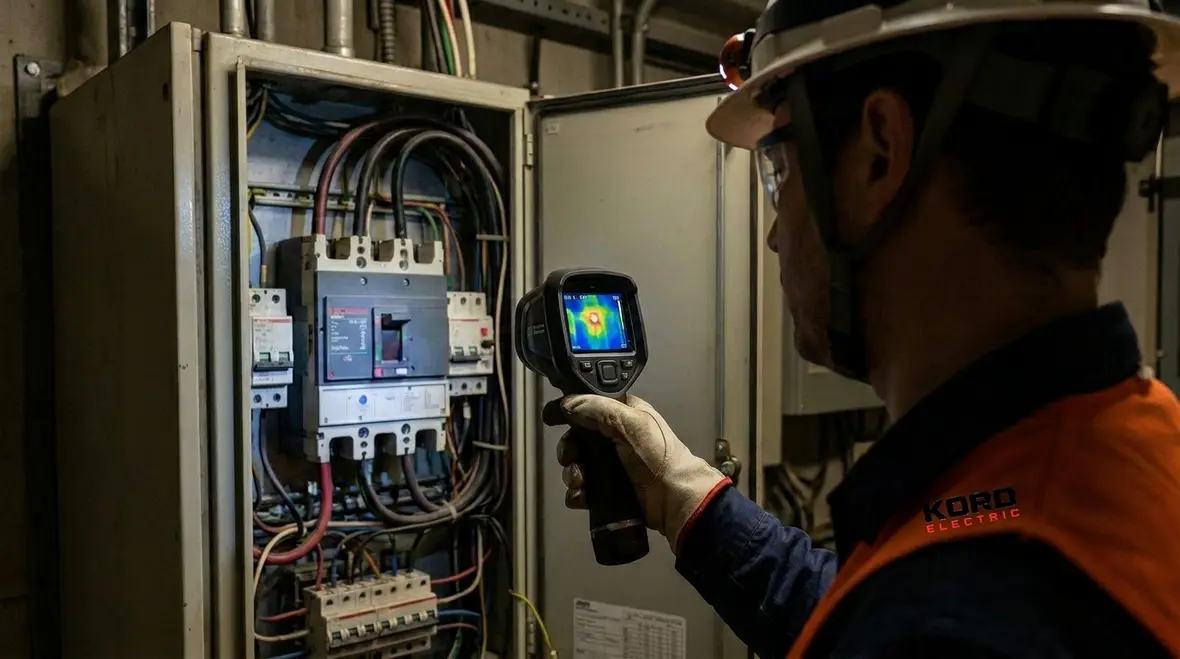
For many properties, commercial electrical load balancing connects directly to broader reliability planning. When facilities combine balancing with structured programs like electrical preventive maintenance, they are not just spreading load more evenly. They are also catching heat, wear, and emerging risks before those issues turn into downtime or emergency repairs.
Where imbalance actually comes from in major properties
In commercial and industrial facilities, imbalance usually forms through changes over time. Over the years, tenants expand, new equipment gets added, renovations shift circuits, and some loads get “temporarily” moved. Additionally, single phase devices and three phase distribution often get mixed in ways that make the original plan less effective.
Common sources include rooftop units that cycle unevenly, process loads that run in one department more than others, and panel schedules that do not match actual wiring after modifications. Moreover, lighting retrofits and plug loads can drift from the intended distribution when someone swaps a circuit without updating the documentation.
We also see imbalance when facilities operate in a pattern that varies daily. For example, production lines may load one phase more during a specific window, while office areas dominate at another time. Then, during nights or weekends, the ratio can swing again. The result is not just wasted energy, but also voltage stress that impacts sensitive controls.
At Kord Electric, our technicians treat these patterns as a normal part of building life, not an anomaly. They observe how current changes during real operating conditions, then recommend balancing strategies that match the way the property truly runs.

Those real-world patterns also intersect with other risks: aging panels, hidden electrical problems behind finished walls, and legacy equipment that no one remembers installing. When properties pair commercial electrical load balancing with broader risk reviews inspired by guidance like Kord Electric’s hidden electrical risks and maintenance planning, they get a clearer picture of where imbalance is forming and why it keeps coming back.
Load balancing and voltage quality: the connection managers can feel
Most facility leaders notice power quality issues first through equipment behavior. Controls reset. Drives fault. Motors complain. However, the root cause often hides in the background as phase imbalance, harmonics, or voltage drops.
When a phase carries excessive load, voltage may sag under peak demand. Even if the system stays within broad tolerance, the margin matters for variable frequency drives, building automation systems, and communications equipment. Therefore, stable voltage helps prevent nuisance shutdowns and improves reliability. In addition, balanced loading reduces uneven heating, which helps maintain insulation and contactor integrity.
Transitioning from theory to action, we recommend an approach that goes beyond “move a few circuits.” We review the electrical one line, examine panel capacities, and evaluate how loads behave during morning startup and peak operating hours. Then, our expert service staff maps likely load migration paths so teams do not accidentally move stress into another part of the building.
Sometimes, the best fix is not moving everything. It is identifying the few circuits that create the largest imbalance and planning safe reroutes with proper labeling and testing. That way, we improve commercial electrical load balancing without turning the electrical system into a DIY science fair.

For facilities that run critical operations or sensitive electronics, this connection between balanced loading and voltage quality often becomes the difference between calm days and recurring alarms. It is also a foundational layer that supports other upgrades, from commercial solar panel integration to modern controls and monitoring. When the underlying phases stay balanced, those technologies perform closer to their design intent.
Preventive maintenance that keeps balancing working
Even the best balancing plan can drift if the facility does not maintain it. That is why we tie our strategy into electrical preventive maintenance planning. Kord Electric supports major property buildings with routines that monitor components before they fail, and those routines directly support balanced performance.
According to our preventive maintenance philosophy, we focus on checks that reveal overheating, loose connections, abnormal readings, and wear that grows silently. For example, we inspect terminations and bus bar areas for thermal clues, verify protective device health, and review panel conditions that affect current distribution. Then we document findings so the next round of decisions builds on real history, not guesswork.
To keep things clear, our technicians also verify that labeling matches the field. That may sound minor, but in practice, wrong labels lead to wrong circuit work. And wrong circuit work leads to new imbalance. In addition, preventive checks help confirm that changes from past renovations did not leave the system in a new, uneven state.
For organizations that want this discipline built into their operations, it often makes sense to align balancing reviews with broader electrical preventive maintenance programs. That way, thermography, torque checks, cleaning, and documentation all support the same goal: a cooler, more predictable electrical system that stays balanced as the building evolves.
Our process for balancing commercial loads in the field
When we enter a property, we do not start with random rewiring. First, we collect data. Next, we analyze it for phase current patterns, operating schedules, and any obvious mismatches between the drawings and the actual system. After that, we propose safe adjustments that facility staff can approve with confidence.
Our expert service staff typically follows a structured workflow. We begin by mapping the existing loads by panel and phase, then we identify the dominant imbalance drivers. Afterward, we plan circuit moves that reduce the peak mismatch, not just the average load. We also account for demand timing, because the goal is to smooth the load curve during real operations.
Then we coordinate with facility teams so work stays within operational windows. We test and verify before we close out. Also, we label changes clearly so future troubleshooting stays fast. Finally, we provide a simple summary that explains what we changed, why we changed it, and what it should improve.
And yes, we double check our work. Electricity does not care about our confidence. It only cares about torque, continuity, and the laws of physics that never take a day off.
Dual column strategies to reduce waste and protect uptime
Action
Measure phase current under peak and part load
Use targeted circuit moves to reduce hot spots
Verify one line and labeling match the field
Inspect terminations and bus areas during preventive maintenance
Review protective devices for nuisance trips
What it improves
Sharper balance and steadier voltage
Lower heat, fewer failures, better reliability
Faster troubleshooting and fewer accidental changes
Stable performance and early detection of deterioration
Less downtime and fewer interruptions to operations
These dual column strategies keep commercial electrical load balancing grounded in measurable actions. They also tie into broader commercial and industrial electrical maintenance plans so every inspection, adjustment, and circuit move supports uptime instead of chasing yesterday’s problems.
Common mistakes that keep imbalance alive
Many facilities try to handle imbalance with quick fixes. However, short cuts usually create new problems. For example, teams sometimes move circuits without checking panel capacity on all phases. As a result, the imbalance may shift rather than improve. Others reroute loads while ignoring load timing. That can improve one hour and worsen another, which keeps the problem alive but moves it.
Another recurring mistake is failing to update documentation. Then, the next technician arrives and works off outdated schedules. Therefore, adjustments become harder, and balancing efforts lose momentum. We also see issues when maintenance intervals slip. A loose connection can heat up, increase resistance, and skew current paths. Consequently, phase behavior changes even if no one touches the panel.
At Kord Electric, we help facilities avoid these traps by tying balancing work to preventive maintenance and verification. Our technicians keep the process grounded in measurements and real operating conditions, not just spreadsheet assumptions.
For multi-site portfolios or major properties in regions like Los Angeles County, these mistakes can multiply quickly. That is why many facility leaders align commercial electrical load balancing with structured service offerings similar to Los Angeles County electrical services, so every location follows the same disciplined approach instead of improvising panel by panel.
FAQ
Call Kord Electric for smarter power distribution
Facility teams do not need more electrical guesswork. They need a plan that fits their operation, their equipment, and their schedules. Kord Electric brings expert service staff, careful measurements, and preventive maintenance thinking to commercial and industrial facilities. If phase imbalance is quietly driving heat, losses, and downtime, we help you correct it with safe, verified steps. Contact us today to review your panels, improve balance, and protect uptime like a pro, not like an overnight hero.
For facilities that also need broader support beyond commercial electrical load balancing, Kord Electric can align this work with related services such as commercial electrical maintenance, troubleshooting checklists, and regional programs tailored for high-demand markets. Integrating these services means your panels, feeders, and equipment upgrades all pull in the same direction: less downtime, lower risk, and a system that quietly does its job day after day.
When you are ready to turn imbalance into a managed, measurable part of your electrical strategy, the next step is simple: schedule a review, share your pain points, and let a focused team translate those symptoms into a practical balancing plan.


