
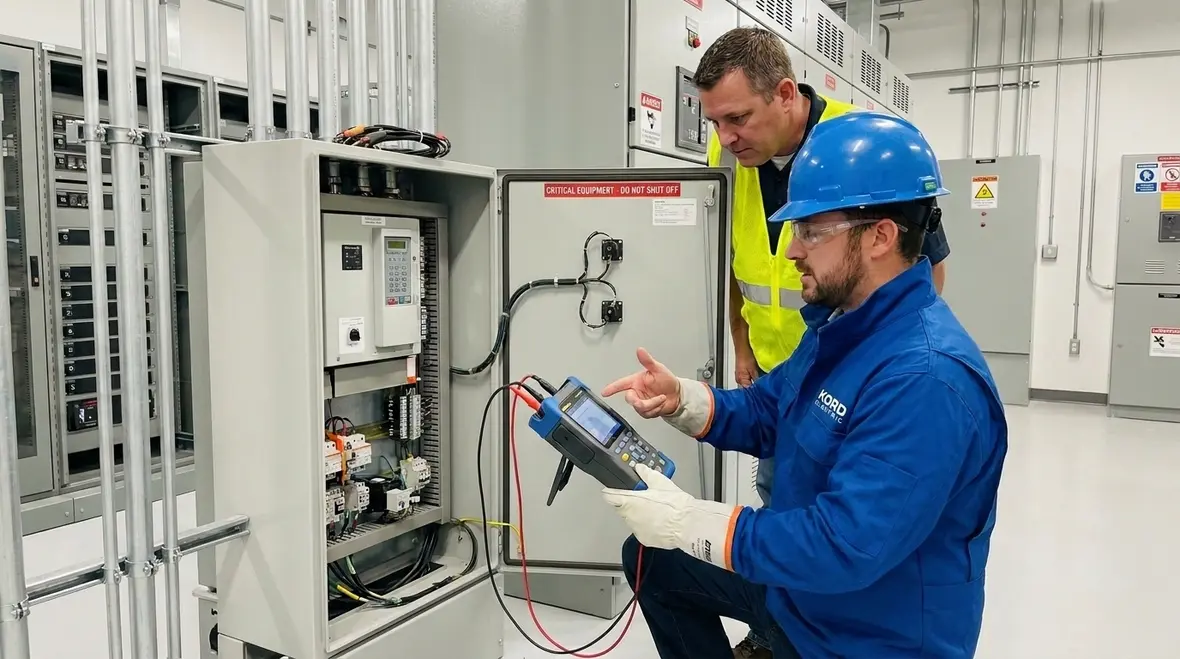
Industrial Power Quality Solutions for Uptime
Kord Electric strengthens industrial power quality solutions for critical equipment so your facility can keep running when the stakes get high. We focus on the power side of the problem: voltage dips, harmonics, unstable grounding, and the quiet troublemakers that shorten equipment life. And while other teams may treat power as a background utility, we treat it like a mission-critical system.
In this article, we explain how our technicians and expert service staff assess risks, build practical plans, and keep commercial and industrial facilities steady. After all, uptime is the goal, and “hope” is not a maintenance strategy. (It sounds nice, though. Like a sitcom plot where nothing goes wrong.)
What is power quality risk for critical equipment?
When we talk about power quality, we mean the electrical conditions that ride through your building every day. Critical equipment such as process controls, HVAC systems, elevators, pumps, security systems, and data equipment depend on clean and stable power. However, the grid does not always deliver what these loads need, and internal issues can make it worse.
First, we see voltage sag and momentary interruptions that can reset controllers. Then we find harmonics caused by variable frequency drives, rectifiers, and modern electronic loads. These harmonics can overheat transformers, increase motor losses, and create nuisance trips. Next, we notice transients from switching operations, lightning events, or contact wear. Even if the lights stay on, sensitive electronics might not be as forgiving as your average TV show audience.
Additionally, poor grounding and loose connections can raise noise and cause erratic operation. Therefore, we focus on power quality solutions that protect equipment, not just the lights in the lobby. We act because the cost of downtime is often higher than the cost of prevention.
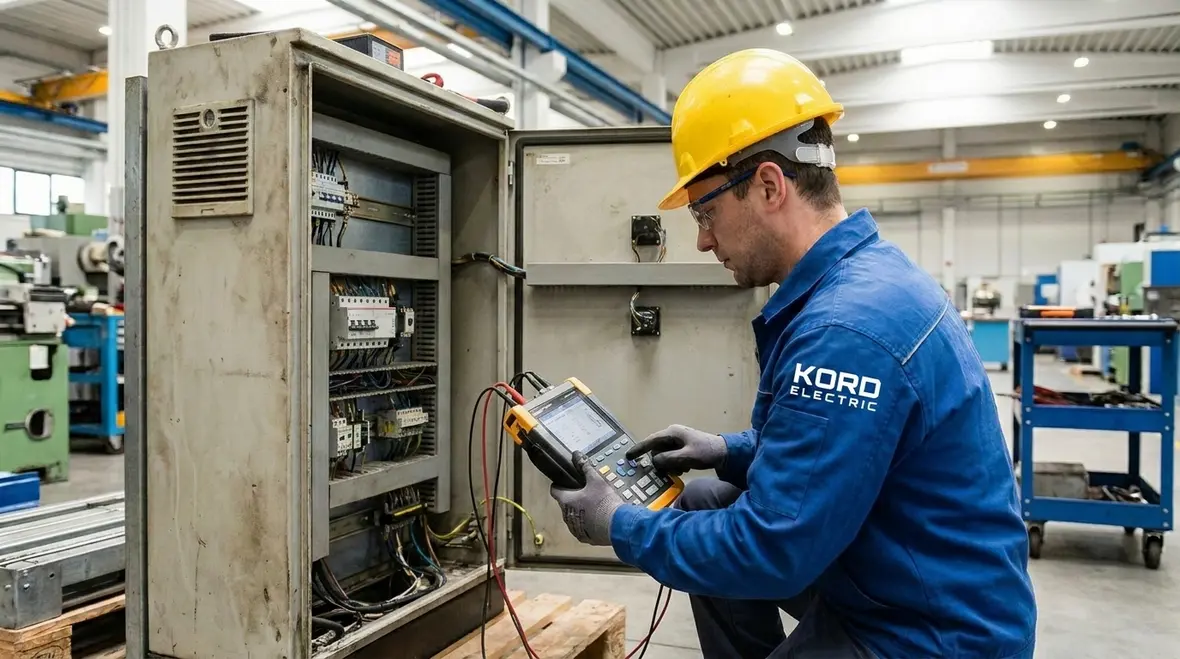
How we diagnose issues in commercial and industrial buildings
Our technicians approach power quality the same way a good mechanic approaches an engine. They do not guess. They measure, compare, and then explain what the data means. As we step into a facility, we review site history, load types, and operating cycles. Then we look for clues like frequent nuisance alarms, uneven equipment performance, and recurring shutdown patterns.
After that, we perform targeted testing. We use power quality analysis to capture events such as sags, swells, harmonics, and frequency variations. We also check system grounding, insulation condition indicators, and the state of connections. Meanwhile, we verify the settings on protection devices and the coordination between breakers, fuses, and surge protection.
To keep it clear for your team, our expert service staff explains the results in plain language. We show what happened, when it happened, and which equipment likely suffered. In other words, we translate electrical data into operational risk you can act on. That way, decisions do not rely on “someone said it might be the transformer.” In a calm way, we help you stop chasing ghosts.
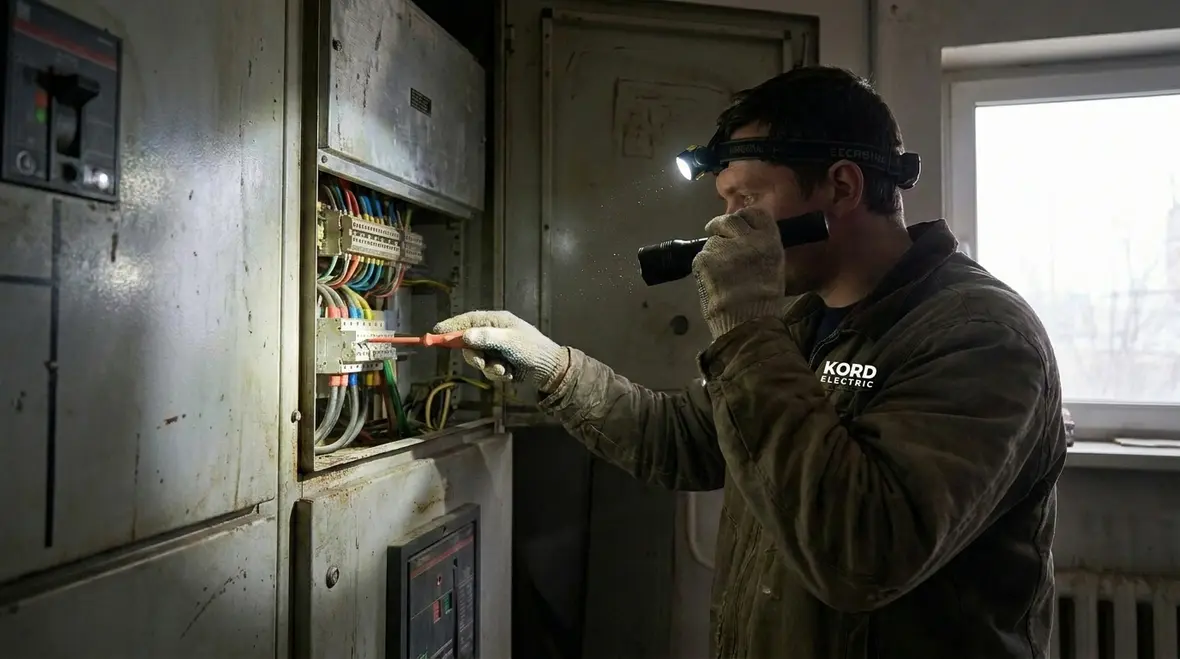
Which industrial power quality solutions reduce downtime?
Once we understand the problem, we match the solution to the load, the system, and the environment. Our industrial power quality solutions include measures that address both disturbances and their causes.
Below are the types of improvements we commonly recommend for commercial and industrial facilities and major property buildings:
Surge protective devices to manage transients and protect sensitive electronics
Voltage regulation strategies to stabilize supply and reduce sag related trips
Harmonic mitigation using engineered approaches to reduce overheating and nuisance behavior
Proper grounding and bonding to control electrical noise and improve protection reliability
Energy conditioning options when critical loads demand a higher level of stability
Targeted maintenance that focuses on connections, switchgear performance, and preventive checks
Furthermore, we also align protection and power distribution design so events do not cascade. For example, we evaluate whether breaker settings and coordination match your load profile. Then we confirm that surge protection exists at the right levels, with appropriate rating and placement.
In short, we do not throw equipment at a problem and hope for the best. We build solutions that work together, so critical equipment sees reliable power day after day.
How maintenance plans prevent power quality failures
Testing reveals what is happening, but maintenance plans keep it from happening again. We reference our commercial and industrial electrical maintenance plans because they provide structure and accountability. Those plans cover inspections, scheduled service, documentation, and follow through.
First, we set expectations for how your electrical system will be reviewed. We include checks that matter to power quality, such as component condition, connection integrity, and breaker performance. Next, we plan for seasonal and operational changes that affect loads, including HVAC schedules, process cycles, and equipment upgrades.
Then our technicians document what they find and what they do. That documentation helps you track trends over time rather than reacting only after a failure. In addition, it supports compliance needs many facility managers face.
So, instead of waiting for the next trip, we help you stay ahead. And yes, staying ahead is cheaper than dealing with an unplanned outage. Even hero stories have budgets.
Learn more in our blog post here: Commercial and Industrial Electrical Maintenance Plans
What makes our expert service staff different
Equipment reliability improves when people understand the system, not just the symptoms. Our expert service staff does two things consistently: they diagnose with care, and they explain with clarity. After we complete an assessment, we speak directly to your facility team in business friendly terms.
We also coordinate the service work around your operational needs. For commercial and industrial facilities, downtime is not just an inconvenience. It affects production, customer service, safety systems, and security. Therefore, we plan interventions with attention to timing and risk.
Additionally, we maintain a practical mindset. We aim for solutions that you can operate, monitor, and support over time. That means we consider spare parts, documentation, and how your staff will respond to alarms or unusual events. In this way, your facility does not become dependent on emergency calls.
To keep the process calm, we walk you through findings, recommend next steps, and explain tradeoffs. We keep it professional, and occasionally we add a light joke because stress already does enough damage. Like, “We promise not to just blame the weather.”
Where to prioritize power quality upgrades first
Not every facility has the same risk profile. However, we help you prioritize based on critical equipment and actual operating impact. We start by mapping your loads to power quality vulnerabilities.
Typically, the first priority goes to areas where disturbances directly affect life safety, process controls, or high value systems. Then we evaluate sensitive electronics and control systems that experience the most frequent resets or performance drops. After that, we look at upstream distribution components that can amplify events, such as older switchgear, overloaded transformers, or distribution with poor connection condition.
In addition, we consider future changes. If you plan to add motors, install additional VFD drives, or expand production, the harmonic profile and transient behavior may change. Therefore, planning upgrades early can reduce cost and rework later.
Finally, we align upgrades with your maintenance plan cadence. We time improvements so they support scheduled service rather than creating extra disruption. This approach keeps your facility stable and your budget under control.
FAQ
Our typical first step
We visit your site, review load and operating patterns, and collect power quality data to pinpoint the root cause.
Our typical next step
We propose industrial power quality solutions and tie them into maintenance planning so reliability improves long term.
For facilities that need broader support across their electrical infrastructure, our team can also connect power quality work with related services such as Los Angeles County electrical services so upgrades, repairs, and preventive maintenance stay aligned instead of living in separate silos.
If your facility wants to keep failures from turning into emergencies, pairing power quality improvements with a structured preventive program like Kord Electric’s electrical preventive maintenance services helps you move from reacting to issues to managing them calmly and ahead of schedule.
Conclusion: Let’s protect your uptime with a clear plan
Critical equipment deserves more than hope and accidental luck. At Kord Electric, we diagnose power quality risks with care, then apply industrial power quality solutions that fit your commercial or industrial facility. Our technicians and expert service staff explain findings clearly, and we connect improvements to maintenance so reliability keeps improving instead of slipping. If you want fewer trips, steadier performance, and a calm plan you can trust, contact Kord Electric today to schedule an assessment and build your reliability roadmap.


