
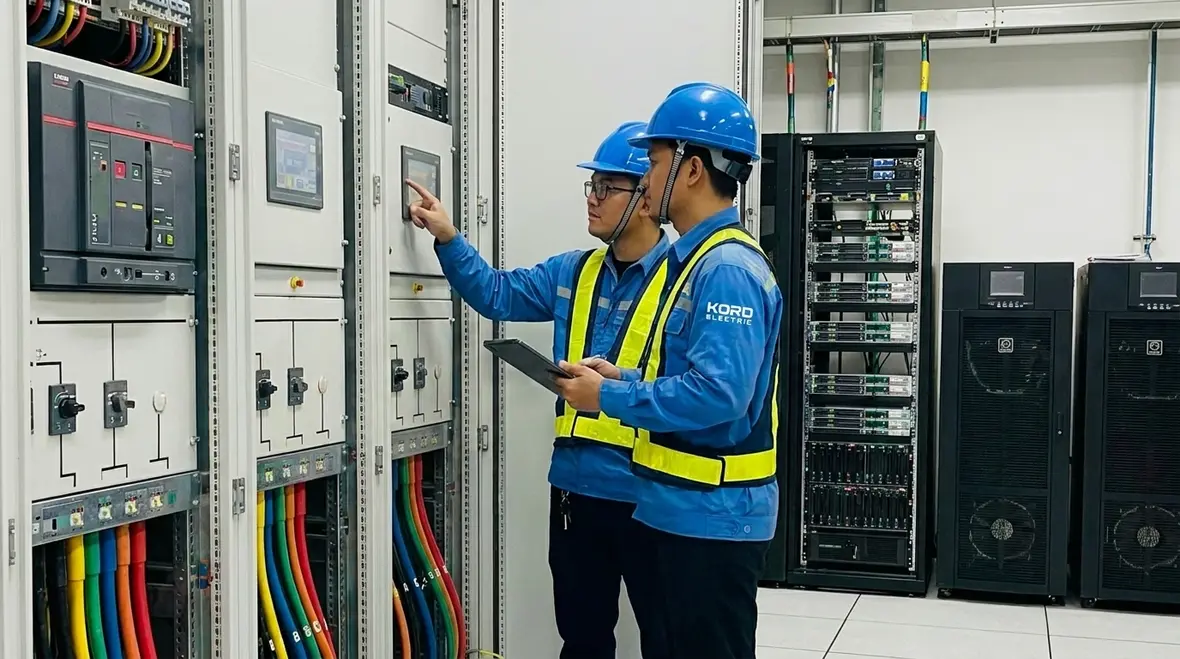
Data Center Power Redundancy for Real Reliability
Data center power redundancy that actually survives real life
In commercial and industrial facilities, data center power redundancy must do more than look good on paper. We at Kord Electric plan for the moments when a breaker trips, a component ages faster than expected, or a utility feed acts like it has a bad sense of humor. And yes, we have heard the same excuse in meetings: “It never happened before.” Well, it will happen, because it always does.
That is why we focus on practical strategies that keep critical systems alive during faults and maintenance. Our approach follows reliability principles for electrical distribution design, so others can reduce downtime without turning their building into a science fair. Our technicians and expert service staff then help customers understand the “why,” not just the “what,” so the system stays dependable long after commissioning. For a deeper look at the broader backbone behind this, many teams also review our companion guide on data center electrical distribution design for reliability alongside their redundancy planning.
Build redundancy from the distribution design up

When others try to add redundancy late, they usually end up with extra parts and no real resilience. Therefore, we start at the electrical distribution design stage and we treat reliability like a system, not a wish. In the referenced reliability-focused design guidance, the core idea stays consistent: plan for faults, isolate them quickly, and keep critical loads supplied through alternate paths.
So, we help teams define which loads are truly critical and how they should be fed. Then we align that with switchgear layouts, transformer choices, and bus schemes. For commercial and industrial facilities, we typically recommend design patterns that reduce common failure points, while also limiting the number of devices a power path must pass through during a transfer.
In plain terms, we design so the failure of one element does not become the failure of the mission. And if that sounds obvious, good. It should be obvious. Yet, in the field, we still see single points of weakness disguised as “cost savings.”

Use selective coordination to stop faults from spreading
Once the distribution plan is set, we move to protection strategy. Selective coordination means upstream devices wait their turn, while downstream devices clear the fault quickly. As a result, the rest of the system keeps running and only the affected area loses power.
Our technicians explain this with a calm, step by step approach. We do not just hand over settings and walk away. We translate the protection philosophy into what facility teams will see during actual events. For example, a well coordinated system reduces the odds that an entire critical segment goes dark due to a localized issue.
To achieve that outcome, we help others confirm relay settings, breaker timing, and current limits across the hierarchy. Then we validate the behavior for the most likely fault types, including short circuits and overload conditions. This matters because coordination is not a one time checkbox. Load growth and equipment changes can shift the balance over time.
Plan for transfer behavior during maintenance and outages
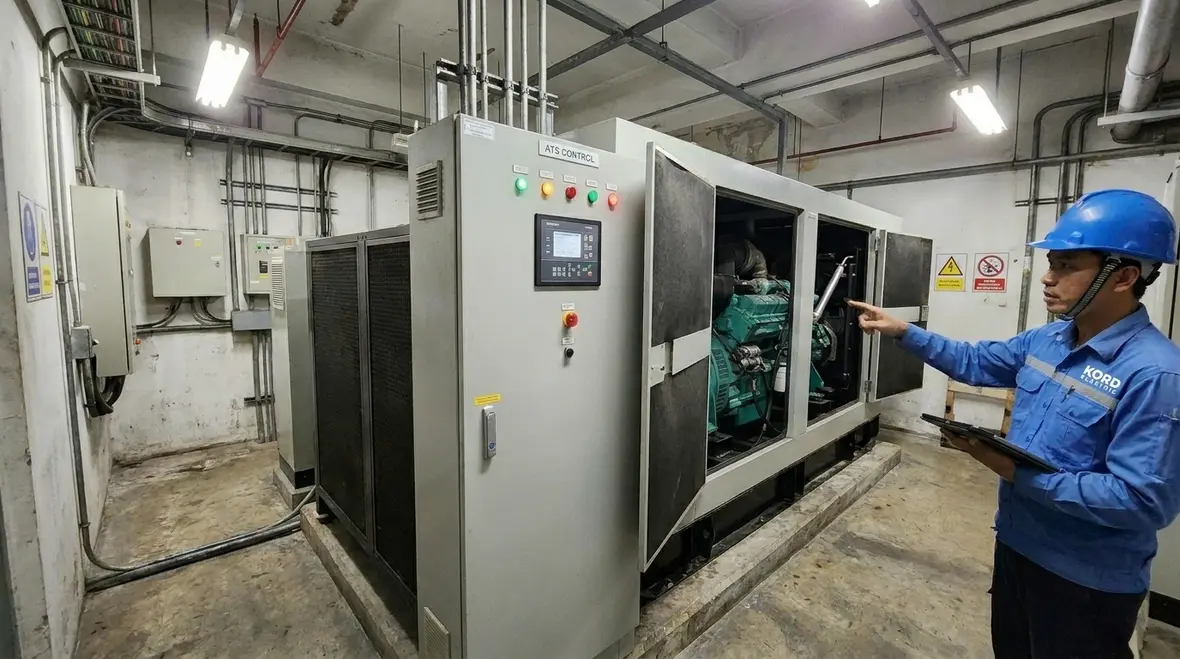
Redundancy does not end at “two sources.” It also requires transfer behavior that is smooth, predictable, and safe for sensitive equipment. Therefore, we plan how power transfers occur between normal and alternate feeds, and how the system handles failures during the transfer window.
Our expert service staff walks others through transfer modes in a way that facility leaders can use in operations. We explain what happens when utility power drops, when a generator starts, and when a static switch or breaker transfer occurs. Then we document the sequence so the site team understands the expected signals and alarms.
Also, we design for maintenance without surprise. If a facility plans to take equipment offline, the system should support that plan. In other words, maintenance should not feel like pulling a guitar string and hoping the whole song still plays. We make it structured, testable, and repeatable.
Match backup power to load reality, not guesswork
Generators, UPS systems, and alternate feeds must match the load profile of the facility. That includes steady state draw, starting surge, and the behavior of cooling and control systems. So, we help others avoid the classic mistake: sizing backup power for an average day, then watching it struggle during peak demand or simultaneous startup.
To support long runtime and stable performance, we plan fuel strategy, generator controls, and monitoring. We also consider harmonic impacts and power quality issues that can show up in modern equipment. And because major property buildings and large commercial and industrial sites do not all behave the same, we tailor the design and test approach to the actual equipment list and operating pattern.
In our experience, careful load assessment beats optimistic assumptions every time. It turns redundancy from a brochure feature into an engineered outcome.
Reduce single points with thoughtful paths and compartmentalization
Next, we help others reduce single points of failure. In practice, that means creating multiple power paths where it matters, and compartmentalizing sections so one fault does not cascade. We also look at cable routing, busbar segmentation, and the physical layout of switchgear rooms.
As we review distribution pathways, our technicians focus on the “boring details” that prevent dramatic failures. For example, we evaluate how many systems share the same support infrastructure, and whether a single physical event could damage multiple critical feeds at once. We then recommend separation and protection measures that fit commercial and industrial construction realities.
We even look at operational workflows. If the site team must use a single process that can fail under pressure, the best electrical design still suffers. Therefore, we coordinate with facility leaders on planned operating sequences and access needs, so redundancy remains usable during real events, not just real design reviews.
Test, monitor, and keep redundancy current
After installation, we do not treat reliability as “set it and forget it.” Instead, we help others test the system and keep it aligned with changes. That includes periodic inspections, functional tests, and review of protection settings when equipment changes.
Monitoring plays a major role in modern facilities. When the system reports the right data, others can respond faster, and they can trend issues before they become outages. We support customers by explaining what alarms mean, what they require, and how operators should act. Our expert service staff focuses on clarity, because confusion in an emergency is like driving in fog with the headlights off. It happens. But it should not.
We also recommend documentation that matches how the site operates. If one diagram shows a different reality than the field, troubleshooting gets slow and costly. Therefore, we help teams keep records current, especially when upgrades touch switchgear, transfer devices, or critical loads.
FAQ for data center power redundancy in commercial buildings
Key strategies we recommend before commissioning
Before energizing critical systems, our team at Kord Electric confirms the strategy is complete and the details are aligned. First, we review load lists and criticality so others do not treat every system like it is equally urgent. Next, we validate protection coordination across levels, because selective clearing keeps redundancy meaningful. Then we check transfer sequences and alarm logic, so operations teams know what to expect during every mode.
Finally, we plan the testing and documentation path. We want the facility to run smoothly on day one, and we want it to stay smooth on day five hundred. A building should not rely on hope, and it definitely should not rely on a lucky breaker. We build for outcomes that engineers and operators can trust together. For many facilities in and around Los Angeles, pairing this design work with dedicated regional expertise such as our Los Angeles County electrical services helps keep those outcomes consistent as the site evolves.
Ready to make redundancy dependable?
If your commercial or industrial facility needs stronger reliability, we can help you plan, review, and support your power distribution with a focus on real operating conditions. Kord Electric works with your team to clarify critical loads, coordinate protection, and validate transfer behavior so your data center power redundancy performs when it matters. Reach out today for an assessment and service conversation. We will map the risks, propose practical steps, and explain everything in plain language, so your next outage does not turn into a surprise event.
When you are ready to go beyond concepts and into a complete, reliability-focused plan, you can also connect this redundancy strategy with our broader work on data center infrastructure, electrical requirements, and maintenance programs. Together, those pieces turn “backup on paper” into power systems that behave the right way when the stakes are highest.


