
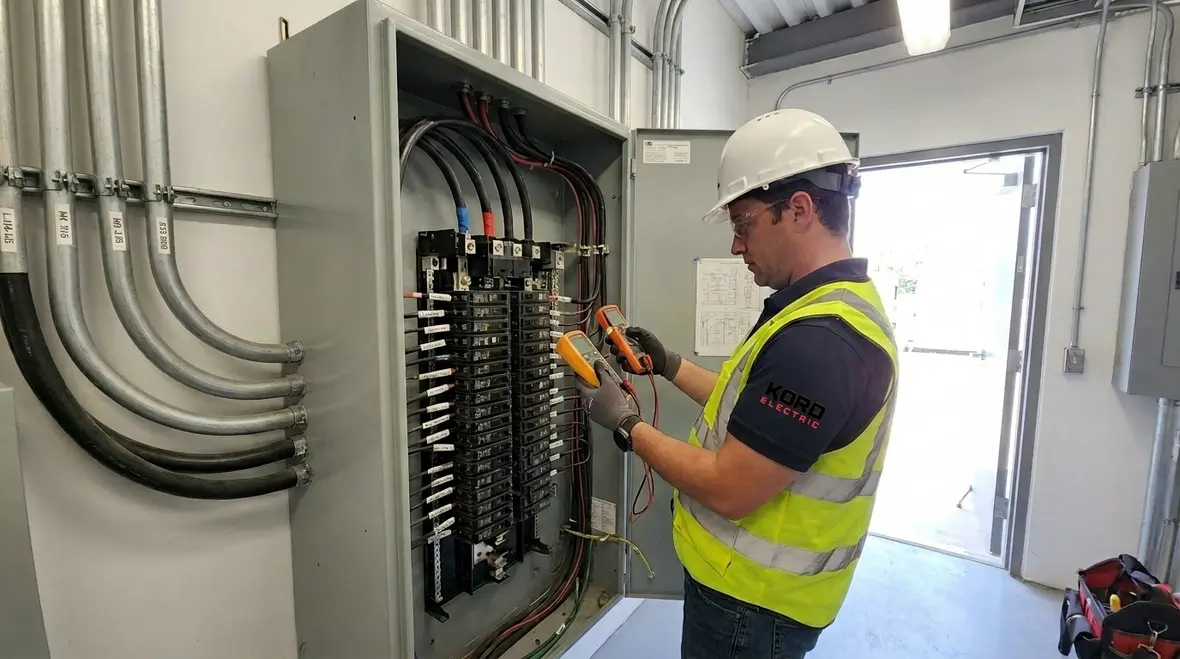
Commercial Electrical Load Balancing Solutions
At Kord Electric, we focus on commercial electrical load balancing because it helps our commercial and industrial clients run smoother, use energy smarter, and protect equipment that costs a lot more than a bad decision on a Monday morning. In fact, when loads share power evenly, voltage stays steadier, heat stays lower, and breakers stop “complaining” through nuisance trips. Then, everyone can get back to their real work.
Our experienced service staff explains the process in plain language, and that matters, because electrical systems are not like office calendars. They do not “auto update” when something changes. Instead, they react. And if load, phase, or harmonics drift out of line, the building feels it first in flicker, then in performance, and later in repairs.
Why load balance matters in commercial buildings
Commercial electrical load balancing works like good traffic control. When equipment, HVAC, and lighting share the electrical capacity evenly across phases, the system stays within safe operating bands. As a result, the facility experiences fewer voltage swings, less uneven heating in wiring, and more stable performance for sensitive loads like building automation, controls, and process equipment.
Additionally, load imbalance increases current on one phase while other phases run lighter. Over time, that unequal current can raise temperatures in transformers, feeders, switchgear, and panels. Furthermore, the electrical wear accelerates. It does not announce itself with a dramatic boom. It shows up quietly, in insulation aging and in the “mysterious” failures that take weekends to troubleshoot.
Our technicians see this pattern often in major property buildings where usage changes by tenant. One suite adds new servers. Another tenant expands production. Then, suddenly, the building’s load story changes. We help facilities correct that drift instead of waiting for the first complaint from a manager who says, “The lights are doing that thing.”
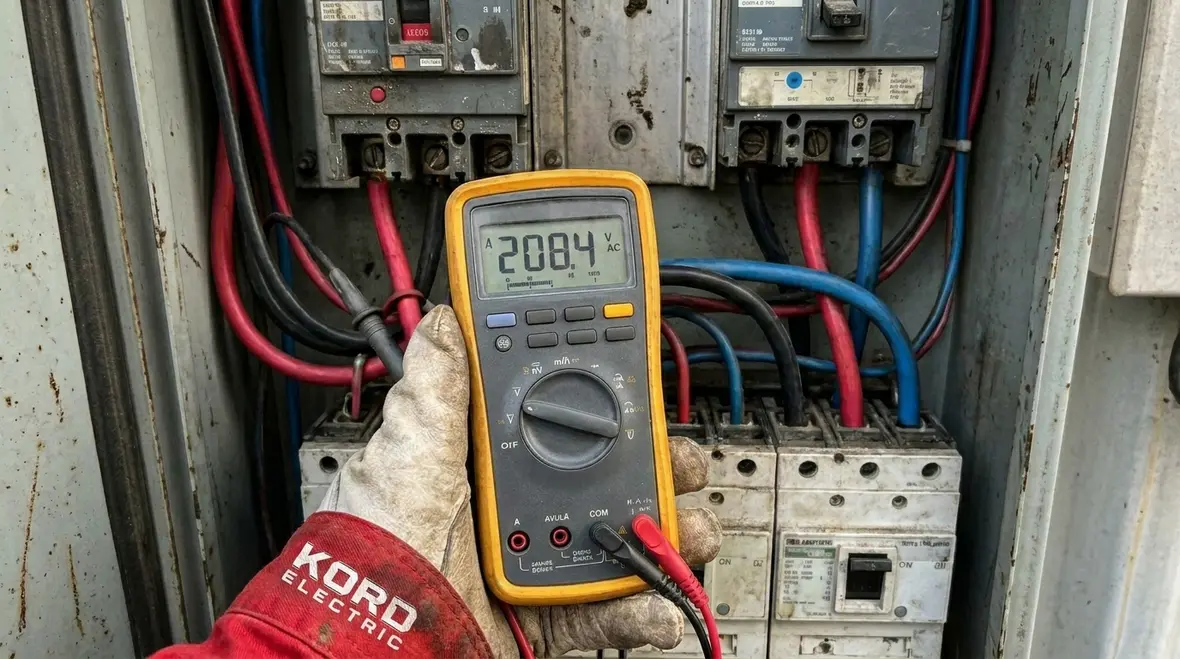
In many of these facilities, load balancing ties directly into broader reliability planning. When panels, feeders, and transformers operate within healthier limits, it becomes easier to spot other issues early and build a roadmap that keeps power distribution predictable instead of reactive.
How uneven phases create voltage problems
In many commercial and industrial sites, the biggest issue is not that power is “bad.” The issue is that it becomes unbalanced because the distribution does not match real-world usage. When one phase carries a heavier share, voltage drop increases on that phase. Meanwhile, the other phases sit closer to nominal voltage, so the system no longer distributes power evenly.
At that point, equipment can face lower effective voltage, and some devices draw current in ways that worsen the problem. For instance, motor loads may accelerate or struggle depending on the actual voltage they receive. Then, HVAC components can cycle more aggressively. Afterward, the building uses more power to do the same job. It is like using an escalator as a treadmill. Technically possible. Not efficient.
To understand the symptoms, we often point clients to our guidance on voltage fluctuations in commercial and industrial settings. In short, voltage instability can come from load changes, feeder capacity limits, and connection issues. However, imbalance plays a large role because it shifts the electrical stress where it hurts most.
When we combine commercial electrical load balancing with targeted voltage fluctuation diagnostics, building teams gain a clearer picture of where stress is building and how to keep sensitive loads operating inside their comfort zone instead of at the edge of their limits.
Where load balancing usually breaks down
Load imbalance rarely appears at random. Instead, it tends to show up after a “normal” change. A tenant remodels. A production line adds another shift. A property manager adds an EV charging bank. Then, the distribution circuits no longer match the original design intent.
Common breakdown points include:
New loads added to existing panels without checking phase distribution
Single phase grouping where circuits feeding similar equipment land on the same phase
Tenant handoff changes where panels get re-labeled but circuit paths stay the same
Capacity drift where feeders and transformers run closer to limits than expected
Harmonic content from variable frequency drives, rectifiers, and modern IT loads
And yes, we have heard the punchline version too. A client says, “We’re sure it was balanced when we installed it.” Then we ask one gentle follow-up: “Which part of the building changed since then?” Most of the time, the answer confirms it. Buildings evolve. Electrical systems need to evolve with them.
For many facilities, that evolution includes new technology, new process equipment, and new expectations around uptime. That is why we often pair load balancing work with structured electrical preventive maintenance, so hidden issues do not have a chance to build quietly in the background.
What our technicians measure before we rebalance
Commercial sites can look complicated, and our approach stays methodical. First, we collect data. Then, we map circuits and confirm how loads land across phases. After that, we measure voltage behavior under real operating conditions, not just in a calm snapshot during a walkthrough.
Our technicians and expert service staff typically examine:
Panel and feeder current by phase, including peak and steady-state
Voltage deviation during equipment start and typical load cycles
Temperature indicators when accessible, since heat often tells the truth
Load profile changes across time, shifts, and seasonal HVAC patterns
Harmonics indicators that can influence heat and power quality
Next, we review the building’s electrical single-line diagrams and check for mismatches between documentation and field reality. Moreover, we confirm that protective devices and bus ratings align with the actual load. Then, we propose a plan that reduces imbalance without creating new issues elsewhere in the system.
Because we work only with commercial and industrial facilities and major property buildings, we focus on the realities those sites share: multiple tenants, changing usage, and strict downtime requirements.
In many buildings, that review becomes the first real “health check” the electrical system has had in years. It highlights where distribution is working, where it is drifting, and where targeted improvements will deliver the most reliability per hour of downtime.
Steps we use for commercial electrical load balancing and efficiency
Once we confirm the root cause, we design corrections that make sense for the facility’s operating schedule. Load changes happen after-hours. Equipment starts during shift transitions. Therefore, we plan adjustments to reduce risk and keep the building stable.
Here is how we usually improve performance through practical load balancing:
Circuit reassignment so major loads distribute more evenly across phases
Load grouping cleanup to prevent similar equipment from stacking on the same phase
Breaker and panel optimization by verifying routing, labeling, and bus capacity
Power quality checks to confirm improvements in voltage stability during operation
Documentation updates so future changes do not undo the progress
Then, we verify the results with measurements. If voltage stability improves and phase currents even out, the system works as intended. If something still drifts, we adjust again, because one measurement cannot tell the full story. Power quality behaves like a movie plot. You see the twist later.
For facilities with complex loads, we also coordinate with maintenance teams and management to reduce unnecessary switching and to keep operations safe. In other words, we balance the electrical system and respect the building’s schedule.
In some cases, these balancing projects lead naturally into broader electrical preventive maintenance or rewiring work, especially when we uncover aging infrastructure that no longer fits the realities of current production, tenants, or technology.
Power quality wins: stability, safety, and lower costs
When commercial electrical load balancing improves, the benefits go beyond “everything feels better.” First, the building uses power more efficiently because the system runs closer to its design targets. Next, electrical components handle less stress, which can reduce premature failures in panels, feeders, and transformers.
Stability also protects operational uptime. Voltage issues can lead to nuisance trips, degraded performance, and inconsistent control behavior. Over time, those disruptions cost more than the maintenance that would have prevented them.
Additionally, steadier voltage supports modern equipment. Controls, drives, and IT infrastructure tend to respond poorly to repeated swings. Therefore, balancing the load helps those systems stay within their operating margins.
We also help clients avoid a common trap. Some facilities chase the symptoms without addressing the distribution. So, they repair or replace equipment while the underlying imbalance continues. Then the same failure cycle returns. Our job is to stop that loop with a real electrical strategy.
For properties that want long-term predictability rather than one-time fixes, pairing commercial electrical load balancing with ongoing electrical preventive maintenance services helps keep systems aligned with real usage instead of frozen in yesterday’s assumptions.
Frequently asked questions about load balancing
Does electrical load balancing improve safety for industrial sites
Yes, load balance supports safer operation. When phases share current more evenly, equipment experiences more consistent heating and electrical stress. That reduces the risk of hot spots that can damage insulation, weaken connections, or shorten equipment life.
Also, balanced systems reduce the likelihood of repeated protective device behavior. Breakers trip less often when they do not constantly handle uneven stress. Meanwhile, operators spend less time chasing intermittent faults that seem to appear and vanish like a pop-up ad.
Our team handles commercial and industrial projects with the mindset that safety is not a checklist. It is a process. That process includes commercial electrical load balancing, equipment inspections, and clear reporting, so safety decisions rest on real data instead of guesswork.
For facilities that operate around the clock or carry especially high risk, our emergency electrical services team is ready to respond if something unexpected does occur—but the goal of disciplined balancing and maintenance is to keep those emergency calls as rare as possible.
Conclusion: Let Kord Electric rebalance your system
If your commercial or industrial facility deals with flicker, inconsistent equipment performance, or recurring panel and breaker issues, we can help. Kord Electric brings experienced technicians, clear explanations from our expert service staff, and a measurement first approach to commercial electrical load balancing. Then we plan adjustments that fit your operations, verify results, and update documentation so the fix lasts.
For properties adding new production, expanding data capacity, or rolling out EV charging, this balancing work becomes the foundation for every upgrade that follows. A well-balanced system makes future projects smoother, safer, and more predictable—whether you are planning targeted repairs, larger electrical maintenance programs, or new infrastructure for growth.
To learn how these strategies fit into a broader reliability plan, you can also explore Kord Electric’s insights on commercial and industrial electrical maintenance and related services for large facilities. When you are ready to see how this applies to your building, our team is ready to walk the site, review the data, and build a practical path forward.
Contact us today, and let’s make your power system run as steady as a calm voice in a noisy building.
If your facility is planning new infrastructure or upgrades that will add substantial load, be sure to involve a team that understands how commercial electrical load balancing fits alongside services such as EV charger installation for commercial and industrial sites so capacity, distribution, and reliability all move in the same direction.


