Warehouse Lighting Energy Optimization Guide
At Kord Electric, we help managers use warehouse lighting energy optimization to cut wasted power, steady budgets, and keep crews safe. We do it with a practical plan, not a mystery. In this guide, we lay out what others usually skip: where energy leaks hide in real warehouses, how controls should work with your operation, and why the right upgrades can reduce costs without turning your facility into a dark comedy. And yes, we sometimes hear people say, “We already have lights.” That is like saying “I already have a car” right before you ask why it will not start.
Our team follows the same philosophy across commercial and industrial buildings, and as we explain it, our technicians and expert service staff keep the process clear from inspection to install. Next, we will walk through a step by step approach managers can run with.
1. What warehouse managers should measure before changing anything
Before anyone swaps fixtures, we measure. First, we map lighting zones by function: dock areas, picking aisles, packing stations, stairwells, and loading bays. Then we record runtime patterns like shift schedules, weekend operations, and seasonal daylight changes. After that, we compare measured power draw against expected values, and we check for aging ballasts, failed drivers, and mismatched dimming behavior.
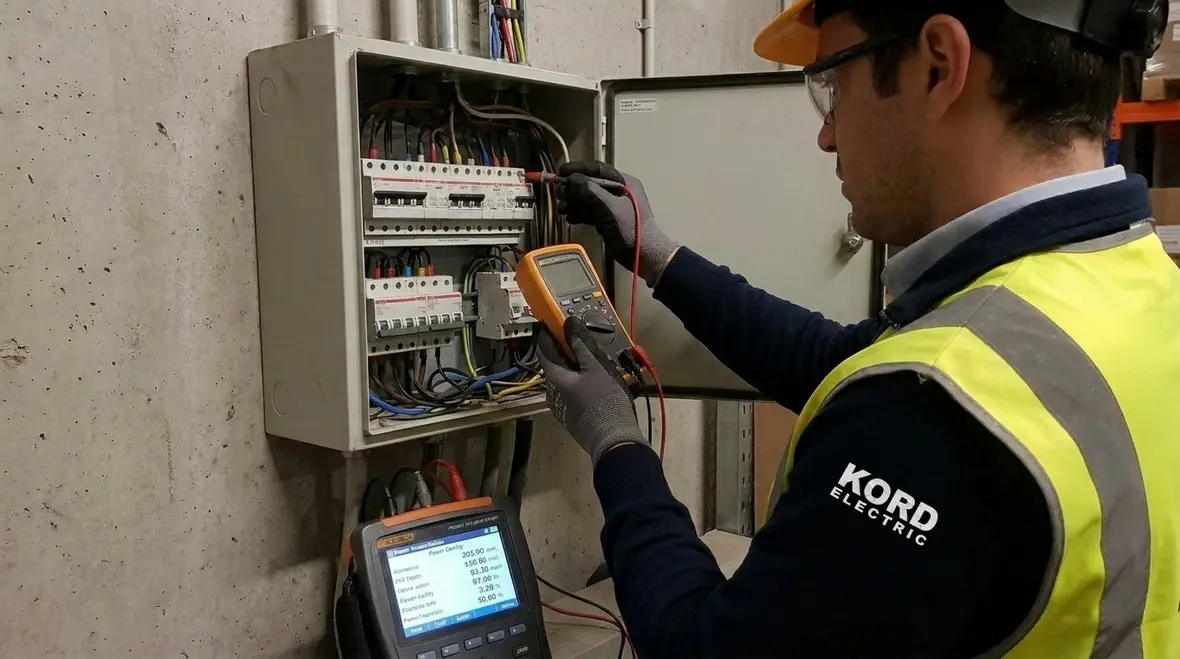
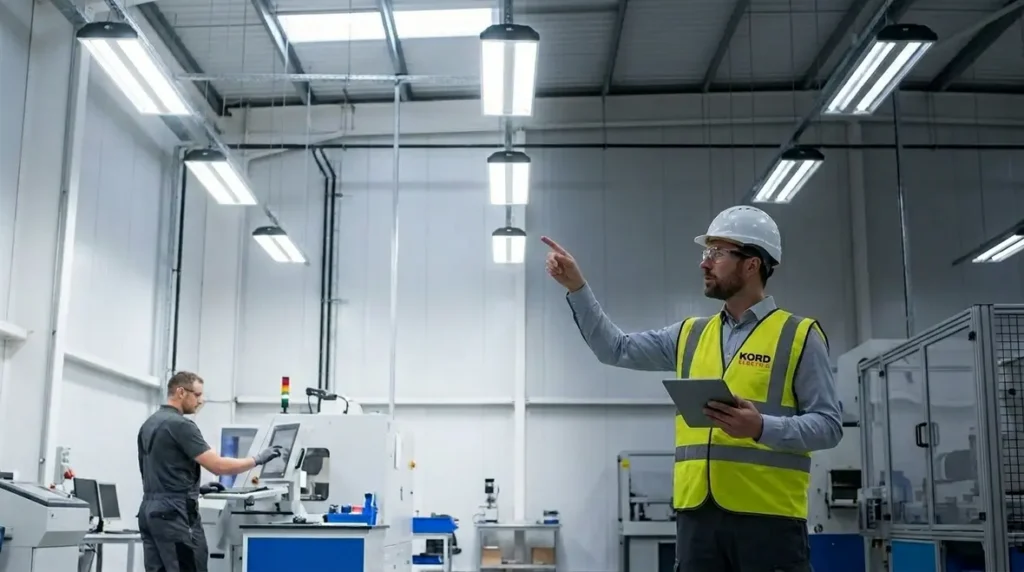
Next, we evaluate where light levels actually land. We use foot-candle checks at work surfaces and along aisles, because “it looks bright” does not hold up in audits. Also, glare matters in warehouses with reflective floors and moving vehicles. If glare rises, productivity drops, and then everyone blames the lighting instead of the design, like the world’s slowest blame game.
Finally, we look at how the electrical system supports the loads. That means panel capacity, circuit loading, and whether your existing wiring can handle new controls. In modern commercial electrical systems, this connection between lighting, power, and controls often determines the real savings. For a deeper dive into how power and controls work together across an entire facility, many managers pair this planning with insights from Kord Electric’s article on commercial electrical systems for modern buildings, then align warehouse lighting upgrades with the broader electrical roadmap.
2. The right lighting upgrades for industrial spaces
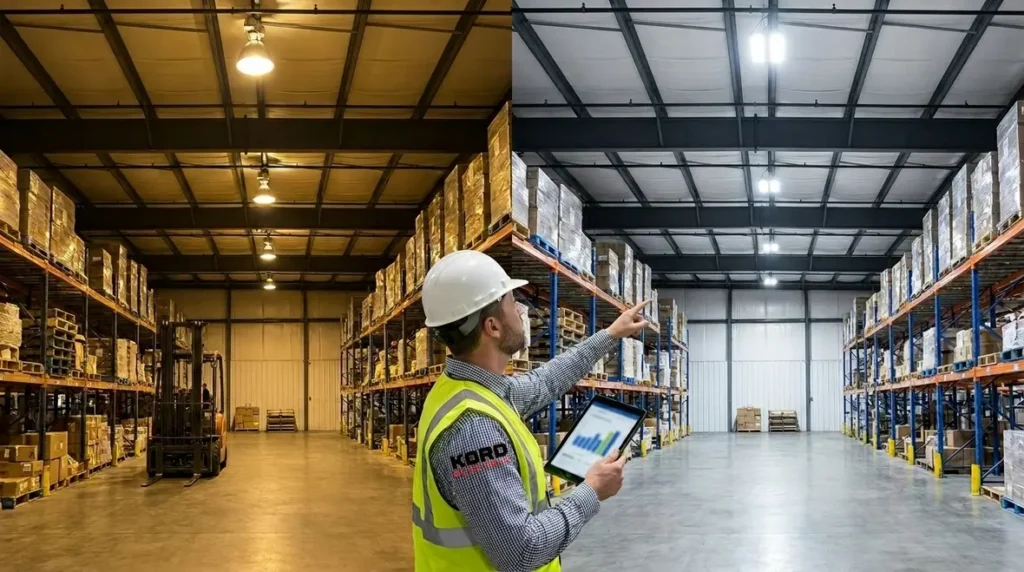
Once we understand the site, we select upgrades that fit the facility, not just the catalog. For many warehouses, LED retrofits deliver a clear reduction in energy, but we do not stop there. We also match optics to your layout, because light distribution must follow your workflow.
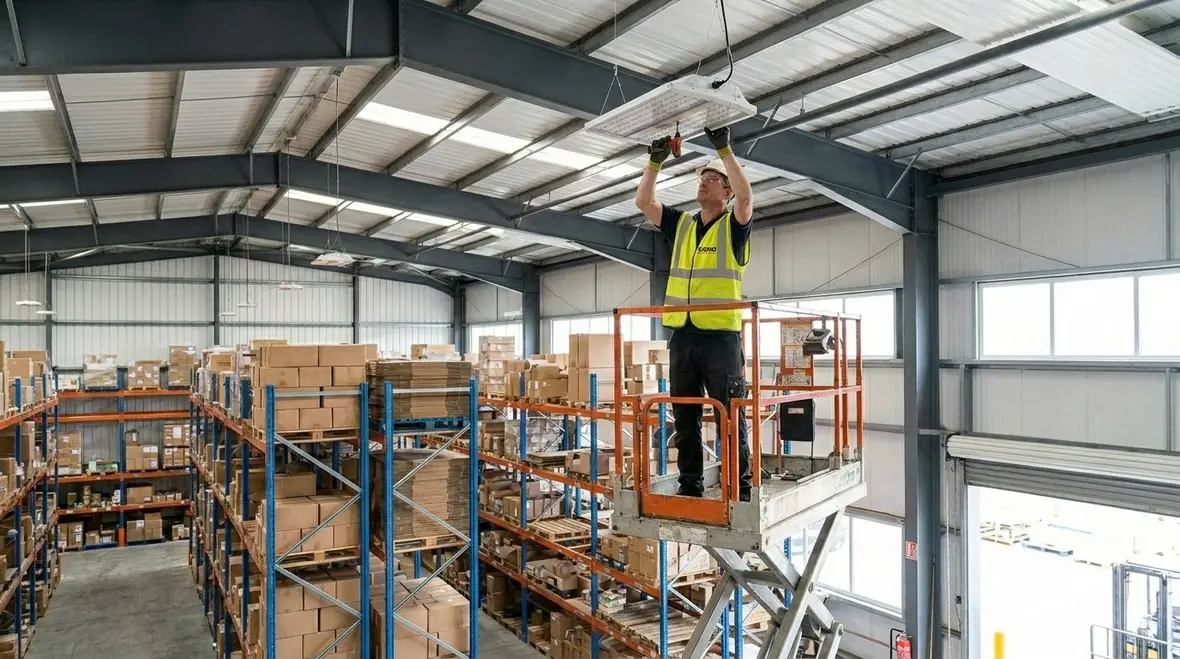
For example, high-bay fixtures need proper beam angles so light reaches tasks without flooding the ceiling. Meanwhile, low-bay areas often benefit from different mounting heights and diffusion. If we ignore this, your energy savings will still happen, but your safety margins might get thin.
Also, we plan for color and performance over time. Higher quality LEDs maintain output longer, which protects consistency across seasons. And if a manager values quick maintenance, we design for access paths that technicians can reach without turning scheduled downtime into an unscheduled event.
To connect this to the broader picture, commercial electrical systems for modern buildings often include lighting integration with controls and power management. When we treat lighting as part of the electrical system, savings get more reliable, and your facility runs smoother. In many projects, lighting upgrades pair with wider improvements like panel modernization, data center power planning, or even commercial solar panel electrical integration, so the warehouse becomes part of a coordinated energy strategy instead of a standalone project.
3. How controls deliver steady savings without annoying people
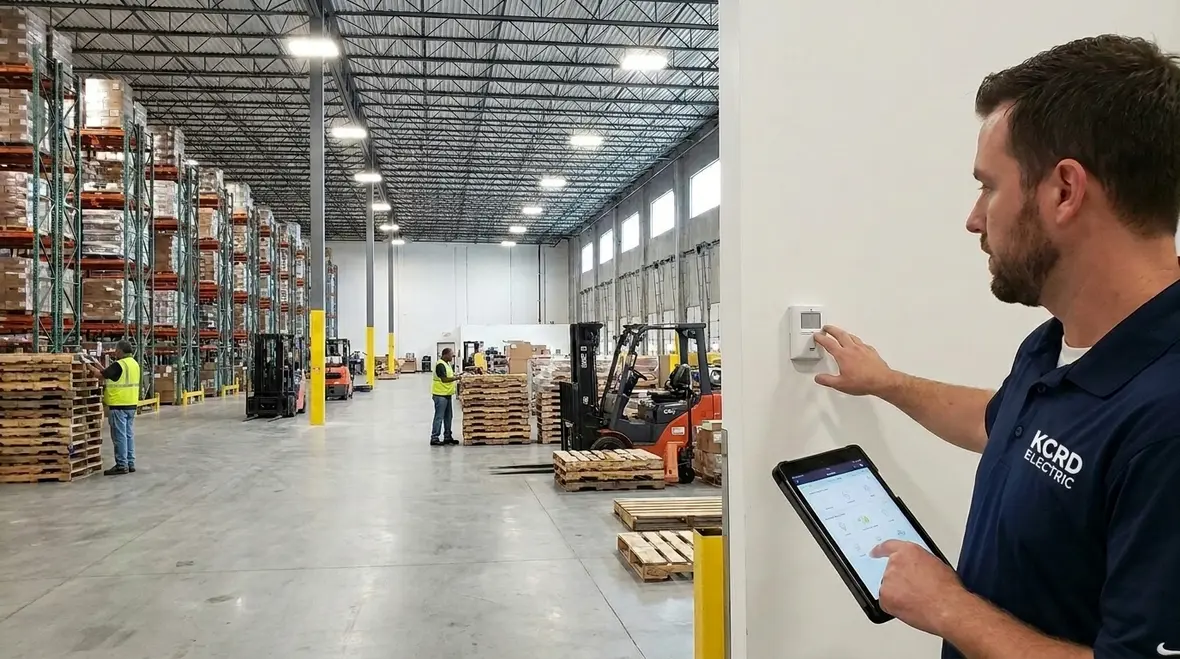
Here is where energy optimization becomes real. We use occupancy sensing, daylight harvesting, and time based scheduling so lights respond to the way the warehouse actually runs. However, we implement controls with care. If the sensors trigger too aggressively, workers complain and then the system gets overridden, like a thermostat that nobody trusts.
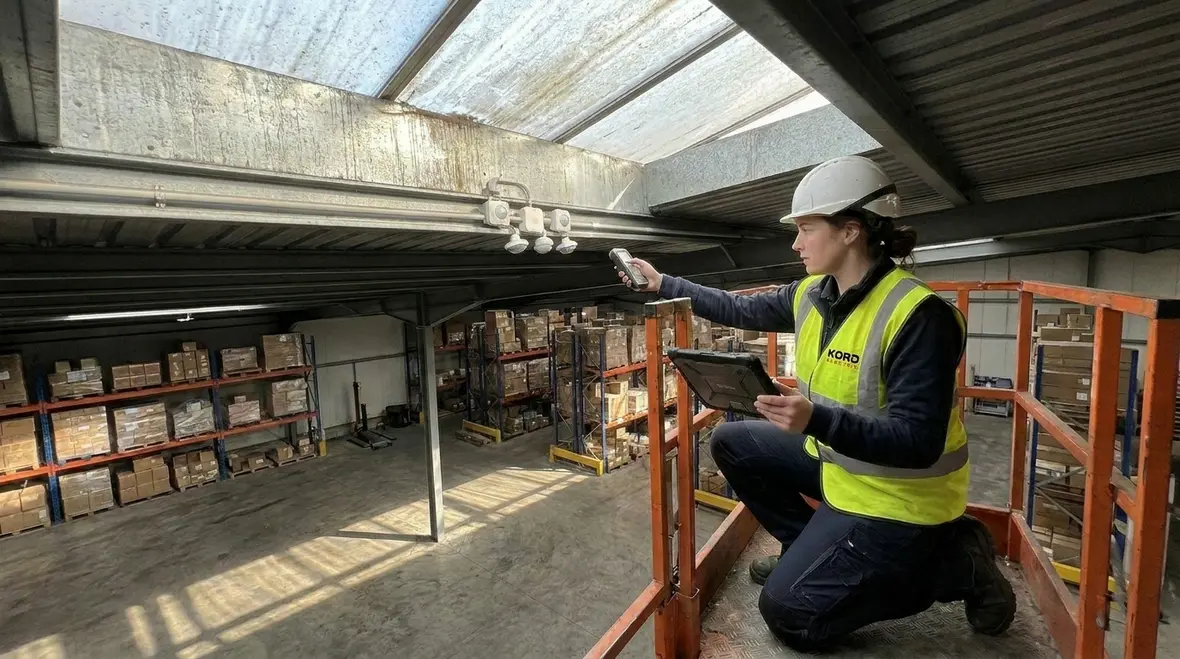
We set up occupancy sensors for the zones where motion signals truly reflect presence. We also adjust sensitivity and keep coverage patterns in mind for aisle spacing and equipment height. Next, we program daylight response so near windows get dimmed when the sun does the job. That reduces power draw without forcing crews to squint at the edge of a pallet stack.
Then we schedule lighting by operations. For instance, if picking starts later than packing, we group controls so each area gets light when it matters. Over time, this supports a stable baseline load and avoids “all lights, all day” habits.
We also include manual overrides and fallback modes. That means your warehouse stays functional during sensor faults. Our expert service staff explains the logic so managers and maintenance teams understand what the system does and why. Often, these conversations happen alongside broader discussions about electrical preventive maintenance and system health, especially when facilities are building structured plans similar to those in Kord Electric’s electrical preventive maintenance programs.
4. Power quality, panel loading, and why managers should care
Energy use is not only about how many watts. It also depends on how the electrical system behaves. For warehouse lighting energy optimization, we watch power quality, circuit loading, and harmonics, especially when a facility upgrades multiple systems at once.

If panels run near limits, new lighting loads can create issues even if the fixtures use less energy. Similarly, poor wiring or loose connections can raise losses and cause premature component failure. So we confirm circuit ratings, inspect terminations, and verify grounding and surge protection where needed.
When we connect lighting controls to building electrical architecture, we also consider how relays, dimmers, and drivers interact with existing panels and any building management features. This helps avoid nuisance tripping and keeps the system reliable through busy shifts.
In short, we treat the project like a business process, not just an install. We reduce energy and protect operations at the same time, and that is the kind of balance managers expect. For facilities planning deeper infrastructure changes such as rewiring or data center support, warehouse lighting often becomes one coordinated part of a larger effort that can include projects like data center electrical requirements for uptime or broader rewiring cost planning.
5. A practical rollout plan that keeps the warehouse running
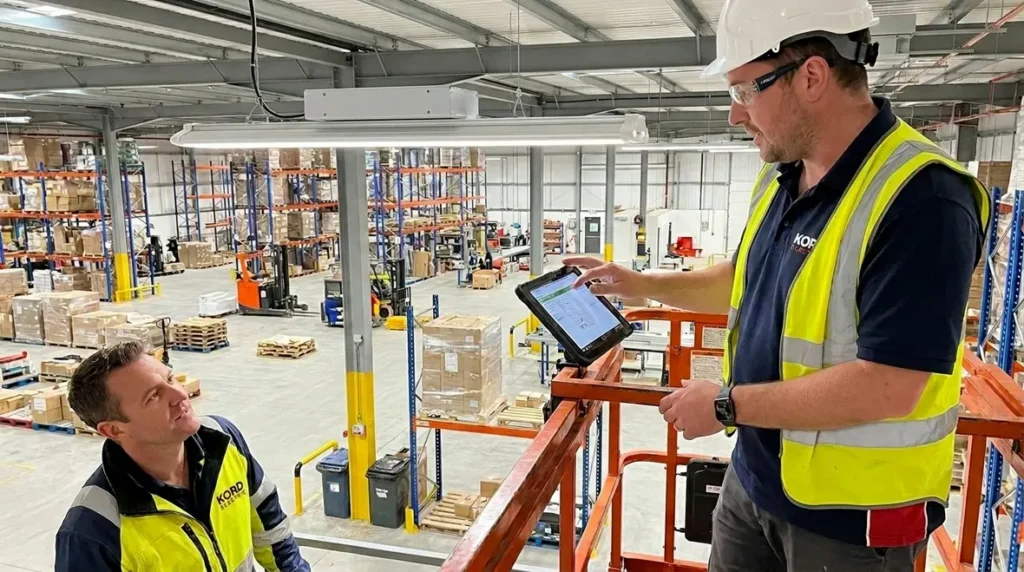
Managers do not want downtime. So we stage the work. First, we confirm access routes and safety needs for staff and equipment. Then we plan upgrades zone by zone, typically aligning installation with slower hours. We also coordinate lockout and testing so the system stays safe during changes.
We then verify performance after installation. We measure output levels, check dimming response, test occupancy coverage, and ensure daylight controls behave as programmed. If something does not align with the facility plan, we adjust settings. That step matters because a warehouse is not a showroom. Real operations reveal the gaps.
Next, we document everything. We label circuits and controls clearly, so future maintenance remains straightforward. Finally, we train the facility team. Our technicians explain what changed, how to report issues, and what normal operation looks like. It reduces confusion and prevents the dreaded “button pulling” that can undo fine tuning.
To support faster planning, we sometimes prepare a two track approach for managers and owners: one path focuses on lighting replacement, the other path focuses on controls and electrical integration. Both move forward together, so the ROI arrives sooner.
Two track rollout view
| Track A | Track B |
|---|---|
| Fixture upgrades and optics matching | Controls programming and daylight strategy |
| Output verification and glare checks | Scheduling, overrides, and sensor coverage tests |
| Circuit labeling and electrical inspection | Performance documentation and staff training |
6. Maintenance habits that protect energy savings
Once the system runs, managers should protect it. We recommend quick checks on controls schedules, sensor operation, and any accidental overrides. Also, we inspect drivers and connections during regular maintenance windows. That prevents small failures from turning into larger performance drops.
Next, we update controls logic when operations change. If a warehouse adds a new picking line or shifts pallet routes, sensor coverage might need adjustment. Similarly, if you remodel an office area or change window exposures, daylight harvesting settings should be revisited.
We also advise keeping spare components for high traffic zones. That way, downtime stays short. If a light output drops, crews notice quickly. When maintenance responds fast, the system remains trusted, and staff does not start treating controls like a prank.
In commercial and industrial facilities, this is how energy optimization lasts beyond the first billing cycle. It keeps savings stable, and it reduces the total cost of ownership. Many teams fold these lighting checks into wider commercial and industrial electrical maintenance plans, so warehouse lighting gets reviewed alongside panels, feeders, and critical equipment.
7. ROI basics managers can explain to owners
When owners ask about return, we keep it simple and honest. We estimate energy savings based on current fixture wattage, operating hours, and expected control behavior. Then we compare that to upgrade costs and maintenance impacts.
However, we also account for less obvious value. Better lighting improves safety and reduces mistakes, and that often matters more than the electricity line item. Strong illumination supports faster picking, cleaner scans, and fewer work stoppages. So the savings show up as reduced risk and smoother throughput, not just reduced kWh.
We also help managers plan budgets around phasing, so the facility does not feel like it is paying for improvements with one big check and regrets. Our technicians and service staff walk through the logic and the expected outcomes, so ownership teams can make decisions confidently. For some facilities, warehouse lighting energy optimization also becomes a foundation for future-ready projects such as EV charging infrastructure, solar integration, or data center expansions, all supported by Kord Electric’s broader commercial electrical services.
FAQ
Conclusion
We help commercial and industrial managers reduce operating costs with real warehouse lighting energy optimization that also protects safety and performance. Our approach starts with measurement, then we upgrade fixtures, design controls, verify results, and train your team so the system stays reliable. If you want fewer lighting surprises and more predictable bills, contact Kord Electric for an on site evaluation. Let us map your zones, estimate savings, and build a rollout plan that keeps your warehouse moving.
If your facility also needs support beyond lighting — from panel health and long term maintenance to critical systems and uptime — Kord Electric’s electrical preventive maintenance services give you a structured way to protect the rest of your commercial electrical system while you optimize lighting.