Commercial EV Fleet Charging Infrastructure Guide
Planning Your Commercial EV Fleet Charging Infrastructure: A Real World Guide
When fleets roll in, they do not just bring vehicles. They bring a new kind of load, a new kind of schedule, and sometimes a new kind of surprise for building owners. Our commercial EV fleet charging approach at Kord Electric helps commercial and industrial facilities plan charging like it is part of the operation, not an afterthought. Others might treat this as a quick install, like “plug it and pray.” We treat it like power planning and long term reliability. And yes, our technicians explain the steps in plain language, because nobody wants a mystery box where the charger used to be. We also use structured preventive maintenance practices from our established electrical program, so sites stay ready while vehicles keep moving.
Start with the site plan, not the charger model
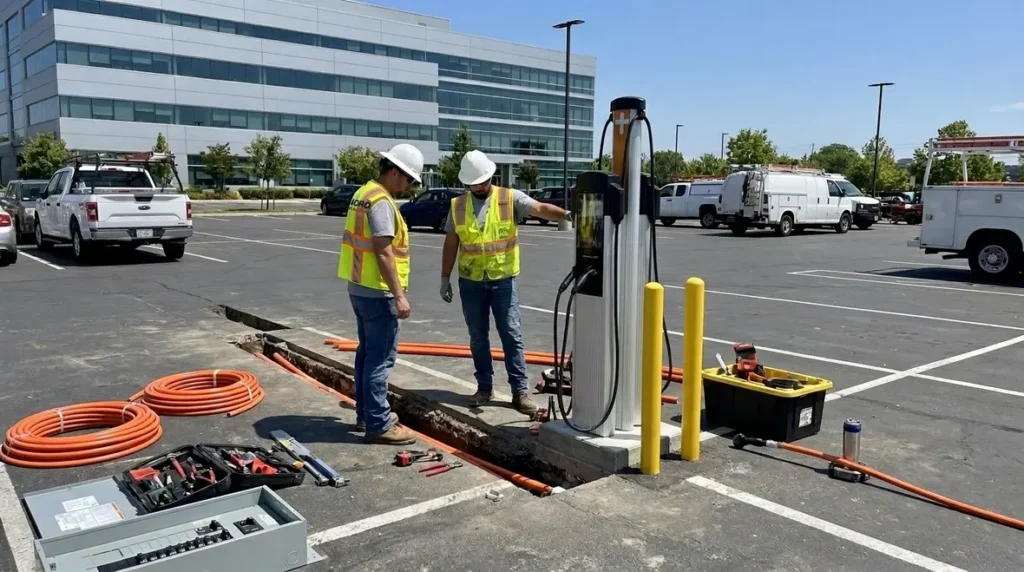
First, we confirm the purpose of the charging at the facility. For major property buildings and industrial campuses, the charging plan depends on how vehicles travel, where they park, and how fast they must recharge. Then we map electrical capacity and real space constraints. In other words, we look at the site before we sell a solution that sounds good on paper.
Our team considers drive lanes, parking layout, and weather exposure, so cables and connectors stay safe and usable. Next, we align charger placement with the fleet’s daily cycle. If the fleet needs fast turnaround in the morning and steady replenishment during the day, we size systems to match that rhythm.
Transitioning from “what looks best” to “what works best” matters. Many sites lose time when equipment goes in the wrong area and later becomes a relocation project. That is the kind of comedy you do not want at 6 a.m. with a live route schedule. We plan early so commissioning feels calm, not chaotic.
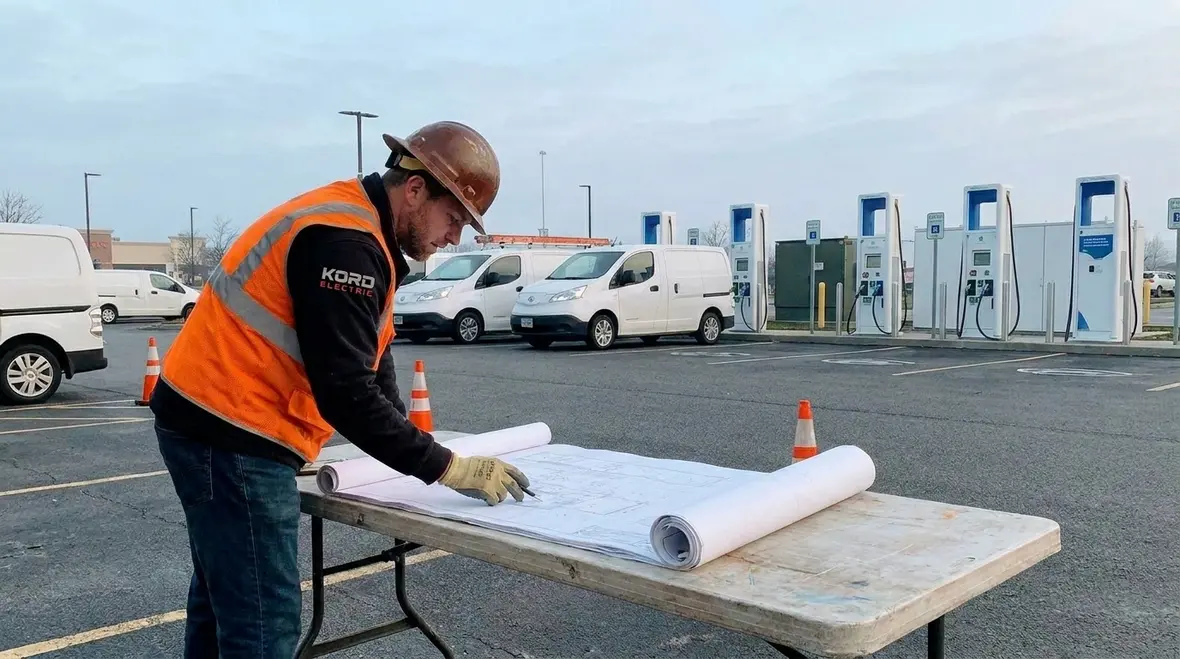
For facilities building long term strategies around charging, site planning also connects naturally with structured electrical maintenance. Many property teams pair EV projects with broader reliability planning such as electrical preventive maintenance, so the same distribution infrastructure that feeds chargers also stays inspected, documented, and protected over time.
Estimate power demand like you mean it
Now we get into the part that keeps operators up at night. Electrical planning. Commercial and industrial spaces do not run on guesswork. We review utility capacity, transformer size, panel ratings, and existing loads such as HVAC, lighting, production equipment, and elevators. Then we model the additional demand from EV chargers under real operating scenarios.
We also account for smart charging options. For example, a site can distribute available power across vehicles instead of applying full draw to every port at once. This approach supports stable performance and can reduce the risk of service upgrades. However, we never assume smart features will magically solve everything. We still design for safe limits and predictable behavior.
Next, we document load calculations clearly. That helps property managers coordinate with facilities teams, procurement, and any utility requirements. It also gives decision makers confidence during budgeting. If you build the schedule around power constraints, the rest of the project runs smoother.

During this phase, some facilities also explore how EV charging fits into broader system behavior. For example, properties that have already navigated voltage fluctuations in commercial and industrial facilities know that new loads must respect not just nameplate ratings, but how the system behaves under real peaks, shifting weather, and evolving tenant use.
Design for safety, access, and future expansion
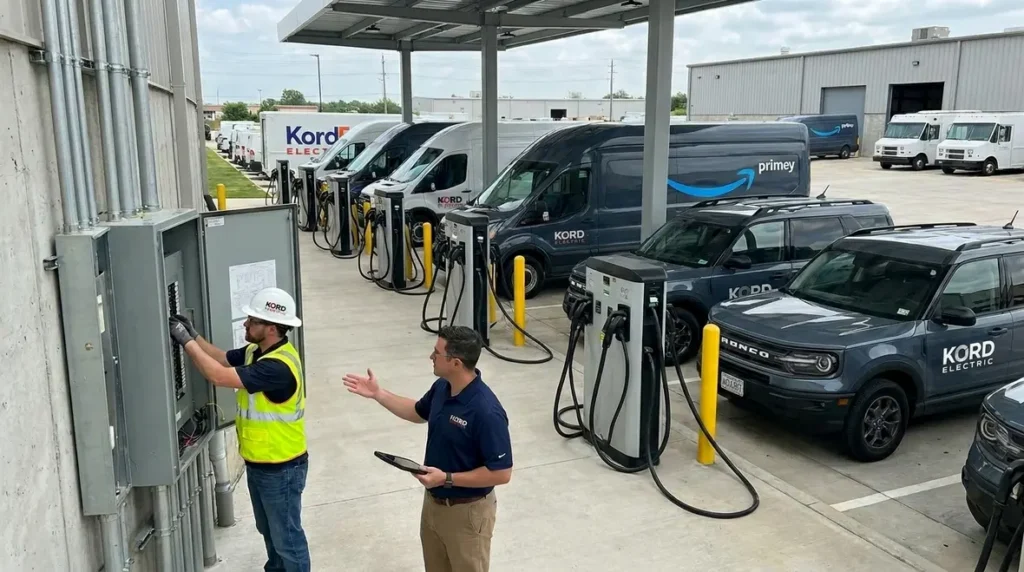
Charging infrastructure must work today and stay serviceable tomorrow. Our design focuses on safe cable routing, protected equipment locations, and access for technicians. That means we plan for cable trays where they belong, conduit runs that respect site traffic, and clear ways for maintenance staff to reach chargers without shutting down entire areas.
As fleets grow, the original design should not trap the site in a dead end. We plan for spare capacity where possible. We also consider panel growth paths and future conduit routing, so adding ports does not require major demolition later.
At Kord Electric, our technicians explain what they see during walkthroughs, including risks they notice. If an area gets flooded or if a route path makes cable damage more likely, we say it plainly. Then we recommend improvements that prevent repeat work. In a building world, repeat work is like paying twice for the same coffee. It is not only costly. It also makes people grumpy.
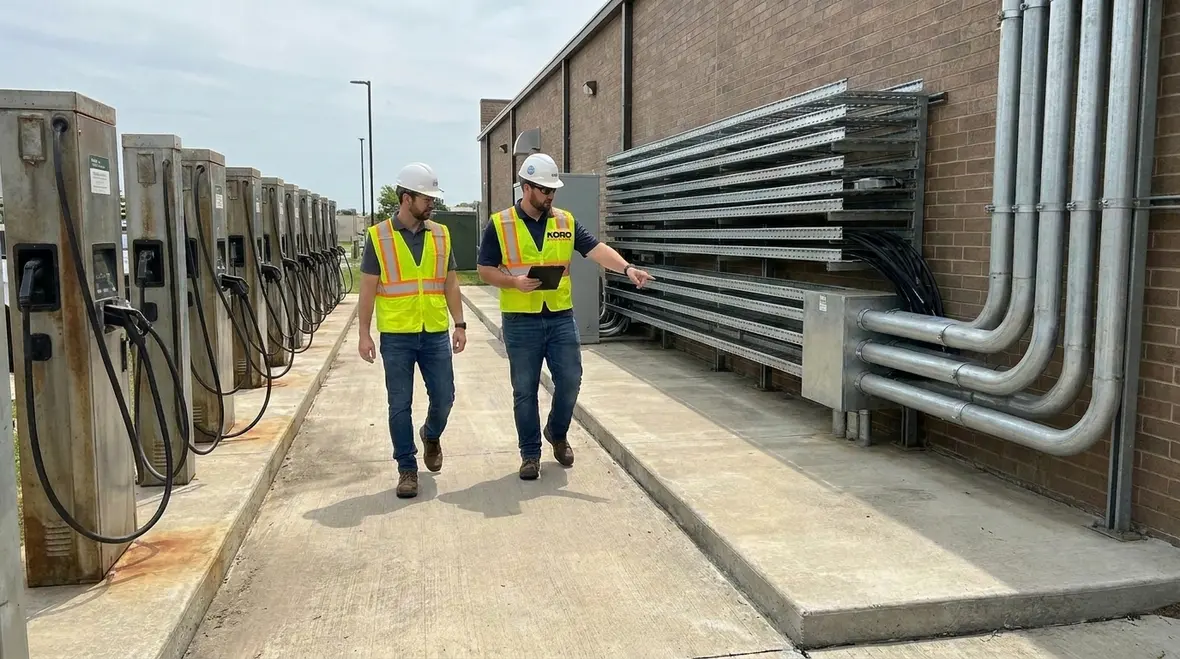
Designing for access and growth also lines up with long term maintenance strategy. Facilities that use structured programs, like the ones behind Kord Electric’s commercial and industrial electrical maintenance plans, benefit from layouts where technicians can reach equipment, document findings, and perform upgrades without turning every service visit into a construction project.
Prepare commissioning, signage, and fleet workflows
Installation is only one chapter. After mounting equipment and running electrical work, we align charging operations with the fleet’s daily needs. That includes connector type choices, charger placement for minimal vehicle maneuvering, and clear labeling so drivers can plug in fast.
We also help facilities teams set expectations for network setup, scheduling, and user access. When systems integrate with fleet management tools, operators need simple workflows. Therefore we coordinate the handoff so maintenance and drivers know what to do and what to avoid.
In many commercial settings, the “real customer” is not the fleet driver alone. It is also the site manager who needs visibility, reliability, and predictable maintenance. Consequently, we provide practical guidance on how the charging system operates under normal use and what events trigger service calls.
Then, when commissioning comes around, we verify operation under load and confirm protection settings. We do not just check that chargers light up. We confirm stable operation so the system performs when it matters.
Use preventive maintenance to protect uptime
Once the chargers go live, the goal becomes simple: keep uptime high and costs stable. Preventive maintenance is where we separate “installed” from “operating.” Kord Electric supports electrical preventive maintenance practices that help sites avoid sudden downtime and expensive emergency repairs.
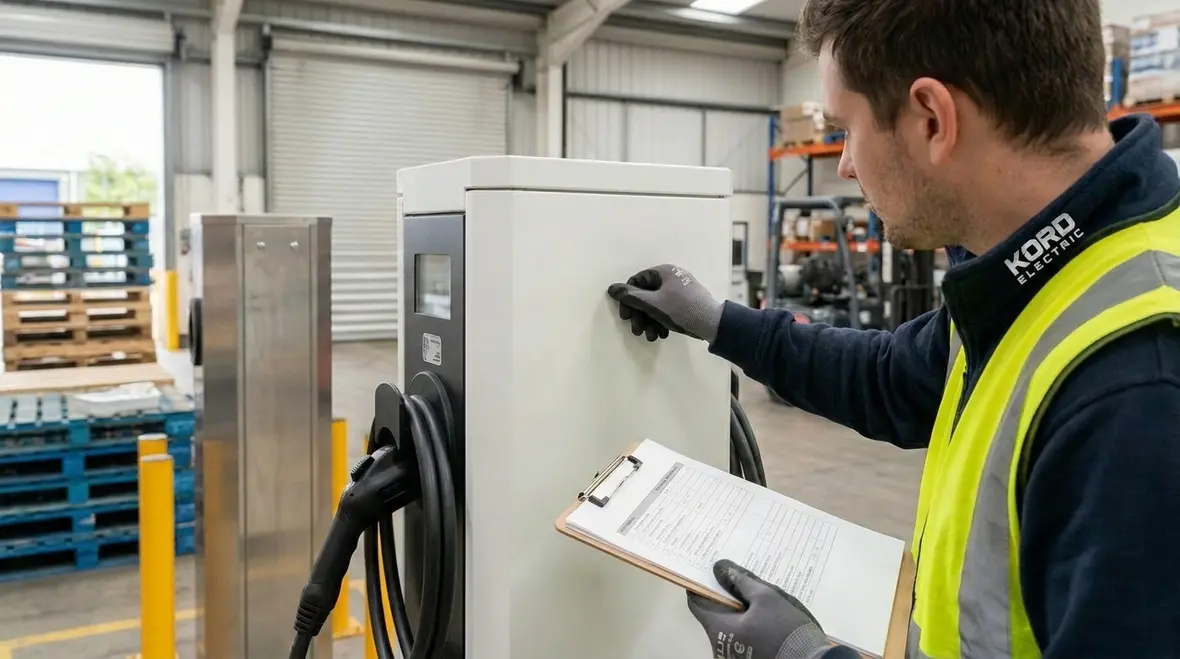
Our approach focuses on regular inspections, component checks, and verification of safe performance over time. For EV charging systems, that means we look beyond the charger face. We confirm connections, inspect protective devices, and check conditions that can worsen with heat, weather, and daily use. We also review any signs of wear that could reduce performance or safety.
Moreover, our expert service staff explains the “why” behind each step. If a part shows early wear, they connect it to real-world conditions at the site, such as cable strain patterns or frequent connector use. That clarity helps managers plan maintenance windows and reduces friction with tenants or operators.
And since nobody wants a surprise bill, preventive work lets budgets breathe. It also keeps the charging system ready for peak fleet days, not only for the day after an issue report. The best time to find a problem is before it becomes a headline.
For properties that view charging as one part of a larger reliability strategy, pairing commercial EV fleet charging with dedicated programs like electrical preventive maintenance or broader efforts to solve hidden electrical risks in commercial buildings helps infrastructure stay steady as demand grows.
Understand utility steps, permits, and project timelines
Commercial sites often include multiple stakeholders: property managers, contractors, electrical inspectors, and the utility company. Therefore, timelines can stretch when requirements are unclear. We help reduce delays by organizing documentation and coordinating the steps needed for approval.
We review what the site likely needs for permits and utility involvement. Then we plan the order of tasks so we do not block progress. For example, we align trenching and conduit work with electrical panel planning. We also coordinate inspections so teams do not sit idle waiting on sign-offs.
Transition words matter here because the sequence matters. First, we gather site details. Next, we build electrical plans. Then we review requirements. After that, we move into installation and commissioning. When process stays steady, the project behaves like a well rehearsed scene, not a reality show plot twist.
Common planning mistakes that hurt commercial fleet charging
Even good projects can stumble. Here are the issues we see most often in commercial and industrial facilities, and what we do to avoid them.
Underestimating power demand: A charger count that looks right on day one can become a limit during peak use. We model loads and plan capacity.
Ignoring smart charging settings: Smart features can help, but only when the system is designed with the site in mind. We configure with real usage patterns.
Placing chargers without vehicle workflow: If drivers cannot reach ports quickly, charging takes longer and schedules slip. We align placement with routes and parking behavior.
Skipping access and cable routing: If technicians cannot reach components easily, maintenance delays follow. We design for safe access.
Waiting too long for preventive maintenance: Emergency repairs cost more and disrupt operations. We use preventive electrical maintenance practices to protect uptime.
Now, we will say this with a smile. Some people treat EV charging like a gadget purchase. But fleets do not run on vibes. They run on uptime, safety, and predictable energy use.
FAQ about commercial EV fleet charging infrastructure
Linking fleet charging to broader electrical strategy
Commercial EV fleet charging works best when it is part of a bigger reliability picture. When panels, switchgear, and distribution paths already follow strong maintenance practices, chargers plug into a system that is ready for them. That is why many facility teams connect new projects with programs like Electrical Preventive Maintenance and targeted solutions for voltage fluctuations in commercial facilities. The result is a property that supports more vehicles without gambling on the underlying infrastructure.
When commercial EV fleet charging projects scale across multiple buildings or campuses, property leaders also look ahead at rewiring, panel upgrades, and lighting improvements. Resources like Kord Electric’s guidance on EV charger installation and related commercial services make it easier to plan charging alongside the rest of the electrical roadmap instead of treating it as a one time experiment.
Final word from Kord Electric
Final word from Kord Electric
If a fleet wants charging that keeps vehicles moving, we build the plan first and protect performance over time. At Kord Electric, our technicians and expert service staff guide the process with clear explanations, solid electrical design, and preventive maintenance practices that support uptime. We focus on commercial and industrial facilities and major property buildings, because that is where disciplined planning pays off. If you want commercial EV fleet charging infrastructure that works now and scales later, contact us to start a site assessment.
To move from ideas to installed systems, many property teams connect this planning work directly with Kord Electric’s dedicated EV charger installation services. From site evaluation and system design to commissioning and preventive maintenance, that service path turns commercial EV fleet charging into a reliable part of everyday operations instead of a guessing game in the parking lot.