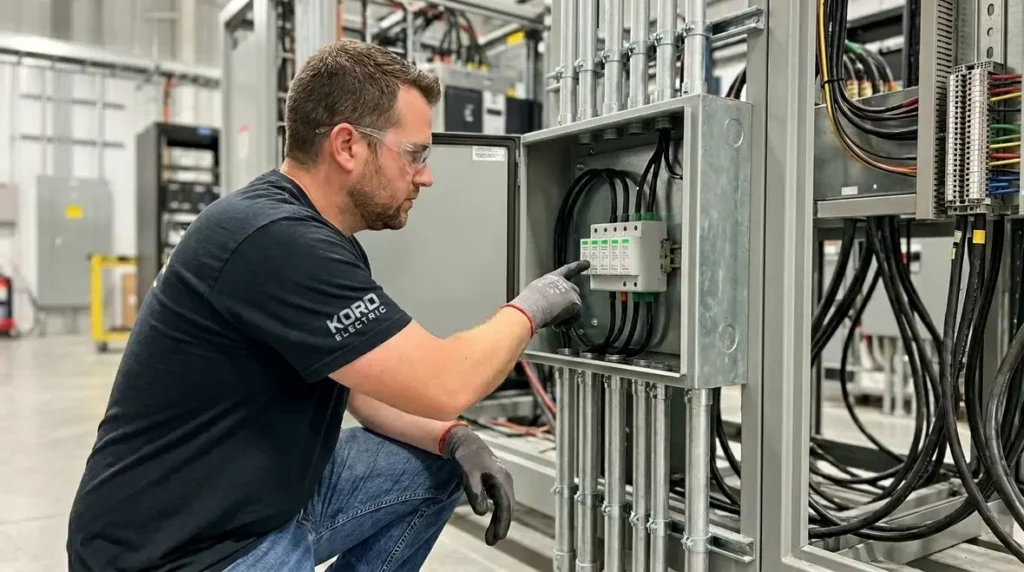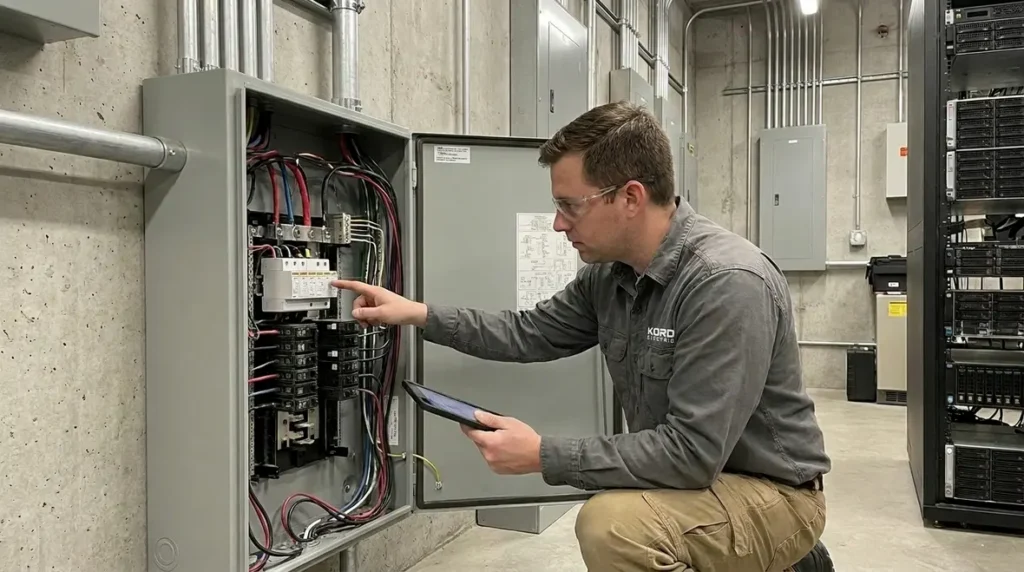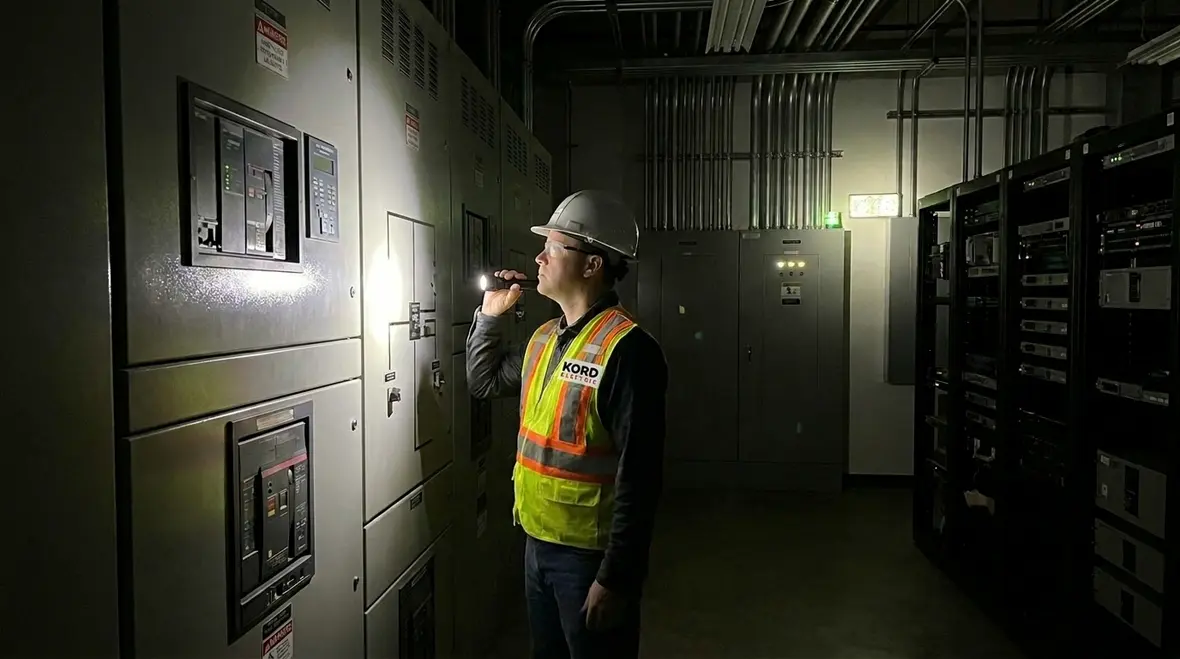
Business Power Outage Recovery Guide
When a commercial or industrial site loses power, the real cost starts the moment the lights go out. At Kord Electric, we focus on business power outage recovery that brings operations back with less chaos, fewer surprises, and tighter control. In this guide, our expert service staff will explain what happens behind the scenes when electricity fails, and how we reduce downtime step by step. Because nobody budgets for a blackout, we help organizations plan for it before it happens. And yes, we will talk about generators, ATS systems, and testing, but we will also talk about the human side of recovery, since even the best equipment can look clueless when the plan is vague. In other words, we help facilities avoid becoming a real life “lights out” episode.
How downtime grows during a power outage and what teams miss
Power loss rarely stays “just an outage.” First, production stops. Then, safety processes start demanding attention. After that, data and communications become unreliable. Meanwhile, teams often assume the utility will fix everything quickly, and they wait longer than they should. In practice, that delay costs money in three ways: lost output, stalled logistics, and expensive restart procedures. Our technicians see a pattern. Facilities that recover fast usually do three things early: confirm the outage scope, protect critical loads, and coordinate decisions with clear roles. Facilities that recover slowly often lack one of those elements. And when the site feels dark and quiet, people tend to act like someone paused the movie and forgot to unpause it.
To minimize downtime, we treat recovery like a controlled sequence, not a scramble. We also plan for the moments that come after power returns. For example, when voltage returns, certain systems may restart in the wrong order, or they may restart too aggressively. That is when equipment can trip again, and teams start chasing symptoms instead of the cause.
Power failure basics for commercial and industrial sites
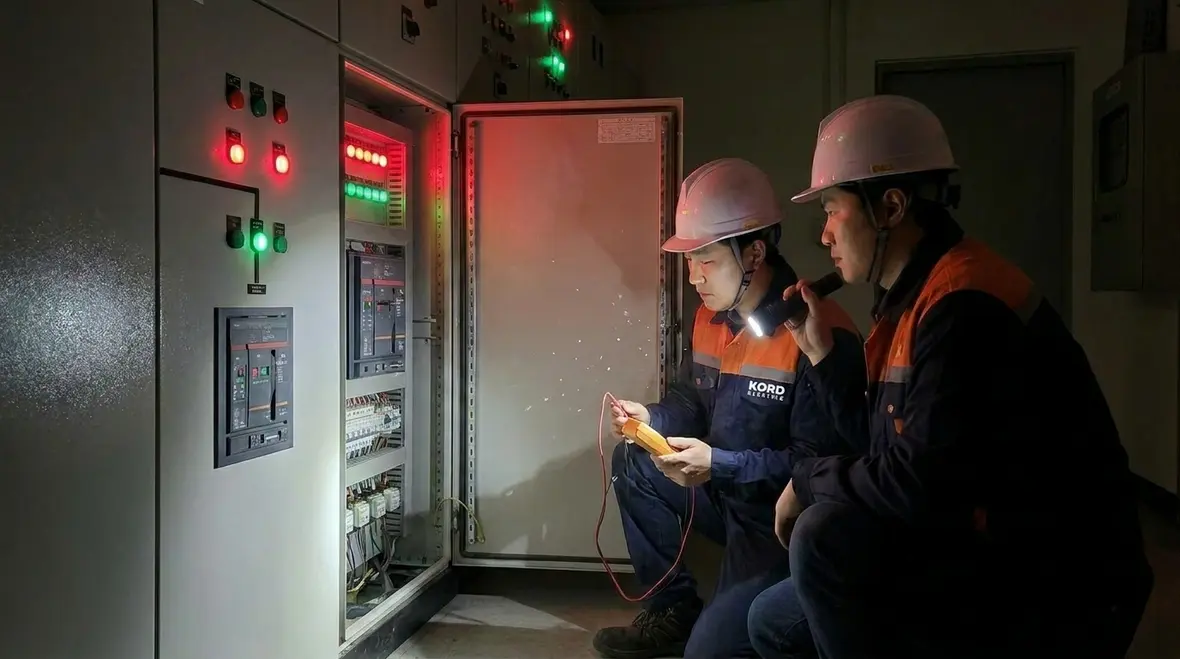
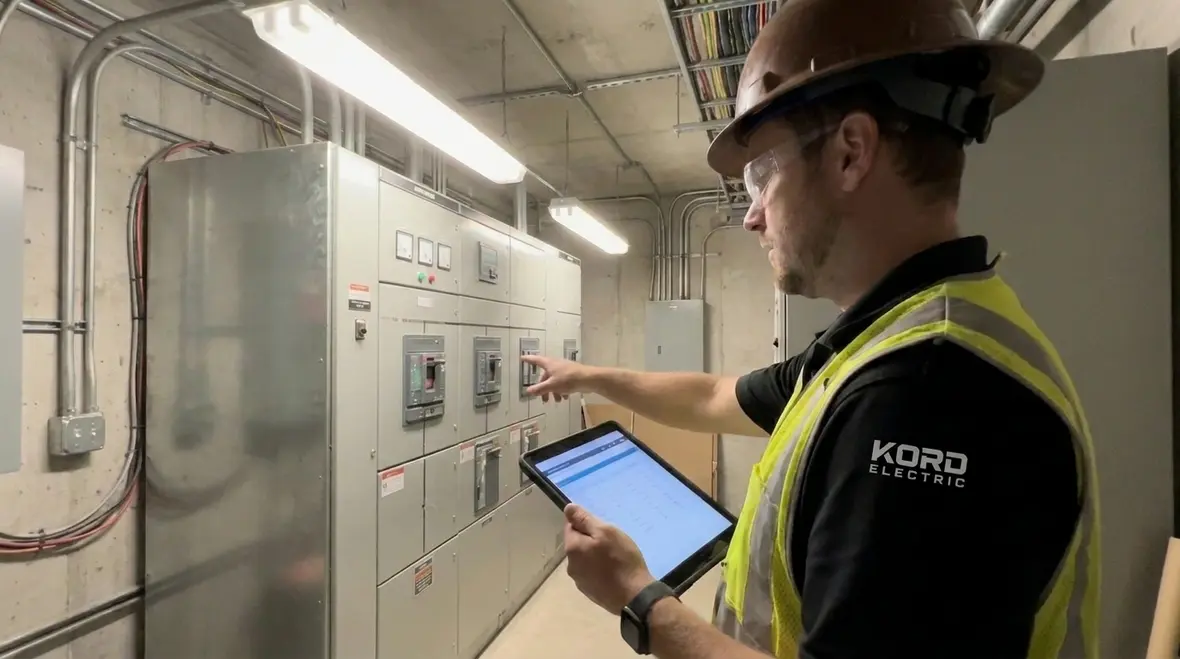
Most major property buildings and industrial facilities face similar electrical realities during an interruption. The incoming utility feed can fail, internal switchgear can trip, protective devices can open to prevent damage, or a downstream failure can cascade. Therefore, a strong recovery approach begins with fast electrical diagnosis. Our expert service staff typically starts with these priorities:
- Identify what failed: utility outage versus internal distribution issue
- Confirm protective device states: breakers, relays, and any locked-out equipment
- Track critical load requirements: what must run immediately, what can wait
- Preserve documentation: load lists, one line diagrams, and recent maintenance notes
Then we move from identification to action. Even when the utility issue is outside your control, you still control how your facility behaves. That is where generators, UPS systems, and transfer equipment become more than “backup.” They become part of a planned pathway back to normal operations.
Designing your recovery plan before anything goes wrong
In business power outage recovery, preparation matters as much as hardware. We help facilities build a recovery plan that includes both technical steps and decision paths. For instance, during the first minutes, teams should know who calls the utility, who verifies switchgear status, and who decides which loads receive backup power. Without that structure, recovery becomes a group chat where everyone assumes someone else knows the next move.
Our technicians often recommend a plan that includes:
- Critical load mapping: ventilation, pumps, safety systems, elevators, data and security loads
- Transfer strategy: planned sequence for ATS switching and generator startup
- Restart rules: how equipment returns to operation without surge damage
- Communication plan: internal contacts, utility contacts, vendor escalation
- Operational priorities: what keeps people safe and what keeps the business alive
After that, we encourage regular drills. And no, a drill does not mean someone holds a clipboard and pretends everything is fine. It means testing the plan under realistic conditions, then tightening it until the sequence feels automatic.

Switchgear, ATS, and generators: reducing the time between failure and power
When commercial sites plan for outage response, the biggest payoff comes from improving the “gap time.” That gap is the span between loss of utility power and stable backup power for critical systems. We address that gap by verifying that transfer gear and generation systems behave exactly as intended.
Our approach focuses on the components that decide whether the facility transitions smoothly:
- Switchgear readiness: correct breaker settings, clean contact surfaces, and confirmed labeling
- ATS configuration: correct sensing inputs, timing settings, and load transfer order
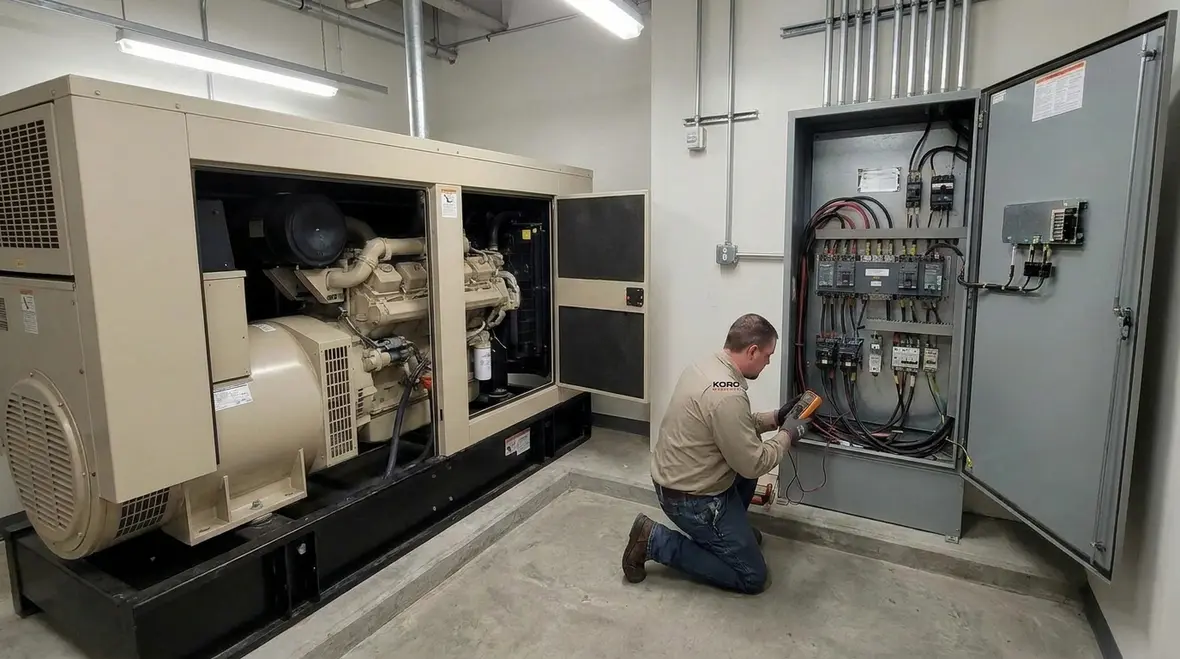
- Generator performance: fuel readiness, voltage and frequency stability, and verified startup timing
- Protection coordination: settings that reduce nuisance trips during the restart window
Next comes the less glamorous but highly important part: commissioning and documentation. Facilities often have equipment on paper, but the field behavior differs from what teams expect. Our expert service staff checks the actual sequence of operations and ensures that the controls and alarms tell the truth. Because when the alarm system cries wolf, the first real wolf shows up, nobody listens. And you do not want that.
Testing, maintenance, and “real world” checks that prevent nasty surprises
Maintenance prevents failures, but testing prevents confusion. Many facilities can explain the theory of backup power, yet they do not test how the system reacts under load conditions. Therefore, Kord Electric treats testing as a core part of business resilience for commercial and industrial buildings.
We support a maintenance cycle that includes both preventive tasks and scenario-based checks. For example, we verify:
- Control panel health: alarms, sensor inputs, and logic verification for transfer sequences
- Battery and UPS behavior: real runtime under expected load, not ideal lab conditions
- Generator startup paths: engine startup timing, voltage ramp response, and stabilization
- Load bank or simulated load: practical performance validation so recovery works, not just sounds good
Then we review the results with facility leaders. Our technicians explain findings in plain terms and connect them to operational impact. If a transfer delay exists, we translate it into how long critical systems might be offline. If settings risk nuisance trips, we describe what those trips can interrupt and why the restart could become longer than planned. In other words, we help teams understand both the numbers and the consequences.
We also recommend keeping key documents current. After upgrades, a one line diagram that is outdated can waste hours during an emergency. Teams should not need detective skills to figure out where the fault sits. They should already know. For facilities that want structured, ongoing inspections rather than one-time checks, it helps to align this work with a dedicated electrical preventive maintenance program that keeps critical systems ready long before an outage hits.
Coordinating people, safety, and communications during recovery
Electrical work happens fast, but decision making often crawls. That is why we emphasize roles and communication. During an outage, teams must coordinate with operations, security, facilities, and sometimes local fire or safety stakeholders. If your plan ignores the “non-electrical” side, then the electrical system may be ready, yet the facility still struggles to return.
Our expert service staff helps facilities establish a simple recovery rhythm:
- First response: confirm outage type and identify affected sections
- Safety verification: confirm safe operating states before energizing or transferring
- Backup activation: ensure transfer occurs in the intended order
- Staged restart: bring equipment online without overload or repeat trips
- Update reporting: provide real timelines and status summaries to leadership
We also encourage facilities to assign one decision owner. Multiple decision owners can turn recovery into a committee meeting, and nobody wants that when the clock is ticking. If someone asks, “Do we wait?” there should be a prepared answer: wait for what, and who confirms it.
Key takeaways for business power outage recovery in major buildings
For commercial and industrial facilities, resilience comes from combining planning, testing, and fast diagnosis. Kord Electric supports that goal with structured guidance and field proven work. When the time comes, our technicians follow clear sequences, verify equipment behavior, and reduce the downtime gap. At the same time, we help facility leaders understand what matters most: protecting people, stabilizing critical operations, and returning to normal flow without damaging equipment or triggering repeat shutdowns. In short, we help your site recover like it trained for it, because it did.
If your facility has already seen flickering lights, unexplained trips, or equipment acting “off” before a full outage, it may also benefit from targeted support for voltage fluctuations in commercial and industrial buildings. Stabilizing everyday power quality makes true business power outage recovery faster and more predictable when a real event occurs.
FAQ
Ready to reduce outage downtime at your facility?
If your commercial or industrial building depends on stable power, do not wait for the next outage to learn what your system really does under stress. Kord Electric can review your recovery plan, verify switchgear and transfer sequences, and support testing that gives your team confidence. Our technicians explain findings clearly and help you prioritize the steps that reduce downtime first. Call us today and let us build a smarter recovery path for your site, so when the lights go out, your operations do not.
To go a step further, many facilities pair their recovery planning with structured commercial and industrial electrical preventive maintenance services. This kind of ongoing program keeps generators, ATS equipment, panels, and distribution systems ready long before the next outage arrives, turning business power outage recovery into a repeatable, low-drama process instead of a stressful surprise.