
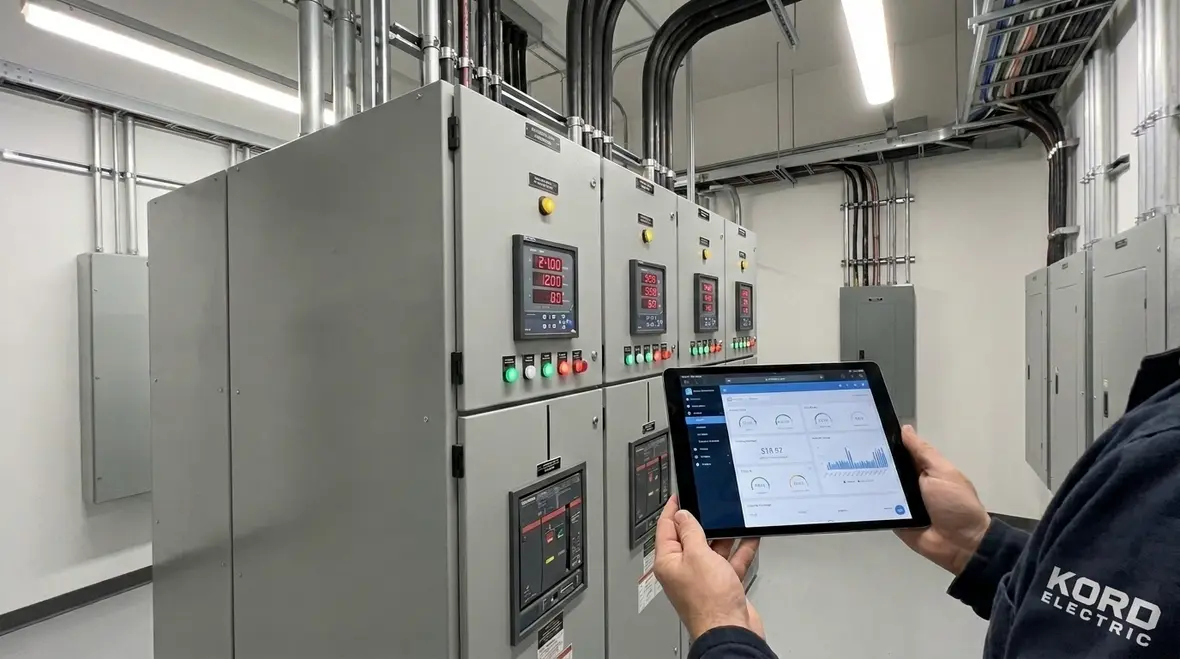
Commercial Electrical Load Shedding Guide for Peak Demand
Managing Peak Demand: A Guide to Commercial Electrical Load Shedding Systems
When a commercial building sips power all day and then suddenly guzzles it at the worst possible time, the utility does not care about your schedule. That is why commercial electrical load shedding systems matter. At Kord Electric, we design and deploy load shedding approaches that help major property buildings, commercial complexes, and industrial sites stay stable when demand spikes, prices jump, or the grid gets stressed. In this guide, our team walks through how others plan, how operators monitor, and how electricians install the right controls so the lights stay on for the right loads, not the loudest ones.
Why peak demand turns into a real problem
Many facilities in commercial and industrial settings hit peak demand during predictable moments. Think: morning start up, shift changes, simultaneous HVAC operation, water pumping, elevators, cooking in tenant areas, and multiple processes running at once. As a result, the electrical system faces a higher current draw, which can push equipment harder than it should and increase the chance of nuisance trips or worse. Then, on top of that, a utility may apply time of use pricing or impose demand limits. Suddenly, a “temporary” spike becomes a costly event that ripples through operations.
Therefore, peak demand is not only about cost. It also affects reliability and safety. If a facility tries to power everything at the same time, the building may exceed available capacity. While some people treat load reduction as a last minute fix, others plan ahead and control what gets cut, when it gets cut, and how quickly power returns after the peak passes. That is where commercial electrical load shedding systems earn their keep. And yes, we have met operators who say, “It will never happen here.” It usually happens here first, because Murphy enjoys office buildings.
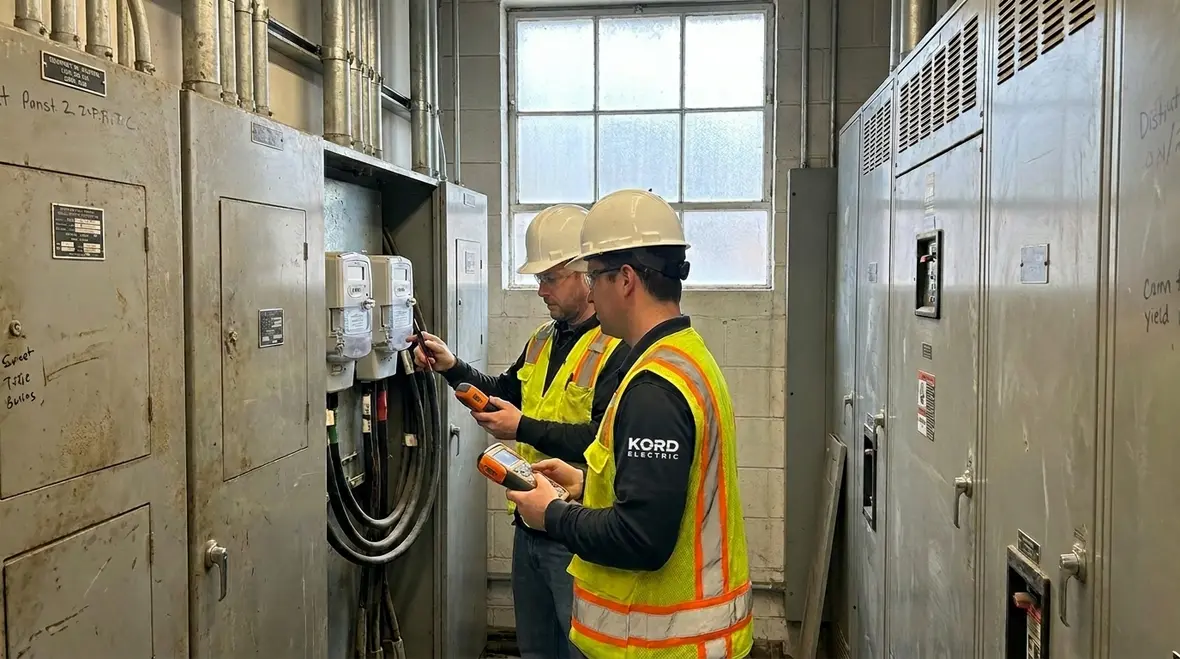
For many facility teams, peak demand planning also connects directly to the broader health of their electrical infrastructure. If your building has already dealt with unexplained breaker trips, flickering lights, or equipment malfunctions during busy periods, pairing a shedding strategy with a strong foundation in commercial electrical systems for modern buildings helps ensure every layer of your power distribution supports stability, not chaos.
What load shedding actually does, in plain terms
Load shedding reduces electrical demand by temporarily removing power from selected non essential loads during a short event. However, good systems do not just “cut power and pray.” They manage priority. For example, a facility can keep life safety systems running while shifting power away from tasks that can pause for minutes without major impact. At the same time, the controls aim to prevent dangerous overloads on feeders, switchgear, transformers, and generators.
In practice, the system monitors building conditions and then acts based on setpoints. The setpoints may include measured current, apparent power, demand rate, voltage deviation, or signals from the utility. Then, rather than shutting down the whole site, the controller sheds loads in stages. As a result, the building maintains service continuity for critical equipment, while other loads cycle back as the demand drops. This staged approach also improves restart control. So, the next time production ramps again, the restart does not become a second peak. Our technicians explain it as “throttle the demand, not the business.”
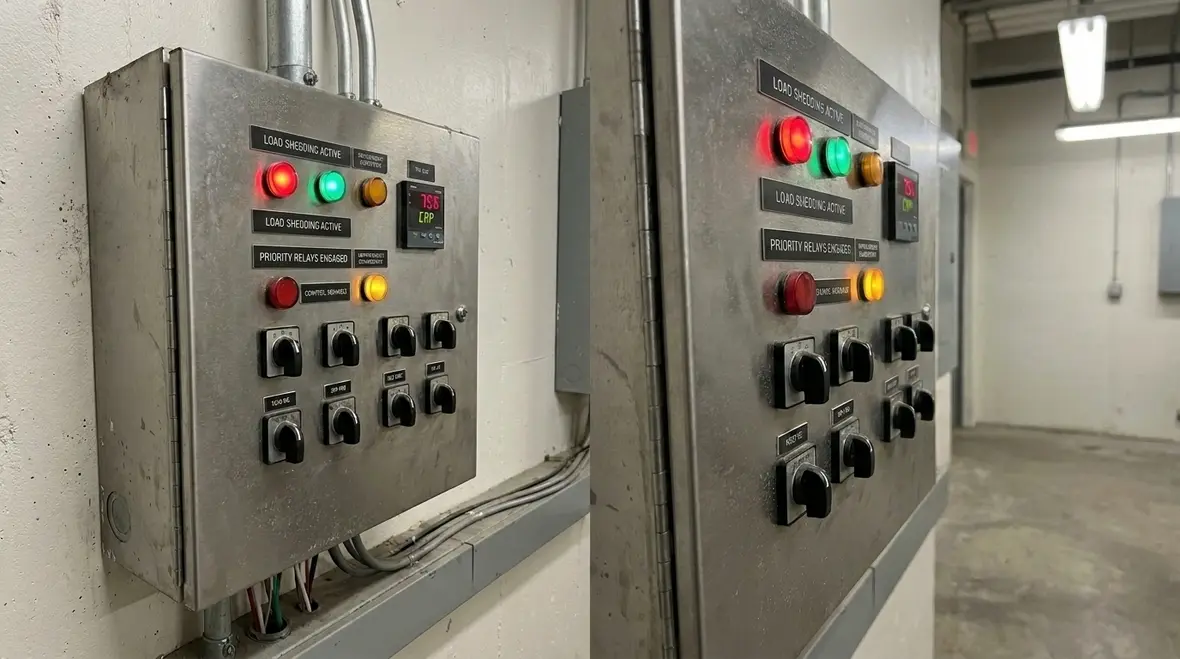
When paired with solid power quality diagnostics and voltage stability work, load shedding becomes part of a wider reliability toolkit. Facilities that struggle with unstable feeds or equipment damage during brownouts often combine these controls with services like voltage fluctuation repairs for commercial and industrial facilities to keep both everyday operations and peak events under control.
Core components our technicians specify for commercial sites
Engineers and electricians need a complete picture before they install commercial electrical load shedding systems. That starts with a load inventory. Kord Electric works with facility teams to identify which loads are essential, which are flexible, and which can run later. Then, we align that list with how the electrical system distributes power across switchboards, panelboards, and motor control centers. Next, we specify the control and protection components that will make decisions reliably.
Typical components include metering, a control unit, communication interfaces, and load control devices. Metering can measure site demand, feeder demand, or both. The control unit uses the data and then triggers shedding sequences. Load control devices can include contactors, solid state switching, motor starters, programmable logic controls, and breaker interfaces depending on the load type. Meanwhile, communication links may connect to building management systems or utility demand response signals. Finally, protection logic ensures the system does not shed loads during safe operating windows or ignore abnormal conditions.
In addition, our expert service staff focuses on install quality. They verify wiring, confirm transformer ratios, test relay timing, and run functional checks. Even though customers sometimes assume the controls are “set and forget,” the reality is that load patterns shift over time. Therefore, ongoing verification and updates protect performance as equipment adds up and tenants expand.
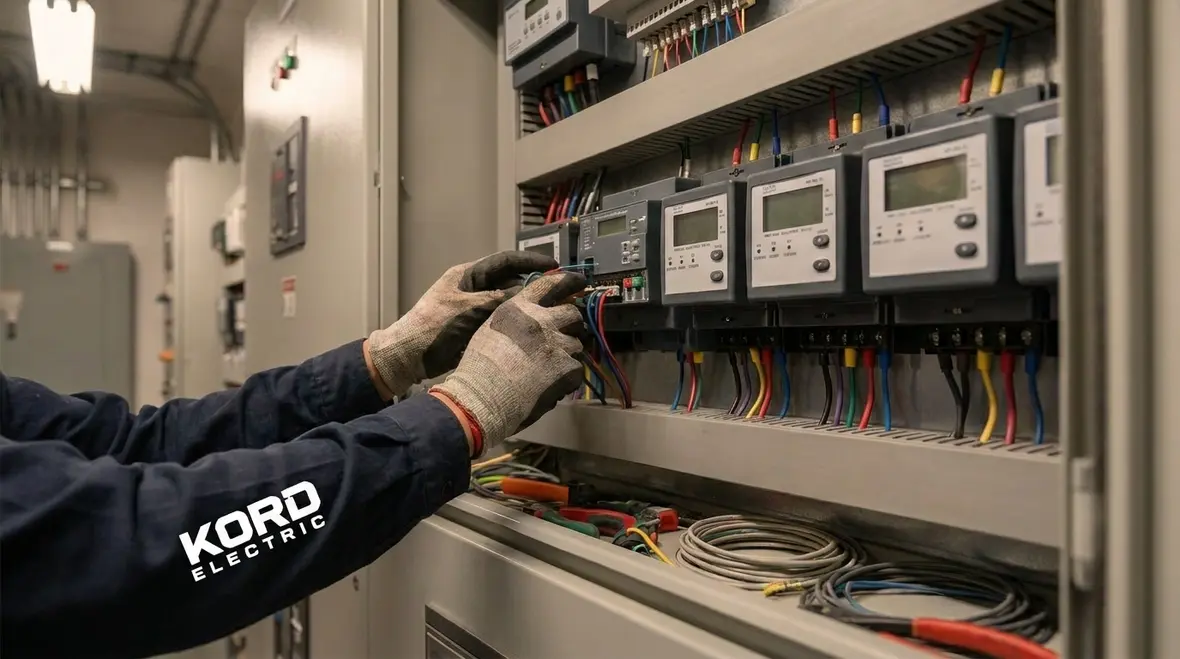
This component-first approach aligns naturally with broader system planning. Facilities that are already evaluating upgrades or rewiring work often review load shedding hardware alongside their main distribution gear, especially when they are studying long term investments such as those outlined in Kord Electric’s rewiring cost guide for commercial electrical systems.
How automatic control strategies manage stages without chaos
Automatic control strategies decide what to shed and how fast to do it. First, the system calculates the building’s present demand and compares it to thresholds. Then, it selects which stages to activate. Staging matters because different loads have different recovery times. For instance, HVAC staging differs from process loads, and refrigeration compressors differ from lighting and plug loads. A well designed shedding plan uses time delays and priority rules so the building does not lose stability.
Moreover, the control logic usually supports multiple shedding levels. Level one may shed a small portion of non essential loads. Level two may shed a larger portion if demand stays high. Level three may shed additional groups if the demand spike persists. Once demand decreases, the system restores loads in reverse order. This prevents a “yo yo” cycle where everything turns off and then turns back on instantly.
Some facilities also use predictive or adaptive logic. Instead of only reacting to demand, the system can account for patterns like shift starts. Others schedule shedding triggers based on known peak periods. That approach reduces the chance of surprise disruptions. And yes, it can feel like preparing snacks before a movie. You still follow the rules, but nobody shows up to a dark theater.
Choosing setpoints and prioritizing loads for reliability
Setpoints require careful work. If the thresholds run too high, the system sheds too late and overload risk remains. If setpoints run too low, the system sheds too often and harms comfort or productivity. Therefore, Kord Electric helps clients choose setpoints based on equipment ratings, historical load profiles, utility limits, and operational tolerance. We also consider contingency conditions. For example, the system should not shed critical ventilation if the site requires continuous indoor air quality during certain processes.
Next comes load prioritization. A typical priority scheme might classify loads as life safety, critical operations, normal operations, and flexible loads. Life safety stays on. Critical operations gets protected. Normal operations receives limited shedding. Flexible loads get shed first. However, we never apply a generic template to commercial and industrial buildings. We map each load group to the site’s actual process and maintenance routines. Our technicians review control sequences so operators understand what will happen during events.
Finally, we coordinate with equipment manufacturers and building standards. Motors need proper restart sequencing. Drives may require specific ramp times. Boilers and chillers have lockout timers. So, a load shedding strategy that ignores these factors can create new problems. By contrast, when the plan respects equipment behavior, it supports reliability and minimizes disruption.
Installation, testing, and ongoing tuning in the field
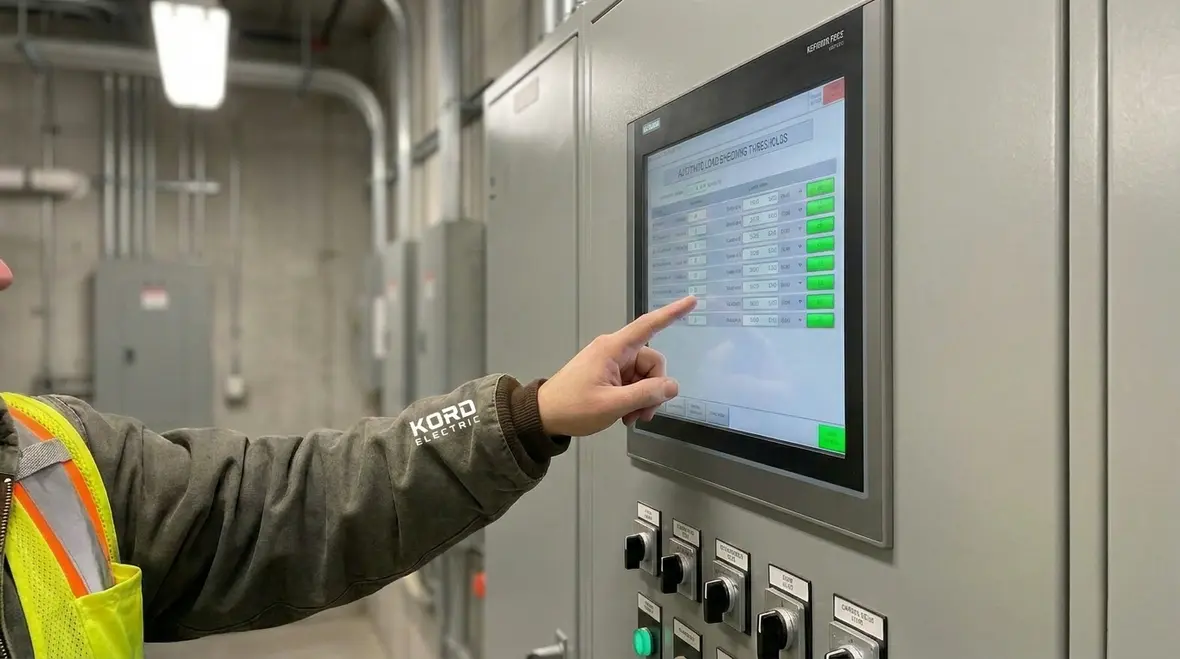
Commercial electrical load shedding systems succeed or fail based on what happens after design. During installation, we verify metering accuracy, confirm relay setpoints, check panel labels, and ensure control circuits function as intended. Then we run testing. Functional testing confirms that the controller detects demand signals and sheds the correct load groups in the correct order. Timing tests confirm delays and restoration logic. We also test alarm and event logs so operators can trace what occurred.
After commissioning, the work continues with tuning. Load profiles change when equipment ages, tenants add circuits, production schedules vary, or HVAC schedules shift. Thus, our expert service staff often schedules seasonal checks. We review event history, compare it to expected performance, and adjust thresholds or staging as needed. That step keeps the system aligned with real operation rather than outdated assumptions.
We also support documentation. A clear one page operational guide helps building teams respond quickly. And when an alarm sounds, people can act instead of guessing. Nobody likes troubleshooting like it is a mystery novel, especially when the stakes involve power.
For many properties, this tuning naturally folds into a broader preventive maintenance rhythm. Facilities that already rely on structured commercial and industrial programs, such as Kord Electric’s dedicated electrical preventive maintenance services, often add load shedding checks to their recurring inspection lists so adjustments track real world operating changes over time.
Real world outcomes for major property buildings
For major commercial and industrial facilities, a smart shedding plan can reduce the likelihood of demand limit violations. It also lowers stress on electrical infrastructure by preventing overload conditions. That can help extend the life of transformers, switchgear components, and motor control gear. Furthermore, well designed staging keeps critical services stable and limits discomfort for occupants. In other words, the building stays usable during the peak event, which helps budgets and operations.
Additionally, many owners want to improve predictability. Load shedding creates a structured response. Instead of experiencing random trips or unpredictable behavior, operators get a planned sequence. They know what gets shed first, which equipment returns next, and how long restoration takes. When others see stable behavior during utility events, they stop treating the system like a gamble and start using it like a tool.
Then, when Kord Electric installs and tunes the controls, our focus stays on commercial and industrial facilities, not generic consumer sites. We build for real loads, real duty cycles, and real operational constraints.
FAQ: Commercial electrical load shedding systems
Call Kord Electric for a plan that fits your load profile
Peak events do not wait for meetings, and neither should your plan. Kord Electric helps commercial and industrial facilities design, install, test, and tune load management controls that protect critical service and reduce demand risk. Our technicians and expert service staff guide your team through load prioritization, staging logic, and commissioning, so the system behaves the way you need it to. If you want fewer surprises during peak demand, contact us today and let us build a smarter response for your building.
If your facility is ready to move from theory to implementation, our team can also integrate commercial electrical load shedding systems into broader reliability programs, combining demand control with structured inspections, testing, and diagnostics. Pairing your shedding strategy with services like electrical preventive maintenance for commercial and industrial properties gives your building a clear roadmap for long term stability, not just short term fixes.


