Commercial EV Charging Infrastructure Design Guide
At Kord Electric, we help commercial sites plan commercial ev charging infrastructure design that stands up to real world demand, real world schedules, and real world budgets. In the first stage, we map power availability, charging behavior, and the physical layout so fleets can charge without turning a workplace into an electrical science project. This guide walks through the basics of how our team approaches commercial ev charging infrastructure design for commercial and industrial facilities, along with major property buildings where reliability matters. And yes, we do explain the “boring” parts too, because downtime is never fun. Even if it sounds dramatic like a movie where the hero says, “We needed more amps.” In real life, it is less cinematic and more costly.
Start With Fleet Reality and Power Limits
Understanding Commercial Charging Needs Before the First Conduit Run
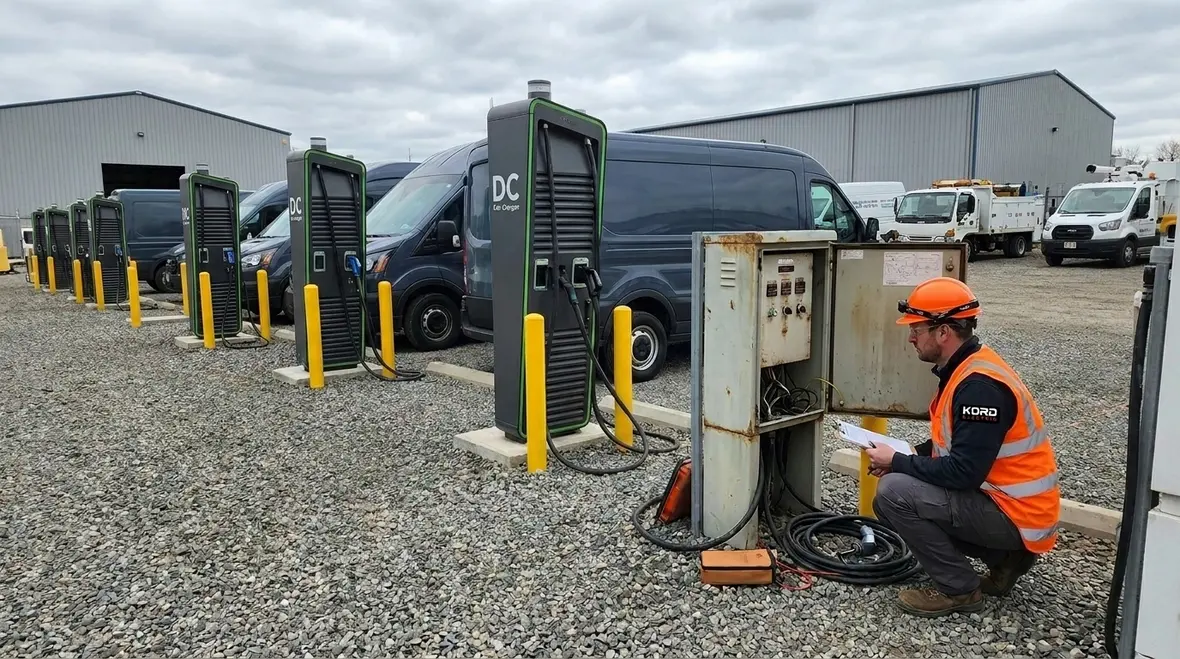
In commercial and industrial settings, the first mistake often comes from planning around the vehicles and ignoring the electrical system. However, when we start a project, we treat the fleet like a living schedule, not a spreadsheet. Then we compare that schedule to the site load profile.
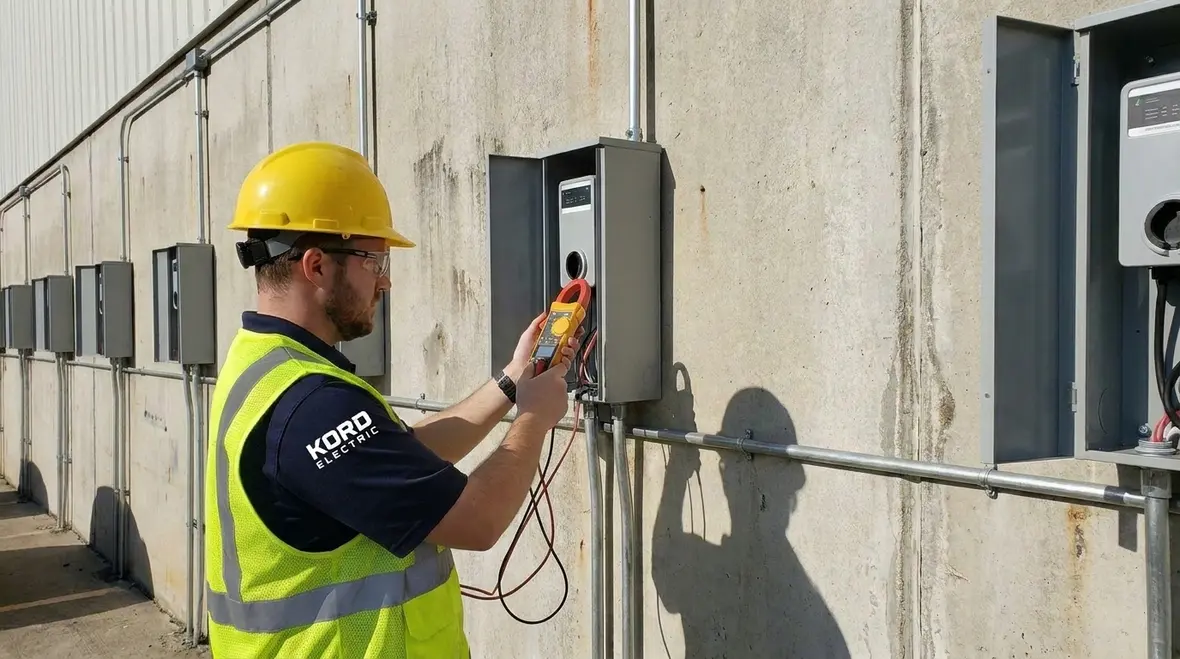
Our expert service staff and certified technicians ask questions that keep the design grounded. For example, we look at when vehicles return, how long they park, and whether drivers need full charge every time. Next, we assess the facility’s existing electrical capacity, available feeders, and any planned expansions. Once we have those facts, we choose a charging layout that fits the site rather than forcing the site to fit the equipment.
At this stage, transition matters. If a client plans to add vehicles, we design with growth in mind, so the system does not become obsolete right after the ink dries. And if the facility runs high loads on certain shifts, we time charging strategy to avoid unnecessary peaks.
To be clear, we only build for commercial and industrial facilities and major property buildings. If someone asks us for a residential setup, we gently redirect them, because the engineering logic and code paths differ.
Turning fleet schedules into real load data
Instead of guessing, we translate route plans, dwell times, and driver behavior into charging demand curves. Early shift vehicles, overnight deliveries, and pool vehicles all create different patterns. By mapping those patterns against building loads, we can see where there is room to charge aggressively and where smart throttling makes more sense.
How Load Forecasting Shapes the Charging Layout
From nameplate ratings to real world loading
After the basics, we move to load forecasting, because the math helps the project survive the real world. Charging power is not just a number on a brochure. It depends on connector rating, charging curves, usage pattern, and whether chargers share capacity.
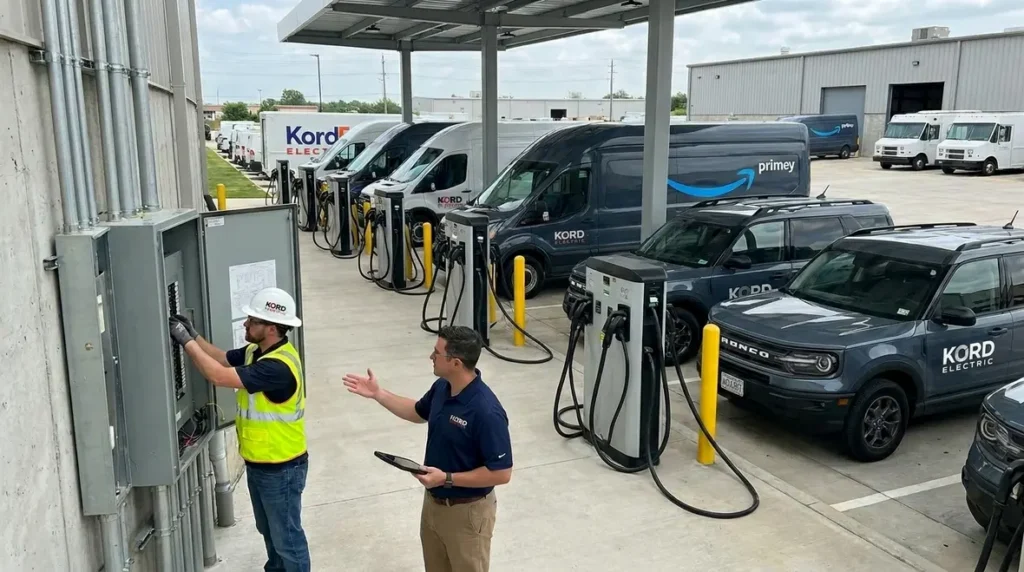
We typically organize the fleet into charging zones based on operational needs. For instance, some vehicles require faster charging during tight turnarounds. Others can charge slower and still meet the daily schedule. As a result, we can reduce overall strain on the building electrical system without reducing performance.
Next, our technicians confirm the site behavior. We review utility service size, transformer capacity, panelboard capacity, and feeder ratings. Then we model the likely load curve over the day. At that point, we can decide whether the site needs upgrades, load management, or a phased rollout.
Here is the part people often forget. If the facility already has heavy equipment, HVAC cycling, or process loads, the charging system must play nice. Otherwise, the building may face voltage stress and unstable performance. And nobody wants their chargers acting like a temperamental DJ.
Designing zones for different charger speeds
We can prioritize high turnover bays near loading docks or dispatch areas while dedicating slower charging to long dwell parking. That mix lets sites combine Level 2 and, where appropriate, DC fast charging without overwhelming service capacity. It also supports staged rollout when vehicles of different classes share the same facility.
Voltage Stability and Why It Matters for Chargers
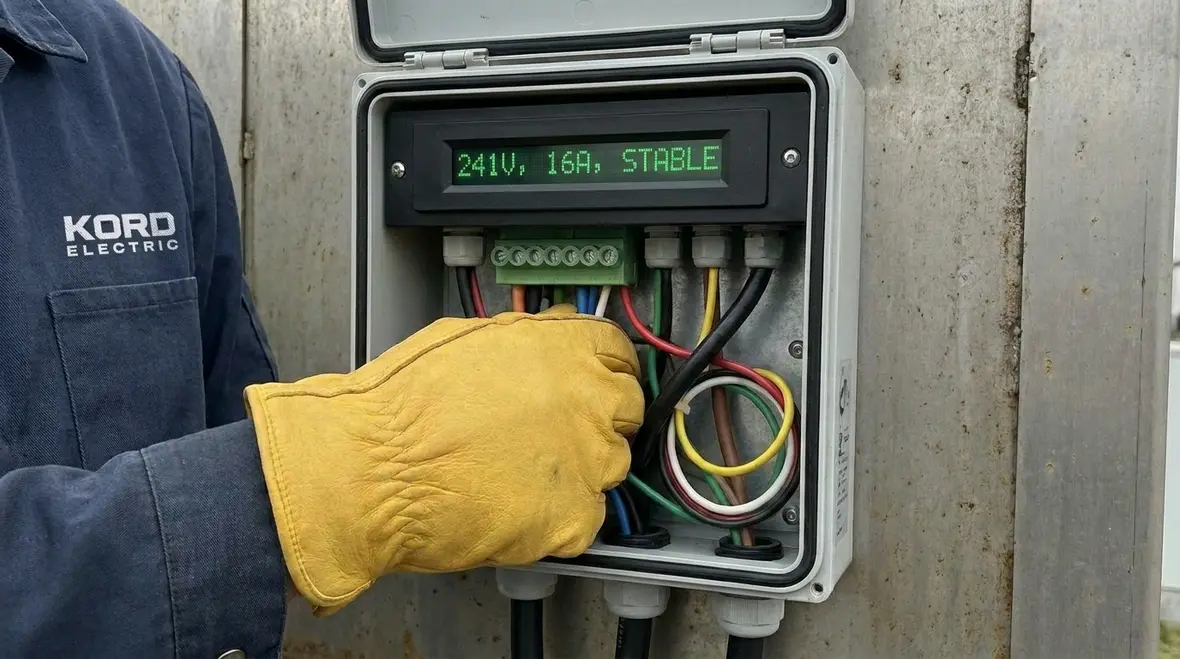
Power quality is not a hobby topic. It affects charger performance, uptime, and long term equipment health. In commercial and industrial environments, voltage fluctuations can occur due to switching events, large motors starting, or uneven loading across phases.
Kord Electric pays close attention to this because it directly connects to how charging equipment behaves. If voltage drops or swings beyond safe limits, chargers may derate, shut down, or repeat protection cycles. As a result, drivers experience slower sessions and operations staff get the kind of phone calls nobody wants.
Our approach aligns with the guidance we share in our article on voltage fluctuations in commercial and industrial settings. We focus on identifying likely causes such as motor starts and panel imbalances, then we align design choices to reduce sensitivity. That means we consider conductor sizing, circuit layout, grounding, and phase balancing. It also means we review protection and coordination so the system responds correctly during faults and transient events.
To keep things practical, we treat voltage like a steering wheel, not a suggestion. We set it up so the charging system receives stable power under normal operations and under stress. And yes, stable power makes chargers happier, which means your facility stays in control.
Whenever possible, we also plan for monitoring. That way, if a facility’s load changes later, the team can spot the issue early and adjust instead of guessing.
Building power quality into commercial EV charging infrastructure design
For many facilities, EV charging is the first time they regularly push the electrical system near its limits. By pairing monitoring with thoughtful design, we can catch voltage issues long before they become nuisance trips or equipment failures. That is especially important when chargers share service with sensitive process loads or critical building systems.
Site Layout, Conduit Planning, and Safety Checks
Designing for drivers, technicians, and inspectors
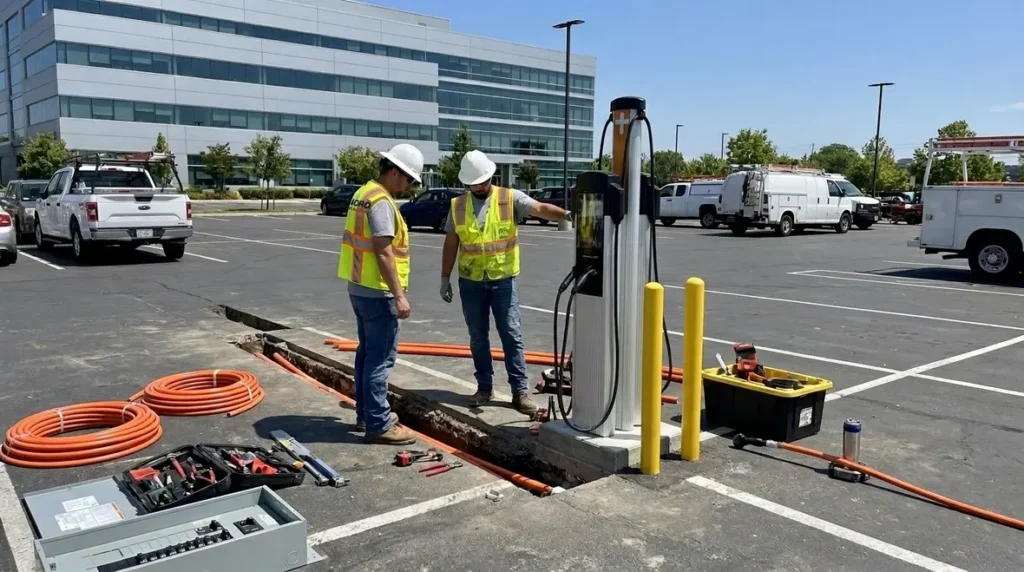
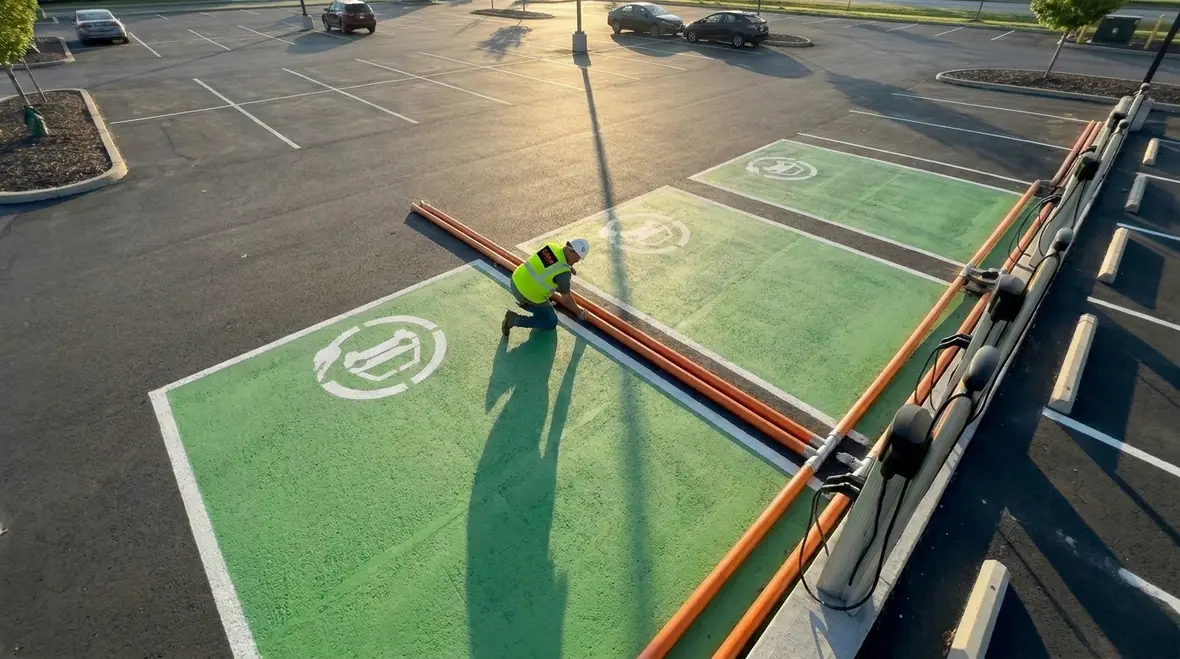
Even the best electrical design fails if the physical installation creates problems. Therefore, we design for both the electrical path and the real world path. We coordinate charger locations with parking patterns, cable routing, and future maintenance access.
Next, we evaluate conduit routing and environmental factors. In commercial and industrial facilities, these details matter. There may be vehicle impacts, wet areas, dust, corrosive conditions, or overhead obstructions. Our technicians plan routes that protect cables and keep installation clean and serviceable.
Then we handle safety through code compliant practices. We consider grounding and bonding, overcurrent protection, labeling, and sign off testing. After that, we confirm the design supports correct operation for both drivers and facility staff.
To help our clients visualize the install, we often use a two track approach for planning and execution. One track covers power delivery and protection, while the other covers site constraints and commissioning steps. This keeps the work organized and reduces surprises. Think of it like two lanes on a highway: nobody gets trapped in the slow lane during launch week.
|
Design Track
|
Install Track
|
Phasing, Load Management, and Fleet Expansion
Designing today’s system for tomorrow’s vehicles
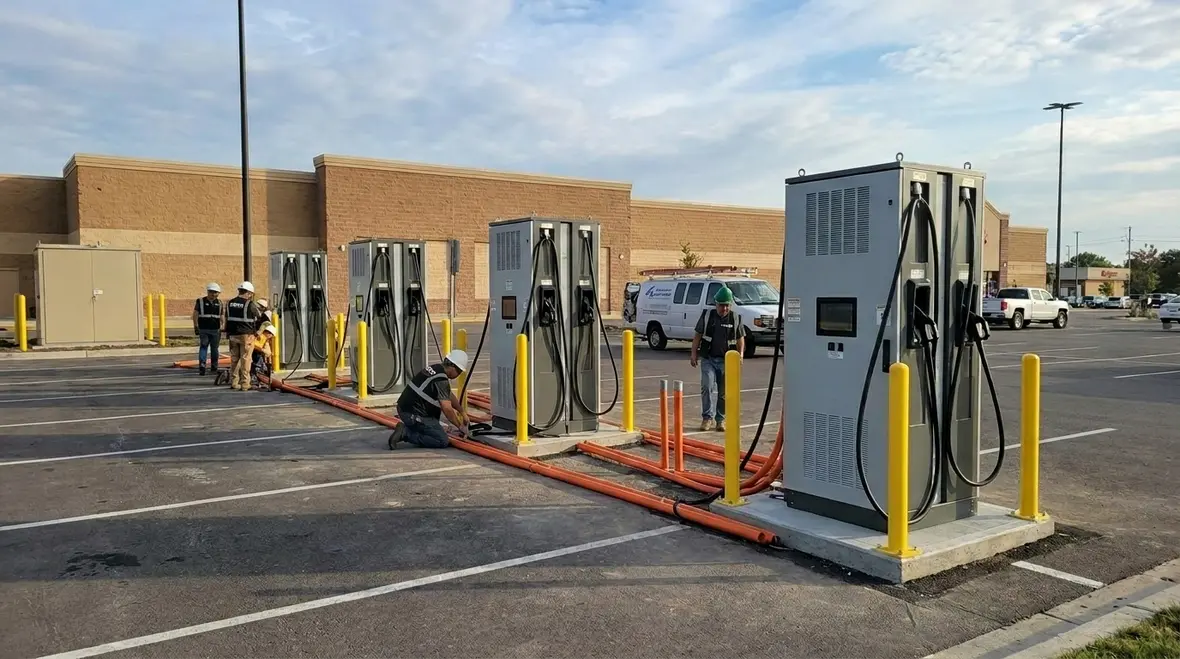
Not every project can be fully built in one pass. However, our team designs systems that scale, because fleet plans rarely stay still. Some clients start with a pilot group of chargers, then expand as charging behavior becomes clear. Others roll out by building wing or by shift schedule.
In these cases, we recommend phasing that protects capacity and avoids expensive rework. We plan the electrical infrastructure so additional chargers can connect without tearing up the site. Then we set up load management logic so the chargers share power responsibly.
Load management matters for commercial and industrial facilities because it helps avoid sudden spikes that stress the service. Instead of letting every charger pull maximum power at the same time, the system distributes power based on available capacity. As a result, charging stays consistent and the building stays stable.
Our technicians also help clients understand operational settings. We make sure facility teams know how to interpret charging behavior, and we explain what changes when new vehicles arrive. That is where experience earns its keep. A charger is not magic, and our staff treats it like equipment that needs a plan.
And if someone thinks, “We will just add chargers later,” we agree they can. But we also remind them the later phase still needs forethought. Even the best plans can fall apart if the conduit and capacity are not ready.
Commissioning, Monitoring, and Support for Commercial Operations
Turning a new charging system into a dependable asset
After installation, we do not treat the job as finished. Instead, we commission the system so it operates safely and as intended. That includes verification steps like correct wiring checks, protective device behavior review, and functional tests under expected conditions.
Next, we support the facility with monitoring options when appropriate. Monitoring helps when a site’s load changes over time, such as new equipment, expanded staffing, or HVAC updates. Then the charging system stays aligned with the electrical reality of the building.
Our expert service staff also trains the right people. We explain what users see, what operators should watch, and how to respond if something deviates from expected performance. This matters for major property buildings too, where multiple stakeholders need clear communication.
In other words, we do not build and disappear. We stay engaged during rollout, because early success sets the tone. And when something odd happens, we handle it fast, not with a “maybe it will sort itself out” attitude. That approach works great in sitcoms, not in fleet operations.
For facilities planning larger electrical upgrades or addressing long term performance issues, thoughtful commercial rewiring strategies can pair naturally with EV infrastructure so the entire system grows in the same direction.
How Commercial EV Charging Fits Into a Larger Electrical Strategy
Connecting charging infrastructure to long term maintenance and reliability
Commercial ev charging infrastructure design does not live in isolation. It connects directly to panel capacity, feeder condition, and the maintenance culture of the property. Sites that already invest in disciplined commercial and industrial electrical maintenance plans often have a head start. Their systems run cooler, protection devices behave predictably, and documentation makes upgrades easier.
When we evaluate a property for EV charging, we look at the bigger picture: prior retrofits, known voltage issues, and the age of major components. If voltage fluctuations or unexplained shutdowns are already showing up, we might recommend addressing those through targeted corrections like the work described in our voltage fluctuation guide before or alongside new charging equipment. That way, every charger benefits from a stable foundation rather than fighting an unstable system from day one.
This whole building mindset also helps with future audits, real estate transactions, and expansions. When documentation shows that EV charging, panel upgrades, and power quality corrections were planned together, stakeholders can see a clear story instead of a patchwork of quick fixes.
FAQ
Ready to plan your EV charging rollout with Kord Electric?
If your commercial facility or industrial site needs a reliable charging network, we help you plan it like professionals. We start with fleet reality, validate electrical capacity, address voltage stability, and design the layout for safe, serviceable installation. Then our technicians commission and support the system so your drivers keep moving and your operations keep running. Reach out to Kord Electric and let us build a plan you can trust from day one.
For facilities ready to move from planning to action, our dedicated EV charger installation services connect design, construction, and commissioning into a single, coordinated process built for commercial and industrial demands.