
Electrical Infrastructure Redundancy for Businesses
Electrical Resilience Starts with Redundant Power
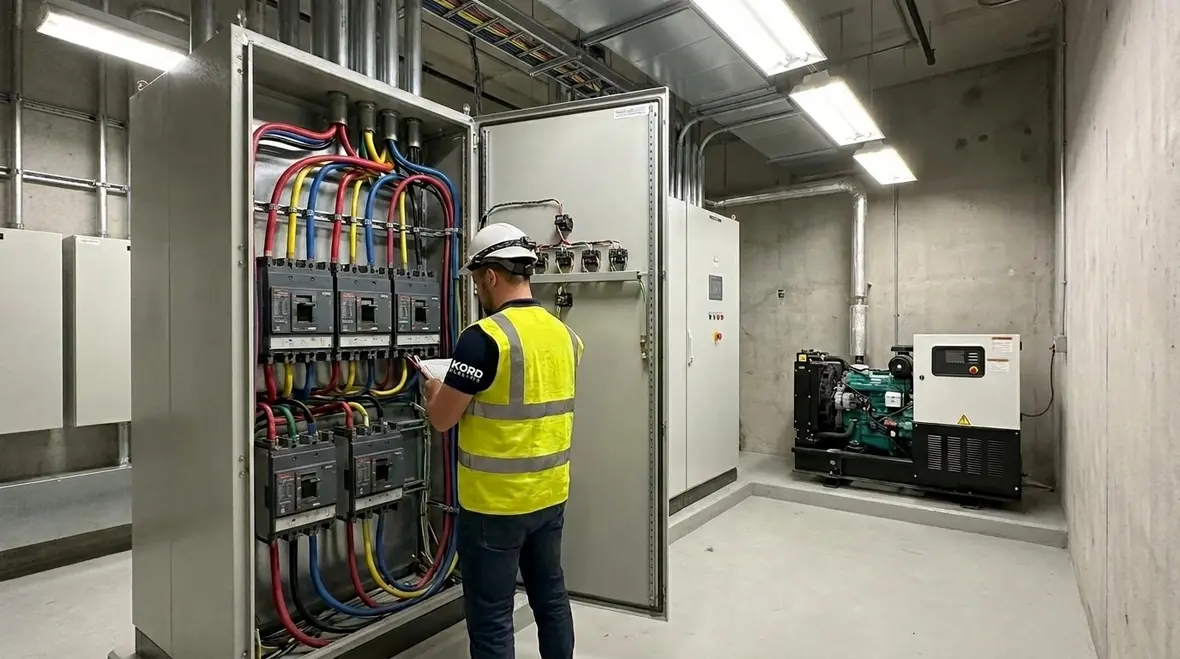
At Kord Electric, we build resilience into the way commercial and industrial facilities receive power. Others treat reliability like a wish and call it a plan. We treat it like an engineering requirement, because electrical infrastructure redundancy for businesses can mean the difference between a short outage and a costly shutdown. When we design your system with smart backup paths, protective coordination, and clean transfer to alternate sources, your operations keep moving. In other words, we help your business stay online even when the grid, a breaker, or a feeder decides to act up like a late customer. And yes, our technicians explain every step in plain language, so your team knows what we installed, why it matters, and what to do if something ever changes.
In the rest of this article, we cover how redundancy works in real facilities, how we assess risk, and how upgrades can be phased without disrupting production or guest flow. Also, we will point to wiring and upgrade lessons we apply from real projects, including commercial kitchen electrical upgrades and wiring.
Why Electrical Infrastructure Redundancy for Businesses Prevents Downtime
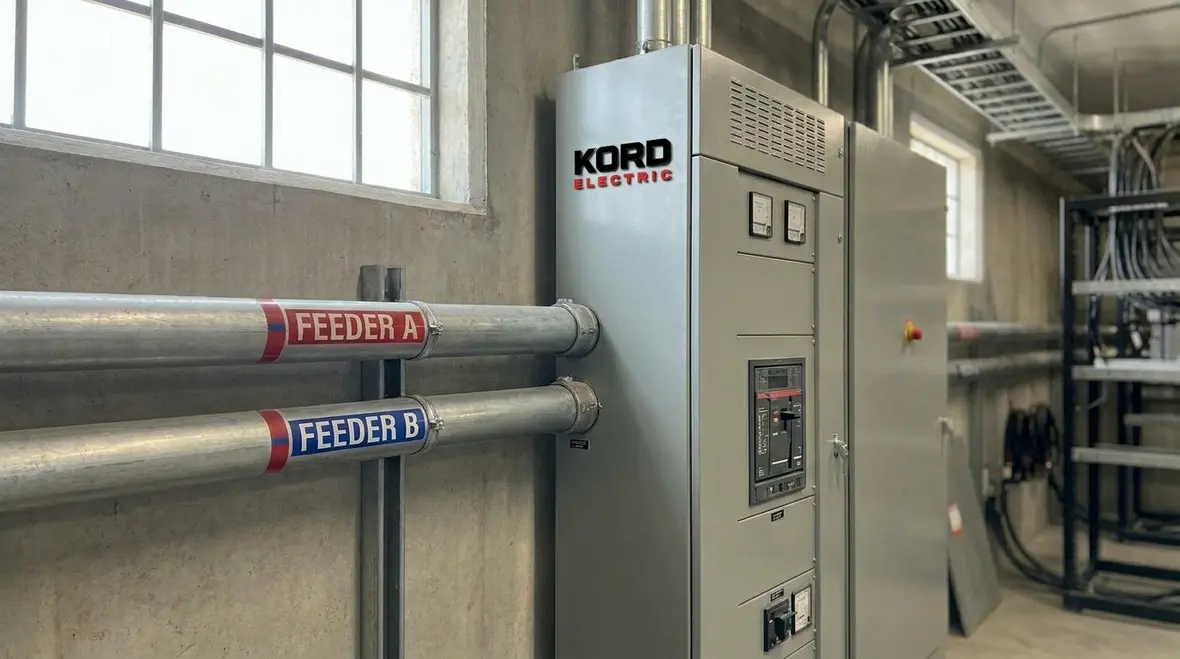
When power fails, the problem is rarely one single event. It is usually a chain reaction: a sag happens, equipment trips, controls reset, and then operations crawl. Therefore, electrical infrastructure redundancy for businesses focuses on keeping critical loads energized through disturbances and failures. We do this by creating multiple ways for power to reach equipment, and by controlling how the system behaves under stress.
For example, a well planned setup can include two independent feeders, a properly sized standby source, or a transfer method that avoids long dead time. However, redundancy does not mean every component is duplicated mindlessly. Instead, we apply redundancy where it protects the most important loads, like life safety systems, critical HVAC, process equipment, and communications.
To make it practical, our experienced service staff walks facility managers through the impact of losing power. They explain how different loads respond, which circuits are sensitive, and what happens to controls during transfer. So, you get a clear picture, not a vague promise.
How Businesses Map Critical Loads and Define Reliability Targets
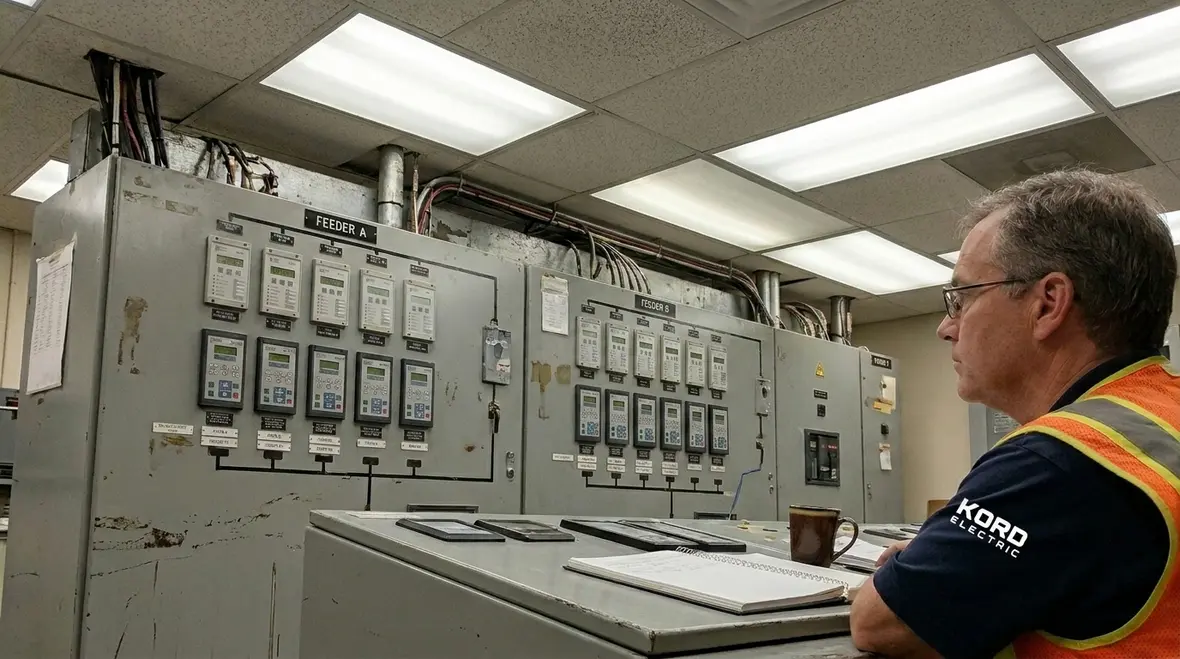
Modern facilities do not fail at random. They fail where systems share weak points, or where one path carries too much risk. So, we start with load mapping. First, we identify the equipment that must stay running, and the equipment that can ride through a short event. Next, we classify loads by priority and sensitivity. Then, we determine what kind of “ride through” a facility needs based on how operations run.
Because every building uses electricity differently, our engineers consider schedules, peak demand, start up currents, and process timing. As a result, the redundancy plan supports actual operations, not just theoretical power availability. For instance, refrigeration compressors, medical style imaging controls, production lines, and elevators all respond differently. And if anyone tells you “all loads are the same,” they have never tried to restart a complex system under time pressure.
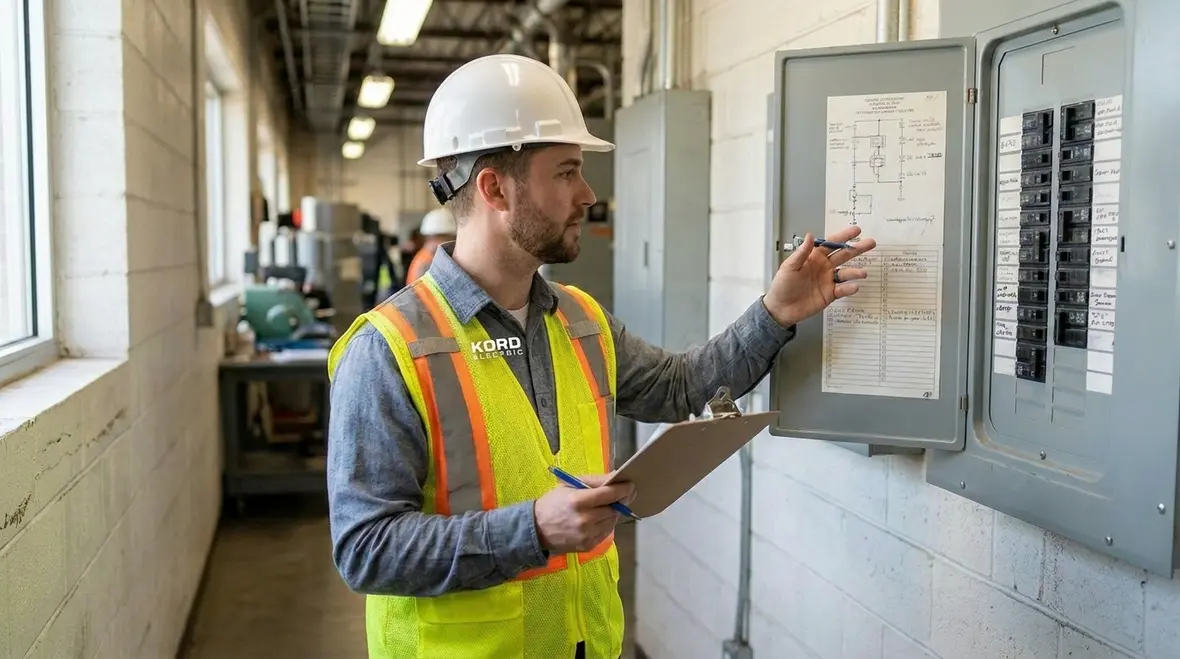
Our technicians also verify how your controls work. They review panel labeling, existing wiring paths, protective device settings, and upstream constraints. Then, we propose improvements that reduce nuisance trips, limit damage risk, and support clean transfer. In short, we build reliability from the inside out.
Backup Power and Transfer Methods That Actually Work
Backup power sounds simple until you look at real transfer behavior. When a facility switches from normal power to backup, the system must avoid short interruptions and unsafe backfeed. Therefore, we design transfer strategies that match your site and your critical loads.
Our team commonly evaluates options such as generator systems, UPS for control and IT loads, and automatic transfer schemes. Additionally, we consider parallel paths so your most important equipment can ride through without depending entirely on one source.
Just as important, we focus on transfer time, load sequencing, and generator starting requirements. If you ignore these details, you can end up with equipment that does not restart correctly, or with breakers that trip under start up conditions. To prevent that, our electricians coordinate protection settings and verify load inrush behavior.
And yes, we test concepts before you rely on them. Others may install gear and call it done. We verify that it performs as intended, with clear documentation and commissioning steps that help your team trust the system.
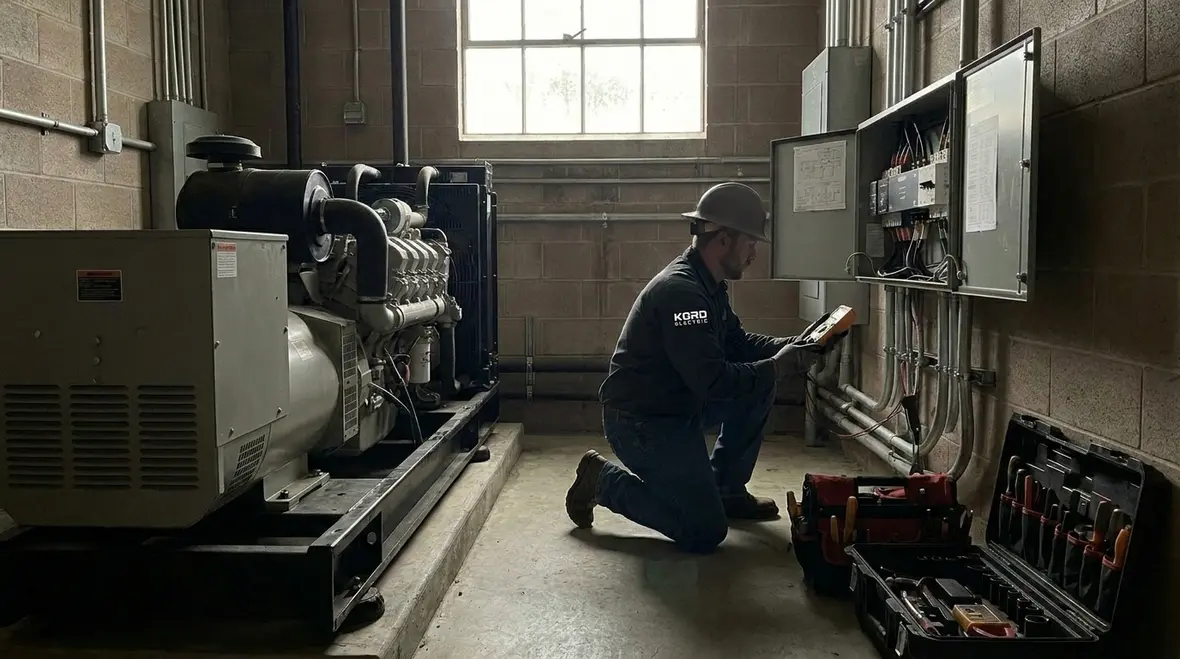
Protective Coordination, Monitoring, and the Hidden Value of Smart Design
Redundancy is not only about having another power source. It also includes how the system isolates faults. When a fault occurs, protective devices must clear the right part of the circuit while keeping healthy loads running. This is where protective coordination matters.
So, we design time current curves, breaker settings, and relay behavior to reduce how far a problem spreads. Then, we add monitoring that helps you see changes early. For example, a facility can catch a phase imbalance, a deteriorating connection, or a repeated nuisance trip before it becomes an outage. As monitoring improves awareness, response time gets shorter, and repairs become planned instead of emergency.
Our technicians install and verify devices that support alarms and trending, and they explain what the signals mean. They do not just hand over paperwork and vanish like a superhero leaving a city without a map. Our service staff stays available, especially when operations need clarity.
Meanwhile, we pay attention to equipment ratings and heat management. Poorly sized conductors, loose terminations, and aging switchgear can turn “redundant” into “reliable for about five minutes.” Therefore, we confirm component condition, not just configuration.
Commercial Kitchen Electrical Upgrades: Lessons Applied to Reliability
Commercial kitchens live on electricity. They run ventilation, refrigeration, cooking controls, and sometimes heavy motor loads throughout busy hours. In the project work we perform, commercial kitchen electrical upgrades and wiring often reveal how real sites fail. A small issue, like a worn connection or a shared feed for multiple critical systems, can create cascading failures.
To improve resilience, we apply redundancy principles to these environments as well. For instance, we separate critical circuits, verify conductor sizing for continuous loads, and support clean segregation between power zones. We also address labeling, because when the circuits are clear, maintenance becomes faster and safer.
Furthermore, we look at how wiring routes affect performance. In a commercial kitchen, heat and vibration can stress connections. So, we ensure proper installation practices and check for conditions that could lead to intermittent faults. Then, we coordinate protective devices to reduce nuisance trips during normal operation.
Just as kitchens need dependable power to keep service on track, industrial and commercial facilities need the same discipline across life safety, process equipment, and key building systems. That is why our approach stays consistent even when the building types differ. We plan redundancy, we coordinate protection, and we confirm performance.
Upgrade Planning for Existing Facilities Without Shutting Everything Down
Many businesses cannot pause operations to rebuild power. Therefore, we plan upgrades with staging. We sequence work so the facility stays running where it must, and we schedule tie ins during windows that align with production schedules.
First, our team reviews single line diagrams, panel schedules, and existing wiring paths. Then, we identify the safest points to refeed or reconfigure. Next, we prepare materials and confirm load behavior so the new design does not introduce unexpected trips or overloads.
Additionally, we coordinate with your stakeholders. Our technicians explain what changes, what stays live, and what downtime is expected. So, your managers and maintenance staff can plan their day instead of reacting to surprises.
Finally, we document everything. That documentation matters later, when future repairs need speed and accuracy. In other words, our upgrades aim to reduce risk today and prevent confusion tomorrow.
FAQ: Electrical Redundancy for Commercial and Industrial Buildings
Call Kord Electric for a Resilience-First Electrical Plan
If your facility cannot afford downtime, do not wait for a near miss to become a full outage. Kord Electric designs resilience for commercial and industrial properties with electrical infrastructure redundancy for businesses, coordinated protection, and upgrade plans that fit real operations. Our technicians and expert service staff explain the system clearly, so your team knows what is installed and why it protects your operation. Reach out today for an assessment, and let us build an electrical plan that stays steady when the unexpected arrives.
If you are planning broader modernization alongside redundancy improvements, explore how our team can support strategic projects such as rewiring cost for commercial electrical systems or long term commercial and industrial electrical maintenance plans. Coordinating redundancy design with rewiring and maintenance helps your facility move from reactive fixes to a stable, long range electrical strategy.
For properties that need a field-ready partner to turn this strategy into safe, code-compliant work in the field, our dedicated commercial electrical services team delivers installation, upgrades, and troubleshooting focused on uptime, safety, and clear communication with your operations team.
When you are ready to strengthen your infrastructure, protect operations, and build in electrical resilience that matches your business goals, Kord Electric is ready to help you design and implement a redundancy plan that fits your facility, your risk tolerance, and your long term growth plans.
Talk with our team about how a resilience-first design can align with your existing equipment, your planned expansions, and your budget, so electrical infrastructure redundancy for businesses becomes a competitive advantage instead of a last-minute scramble.


