Warehouse Smart Lighting Controls Installation
Optimizing Warehouse Efficiency With Smart Lighting Control Installation by Kord Electric
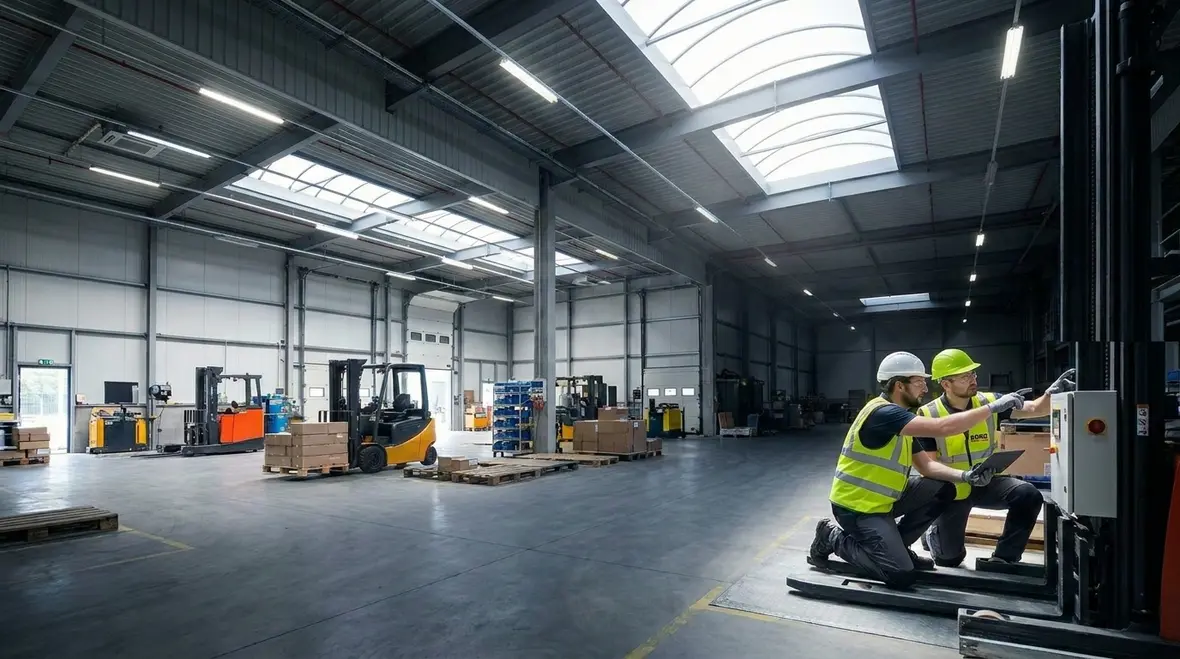
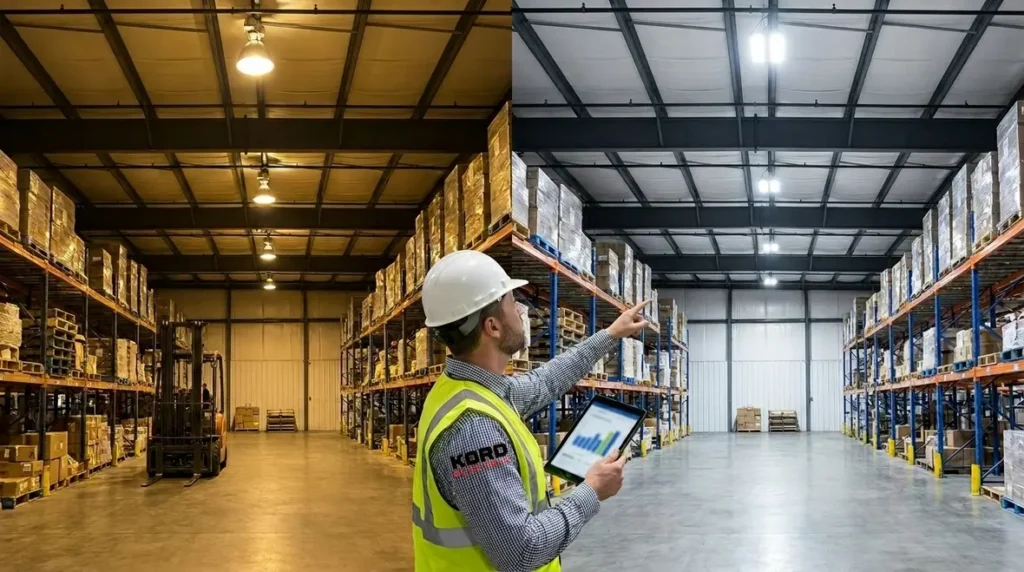
In today’s commercial and industrial spaces, light is not just decoration. It is a system. With warehouse smart lighting controls installation from Kord Electric, we help facilities cut wasted energy, improve safety, and keep operations moving smoothly. In the first hours after our team finishes setup, customers often notice the same thing: areas feel brighter where they should be, and dimmer where they do not need to be. That means fewer “why is this hallway lit like a runway” complaints and fewer energy bills that feel like they were sent by a haunted house. And because our technicians explain each step as they go, others in the building leadership team can make smarter decisions with confidence.
Why lighting control affects productivity, not just electricity
Warehouses run on time and flow. However, basic lighting often fights that goal. For example, if a bay stays fully bright even when it is empty, the facility pays for light it does not use. Then again, if lights lag when forklifts or workers move through zones, people slow down and safety risks rise. Therefore, good controls do not merely switch lights on and off. They adjust lighting to real activity and real needs.
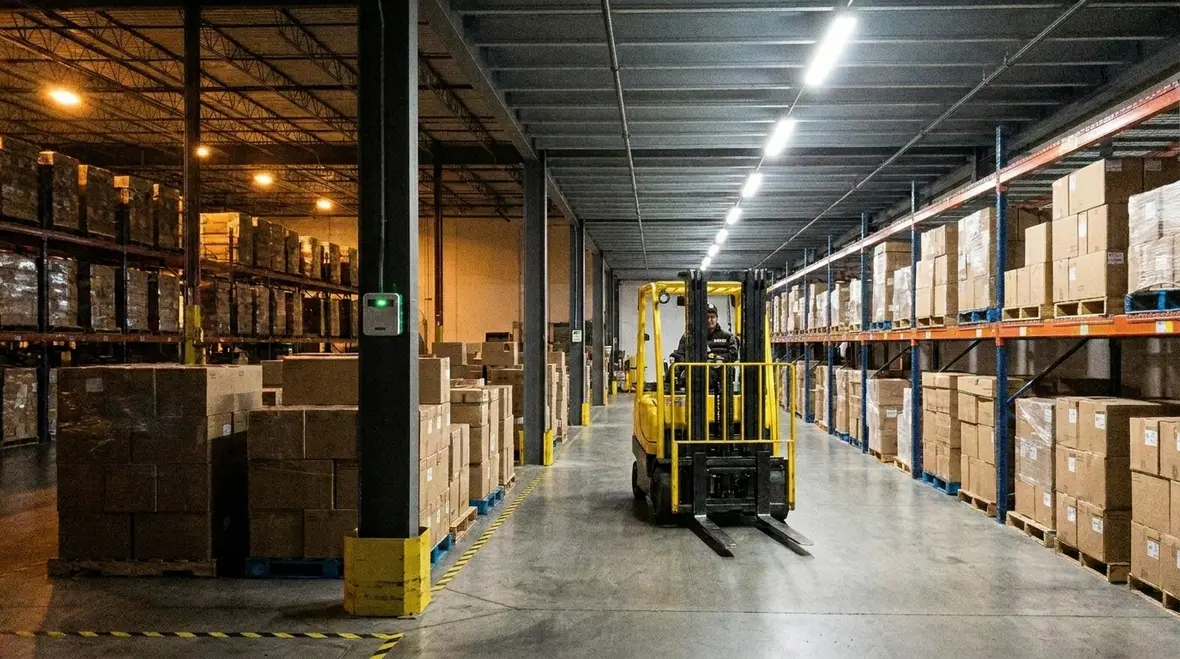
At Kord Electric, our expert service staff connects lighting control logic to how the warehouse behaves. We account for working hours, motion patterns, dock traffic, storage zones, and maintenance areas. Consequently, teams get consistent visibility during active tasks while less-used areas remain properly lit without constant full power. This approach supports both efficiency and comfort, and it keeps managers from playing guesswork bingo with their own electrical system.
Steps we take before we touch a single fixture
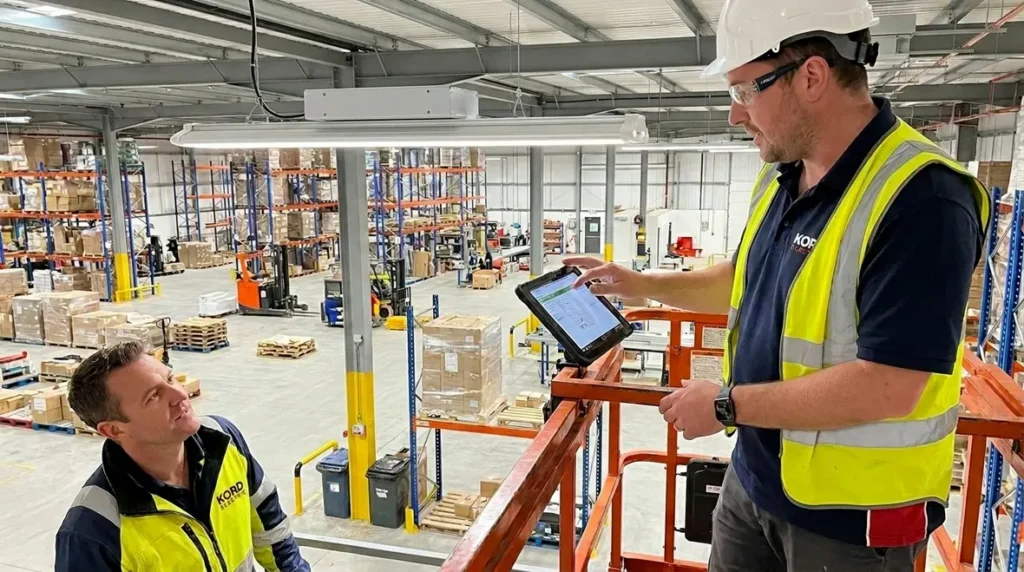
Installation works best when the plan is grounded in reality. That is why we start with a walkthrough of the commercial or industrial facility. Then we map lighting layouts, identify control zones, and review existing wiring and devices. After that, we verify power distribution, check fixture types, and confirm whether the system can support dimming and scheduling.
Our technicians also look for the hidden problems that cause “random dimming” or “lights that never fully turn on.” For instance, occupancy sensing can be thrown off by lens placement, airflow, or reflective surfaces. Additionally, daylight harvesting can misread brightness when skylights or exterior glare change across seasons. Therefore, we test assumptions on site and calibrate settings so the system behaves the way the operation actually runs.

How smart controls reduce waste across zones and shifts
A warehouse does not use light evenly. Some bays work nonstop. Some aisles serve only occasional picks. And loading docks can swing from quiet to chaotic in minutes. Because of that, smart control strategies focus on zoning and timing.
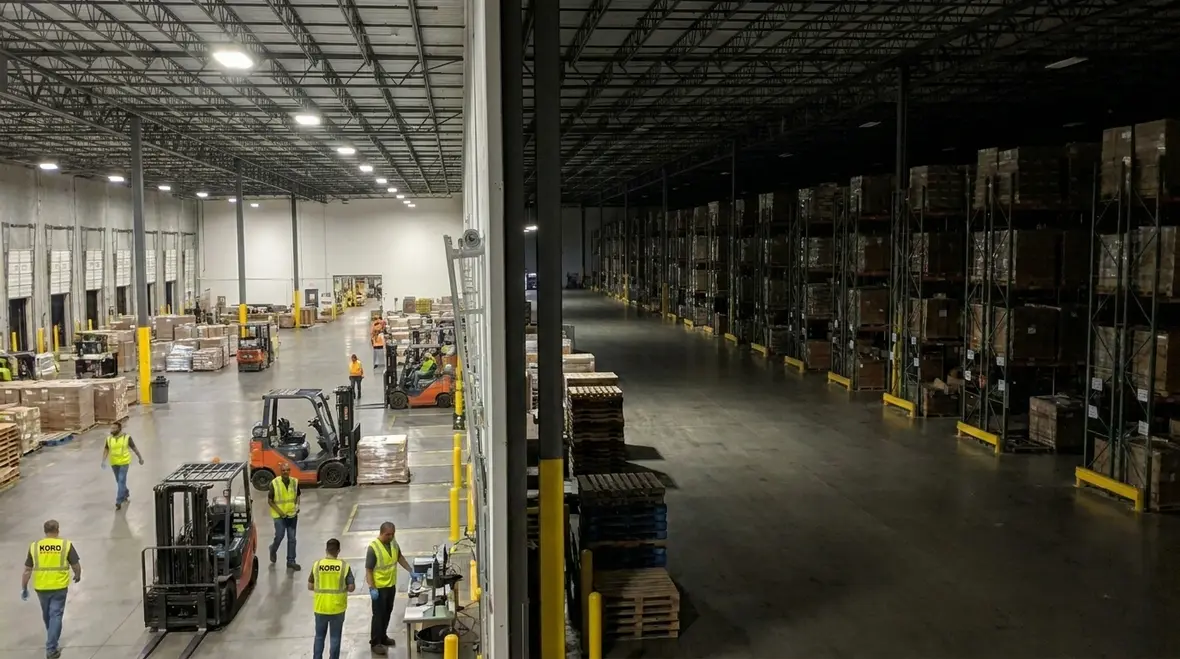
Typically, we implement a blend of scheduling, occupancy sensing, and daylight response. For example, lights in receiving areas can follow shift schedules and boost brightness when motion or dock activity occurs. Meanwhile, storage zones might reduce output during low-traffic hours and return to full brightness when workers enter. In addition, we set stairwells, corridors, and secondary routes with consistent behavior so people never feel like they are walking through a dim scene from a mystery show.
Just as important, we prevent “startup storms.” When every fixture flips to full brightness at once, electrical load spikes. Our technicians coordinate control groups so the system ramps smoothly. That helps facilities avoid nuisance demand peaks and keeps power systems calmer.
Role of integrated controls in energy savings and safety
Energy savings matter, but safety matters first. Smart lighting controls installation supports both when it is designed correctly.
First, we ensure emergency and egress requirements meet code and facility needs. Then we set normal operating levels that support task visibility. Next, we tune sensors so they detect real movement instead of missing workers. As a result, you reduce the chance of dark pockets where people stash pallets and forget that “human eyes” are not a sensor.
We also consider maintenance workflows. If a fixture fails, the control system can help identify which areas need attention sooner. Therefore, repairs happen faster, and downtime drops. For facilities that follow structured upkeep, this aligns well with the kind of approach described in our commercial and industrial electrical maintenance plans. Those plans emphasize ongoing checks, documentation, and scheduled service, rather than waiting for problems to become emergencies.
What our technicians deliver during installation and commissioning
When Kord Electric installs smart lighting controls, our technicians do not just wire devices and disappear. They stay with the system through verification, testing, and commissioning. That matters because controls must respond correctly under real movement and real lighting conditions.
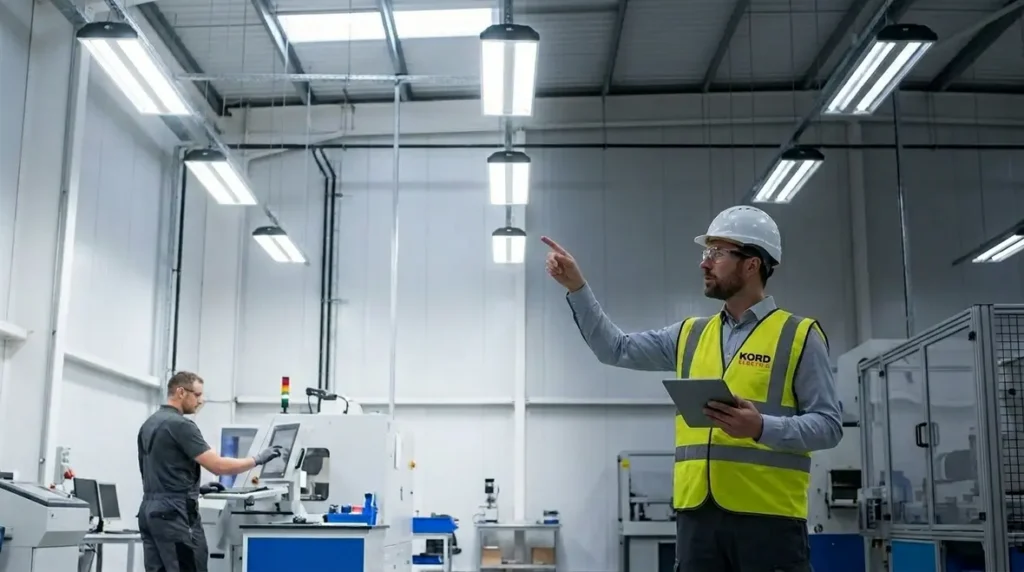
During commissioning, our team tests each zone for expected behavior: scheduled states, occupancy events, and daylight adjustments. Then we confirm that scenes and timers match facility policies. After that, we validate that override controls work for managers and safety leads. Consequently, operations can adapt without turning the system into a “daily reset ritual.”
Finally, we train the right people. We explain how to adjust schedules, how to respond when sensors need recalibration, and how to interpret system status. In short, others in the building leadership team get clarity instead of confusion, and the facility keeps control after our crew leaves the site.
Building a maintenance rhythm that protects performance
Smart systems work best when they are monitored. Even the best installation needs periodic review, especially in warehouses where forklifts, racking changes, and seasonal lighting variations happen. That is why our approach often connects to structured maintenance planning.
We help commercial and industrial facilities keep performance steady by checking sensor cleanliness, verifying firmware or controller settings when applicable, and reviewing energy and occupancy trends. Additionally, we inspect wiring connections, mounting positions, and control panel behavior to ensure the system remains stable over time. Therefore, managers avoid the slow drift problem, where lighting settings become less accurate months after installation.
For major property buildings, this matters even more. Those sites have higher traffic and more complex schedules, so small issues can scale quickly. With the right rhythm, lighting stays consistent, safe, and predictable.
Smart lighting controls installation in warehouses: a quick FAQ
FAQ for featured snippets
What is warehouse smart lighting controls installation?
What is warehouse smart lighting controls installation? It is the design and installation of lighting control devices and settings that adjust brightness based on time, occupancy, and sometimes daylight.
Will smart lighting reduce energy costs?
Will smart lighting reduce energy costs? It can, because the system limits full brightness to active areas and idle periods, reducing wasted light.
Do smart controls help with maintenance?
Do smart controls help with maintenance? Yes. They can improve visibility into which zones need attention and support planned service checks that keep performance stable.
Can we set different schedules by shift?
Can we set different schedules by shift? Yes. We configure schedules by area and shift so lighting supports how the warehouse actually operates.
Does Kord Electric support commercial and industrial facilities only?
Does Kord Electric support commercial and industrial facilities only? Yes. We focus on commercial and industrial buildings and major property sites.
Explore related lighting services for your warehouse
Warehouse smart lighting controls installation works even better when paired with the right fixture strategy. For large facilities planning LED upgrades, new layouts, or a combination of task and high-bay lighting, our dedicated lighting installation services provide commercial and industrial lighting solutions built for performance, safety, and efficiency across warehouses and logistics hubs.
Conclusion: take control of your lighting with Kord Electric
Smart lighting should feel steady, not random. At Kord Electric, we design and complete warehouse smart lighting controls installation for commercial and industrial facilities with a careful plan, clean execution, and technician-led training. Then we help protect performance through practical maintenance rhythms. If your warehouse is paying for light when nobody is there, or if safety visibility varies from day to day, we can help. Contact Kord Electric today for a site review and a control plan built for your operation.
For warehouses planning broader upgrades, our team can also coordinate smart controls with structured electrical preventive maintenance and comprehensive electrical preventive maintenance programs. That way, your lighting, distribution equipment, and safety systems all work together to support efficient, reliable operations.
If you are ready to bring your warehouse lighting in line with how your operation actually runs, Kord Electric can help you move from “always on” to smart, responsive control that supports every shift.