Electrical Safety for Server Rooms and Downtime
In commercial and industrial buildings, downtime in a server room rarely announces itself with a dramatic soundtrack. It usually shows up quietly, then all at once, when someone notices applications lagging like an old sitcom streaming on dial up. That is why electrical safety for server rooms must be treated as a daily discipline, not a once a year checkbox. At Kord Electric, we work with facility teams and we explain, step by step, how to reduce risk from shocks, fires, equipment damage, and the power instability that can quietly ruin hardware. Our technicians and expert service staff guide clients through practical electrical safety habits, protection planning, and field-ready fixes that keep mission critical systems running.
Electrical safety in server rooms that actually prevents outages
When electrical systems behave poorly, server rooms suffer first. Yet most outages do not start with the servers. They start with power quality issues, poor grounding, overloaded circuits, and loose connections that generate heat. Over time, that heat degrades insulation and worsens contact resistance. Then a minor event becomes a major incident.
From the way we approach these rooms, we focus on what prevents the chain reaction. First, we verify safe distribution. Next, we confirm correct protective device coordination. Then we review how power flows during normal operation and during disturbances. Finally, we make sure that corrective actions match the real load profile of the facility.
In plain terms, we do not just “look for problems.” We help others prevent downtime by controlling the conditions that turn small electrical issues into full service failures. And yes, we have seen cable trays become “accidental heaters.” Server operators never order that extra feature, but it happens anyway.

Voltage fluctuations and why server gear hates surprises
If a building’s voltage swings, server equipment can react in ways that look like random failures. Some systems restart. Some hang. Others degrade slowly, and the business only learns about it when performance drops. While servers can tolerate certain variations, repeated fluctuations often stress power supplies and cooling systems.
Our team at Kord Electric references real-world findings from the industry, including the dynamics described in our article on voltage fluctuations commercial industrial, where we explain how unstable supply, load changes, and upstream events can create swings that travel downstream. Then those swings hit sensitive electronics in the server room, right when people are trying to work.
We often explain this to clients as a timing issue. When power quality changes at the wrong moment, even a good installation can show weaknesses. Therefore, we recommend protection and monitoring that fit the specific environment, not generic upgrades. We also help others identify where fluctuations originate, whether at service entrance, on feeders, or inside branch circuits serving critical loads.

Baseline checks that reduce risk before something breaks
A server room does not need guesswork. It needs a routine that builds confidence. Accordingly, we start with baseline verification of critical electrical safety elements, and we document results so facility teams can track trends. That way, a gradual issue does not sneak past unnoticed.
Typical baseline checks we run and explain include:
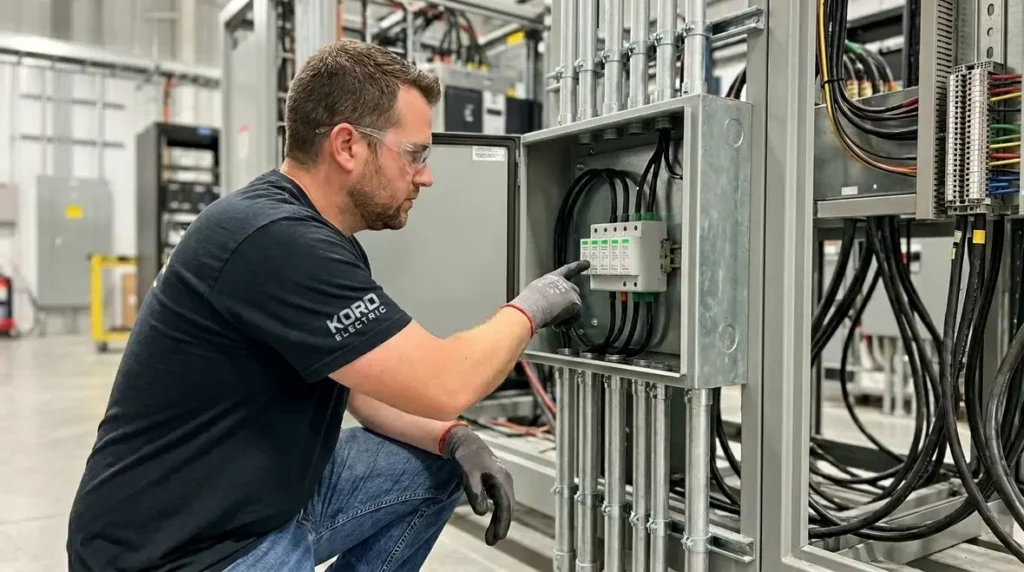
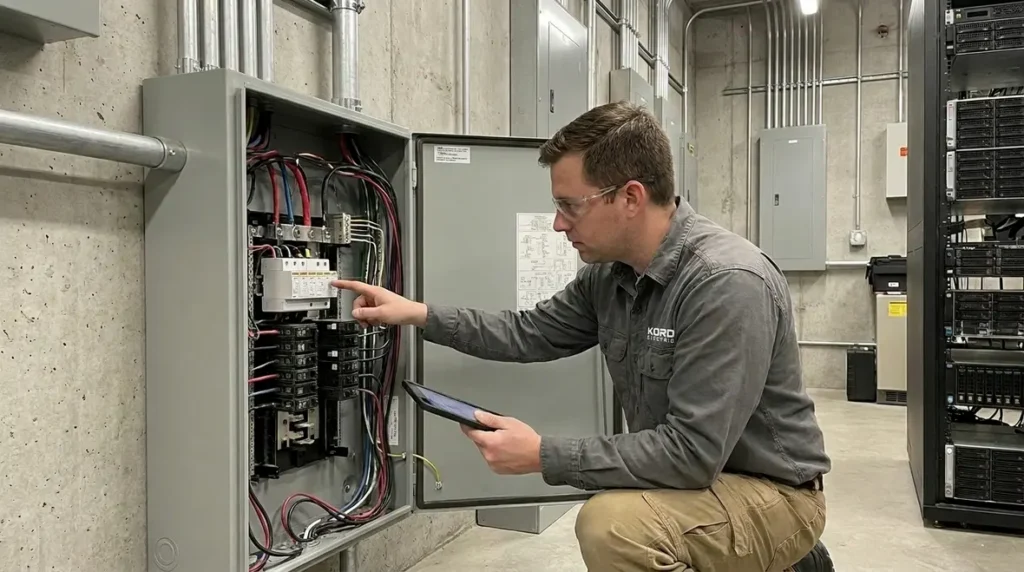
- Panel and breaker inspection for signs of overheating, loose terminals, and abnormal wear
- Grounding and bonding verification to ensure fault paths work as designed
- Cable condition review for insulation wear, aging connections, and routing that supports airflow
- Load assessment to confirm circuits match actual demand and do not operate in constant overload
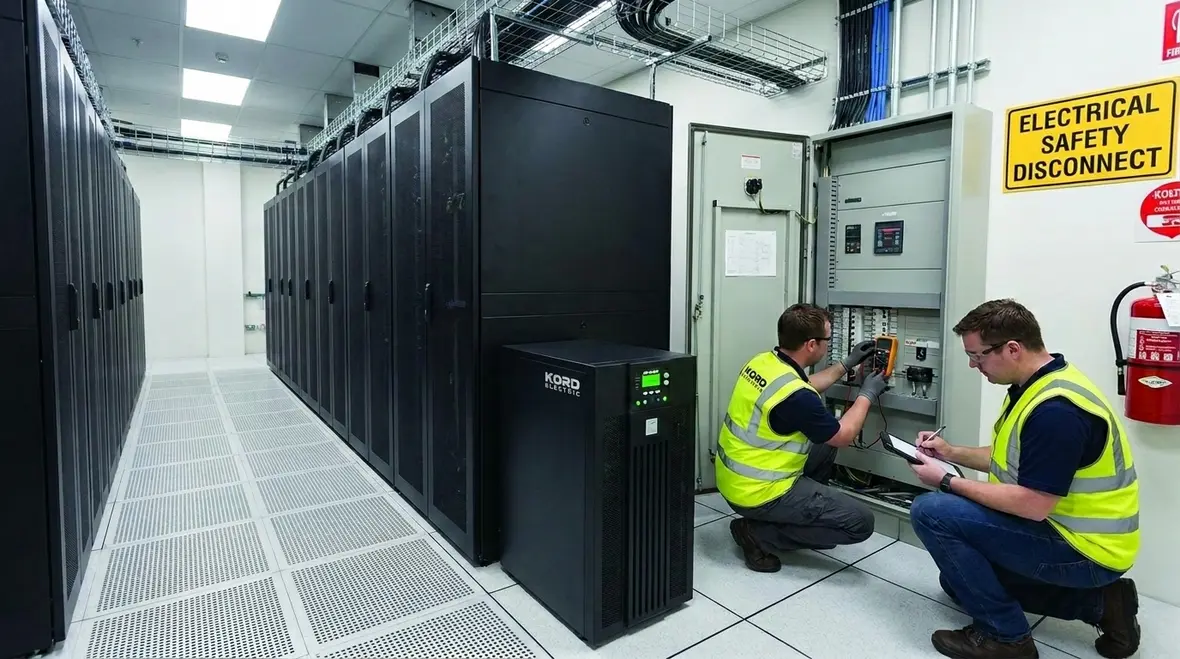
- UPS and transfer pathway review so the room knows what happens during switching events
Then, because our technicians work in commercial and industrial settings, we align these steps with how the building actually operates, including production schedules, night loads, and seasonal changes. We also keep communication clear. When we find an issue, we explain it in normal business language, not a technical rant that makes people feel like they need a law degree.
Keep protection coordinated and trouble localized
Protection is the difference between a small event and full downtime. Yet many facilities have devices that do not coordinate well. That means when a fault happens, the wrong breaker clears, or multiple devices trip, or the system fails to isolate the problem quickly.
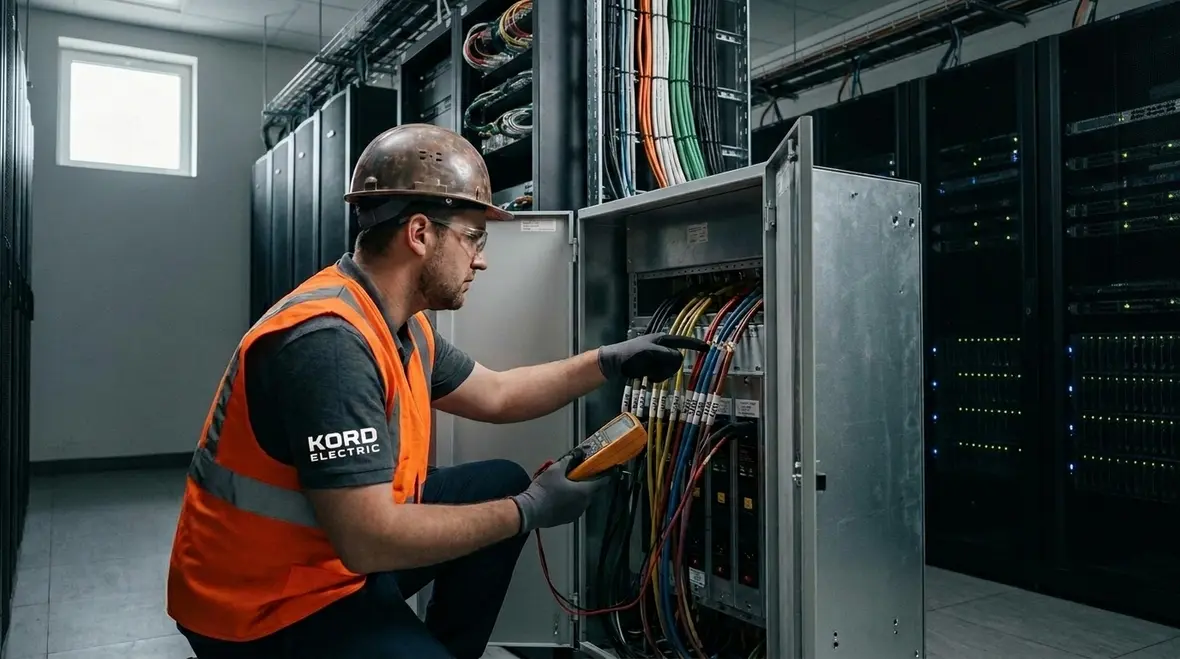
Kord Electric helps others reduce downtime by checking how protective devices work together. We review short circuit conditions, breaker sizing, time-current curves, and how coordination plays out across the electrical distribution chain. We also verify that labeling and circuit mapping stay accurate, because misidentification can delay response while the equipment keeps taking hits.
In server rooms, localization matters. If a fault occurs, the facility should isolate the faulty segment without cutting power to the entire critical load. Therefore, we help clients plan protective strategies that support safe shutdown and safe operation. And if a technician hears “Just keep it running,” we gently remind everyone that “running” is not a substitute for “protected.” Even computers need boundaries.

Bonding, grounding, and surge protection that stand up to real life
Electrical safety for server rooms relies on effective bonding, correct grounding, and surge protection that meets the building’s conditions. These systems guide electrical energy away from sensitive equipment and toward safe paths. If that foundation is weak, even normal switching events can cause damaging transient voltage.
Our expert service staff explains how grounding systems reduce shock risk and help protection devices clear faults. We also explain that grounding is not only a “wire thing.” It includes continuity, connection quality, and the behavior of the system during disturbances.
We also consider surge protection as a layered approach. It should cover the places that matter, including service entrance interfaces and distribution feeding critical loads. If surges enter through power lines, they can also couple through data and control paths. So we coordinate electrical protection with the realities of how equipment connects in a commercial or industrial building.
In other words, we treat surge protection like a seatbelt, not like a decorative accessory. You hope you never need it. Then you are grateful when you do.
Safe installation habits and maintenance that facilities can sustain
Preventing downtime requires discipline after installation. That is where maintenance fails for many organizations. They schedule service, then the server room changes, then responsibilities blur, then issues return like seasonal allergies.
We help facility teams build sustainable habits. Our technicians guide them on what to check, what to log, and what to address immediately. We recommend maintenance practices that support electrical safety for server rooms without disrupting critical operations more than necessary.
Key maintenance actions we support include:
- Periodic terminal inspections for tightening and torque verification where needed
- Thermal checks to locate hotspots before they become failures
- Cleaning and airflow verification around electrical gear, so heat does not accumulate
- Verification of UPS health indicators and battery life planning
- Monitoring of power quality trends, especially after building changes
Additionally, we encourage clients to manage change control. When others add racks, expand networks, or shift loads, the electrical system must adapt. That is how we prevent hidden overload and avoid creating new points of failure. We work with commercial and industrial teams who understand that downtime costs money, and prevention costs less than recovery.
How our technicians keep the conversation clear during electrical safety work
Technical work can feel intimidating, even when it is essential. That is why Kord Electric keeps explanations practical. Our technicians and expert service staff show facility leaders what we see, what it means for server room operations, and what we recommend next. We also explain tradeoffs, like whether to focus on power quality improvements, protective coordination, or physical inspection first.
We do not treat the server room like a mystery box. We treat it like a system with inputs, protections, and failure points. Then we translate that into a plan others can approve and act on.
Sometimes, the most valuable part is simply aligning expectations. For instance, we tell clients what we can validate during downtime windows and what can be inspected without shutting down operations. Then we schedule work in a way that fits the building schedule, not the other way around. Because in a commercial and industrial facility, operations do not pause because paperwork feels slow.
FAQ
CTA: Keep critical systems online with Kord Electric
Downtime in a commercial or industrial server room is expensive, disruptive, and preventable. Kord Electric helps facility teams strengthen electrical safety for server rooms through inspection, protection coordination, grounding and surge strategies, and maintenance plans that match real operating conditions. If your building has experienced power quality issues, unexplained trips, or recurring equipment glitches, contact us for a professional review. We will explain what we find, recommend clear next steps, and help you keep your systems running when it matters most.
For large facilities that depend on resilient distribution, you can also explore how broader infrastructure planning supports server reliability in our guide on data center electrical infrastructure essentials and the way commercial electrical systems for modern buildings keep power flowing behind the walls. Together with focused electrical safety for server rooms, these strategies help protect uptime across the entire property.
When you are ready to put a structured plan in place, Kord Electric’s commercial and industrial team can help you coordinate inspections, upgrades, and maintenance windows around production demands. Visit our commercial and industrial electrical services page to see how we support large facilities from service entrance to server racks.