Intermittent Circuit Breaker Trips in Offices
When a circuit breaker trips on and off in an office, the situation can feel like a ghost in the wiring. We often start with troubleshooting intermittent commercial circuit tripping, because the pattern matters. A breaker that trips only after certain hours, during equipment startup, or right when a specific floor gets busy usually points to a hidden cause, not a simple “bad breaker” story. We at Kord Electric handle commercial and industrial facilities, plus major property buildings, and our technicians take a calm, methodical approach. Meanwhile, we explain what we find in plain language, so others do not keep guessing and guessing like it is a crime drama with no evidence.
Common symptoms we see during troubleshooting intermittent commercial circuit tripping
In many commercial sites, the breaker does not trip every minute. Instead, it trips intermittently, then behaves normally until the next shift change, a weekend event, or a seasonal load swing. First, the lights may flicker, then the breaker trips, and staff reset it. Next, the same problem returns later, often under similar conditions. Therefore, we focus on the “when” and “where,” not just the fact that the breaker opened.
Our expert service staff also look for signs like hot panel doors, smell of overheating at terminations, or subtle buzzing from an enclosure. Occasionally, the breaker trips under a load that sounds harmless, like office outlets, printer banks, or small HVAC zones. Because people assume these are low risk, the real source can hide in plain sight. In our experience, the office never lies, it just leaves clues scattered around the building.
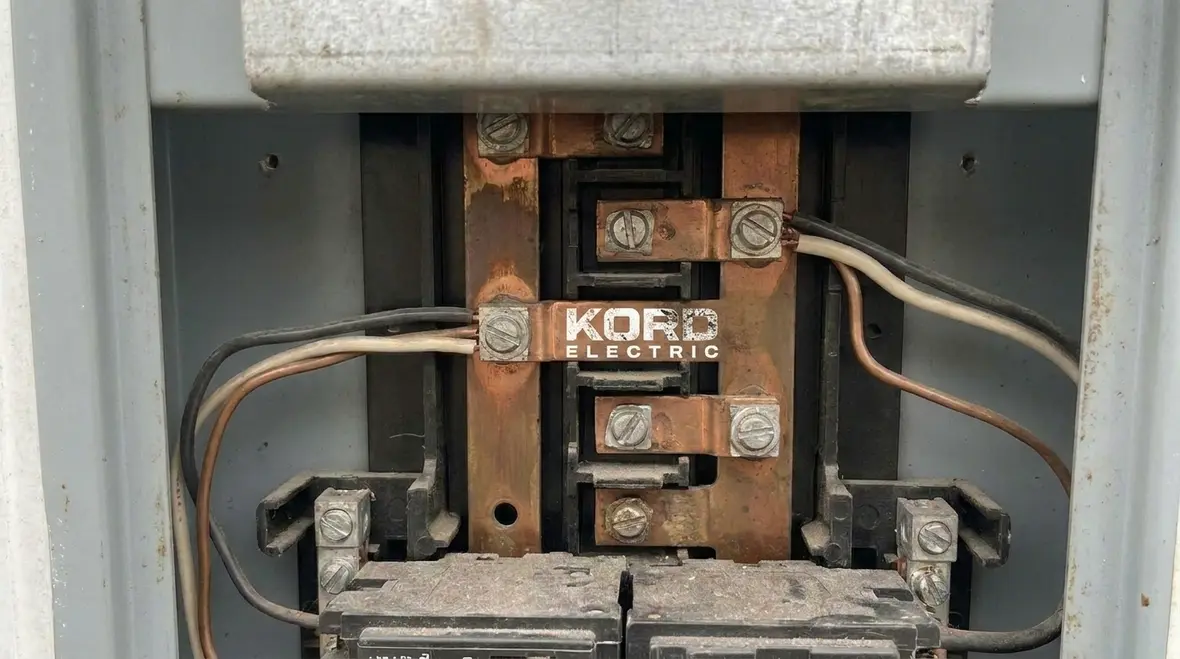
Hidden causes behind intermittent tripping in commercial panels
To identify the real cause, our team considers how electrical systems behave under changing conditions. A breaker trips when protective devices detect current or heat patterns outside safe limits. However, the cause can come from upstream, downstream, or even from the way components age together over time.
Here are the hidden causes we commonly uncover in commercial and industrial settings:
- Loose terminations at breakers, bus bars, lugs, or neutral connections that heat up and open later.
- Worn contacts inside the breaker or in switchgear that build resistance with cycles.
- Neutral issues, including neutral overload or damaged neutral paths that mimic faults.
- Moisture and contamination inside cabinets that create leakage paths when humidity rises.
- Arc faults from damaged insulation, poor splices, or failing connections in walls and ceilings.
- Motor or drive inrush surges from equipment that starts and stops in ways staff did not notice.
- Harmonics from modern electronics that increase heating in neutrals and transformers.
At Kord Electric, we treat these as leads, not guesses. Then our technicians verify each one with testing, inspection, and load analysis. That is how we separate a “mystery trip” from a fixable electrical cause. And yes, we know how funny it is that the building acts like a sitcom character who only misbehaves in the final act.
How we pinpoint the trigger using site context, load patterns, and testing
Next, we connect the problem to the building’s real routine. For example, intermittent trips often line up with schedule-based loads like lighting relays, kitchen equipment, EV charging, IT rack shutdown cycles, or after-hours HVAC staging. Additionally, we review panel labeling, one line diagrams, recent repairs, and equipment upgrades. If the building changed, the wiring load profile changed too.
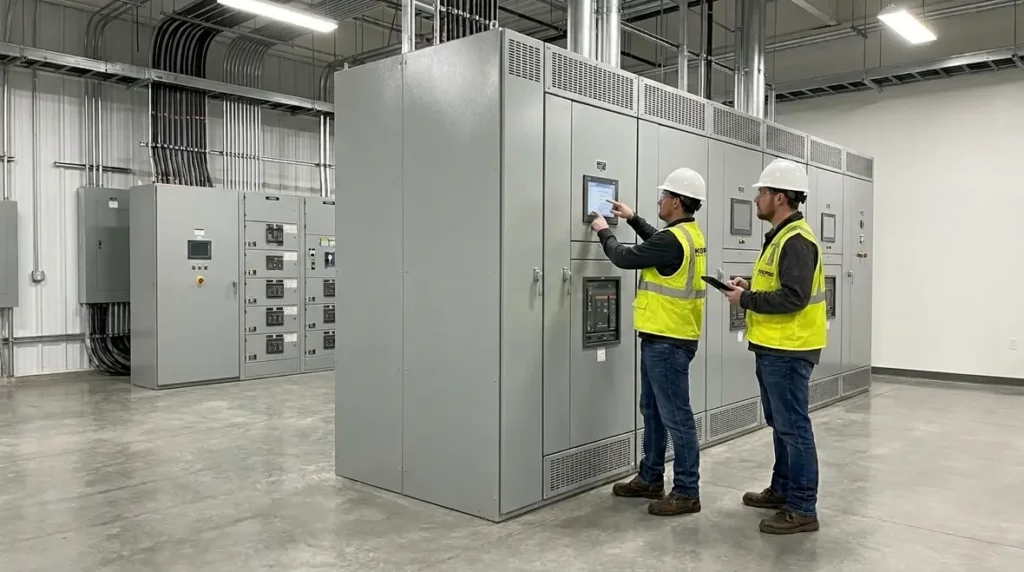
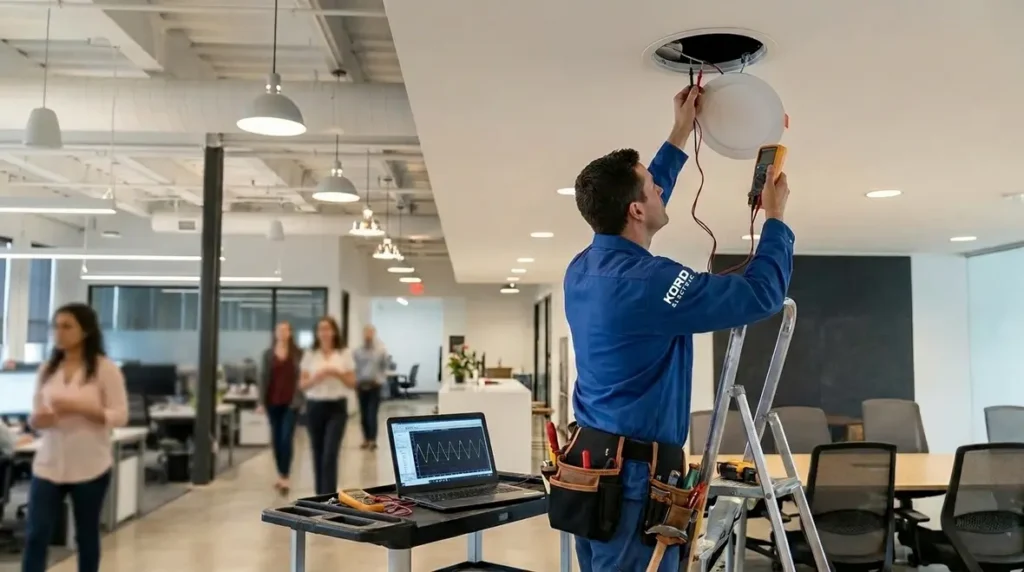
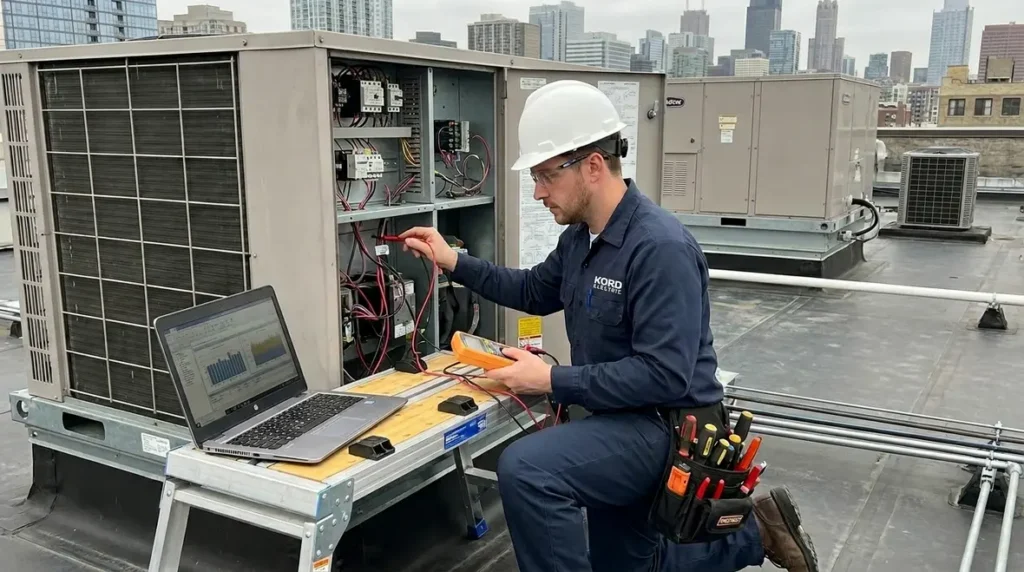
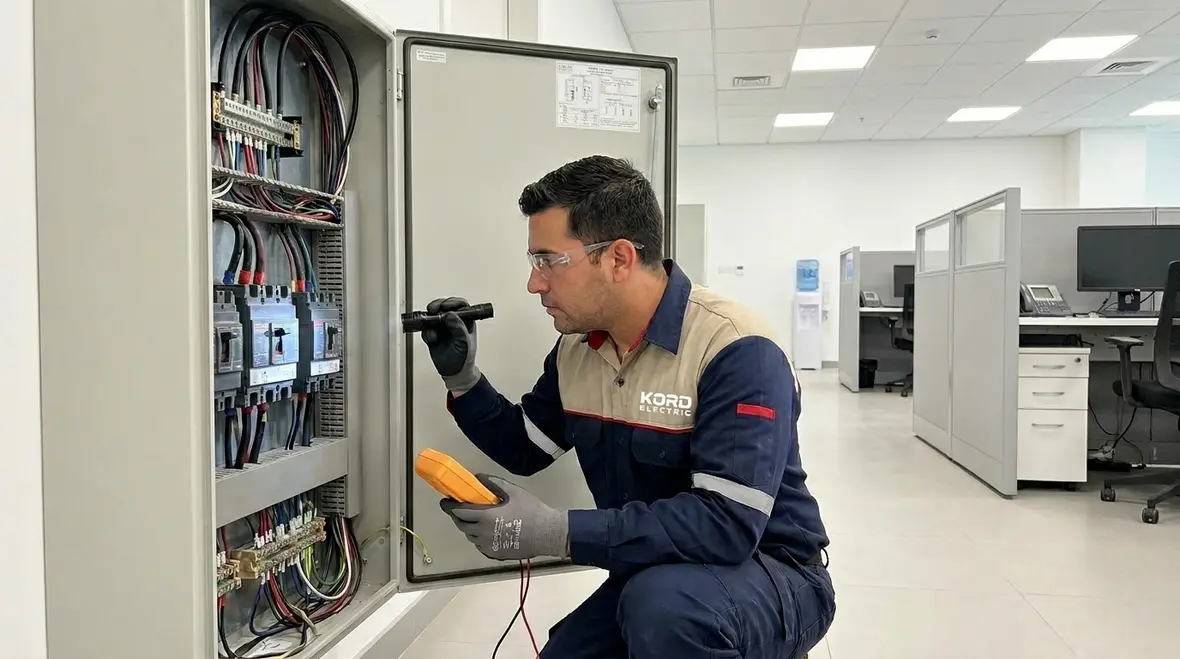
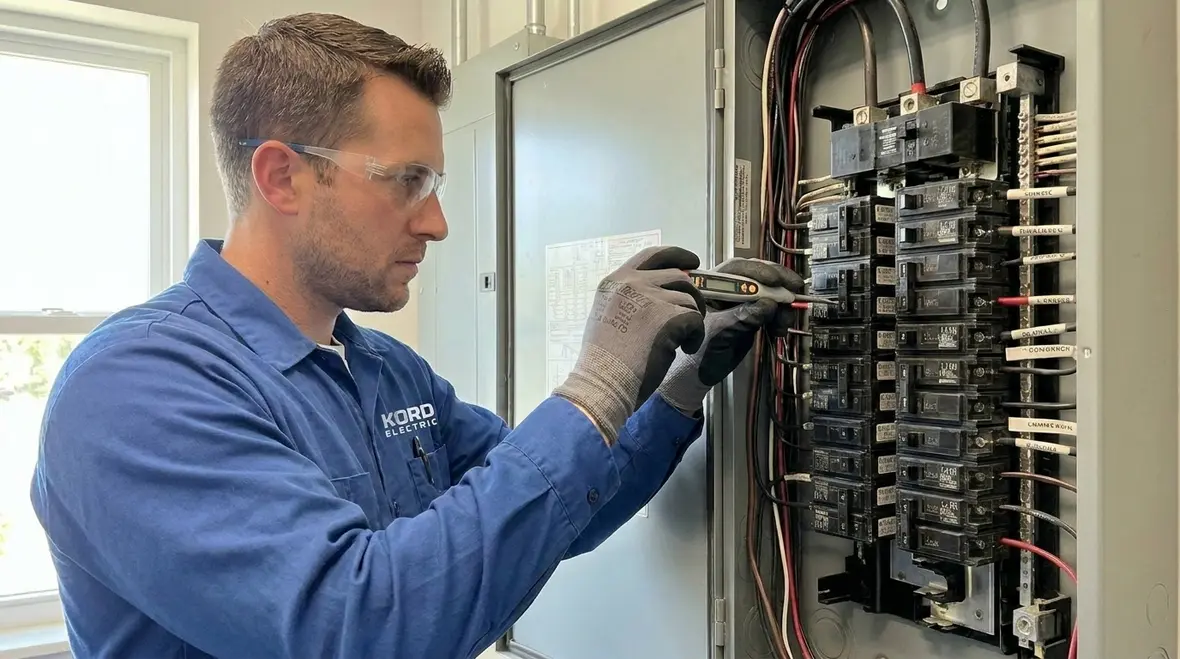
Our expert service staff then performs a structured inspection. First, they examine connections for heat marks, discoloration, or physical looseness. Then they check breaker settings and verify that the correct protective curve matches the expected load type. After that, we run targeted testing such as insulation checks, IR scanning when appropriate, and verification of neutral integrity. We may also use current logging tools to capture patterns without interrupting daily operations.
Once we collect evidence, we compare the trip timing with electrical activity. For instance, if the breaker trips when multiple devices turn on together, we suspect inrush or undervalued conductors. If it trips after a long period with steady load, we suspect a resistance heating issue. Therefore, the testing confirms what the symptom suggests, and we explain it so the office team understands what changed and why the breaker reacted.
For facilities already dealing with flickering lights, unexplained shutdowns, or unstable voltage, our diagnostic work often connects directly with broader power quality issues. In those cases, our process aligns closely with the way we investigate voltage fluctuations in commercial and industrial facilities, using logging, testing, and real-world load analysis to reveal what the system is actually doing under stress.
Why “it only trips sometimes” misleads teams in commercial buildings
When troubleshooting starts, people often blame the breaker first. However, intermittent behavior usually means the fault or stress occurs only under specific conditions. For example, loose connections may not show themselves until current warms the conductor. Then the connection resistance rises, temperature increases, and the breaker trips on overload, heat, or arcing conditions.
In offices, intermittent trips also happen when loads cycle differently. One day the printers run, the next day the staff uses scanning heavily, and then the IT team updates a server room cooling schedule. Even a small change in a power strip, UPS behavior, or desk charging routine can shift the load balance. And yes, neutral problems can look random because the uneven phase loading changes throughout the day.
That is why we do not treat every reset as a solution. Resetting a breaker can hide the pattern for a while, like shutting the curtains and hoping the smoke goes away. Instead, we document trip times, collect load context, and check for component wear. Then we build a repair plan that prevents repeat trips rather than chasing the symptom.
Sometimes that repair plan includes broader system upgrades, such as strategic rewiring or load reconfiguration. For properties that are pushing older infrastructure well beyond what it was designed to handle, our recommendations may overlap with what we outline in our rewiring cost guide for commercial electrical systems, where we explain how aging panels, feeders, and branch circuits start to show themselves through frequent or intermittent trips.

Dual-column checklist we use for field verification
To keep the process consistent across commercial and industrial environments, we use a quick field checklist. Below is how our technicians verify evidence during troubleshooting and confirm what the building is telling us.
| What we check | What it helps us confirm |
| Breaker trip history and time pattern | Whether trips align with schedule based loads or specific events |
| Panel and enclosure condition | Moisture, contamination, loose hardware, or heat exposure |
| Neutral connection integrity | Neutral overload, damaged links, or shared neutral stress |
| Terminal tightness and signs of overheating | Loose terminations that build heat during intermittent load peaks |
| Equipment start and stop behavior | Inrush current, motor starter issues, or drive settings problems |
| Arc fault indicators when present | Hidden insulation damage or failing splices |
| Load balance and harmonics concerns | Excess heating in transformer or neutral conductors |
After we verify, we share findings with the building manager and facility team. We keep explanations clear, so others can plan repairs without fear or guessing.
Correct repairs that stop repeat trips in offices and facilities
Once we confirm the root cause, we move from diagnosis to repair. We typically focus on the weakest link, whether it is a connection, a neutral path, a feeder issue, or a protected device mismatch. Then we test again to confirm stability under load.
Examples of repairs our technicians perform for commercial and industrial facilities include tightening and reterminating lugs, replacing damaged splices, correcting neutral distribution problems, and updating protective settings where code and equipment ratings allow. In some cases, we recommend adding or adjusting protective devices to match the real fault type, such as arc fault capable protection when we find evidence of insulation stress. If the breaker itself shows internal wear or out of spec behavior, we replace it with an appropriate model.
Importantly, we also prevent backslides. We label circuits clearly, document the changes, and advise facilities staff on what to watch for in future. Our expert service staff explains the why behind each step, because a repair is not finished until the site understands how to keep it stable.
For many properties, that stability also depends on proactive programs, not just one-time fixes. Our approach to preventing future trips often flows naturally into structured electrical preventive maintenance, where recurring inspections, infrared scanning, and documentation catch weak points before they turn into the next round of nuisance trips.
FAQ
Call Kord Electric for calm, proven electrical diagnosis
If your office experiences intermittent tripping, do not treat it like a recurring nuisance. We at Kord Electric focus on commercial and industrial facilities, plus major property buildings, and we use structured testing to identify hidden causes and stop repeat issues. Our expert service staff explains every finding in business friendly language, so your team knows what is happening and what we will fix next. Contact us today to schedule an assessment and get your power back to steady, reliable performance.
If issues are disrupting operations right now, our team can also respond through dedicated emergency electrical services to stabilize critical systems, then transition into a longer-term repair and preventive plan once your facility is out of crisis mode.