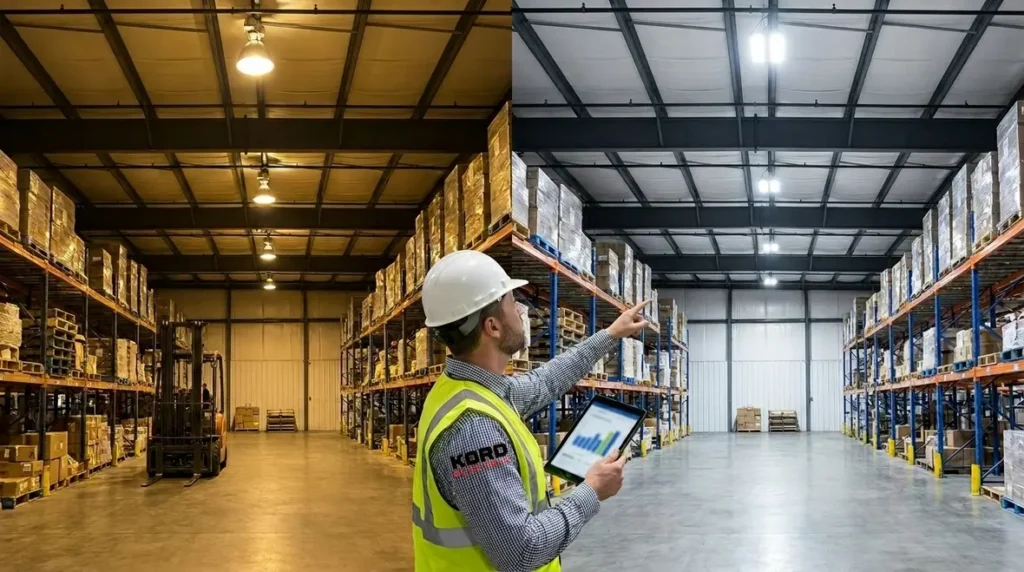
Industrial Lighting Retrofit ROI Analysis Guide
When a large facility weighs the idea of LED retrofits, the first question is usually simple: what does it really cost, and when does it start paying us back. At Kord Electric, we use an industrial lighting retrofit ROI analysis right from the start to estimate energy savings, operating cost changes, and payback timing based on how your building actually runs. Then, we confirm those assumptions with field measurements, fixture audits, and practical engineering choices. After that, our technicians and expert service staff explain the results clearly, so stakeholders can make a confident decision without guesswork. And yes, we keep the process calm and straightforward. Even the spreadsheets behave. Mostly.
What is the ROI model we use for industrial and commercial sites?
ROI is not a single number pulled from thin air. Instead, it is a structured view of costs versus benefits over a realistic timeline. We build that view for commercial and industrial facilities and major property buildings, because those environments have different usage patterns, maintenance cycles, and utility rate structures than typical offices. To do that well, we bring the model down to practical inputs, like current lighting power, hours of use, and the current cost of electricity.
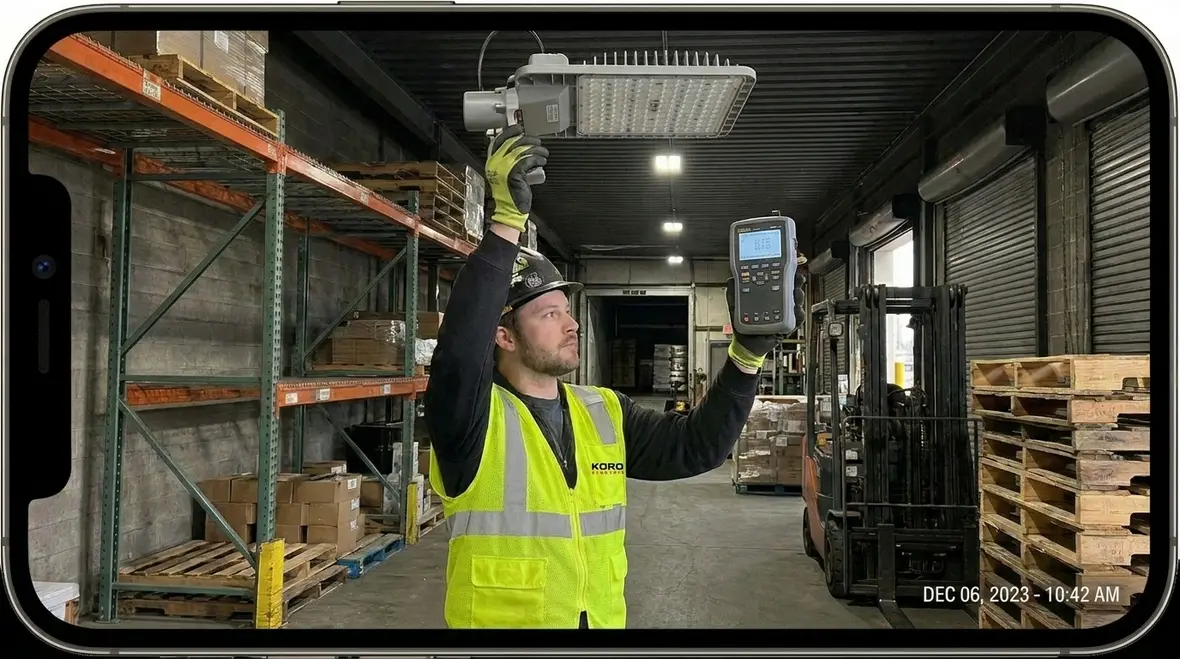
Our team starts by mapping the existing lighting system in the spaces that matter most: warehouses, production areas, loading zones, corridors, parking structures, and building entries. Then we estimate how the retrofit changes light output and power draw. Next, we model savings from reduced wattage and smarter controls where appropriate.
While some vendors throw a generic payback claim on a slide, our approach uses transparent assumptions. Therefore, when a facilities manager asks “How did you get that number?”, our expert service staff can walk through it, step by step, like a calm narrator describing a plot twist before it happens. They also explain the tradeoffs, so others understand that ROI does not only come from lower electricity bills.
We also connect the ROI model to broader decision-making. For many facilities, a retrofit is not just about swapping fixtures. It is about aligning safety, productivity, and code compliance with long term financial goals. That is why we often pair ROI discussions with topics like lighting installation code compliance and workplace lighting safety, so the financial story includes risk reduction as well as direct savings. For a deeper dive into how code requirements influence design choices, many facility teams review our dedicated resource on lighting installation code compliance alongside this ROI guide.
Calculating baseline energy use without guessing
Before we estimate savings, we define the baseline. In other words, we do not assume the building’s lighting consumption. We measure it, we document it, and we reconcile it with the electrical reality on site. For large facilities, that matters because “estimated fixture watts” can be off by a surprising margin once you account for ballast conditions, lamp age, occupancy behavior, and the mix of lighting types.
We typically calculate baseline energy using three core inputs: total fixture count, actual wattage per fixture, and annual operating hours. Then we apply the facility’s electrical rate structure, including demand charges where they apply. Many large buildings pay not only for energy, but also for demand. If the retrofit reduces peak demand, the financial impact can improve further, particularly during high load periods.
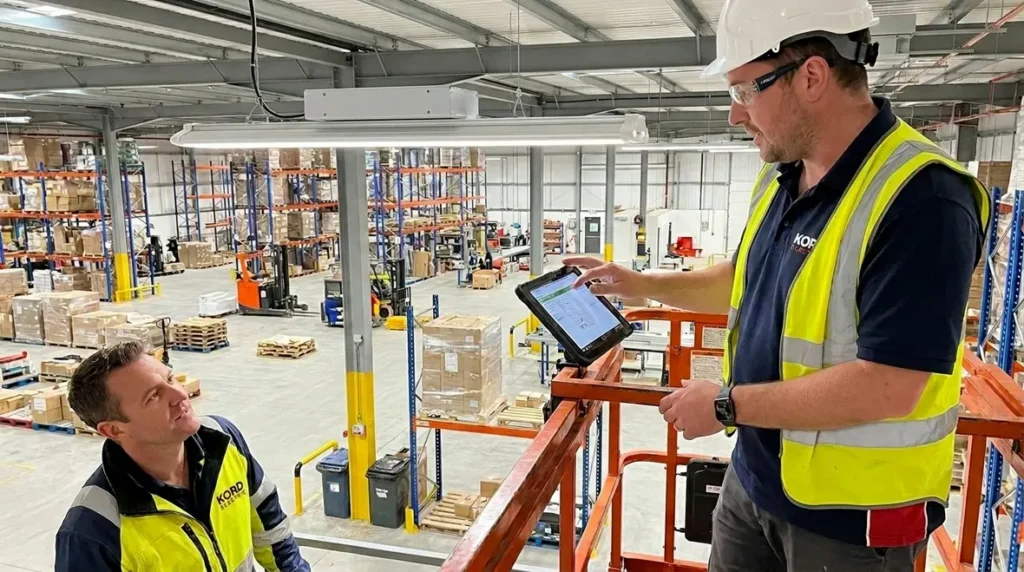
To keep the data clean, our technicians often verify fixture conditions and check if any controls already exist. Then, we confirm the likely adoption of occupancy sensors, daylighting controls, or scheduling logic. After all, controls do not just reduce energy. They also help ensure lighting stays where it should be, and that performance remains stable after commissioning.
This baseline work is also where facilities start to see how an industrial lighting retrofit ROI analysis connects directly to everyday operations. When we lay usage profiles next to production schedules, safety priorities, and maintenance reports, the numbers stop feeling abstract. They begin to look like the building’s story written in kilowatt-hours and labor hours instead of paragraphs.
How to estimate lighting savings that hold up in real life
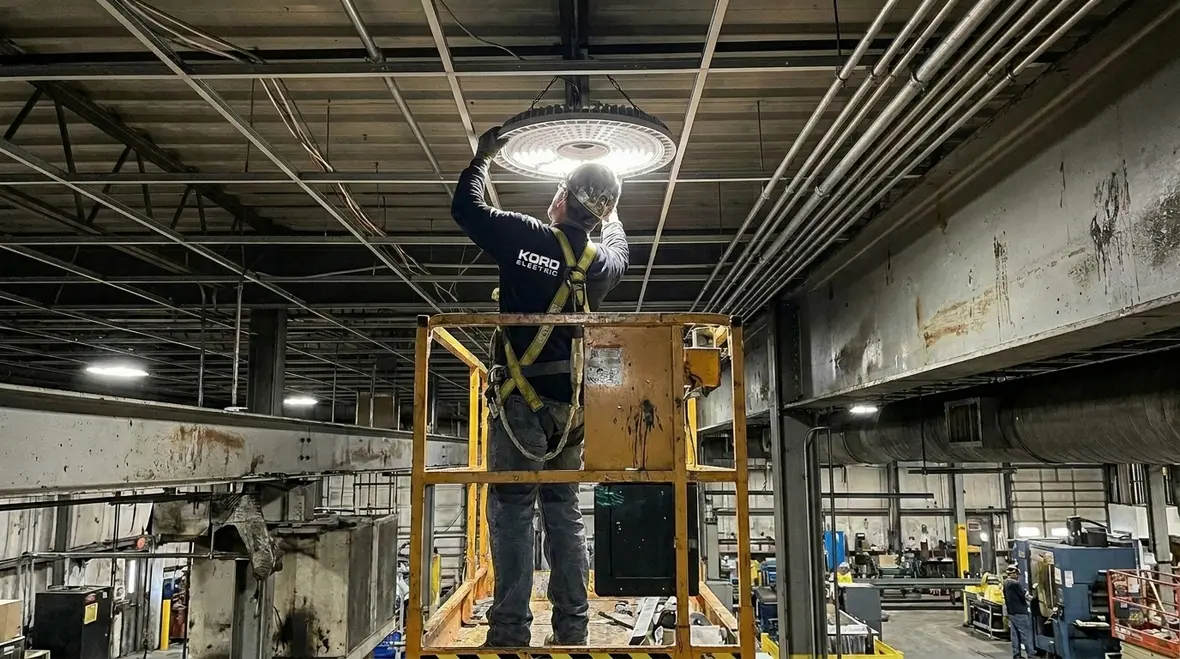
Savings projections go wrong when they ignore how people and processes actually behave. Therefore, our industrial lighting retrofit ROI analysis includes operational assumptions that match how a facility runs. A warehouse may operate at different hours by zone. A manufacturing line may shift from steady operation to variable schedules. Even maintenance windows can change lighting use in ways that matter to annual results.
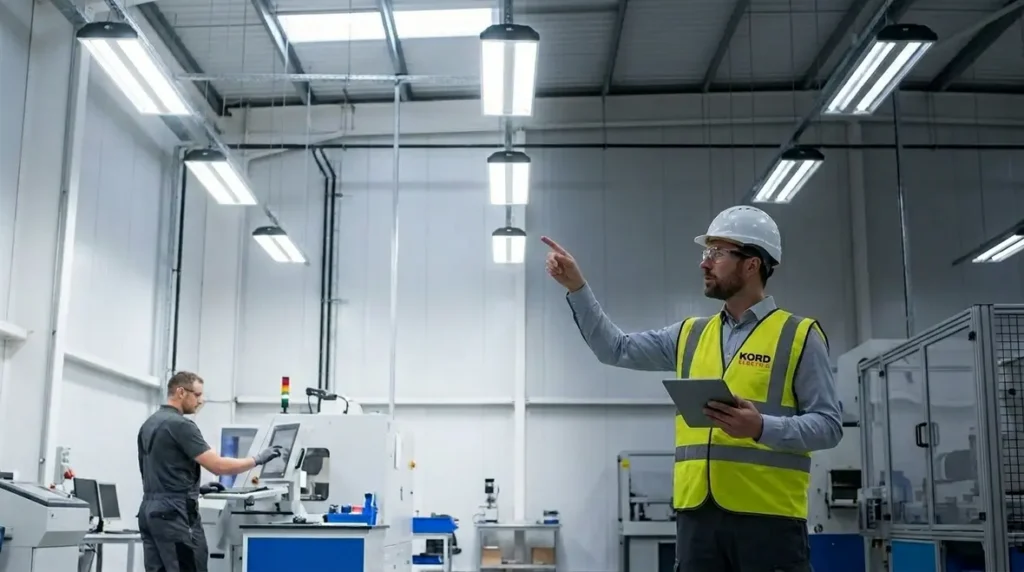
We also consider lighting quality and performance because it influences long term outcomes. If a retrofit produces adequate illumination, fewer changes are needed later. If the retrofit underperforms, teams compensate with higher power settings, extra fixtures, or added lighting. That kind of “shadow labor” turns into real cost. So we evaluate aiming, mounting height, distribution, and glare control, not just lumens on paper.
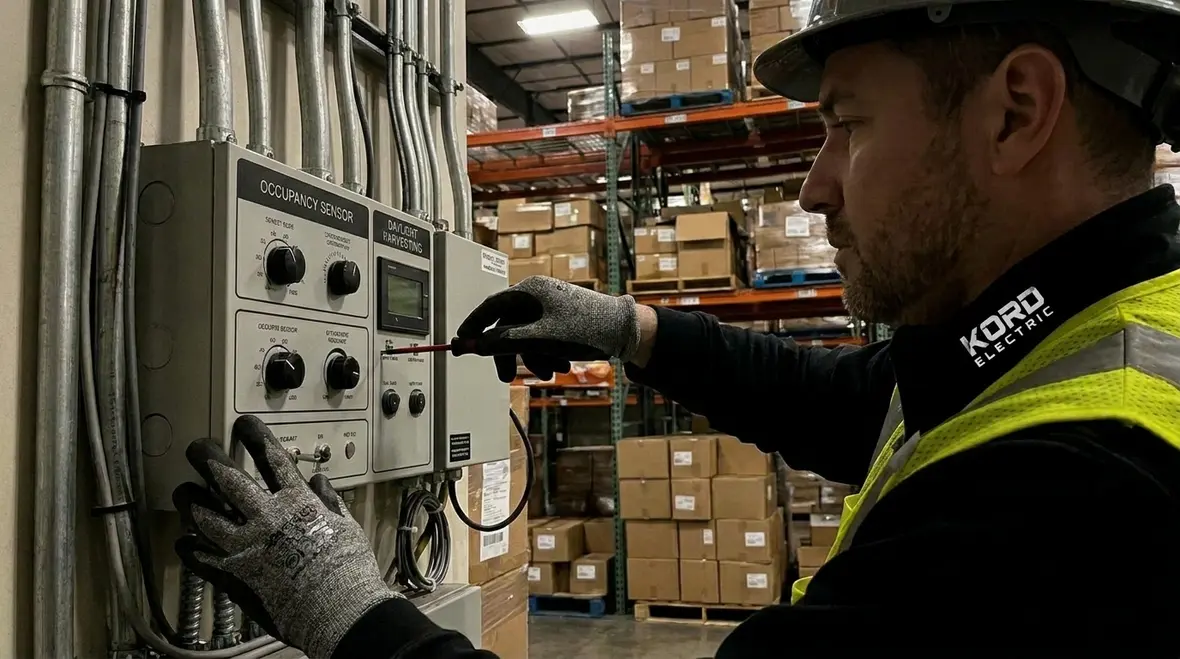
Controls help stabilize savings. For example, occupancy-based lighting in offices and corridors reduces hours at full output. Daylight harvesting in skylit areas prevents over-illumination. Additionally, multi-level switching supports stable performance during off peak hours. As a result, savings stay consistent rather than collapsing after a few months.
And yes, we do explain this without turning it into a lecture. Our technicians can show how a control plan affects usage patterns in a way that even non electrical people can follow. Like explaining a plot in a movie without revealing the ending, but still letting everyone understand the stakes.
This is also where we connect the retrofit plan to broader lighting installation services. In many projects, it makes sense to coordinate industrial lighting retrofits with other upgrades, such as code-driven control changes or emergency lighting improvements. By treating everything as one integrated system instead of separate projects, we help facilities lock in savings that actually match the real-world way their buildings work.
Maintenance, downtime, and replacement cycles that affect payback
When a facility estimates LED retrofit value, energy is only one piece. Maintenance and downtime often move the needle more than anyone expects. Traditional systems require lamp replacement, ballast servicing, and frequent labor time. In large facilities, that labor is not just an expense. It also pulls technicians away from urgent work, and it can create operational risk when areas are inaccessible.
LED systems typically reduce maintenance events due to longer rated life, stable performance, and fewer moving parts. However, our team does not stop at “LED lasts longer.” We calculate service impacts based on your current cycle. Then we estimate how the retrofit changes replacement frequency, service call volume, and disruption time.
Downtime matters most in production zones and logistics areas where lights support safety and throughput. If lighting failures force temporary shutdowns or reduce productivity, those losses count. Therefore, our financial modeling includes an approach to estimate disruption cost based on expected maintenance frequency and the operational value of uptime in your environment.
Our expert service staff often helps stakeholders understand these factors in plain language. They explain the practical side, like how many hours it takes to service a typical location and what that means during peak operations. In short, we quantify the hassle you do not want, not just the savings you do want.
In many facilities, this is also the right time to consider structured electrical preventive maintenance alongside the retrofit. When maintenance and upgrade strategies work together, lighting performance stays consistent, inspections go smoother, and the ROI story stays strong long after the initial payback period has passed.

Controls, rebates, and financing: where the upside gets real
Once baseline energy and maintenance impacts are defined, the next step is improving the retrofit economics with smarter integration. Controls can create additional savings beyond watt reduction, especially in spaces with variable occupancy and shifting work patterns. We evaluate whether the building needs simple occupancy sensors, advanced scheduling, or daylighting strategies.
Rebates and incentives also impact ROI timing. Many commercial and industrial programs reward energy efficiency upgrades. However, eligibility depends on product selection, documentation, and installation practices. So we help manage the path from design to submittals to verification. That way, the incentive does not turn into a “we tried, and then it vanished” story.
Financing and capital planning can also shift ROI. Some facilities prefer a phased rollout to manage cash flow and to reduce operational disruption. If you stage projects across zones, you can capture savings earlier while planning for future phases. Meanwhile, long term budgets become easier to manage when the financial forecast stays grounded.
All of this fits into a disciplined industrial lighting retrofit ROI analysis, because incentives, control choices, and financing terms must align with the same assumptions. Otherwise, the model becomes a castle built on sand. And sand, as anyone who has watched beach movies knows, does not hold up well.
For many facilities, the next logical step after planning is to coordinate with a dedicated lighting installation services team that understands commercial and industrial environments. When the same experts who helped build the financial model also handle installation and commissioning, the odds of your project hitting its target ROI improve dramatically.
Risks to watch in large facility retrofits
Even strong projects can stumble if the scope is unclear or if the installation plan ignores real constraints. Therefore, we help facilities manage the most common risks that affect cost and ROI outcomes.
Design mismatch: If the retrofit does not meet the lighting targets for tasks and safety, teams may request changes later. That adds time and cost. We prevent this by verifying distribution and performance expectations during planning.
Utility and electrical constraints: Older buildings may have panel limitations, wiring challenges, or inconsistent voltage behavior. Our team reviews electrical capacity so installation does not trigger unexpected upgrades.
Control commissioning gaps: Occupancy and daylight sensors must be tuned. If they trigger too often or fail to respond, savings shrink and staff become frustrated. We support commissioning so controls actually perform.
Phased access and safety planning: In major property buildings and industrial sites, access schedules matter. Therefore, we plan installation logistics around operations so the retrofit does not disrupt workflow more than necessary.
Then our technicians and expert service staff document key details so the building team can maintain performance. In other words, the ROI stays believable long after the ribbon cutting.
Many of these risks tie directly into workplace conditions. For example, a poorly planned retrofit can accidentally create new workplace lighting safety hazards if glare, shadows, or uneven illumination are introduced. That is why we often recommend reviewing retrofit plans alongside guidance on workplace lighting safety, so performance upgrades do not create new liabilities.
FAQ
Get a clear payoff estimate for your facility
If your facility runs heavy hours, faces maintenance pressure, or carries safety concerns tied to aging lighting, it is time to model the retrofit properly. Kord Electric builds an industrial lighting retrofit ROI analysis using real operating assumptions, electrical context, and maintenance impact. Then our technicians and expert service staff explain the numbers in plain terms, so decision makers understand what changes and when savings arrive. Contact us to schedule a site review and receive a clear, finance friendly estimate built for commercial and industrial buildings.
For facilities that are ready to move from analysis to action, partnering directly with our Lighting Installation Services team ensures your retrofit plan becomes a well-executed project. From initial design through commissioning, we keep the focus on performance, safety, and a payback profile your financial team can stand behind.
When you combine a disciplined industrial lighting retrofit ROI analysis with expert installation, code-aware design, and thoughtful maintenance planning, the result is simple: better lighting, stronger safety, and a financial outcome you can explain in a single meeting without anyone reaching for aspirin.