Commercial Electrical Load Testing for Safety
Why commercial electrical load testing protects your business before problems show up
At Kord Electric, we treat commercial electrical load testing as a safety habit, not a box to check. We run it so your electrical system carries real demand the way it will during the busiest hours, not just during a quiet test window. As our expert service staff explains to facility managers, a building can look fine on paper and still hide trouble under normal use. And when the trouble stays hidden, it usually shows up at the worst time, like a surprise plot twist in a TV episode you had no business watching after midnight.
Third person perspective is important here, and it fits: we see the results, we document the findings, and we help owners and others make safer decisions. Later in this article, we explain what load testing finds, why safety improves, and how voltage issues connect to real-world risk, especially for commercial and industrial facilities and major property buildings.
What commercial load testing checks in real operating conditions
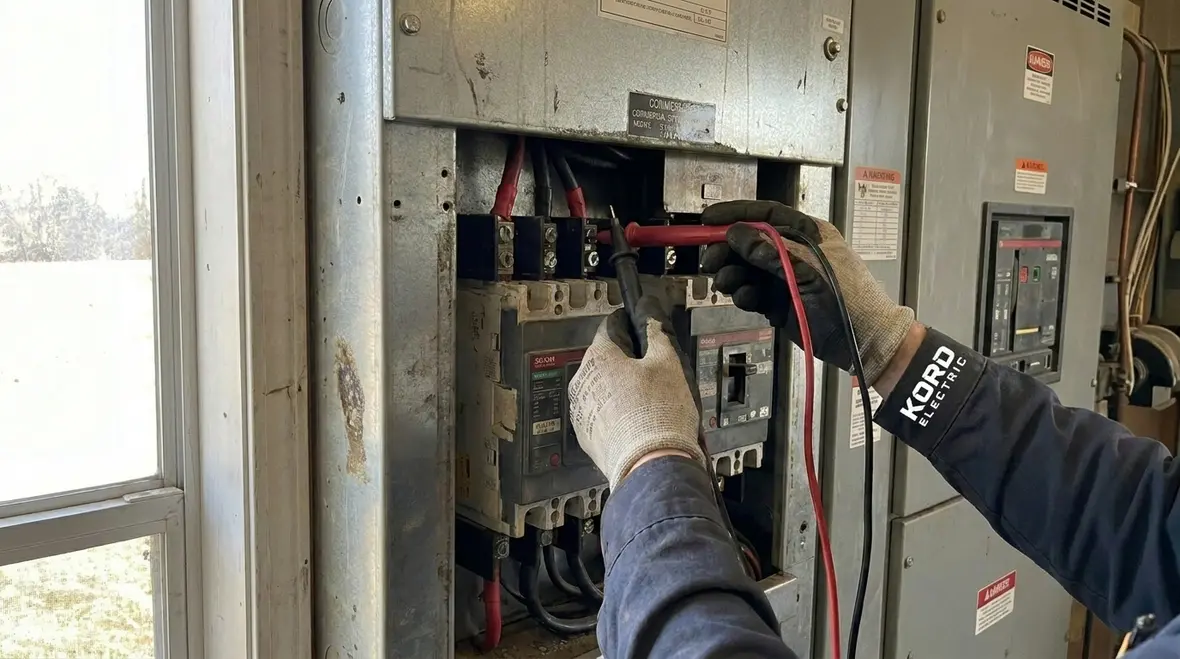
Load testing does not rely on guesswork. Instead, it applies controlled demand and observes how the electrical system responds. In other words, it verifies performance under stress, which is exactly when safety concerns can surface. Facility teams often focus on breaker labels and one time inspections, but those do not show how the system behaves when multiple circuits pull current at once.
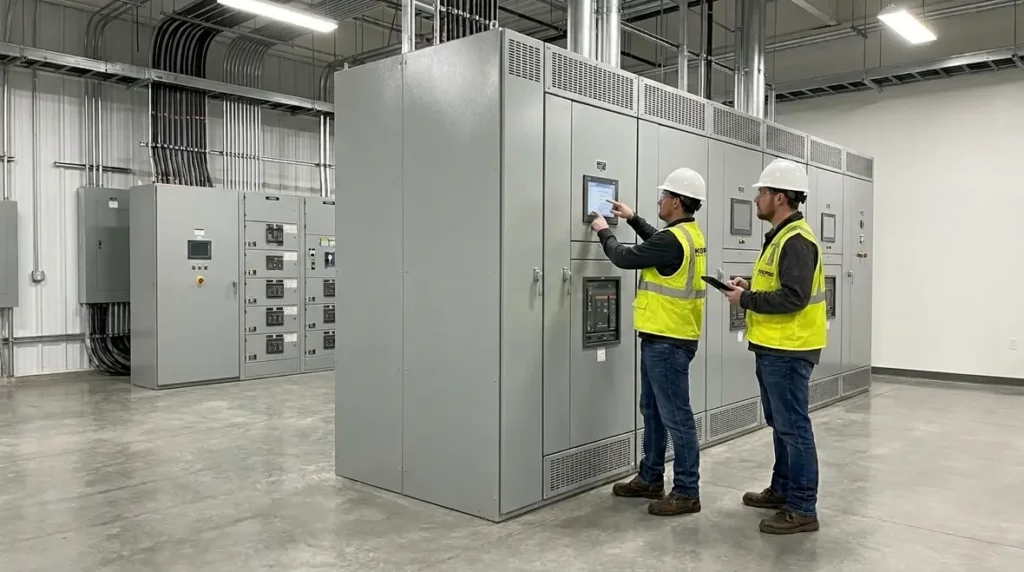
Our technicians, both calm and very thorough, typically focus on key areas that affect safety. First, they evaluate the distribution path, including panels, switchgear, bus systems, and major feed connections. Next, they examine how voltage holds up under load, since voltage drop can quietly increase heat. Also, they measure current draw to confirm equipment and protection devices operate within expected ranges.
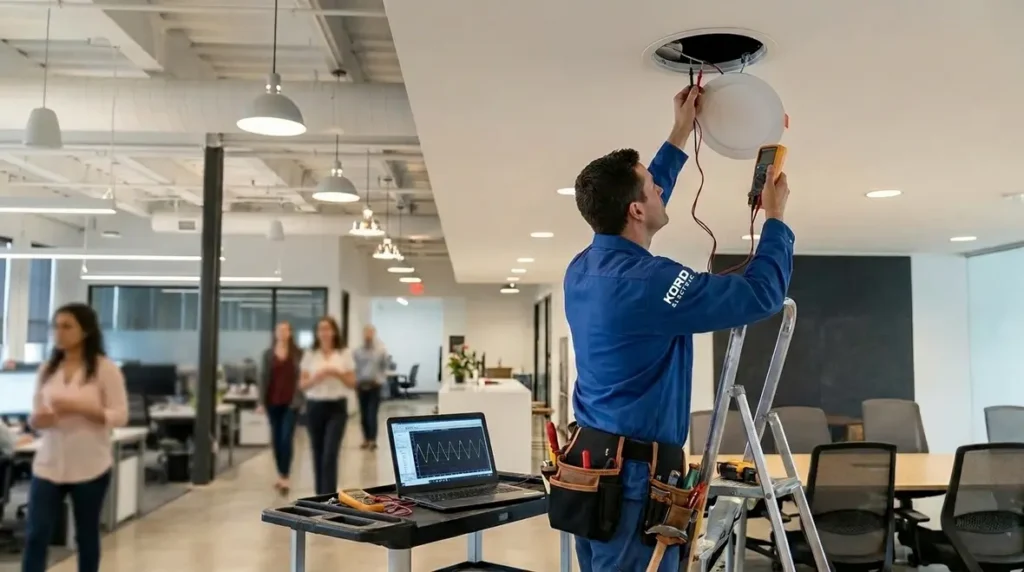
When we explain the process, we keep it practical. We do not throw heavy math at people, but we do show what changes during load. For example, if a connection is loose, a load test often reveals heat patterns and unstable readings before a failure happens. Loose connections are like a bad handshake, they seem harmless until you feel them.
How load testing reduces fire risk and equipment damage
Safety improvement starts with a simple truth: electrical systems fail under load more often than when idle. When current rises, resistance can create heat. Over time, that heat can damage insulation, weaken terminations, and accelerate wear on transformers and switchgear. So, when commercial sites skip proper testing, they may also skip the chance to catch issues early, before a small problem becomes a costly outage.
After load is applied, our expert service staff looks for signs that indicate elevated risk. That includes abnormal temperature indicators, unexpected voltage sag, inconsistent current readings, and behavior that does not match the design. Then we compare results to baseline expectations so the findings make sense for your specific facility.
In addition, load testing supports proper protective device performance. Circuit protection should respond correctly during real conditions. If it does not, equipment can remain energized when it should trip, or it can trip at the wrong times. Either outcome increases safety concerns and operating disruption.
And yes, nobody wants a building that behaves like a temperamental celebrity. Reliable protection is how a system stays predictable, even when the demand gets loud.
Voltage fluctuations and why they matter for safety in commercial buildings
Voltage problems create ripple effects. A small voltage dip can increase current draw, which increases heat, which increases stress. That is why we connect load testing to voltage fluctuations. Our team supports commercial and industrial facilities and major property buildings, and we often find that voltage stability issues sit near the root of performance and safety problems.
On our site, Kord Electric addresses how voltage fluctuations can affect equipment, lighting quality, and operational consistency, and the same theme holds for safety. When voltage fluctuates, motors may draw more current, sensitive electronics can experience stress, and heaters and transformers can run hotter than intended. Over time, those conditions can damage components and increase the odds of failure. For a deeper dive into this topic, you can review our dedicated guide on voltage fluctuations in commercial and industrial facilities, which connects real-world symptoms to root-cause electrical issues.
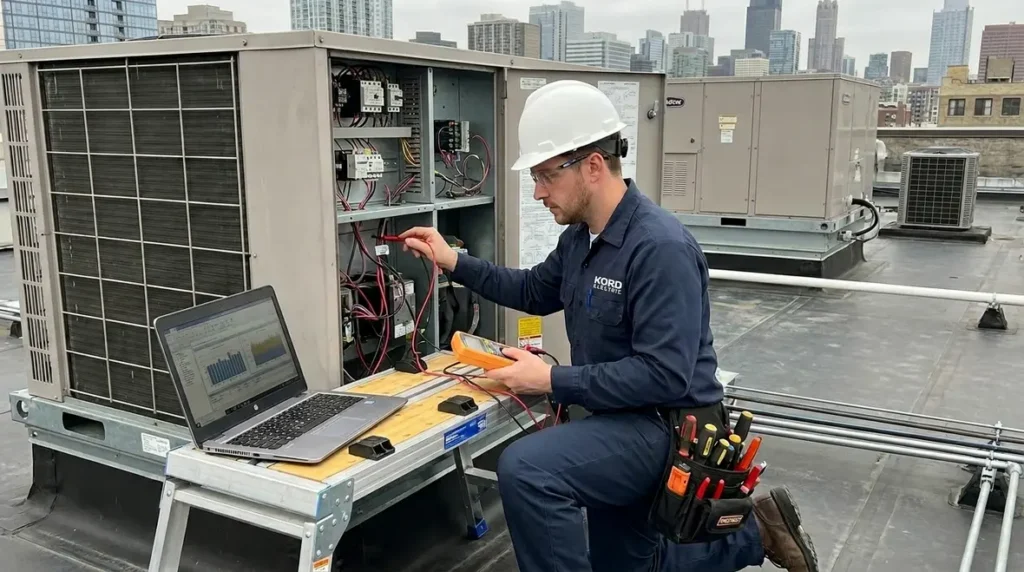
To handle this, our technicians observe system behavior during real load. If the voltage droops beyond expected levels, it signals that the electrical path may not deliver power as designed. Then the right response becomes clear, whether that response is targeted troubleshooting, corrective maintenance, or equipment adjustments.
In short, load testing helps turn vague concerns into measured facts. And facts are what keep safety decisions from turning into guesswork.
Step by step: what a Kord Electric load testing engagement looks like
A solid testing plan respects how commercial buildings operate. We do not show up and disrupt the day without coordination. Instead, we schedule work around business hours and critical operations, then we verify the scope before we begin. That planning step matters because a major property building cannot pause like a small office.
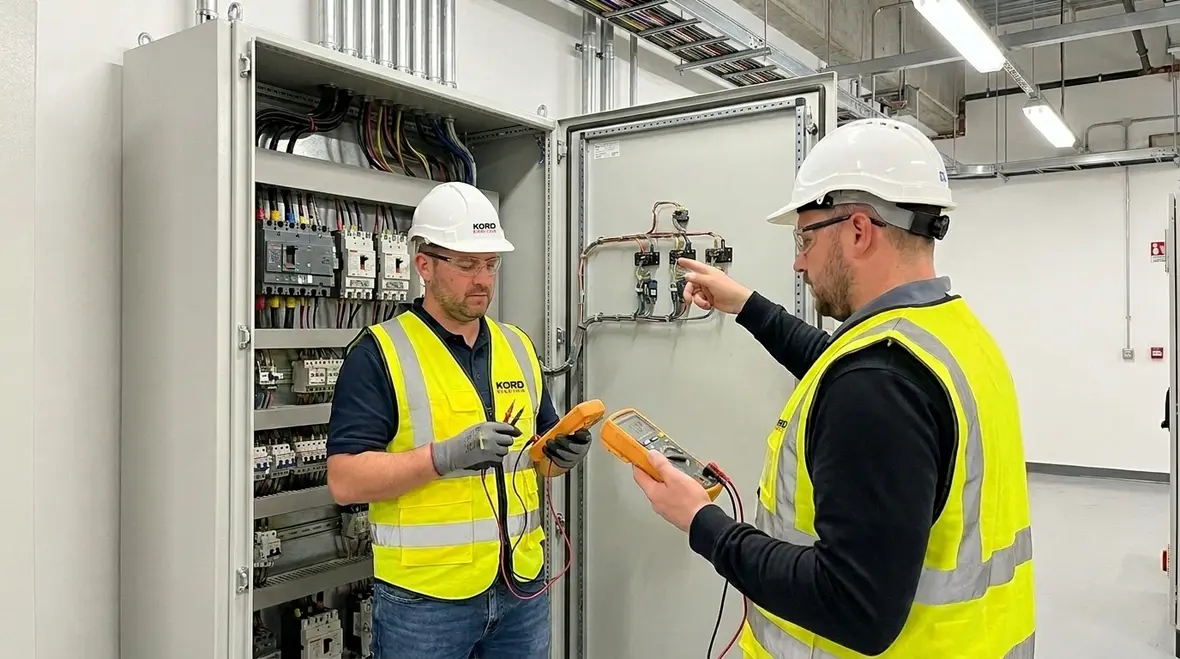
Our process typically follows a clear flow. First, we review facility documentation such as one line diagrams, recent service history, and equipment ratings. Then we confirm test points and safety boundaries with your site contacts. After that, our technicians set up the testing equipment and apply controlled load while monitoring key readings.
During the test, we track voltage behavior, current draw, and how the system responds as demand changes. Next, we analyze the results for patterns that suggest issues like high resistance connections, underperforming components, or distribution constraints. Finally, we report findings in a format that facility teams can use right away, including recommended next steps.
Throughout the engagement, our expert service staff explains what the readings mean in plain language. We also point out the “why,” not just the “what.” That way others can make decisions based on safety and reliability, not on fear and rumor.
Commercial and industrial safety: who needs this testing and when
Load testing supports many commercial and industrial facilities and major property buildings, but it matters most when the system runs hard. In practice, that includes properties with high motor loads, frequent tenant changes, major renovations, or equipment upgrades. It also includes buildings with known power quality complaints such as flickering lights, inconsistent HVAC performance, or nuisance trips that make people blame everything except the real cause.
In many cases, we recommend load testing when new equipment installs go live, when a building’s use changes, or when maintenance uncovers hints of electrical strain. Also, if voltage fluctuations appear, testing becomes even more relevant because it shows how the system performs under the very conditions that cause those fluctuations.
We also emphasize a steady approach. Businesses should treat load testing as part of a broader safety plan, not a one-time reaction. After all, an electrical system does not wait politely for the next scheduled meeting. It works or it fails, and it does not send a calendar invite.
For organizations that want to connect load testing with routine care, Kord Electric also provides structured electrical preventive maintenance programs that keep panels, switchgear, and distribution paths aligned with real-world operating demands.
How to choose a team that does more than plug in and leave
Not all testing feels the same. Some providers simply capture numbers and move on. At Kord Electric, we focus on interpretation and action. We understand that commercial and industrial facilities and major property buildings need testing that results in clear safety outcomes, not just a stack of readings.
When others evaluate a contractor, we advise looking for these qualities. First, confirm the team works with commercial and industrial electrical systems, not only small residential sites. Second, ask whether the team explains findings in a way that operations staff can act on. Third, see if they connect results to voltage stability and system behavior under load, because that link drives safer decisions.
Also, check whether the technicians document results and recommend next steps. If the service ends without guidance, the building remains exposed to the same safety gaps. Our expert service staff makes sure the conversation does not end at the test meter.
And if someone says, “Don’t worry, it passed,” without explaining what “passed” means for your equipment, then that is not a safety plan. That is a motivational poster.
FAQ
Call Kord Electric for safer electrical performance
Commercial and industrial facilities should not wait for failure to prove a safety concern. Kord Electric helps organizations verify how their electrical system performs under real load, connect findings to voltage stability, and take clear next steps. Our technicians and expert service staff explain results in plain language, then support decisions that protect people, equipment, and operations. If your building runs busy schedules, uses major motor loads, or has seen voltage complaints, contact us to plan commercial electrical load testing now.
If you are mapping out a broader reliability strategy, you can also explore how our team handles voltage fluctuations in commercial and industrial facilities and how our electrical preventive maintenance services fit into long-term safety planning. Together with focused commercial electrical load testing, these services create a more complete protection plan for your building.
For properties planning upgrades or growth in electrical demand, Kord Electric’s commercial EV charger installation services help align new infrastructure with existing capacity, ensuring that added loads, new equipment, and modern systems all operate safely on a stable electrical backbone.