Commercial Electrical Maintenance Best Practices
Kord Electric builds our work around Commercial Electrical Maintenance Schedule Best Practices, because a facility lasts longer when the electrical system gets attention before it complains. In the real world, we see businesses run into downtime that could have been prevented with steady, planned care. So, we guide property teams with a schedule that makes sense for commercial and industrial facilities and major property buildings. It is not guesswork, and it is not paperwork theater. It is a practical plan our technicians and expert service staff follow with clear steps, clear records, and calm confidence. And yes, the goal is to keep your lights on, your panels happy, and your operations moving, even when the rest of the world acts like it has no idea what day it is.
Why proactive maintenance keeps commercial buildings running
When the power system is left to chance, small problems grow into expensive ones. Loose connections heat up, insulation ages faster than it should, and water intrusion finds ways into places it should never reach. Then, one day, a breaker trips and everyone suddenly becomes an amateur electrician on the group chat. That is where proactive work pays off.
In commercial and industrial environments, electrical loads shift all the time. New tenants arrive, motors start and stop, HVAC cycles change, and lighting upgrades happen. Therefore, the facility’s electrical needs evolve, and the maintenance schedule must match that reality. Our approach at Kord Electric stays strategic: we inspect what affects reliability first, test what predicts failure next, and document findings so decisions are based on facts, not feelings.
Even better, proactive maintenance reduces more than outages. It improves safety, supports smoother operations, and helps property managers plan budgets with less surprise. When we catch issues early, repair work typically stays smaller and simpler. In other words, prevention costs less than panic, and panic is rarely on any maintenance budget. Call it the “no drama” policy for power systems.
Building a Commercial Electrical Maintenance Schedule that actually works
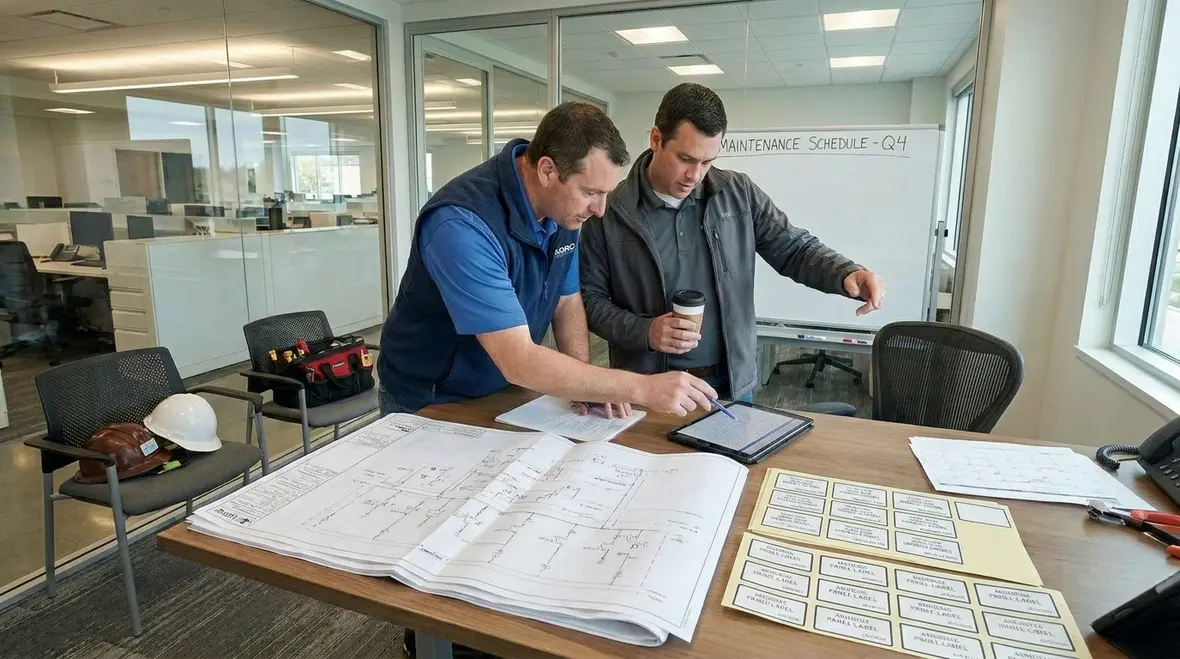
A good schedule does not just list tasks. It assigns timing, owners, access needs, and follow up actions. At Kord Electric, we help facilities build a Commercial Electrical Maintenance Schedule Best Practices style plan that fits the building’s risk level and usage. We start with the electrical one line, the panel labels, the history of service calls, and the known load profile. Then we map tasks to real operating seasons.
Typically, we organize work into tiers. Routine inspections and visual checks happen on a regular cycle. More detailed testing happens at planned intervals based on equipment type and condition. For major property buildings, we also coordinate with tenant schedules and critical operating windows so work happens without disrupting operations.
Our expert service staff also checks the “hidden” pieces, like terminations, busbar condition, and connections that can look fine until heat reveals the truth. We verify that protective devices match the loads they serve and that grounding and bonding meet the building’s safety needs. That is where the schedule becomes more than maintenance. It becomes a system for long term performance.
For facilities that want deeper support in planning, Kord Electric’s electrical preventive maintenance services build on these Commercial Electrical Maintenance Schedule Best Practices with structured inspections, thermal imaging, and detailed reporting tailored to your operational risk and compliance needs.
What we inspect during routine electrical maintenance visits
Routine work is where we spot trends. We do not treat every visit like a surprise party. Instead, we follow a repeatable inspection flow that covers key areas of commercial and industrial electrical systems.
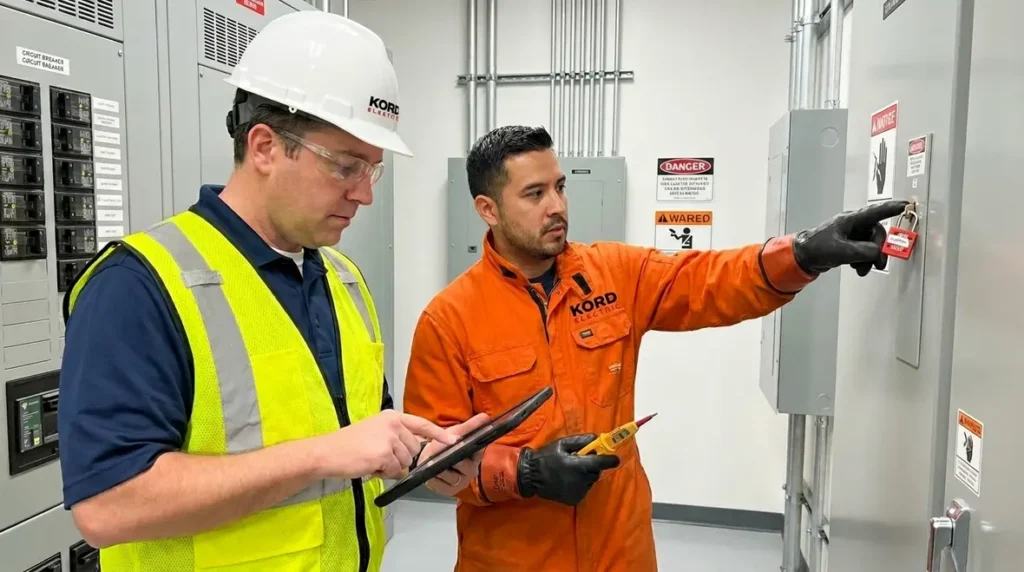
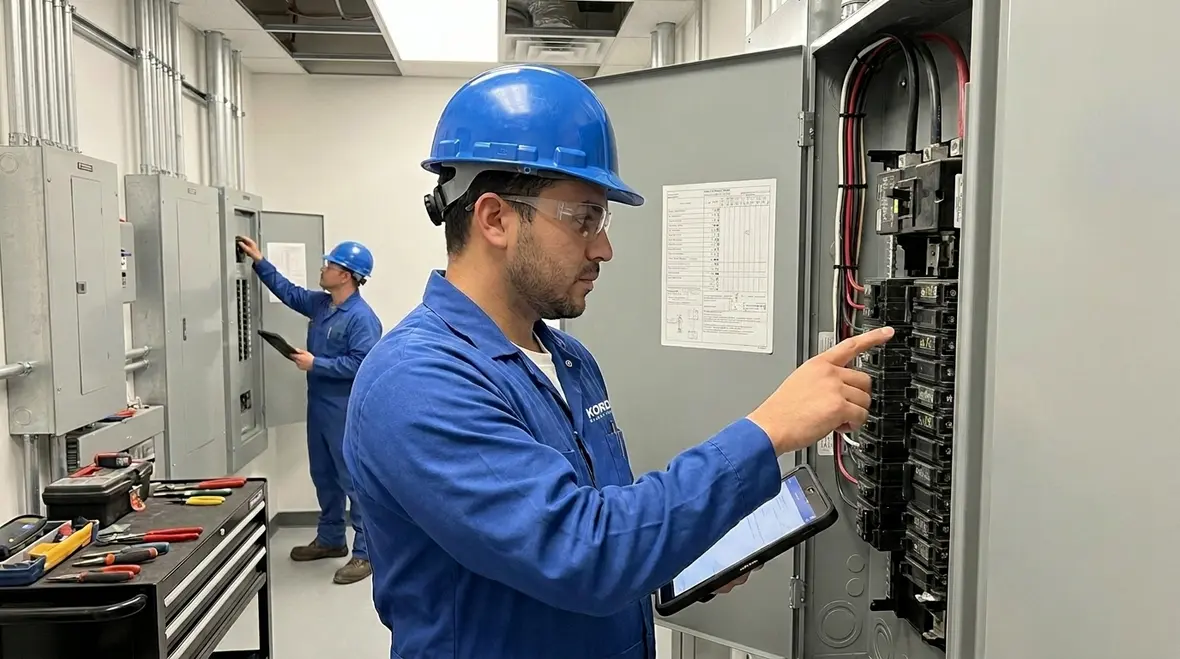
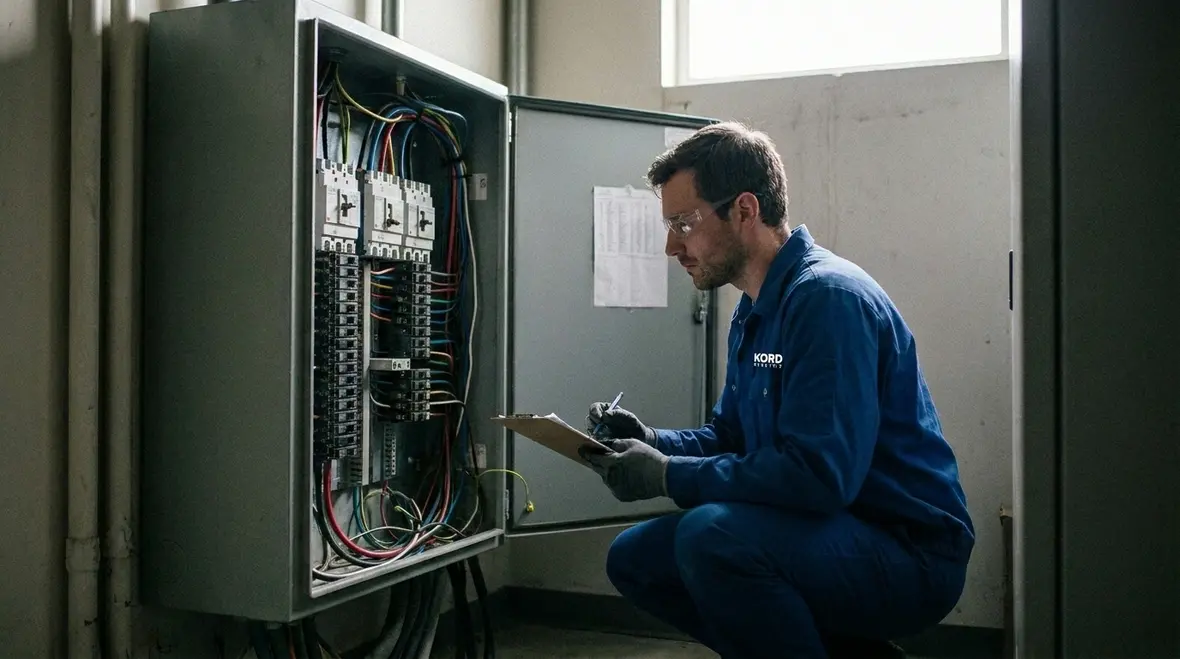
Panels and distribution equipment are a starting point. We inspect for signs of overheating, corrosion, moisture damage, and physical wear. Then we check labeling, access, and clearance so electricians and operators can work safely later. Next, we review protective devices for signs of distress and confirm that the panel layout supports safe operation.
Connectors and terminations receive careful attention. Even when breakers function, connections can degrade under load. Therefore, we look for evidence of looseness, discoloration, and uneven wear. Where conditions suggest risk, we recommend deeper testing.
Grounding and bonding matter in every building. If grounding paths do not behave correctly, it affects safety and can create nuisance trips or equipment stress. We verify the integrity of grounding systems and support protective performance.
And because commercial work often includes upgrades, we also verify that any new components integrate cleanly with existing systems. That way, the building does not end up with a patchwork of “it should be fine” decisions. We prefer fine with proof.

Testing and diagnostics that prevent future failures
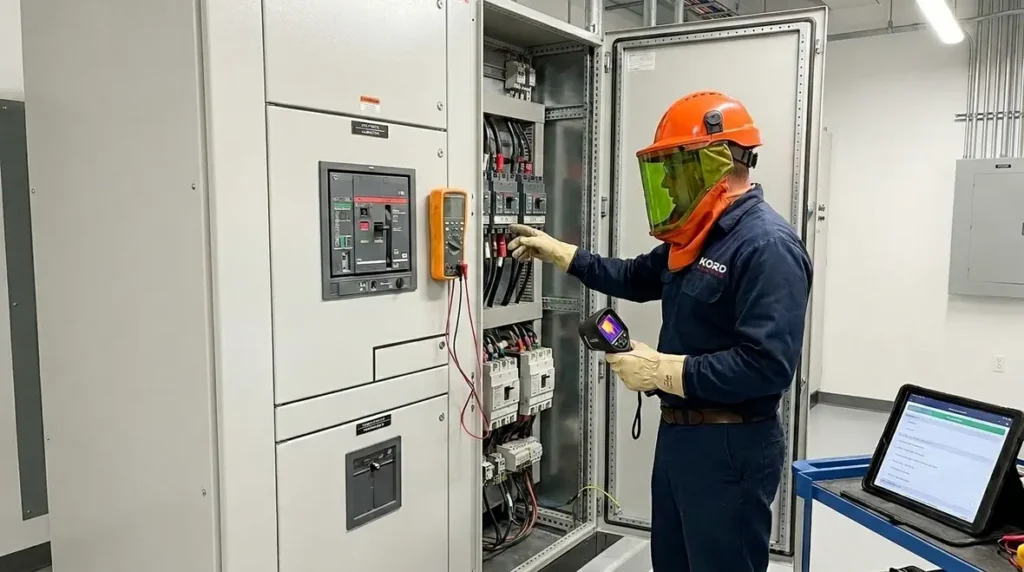
After the visual checks, we move into predictive care. Testing helps us see what the eye cannot. Kord Electric uses practical diagnostics to find insulation problems, identify abnormal conditions, and reduce unexpected shutdown risk.
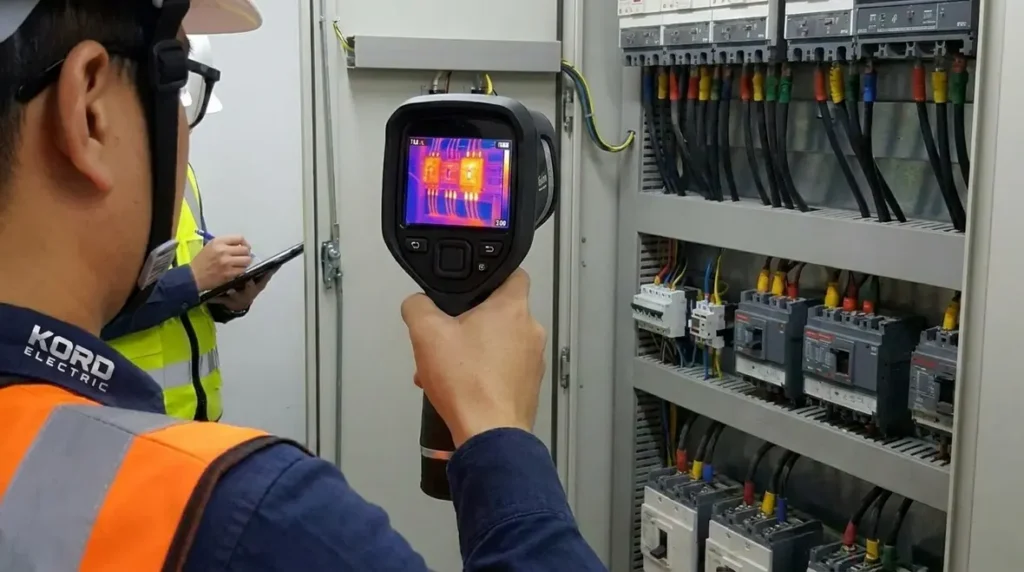
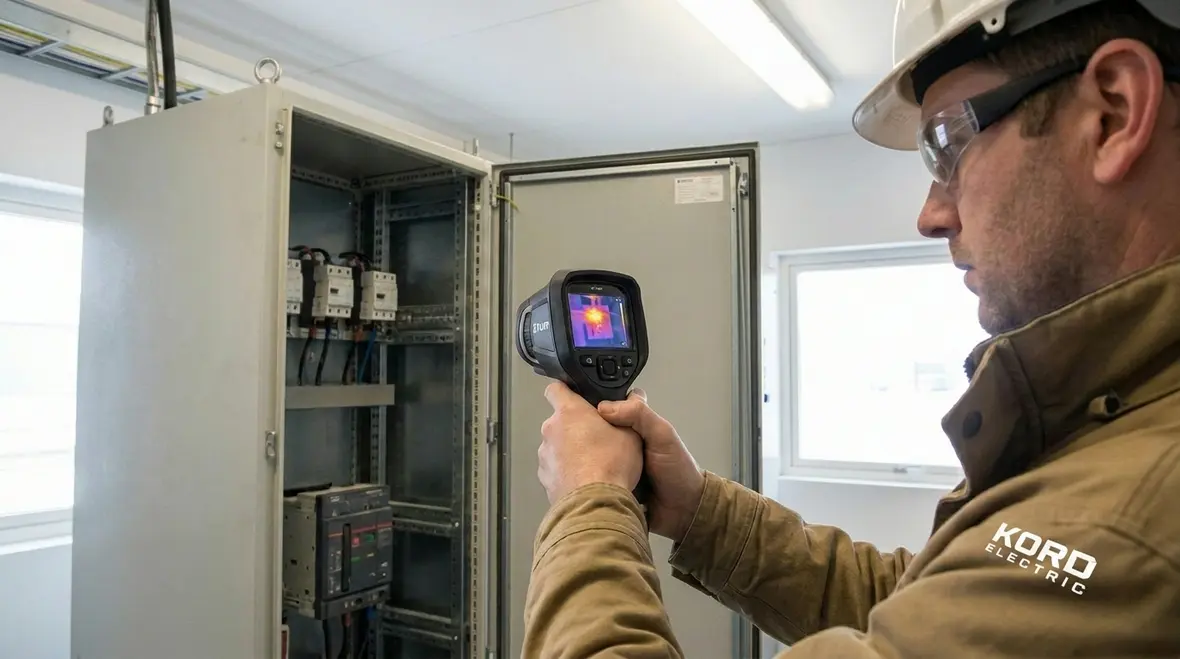
Thermal and load based assessment helps uncover hot spots. Connections that run hotter than they should can be harder to catch without proper evaluation. When we detect hot conditions, we plan corrective action before the issue escalates.
Insulation related testing supports the long term health of wiring and equipment. As insulation ages, it becomes more likely to fail under stress. Therefore, planned testing helps our technicians and expert service staff identify equipment that needs attention.
Breaker and protective device verification helps ensure the system responds correctly during fault conditions. Proper protective performance keeps downstream equipment safe. It also protects your operations from damage that can spread faster than you can schedule a meeting.
System documentation and follow up closes the loop. We do not just test and walk away. We capture results, explain what they mean, and recommend next steps. That way, your facility team understands risks and can schedule repairs logically instead of guessing.
Integrating EV charging and modern loads into the plan
Modern commercial properties add equipment, and that shifts the electrical picture. For example, EV charging changes how the building handles current, load demand, and future expansion. Our technicians account for those realities when we help property teams plan electrical capacity and reliability.
If a facility installs EV chargers, we treat the project as part of the larger electrical maintenance strategy, not a one time event. We reference our EV charger installation work at Kord Electric to show how we think about the system as a whole, including power supply considerations, safe installation practices, and readiness for how usage grows over time. You can review our EV charger installation details to see the kind of organized, system focused work we bring to commercial electrical needs.
Then, we fold that equipment into the maintenance rhythm. That means checks on charging circuits, proper labeling, monitoring for abnormal conditions, and coordination with existing distribution equipment. In other words, we do not leave EV charging to run on vibes. It gets scheduled attention like any other critical load.
And just like any pop culture hero, your electrical system performs best when it has a plan, a routine, and backup resources. The difference is, your building will not ask for a training montage.
How we keep maintenance on schedule without disrupting operations
Scheduling is where many plans collapse. A facility might want maintenance, but operations do not pause. So, Kord Electric coordinates work to reduce downtime risk and keep projects clean for property teams and tenants.
First, we align the schedule with building priorities. Critical areas get first attention. Then we group tasks by access needs and shut down requirements. If certain work must happen during off hours, we propose timing that fits your operational reality.
Second, our expert service staff communicates clearly. We explain what we will do, what we need from the facility team, and what the expected impact will be. That reduces surprises and helps stakeholders prepare.
Third, we maintain documentation that supports future decisions. When a facility sees maintenance history over time, it can spot repeating issues, estimate life cycles, and plan upgrades in a smarter order. Therefore, maintenance becomes a strategic tool instead of an ongoing emergency subscription.
Finally, we set up a feedback loop. When we find conditions that require adjustments, we bring it forward promptly and explain the risk in business terms. We aim for calm, not chaos. Because the only thing that should be loud is the building’s branding sign, not its electrical system.
FAQ
Conclusion and call to action
If you want your electrical system to stay reliable, you need a maintenance plan built for real facility conditions, not generic checklists. Kord Electric helps commercial and industrial facilities and major property buildings set up and follow a proactive schedule that protects equipment and supports business continuity. Our technicians and expert service staff inspect, test, document, and explain what matters, then we recommend smart next steps. Reach out to us to review your current electrical maintenance approach and build a schedule that keeps power steady, costs lower, and stress way down.
To explore how structured maintenance connects with other upgrades, such as lighting improvements and system modernization, you can also review services like Kord Electric’s recessed lighting installation, which pairs well with a Commercial Electrical Maintenance Schedule Best Practices plan for safer, more efficient commercial spaces.