Commercial Electrical Panel Safety Checklist
Kord Electric approaches commercial electrical panel safety like we approach every job: calmly, methodically, and with respect for the real risks that sit behind the metal doors. In a commercial and industrial facility, one small mistake can turn routine power checks into an all day problem. That is why our team builds safety habits into every visit, from how the panel is opened to how breakers are tested and labeled.
In this guide, we lay out a practical commercial electrical panel safety checklist our expert technicians follow. We also explain what we look for and what others often miss, so your maintenance staff can prevent surprises before they become headlines. And yes, we promise to keep the jokes to a safe level. We cannot keep the electricity that way, but we can try.
Why commercial panels demand a safety checklist
When people hear “electrical panel,” they sometimes picture a simple box. In reality, we treat it like a living system. Components heat up, connections loosen, dust collects, and moisture finds weak points. Even a well maintained building can develop issues over time, especially in industrial settings where vibration and heavy use are common.
To keep risk low, we use a checklist that supports consistent commercial electrical panel safety steps. This matters because panels fail quietly. You might notice it only after a breaker trips often, a label fades, or a busbar shows discoloration. Then, the building’s operations pay the price.
Pre inspection conditions we verify before touching anything
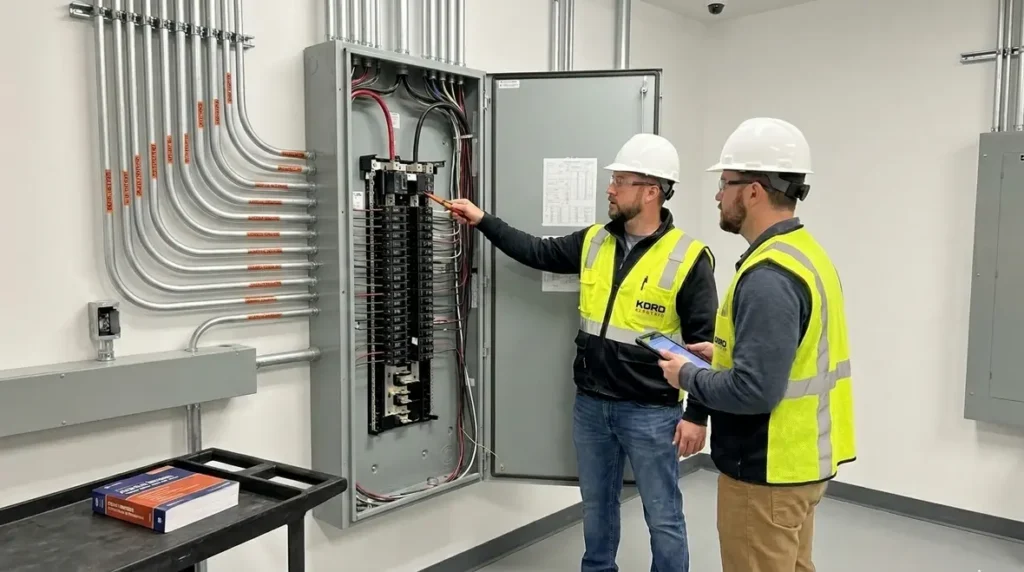
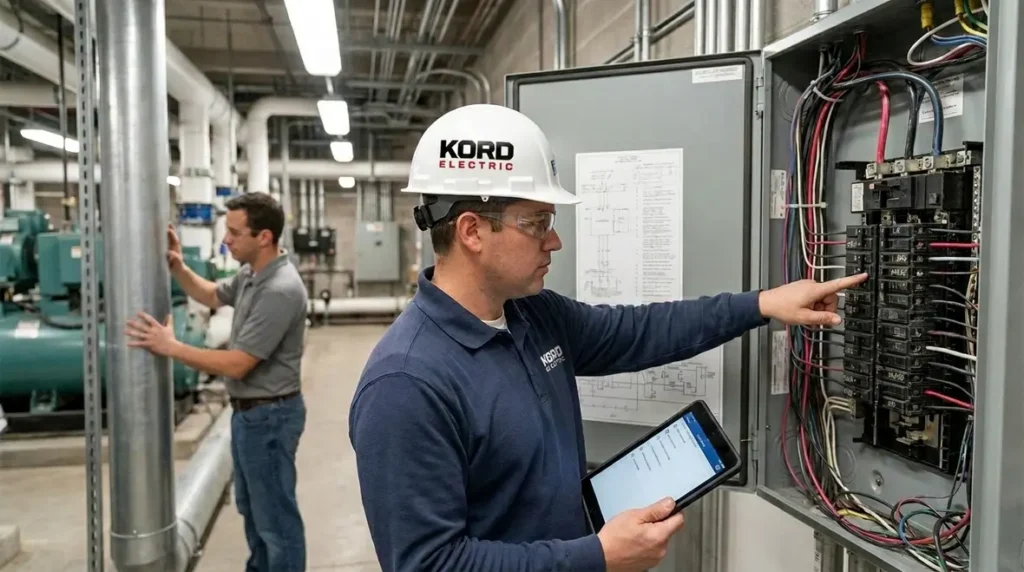
Before our technicians open a door, we verify conditions that affect both safety and accuracy. First, we confirm the correct panel based on the facility drawings and equipment schedule. Next, we check the area around the panel for trip hazards, stored materials, and restricted access. If someone parks a pallet in front of the cabinet, that is not organization. That is a future problem.
Then we confirm environmental factors. We look for water intrusion signs near the enclosure, excessive humidity, corrosion at conduit entries, and dust buildup that can trap heat. We also verify lighting, because working in a dim corner is how small errors grow legs.
Finally, we ensure proper identification. Technicians need clear panel schedules and correct circuit labeling before tests begin. When labels are missing or outdated, we correct them. Otherwise, you end up chasing ghosts, like looking for the remote that is not “lost,” it just fell behind the couch.
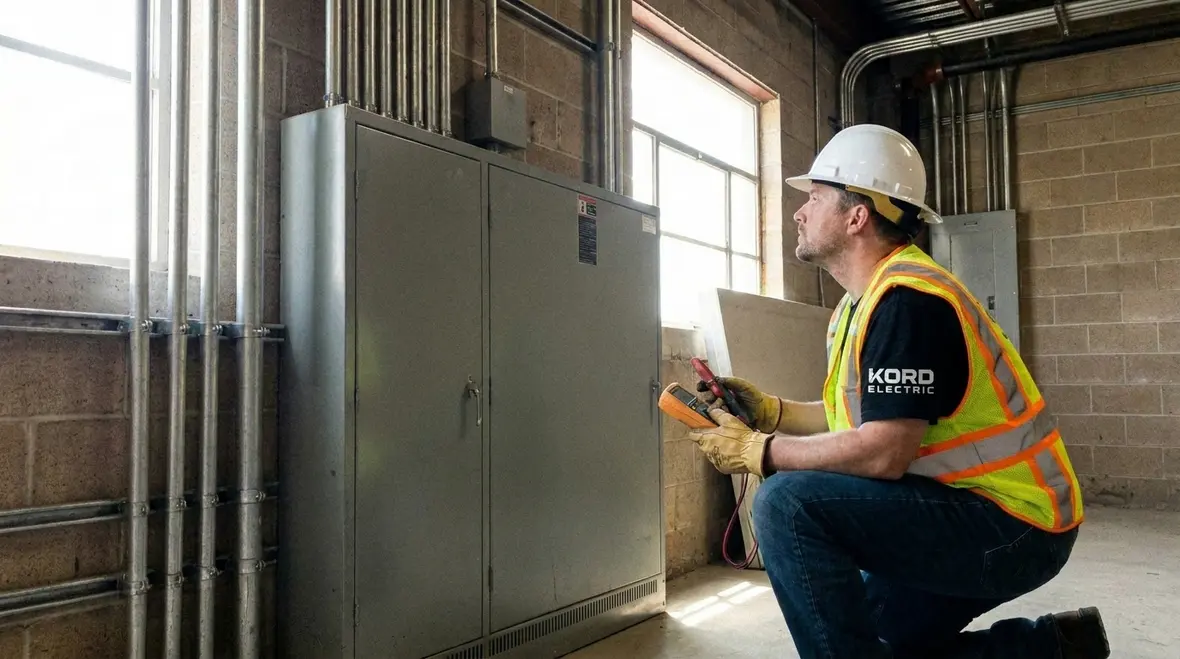
Commercial electrical panel safety checklist for hands on checks
Now we get to the core steps. Our checklist focuses on what we inspect, what we test, and how we document. Because in commercial and industrial environments, your goal is not just to find problems, it is to prevent repeat failures.
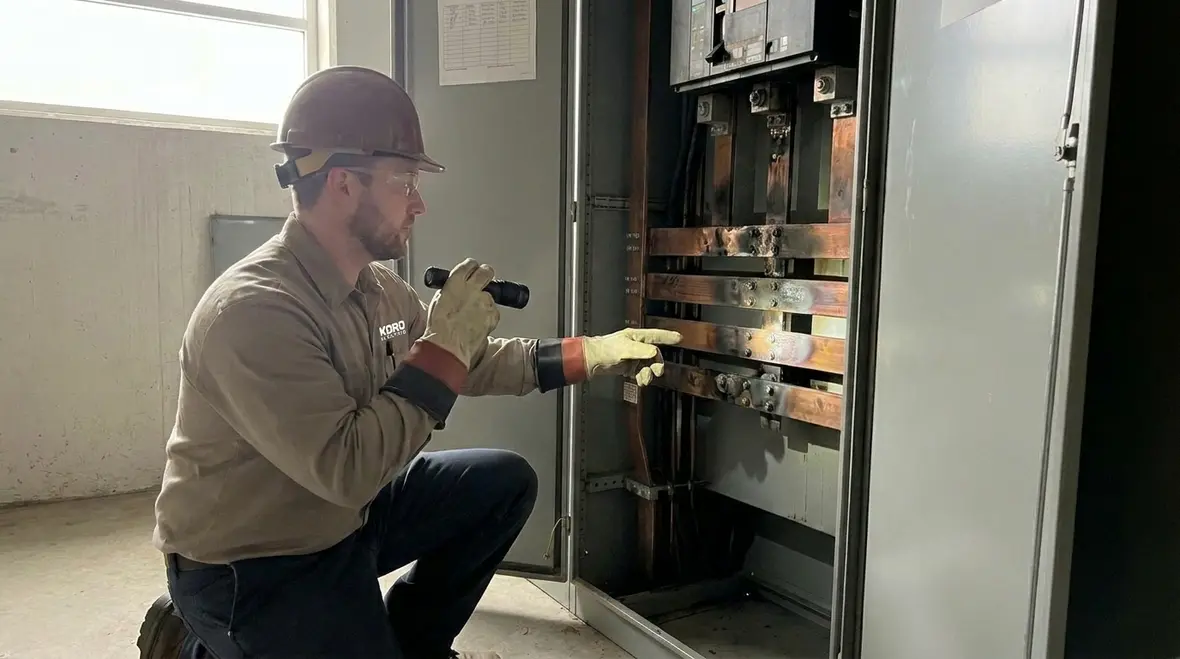
- Visual inspection: We check for loose or damaged cover plates, missing screws, rust, scorch marks, abnormal discoloration, and signs of overheating around breakers and wiring.
- Enclosure condition: We inspect door hinges, seals, knockouts, and cable entries. A bad seal invites moisture and contaminants.
- Clearance and access: We verify safe working space around the panel. We also confirm pathways stay open for electricians and first responders.
- Wire integrity: We look for frayed conductors, improper routing, and signs of contact with sharp edges. If insulation shows wear, we address it before it becomes arcing.
- Torque and connection quality: For eligible circuits, we evaluate connections. Loose terminations often cause heat. Heat causes failure. Failure causes downtime. That is the chain reaction nobody wants.
- Breaker condition: We check for damage, evidence of abnormal tripping, and signs that a breaker is not seating correctly.
- Labeling and circuit identification: We confirm that circuit labels match the actual loads. We update documentation so future work stays safe.
- Grounding and bonding: We verify grounding points and bonding continuity where required. Proper grounding reduces risk during fault events.
As we work through these steps, our technicians explain what they see. We do not just point at a problem and move on. We tell your team what it means, how it typically fails, and what to fix now versus what to monitor. Others sometimes treat this like a one way report. We treat it like a training moment.

How we test safely without guessing
Testing should not feel like a wild experiment. When our expert service staff conducts checks, we use a planned approach so we do not create new hazards. We begin by confirming the safe boundaries of the work area, then we verify equipment status before we apply any test method.
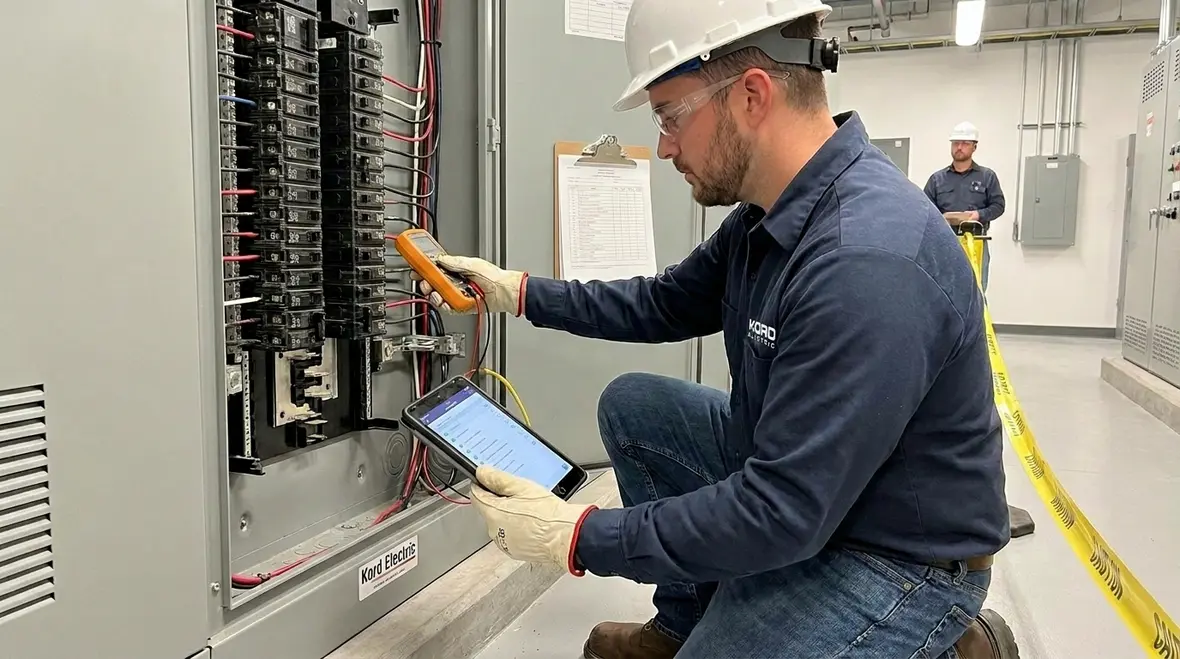
Depending on the facility and the condition of the panel, we may use tools that include voltage verification, thermal imaging support, and other diagnostic methods that help spot abnormal heating patterns. We also evaluate whether the panel has a history of nuisance trips, frequent resets, or irregular load behavior.
Equally important, we document readings and observations. Later, when a technician returns, they can compare results. That is how we catch slow degradation early. It is also how we avoid repeating the same “inspection dance” every month, like doing the same plot twist in a movie you already paid for.
We also confirm that the building’s operational needs stay protected. For major property buildings, downtime is expensive, so we coordinate testing windows with your team. We keep communication clear, so maintenance and safety stay aligned.
For facilities that want this level of planning built into every visit, many property leaders pair a structured commercial electrical panel safety checklist with ongoing electrical preventive maintenance programs that keep panels, feeders, and critical equipment healthy over time.
Common issues we see in major property buildings
Even strong facilities develop panel problems over time, especially where electrical systems carry heavy loads. Our technicians often spot patterns, and we tell our clients what they usually come from.
- Faded or incorrect labeling: This causes misidentification during maintenance, which increases risk during isolation and troubleshooting.
- Dust and contamination: In warehouses, manufacturing, and transport facilities, dust can build up and hold heat.
- Moisture at conduit entries: When seals fail, corrosion can start in places that look fine from the outside.
- Loose connections from vibration: Industrial environments apply constant stress. Over time, that stress loosens terminations.
- Overloaded circuits: When a building expands services or adds equipment without updating load calculations, panels can run hotter than designed.
- Improper access habits: Staff may store items in front of panels because it feels convenient, until it becomes unsafe.
We also emphasize documentation. In commercial and industrial facilities, the panel’s story includes drawings, schedules, inspection history, and any recent modifications. When those records are missing, safety checks lose context.
If you want to see how these issues show up across large properties, you can explore how they connect to broader hidden electrical risks in commercial buildings and what happens when unseen panel problems are left to grow.
Training and routines that keep teams aligned
Commercial electrical panel safety improves when people follow the same routine. Our approach includes practical training for your maintenance staff and property operators. We explain what “safe” looks like before work begins, what signals require stopping, and how to report findings quickly.
We recommend that your team includes routines such as keeping access clear, verifying labeling accuracy, and scheduling periodic checks based on operating conditions. Where load is heavy, where dust is common, or where the building changes frequently, the schedule needs to reflect reality.
Importantly, your staff should know when to stop. If they see scorch marks, repeated breaker trips, unusual smells, or signs of moisture intrusion, they should not “try again later.” They should isolate appropriately and contact qualified professionals. We help set that standard so people do not improvise when they should not.
For organizations that want structure instead of guesswork, Kord Electric can align your commercial electrical panel safety routines with broader commercial and industrial electrical maintenance plans built specifically for high demand facilities.
FAQ: Commercial electrical panel safety checklist
Conclusion: Let Kord Electric keep your panels safe
If you operate a commercial or industrial facility, your electrical panels should not be treated like background furniture. We help your team maintain commercial electrical panel safety through thorough inspections, clear documentation, and practical training that reduces risk and downtime. When we visit your building, our technicians explain what we see and what it means, so you can act with confidence. If you want a checklist built for your property and operating conditions, contact Kord Electric today.
For facilities that want a long term strategy instead of one time fixes, Kord Electric’s dedicated electrical preventive maintenance services turn your commercial electrical panel safety checklist into a repeatable program that protects uptime, supports compliance, and gives your team clear next steps instead of guesswork.