Commercial Electrical Panel Safety Warning Signs
Commercial electrical panel safety starts before the first flicker
In commercial and industrial facilities, the electrical panel is not a “set it and forget it” device. It is a working hub where heat, load, and faults can build in silence. When something goes wrong, the outcome can range from downtime to real hazards, and nobody wants that kind of surprise during business hours. We at Kord Electric take commercial electrical panel safety seriously because we have seen what happens when small warning signs get ignored too long.
Meanwhile, others may treat the panel like a background character in a movie. But once the lights start acting weird, everyone suddenly wants the plot explained. That is where our expert service staff comes in, speaking in clear terms and making sure our technicians diagnose the root cause, not just the symptom.
Overheating, burning smells, and the “why does it sound like that?” problem
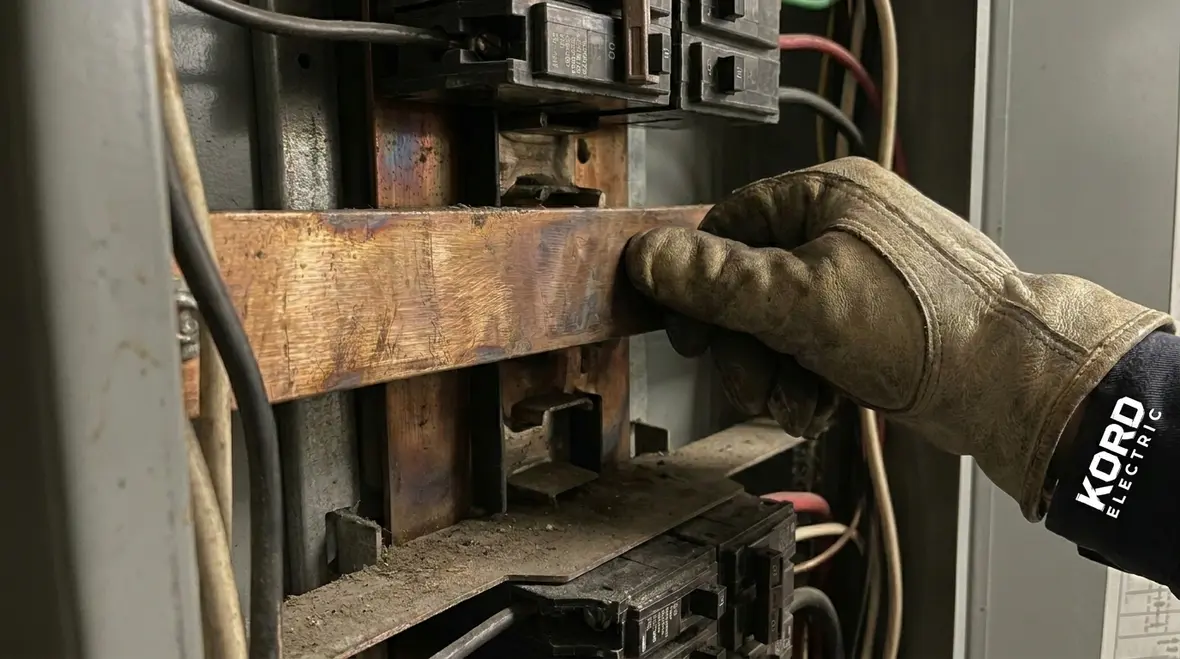
If your panel feels warmer than usual, or if you notice a burning smell near the enclosure, you need immediate attention. Heat does not show up for no reason. It often points to loose connections, damaged bus bars, failing breakers, or corrosion that increases resistance. And resistance is the enemy that turns electricity into unwanted heat.
Now, add sound. If you hear buzzing, crackling, or loud snapping when equipment starts, the panel may be struggling under load or experiencing arcing. Arcing does not politely wait for you to schedule a service call. It can damage components fast, and it can also create dangerous conditions for nearby combustibles.
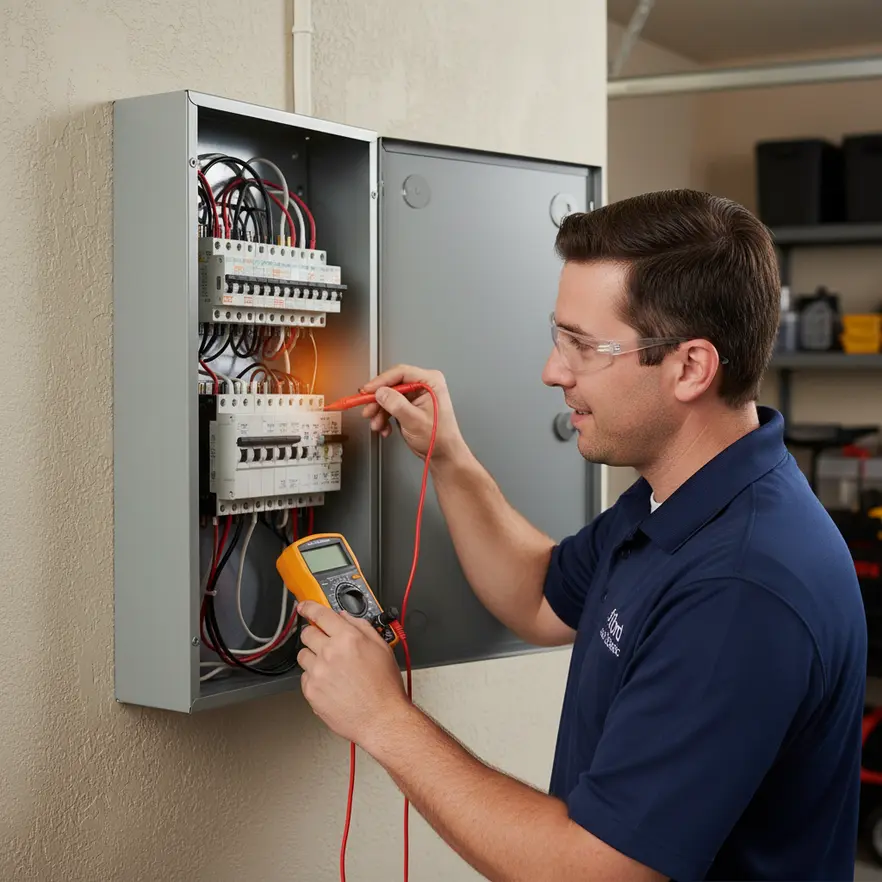
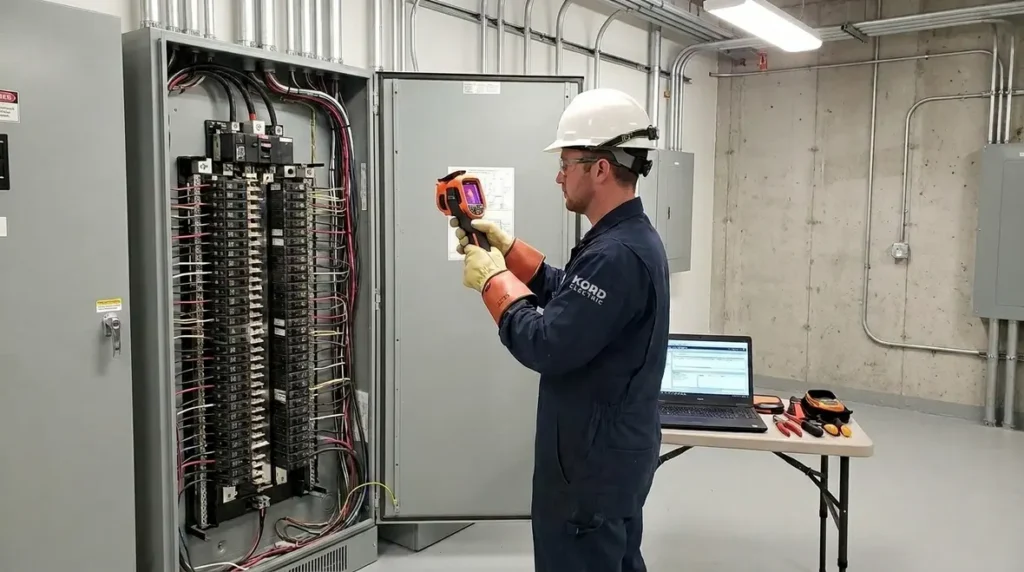
When we arrive, our technicians check temperatures, inspect terminations, and verify breaker condition. Then we explain what we find in plain language, because most people do not deserve a lecture while their facility loses production.
If your facility runs critical systems, the risk rises even more. In fact, data centers and other uptime focused buildings often require strong electrical oversight to avoid interruptions. Our approach aligns with uptime thinking, because electrical problems do not stop just because the calendar says it is Friday. For a deeper dive into that mindset, you can explore how we support data center electrical requirements for uptime and see how we apply the same discipline to commercial electrical panel safety.
Breakers that trip often, or never trip at all
A breaker that trips repeatedly usually signals overload, a fault, or a connection problem that only appears under certain loads. However, a breaker that never trips can be just as dangerous. It may fail to protect the circuit when it should. That means damage can spread before anyone notices.
To keep things simple, imagine a fire alarm that only rings when it feels like it. That is not protection, and it is not acceptable in a commercial electrical system.
We also look at patterns. For example, do trips happen during HVAC start up, conveyor ramps, or shift change equipment use? Often, the panel shows wear where demand rises. In other cases, a nuisance trip may hide a deeper issue such as a failing breaker mechanism or a defective component on a feeder.
Our expert service staff helps you interpret what the panel behavior means for your operations. We do not just reset and walk away. Instead, we identify the cause so the problem does not return like a sequel nobody asked for.
Signs of moisture, corrosion, and moisture getting in through “closed” doors
Commercial and industrial spaces often deal with humidity, washdowns, dust, and condensation. Even if the panel door stays closed, moisture can still find a path through cable entries, gaskets, or damaged conduit seals. Once water gets inside, corrosion forms and resistance rises. Then heat builds, and then you get the kind of electrical panel symptoms that do not belong on your maintenance calendar.
Watch for condensation on the inside cover, rust trails around knockouts, sticky residues, or unusual discoloration on components. If the panel has been in an area where moisture can collect, we advise inspections on a schedule rather than “when it looks bad.”
And yes, our technicians document findings carefully. Then they explain what they see, including what likely allowed moisture to enter and what changes reduce the chance of repeat failures.
For uptime focused environments, this matters even more. Electrical reliability depends on preventing hidden failures before they interrupt critical workloads. That same thinking applies broadly across commercial electrical panel safety planning.
Flickering, dimming, and weird power quality swings
Sometimes the panel does not look damaged, but the power behaves badly. Lights flicker. Motors run rough. Computers or controls reboot. These symptoms point to voltage instability, loose connections, harmonics, or grounding issues.
Power quality problems often connect back to the panel because the panel distributes power to large loads. If a termination loosens or a bus bar develops a high resistance spot, the system can show voltage drops under demand. As a result, equipment may fail, degrade, or experience intermittent faults that are hard to trace.
When we assess your panel, we may review load profiles, inspect connections, and evaluate grounding and bonding. Then we help you connect the dots between electrical behavior and operational impact. In other words, we do not just measure voltage. We translate it into what your facility actually experiences.
In a data center setting, uptime concerns raise the bar. Electrical design and maintenance aims to keep systems stable and predictable, because downtime costs real money. Even outside that world, commercial facilities depend on consistent power to keep production, security, and life safety systems working.
Old gear, modern loads, and when upgrades become urgent
Some buildings keep their electrical panels for decades. That can work, but only if the panel remains properly sized, maintained, and updated as loads change. Today, many facilities add equipment: more refrigeration, new manufacturing lines, EV charging, upgraded lighting, server racks, or additional tenant improvements. The panel that once handled demand may now face stress it was never meant to manage.
When we inspect older panels, we look for wear, missing components, outdated protection, and signs of repeated repairs. We also evaluate whether the panel can safely support current and future loads. If not, immediate attention may mean targeted upgrades or replacement of worn components.
Our technicians also explain the path forward. We avoid vague advice. Instead, we lay out options with clear reasons, because business owners and facility managers deserve honesty, not “maybe it will be fine” magic.
And if you ever hear someone say, “It worked yesterday,” we politely remind them that yesterday did not come with the new equipment drawing current today.
How we respond on site: fast diagnosis with calm, clear communication
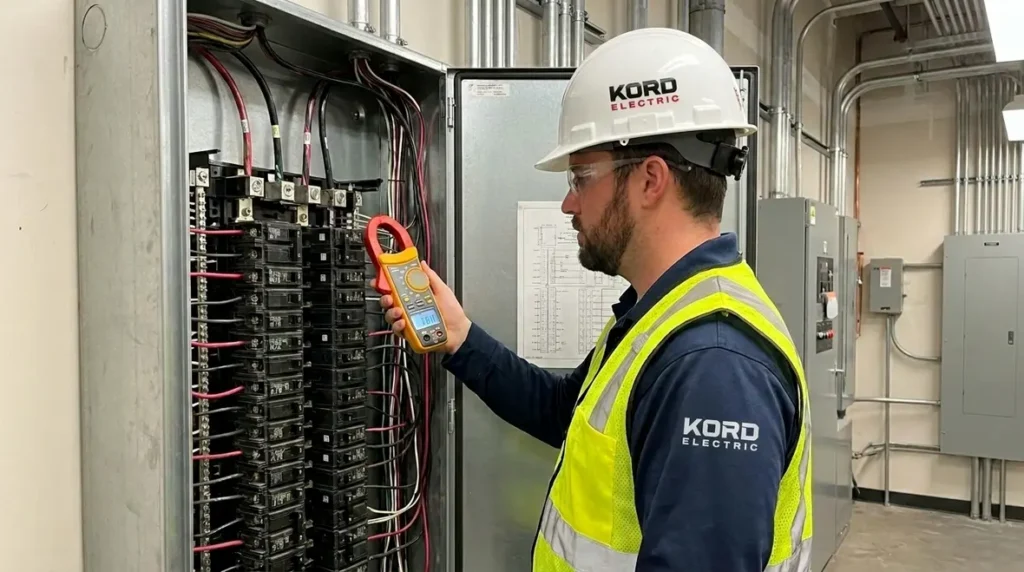
When you call Kord Electric, we bring a process built for commercial and industrial facilities. First, our expert service staff asks focused questions so we understand symptoms, timing, and which systems are affected. Then our technicians perform a structured inspection of the panel and related feeders, looking for physical damage, thermal stress, and protection issues.
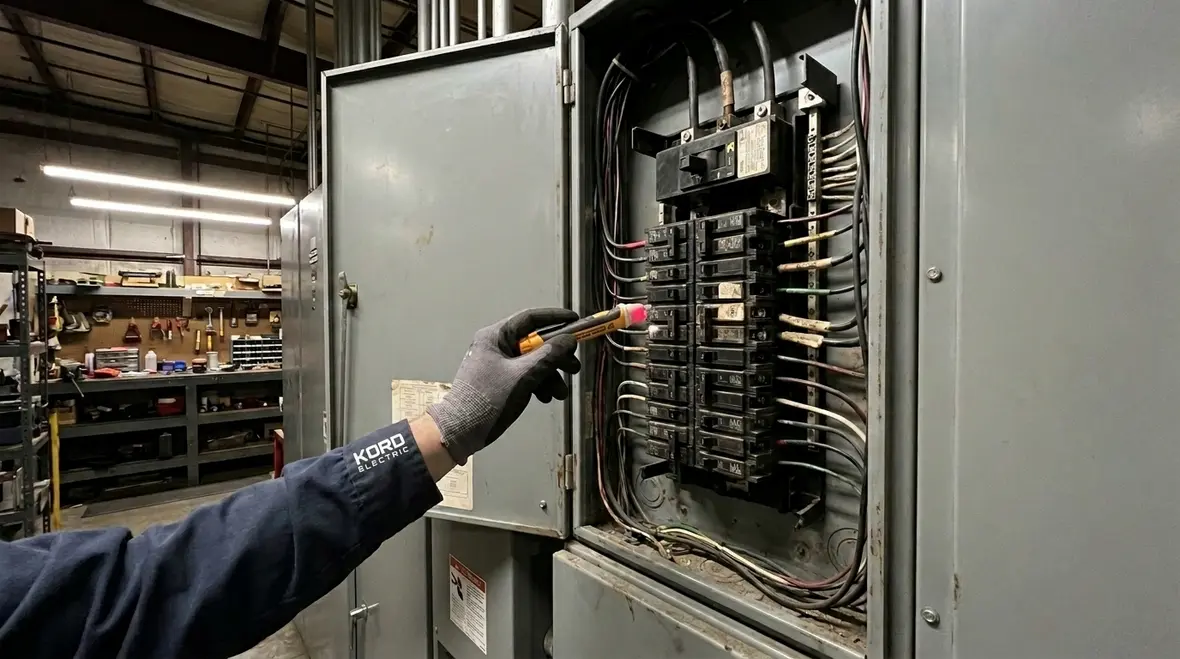
Next, we test key areas to confirm what caused the symptoms. For example, we evaluate connection integrity and breaker behavior. We verify safe conditions and identify changes required to restore proper function. Then we explain findings in a way your team can use, not a confusing report that lives in a drawer.
Finally, we help you plan the next step. That might include targeted repairs, component replacement, or a broader upgrade strategy that supports uptime priorities. We also discuss how to monitor the panel going forward, so warning signs do not grow into emergencies.
To be clear, we do not treat this like a one time visit. We treat it like risk reduction. Because commercial electrical panel safety is not a slogan. It is a daily discipline.
For facilities across Southern California, that daily discipline often starts with partnering closely on broader infrastructure work. If you operate in the region and need a team that can support panels, distribution, and more, our Los Angeles County electrical services offering connects these commercial electrical panel safety principles to the rest of your system.
FAQ
Conclusion: call Kord Electric before small signs turn into big downtime
If you see overheating, unusual sounds, repeat breaker trips, moisture clues, or power quality swings, act now. We at Kord Electric serve commercial and industrial facilities and major property buildings, and our technicians diagnose electrical issues with care and explain the next steps clearly. Do not wait for the lights to perform a dramatic finale. Call us today so we can restore safe operation, protect your equipment, and keep your facility running with confidence.
Whether you manage a distribution warehouse, a production line, or an uptime focused environment, commercial electrical panel safety is one of the fastest ways to reduce risk without slowing the workday to a crawl. A structured inspection, clear testing plan, and timely upgrades can turn today’s small warning sign into tomorrow’s “glad we caught that early” story instead of next quarter’s outage report.
If you are ready to take that next step, our team can align panel assessments with broader service needs, from new loads and tenant improvements to targeted reliability projects. Commercial electrical panel safety ties into everything else your electrical system does, and we are here to make sure it all works together the way it should.