Warehouse Lighting Efficiency Upgrades Guide
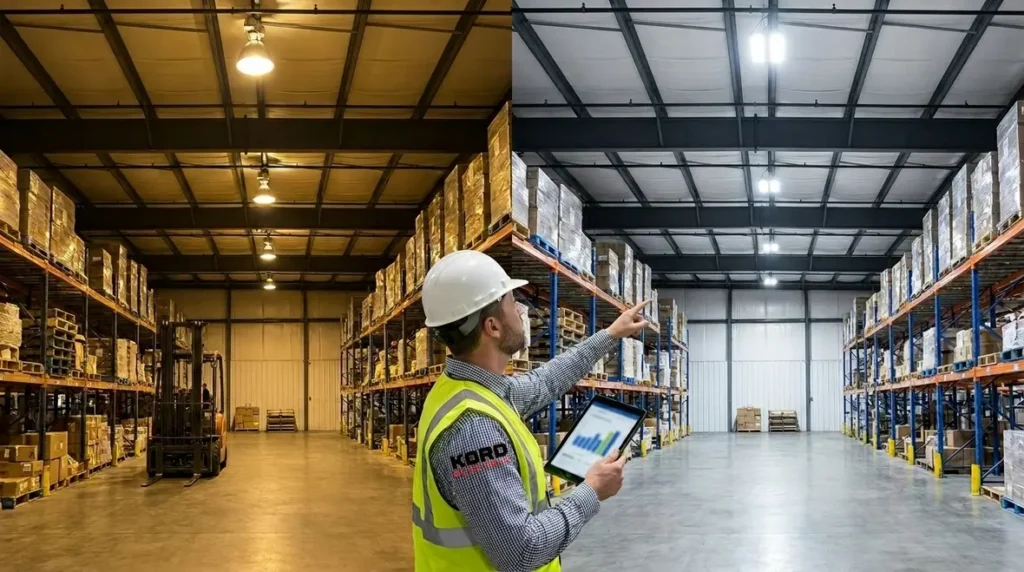
At Kord Electric, we help commercial and industrial facilities get more done with fewer headaches by upgrading lighting that is dated, wasteful, and inconsistent. In the intro, we focus on warehouse lighting efficiency upgrades because they often deliver fast wins in both productivity and cost control. When we modernize the lighting system, we reduce glare, improve visibility, and stabilize light levels across aisles, docks, and staging areas. And yes, the warehouse starts to feel less like a dim cave and more like a place where humans can actually see what they are doing.
Others might chase flashy technology first. We take the quieter, smarter route: we plan the upgrade, we verify the layout, and we align the lighting performance with the way your team works. Then our field technicians explain the why behind each step, because good installs should never feel like a magic trick.
Warehouse lighting efficiency upgrades: the productivity link most people miss
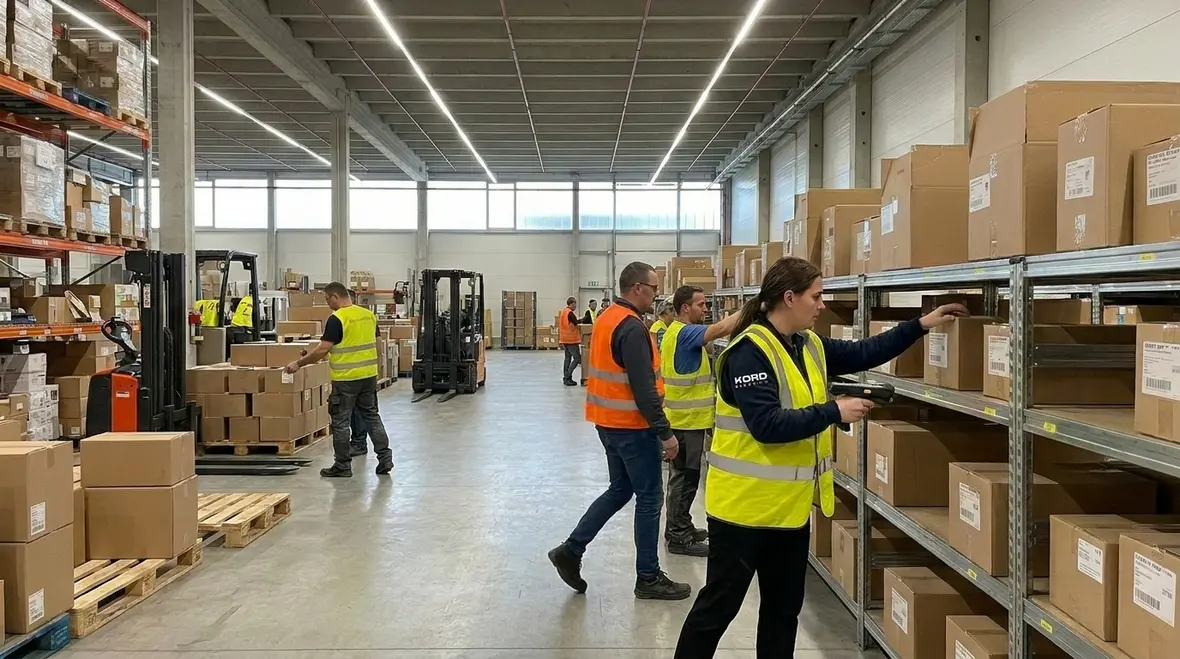
Warehouses run on timing, accuracy, and safe movement through tight spaces. Therefore, lighting affects more than comfort. It influences how quickly staff can pick, inspect, pack, and move materials. When light levels are uneven, workers compensate with extra steps, slower scanning, and more “rechecking.” Meanwhile, poor lighting can push teams toward risky behaviors, like walking faster to “get through the dark parts.” That is not efficiency. That is just workplace improvisation, and it can end badly.
With warehouse lighting efficiency upgrades, we improve uniformity across high use zones such as racking aisles, conveyor areas, and loading bays. As a result, the eye adjusts less often, and tasks like reading labels, checking product condition, and locating barcodes become easier. In addition, modern controls help prevent “lights on, lights blasting” scenarios during low traffic periods. We also aim to reduce maintenance interruptions by choosing equipment that matches industrial duty cycles.
In short, better light helps people work calmer, steadier, and faster. And if you think that is “just lighting,” try walking a forklift path at dusk under flicker and grime. You will learn real quick.
Audit the site like a pro, not like a guess
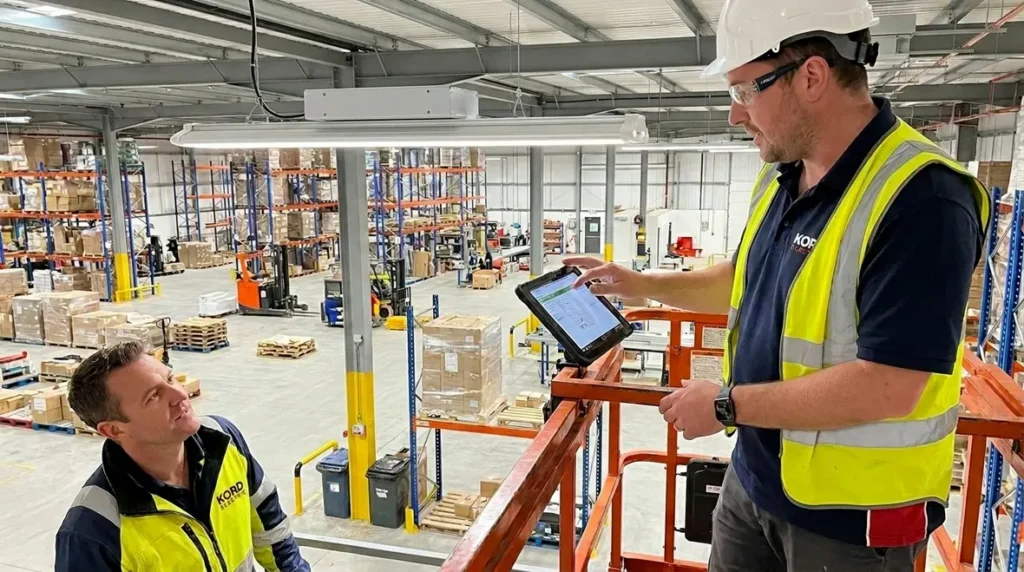
We begin every project by mapping how your warehouse lighting behaves, not just how it looks. First, our technicians review the building use, including forklift routes, mezzanines, workstations, and any areas with visual tasks that require close inspection. Then we examine existing fixtures, optics, mounting height, reflectance, and the condition of diffusers and lenses.
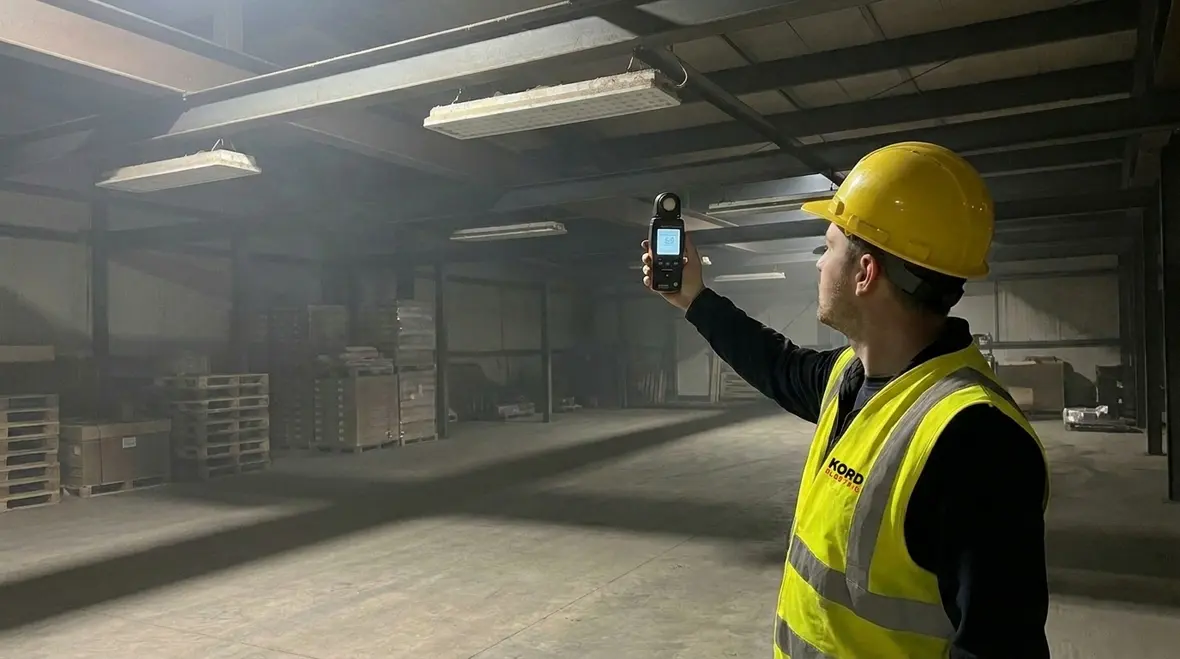
Next, we measure light levels and identify hot spots and dark zones. This matters because two areas can share the same fixture type while still performing differently due to beam angles, dust accumulation, and ceiling obstructions. Meanwhile, the warehouse can change over time as pallet layouts, traffic flow, and seasonal inventory shift. So we do not treat a lighting audit like a one time photo.
Then we check control points, wiring paths, and the way occupancy and daylight affect current performance. After that, we model upgrade options to estimate both energy reduction and light distribution improvements. We also factor in maintenance access, because the best fixture on paper does not help if it takes a ladder parade every month. Our goal stays practical and measurable, not theoretical.
Finally, we explain what we find. Our expert service staff does not hide behind jargon. They walk others through the causes, like why one bay looks fine and another bay looks like it belongs in a late night horror movie.
Upgrade pathways that actually fit commercial and industrial buildings
Once we understand the site, we recommend upgrades that match your space and operating rhythm. For many warehouses, the highest impact approach combines fixture modernization, improved optics, and controls. For example, replacing older lighting with efficient industrial LED fixtures can raise usable light where it matters and reduce waste where it does not.
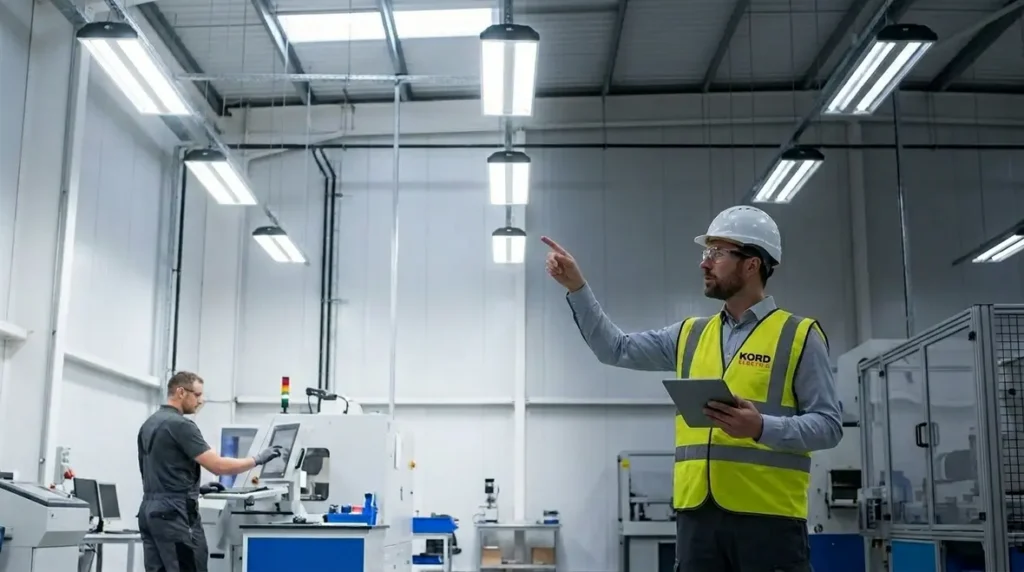
In addition, we often optimize optics so light travels the right distance and spreads correctly on the floor. That reduces glare near aisles and helps workers see safely at the edges of beam patterns. Next, controls come into play. We can schedule lighting by zone, use occupancy sensing for areas with intermittent traffic, and apply daylight strategies where windows exist. Therefore, your warehouse lighting efficiency upgrades stop acting like a permanent tax and start acting like a smart system.
We also address distribution and circuit planning where needed, so the lighting operates smoothly and avoids uneven switching. And if your facility uses multiple levels, we make sure the layout supports consistent performance from ground to mezzanine, because shadows have a way of growing like weeds when nobody checks them.
Our technicians also consider future changes. If you plan to add racking or change workflows, we prefer solutions that can adapt without major rewiring. That way the upgrade protects productivity long after the install day.
Connecting upgrades to ROI and energy codes
For many facilities, warehouse lighting efficiency upgrades also create a direct line to energy savings. When we pair high performance LED fixtures with well tuned controls, power draw drops while task visibility improves. That means lower utility bills without asking anyone to work in the dark.
If you operate in California or similar energy focused regions, we can align your warehouse strategy with the practical steps outlined in Kord Electric’s California Title 24 Lighting Retrofit ROI Guide, so your upgrade roadmap supports both operational goals and compliance driven ROI planning.
Compliance and code realities that keep projects smooth
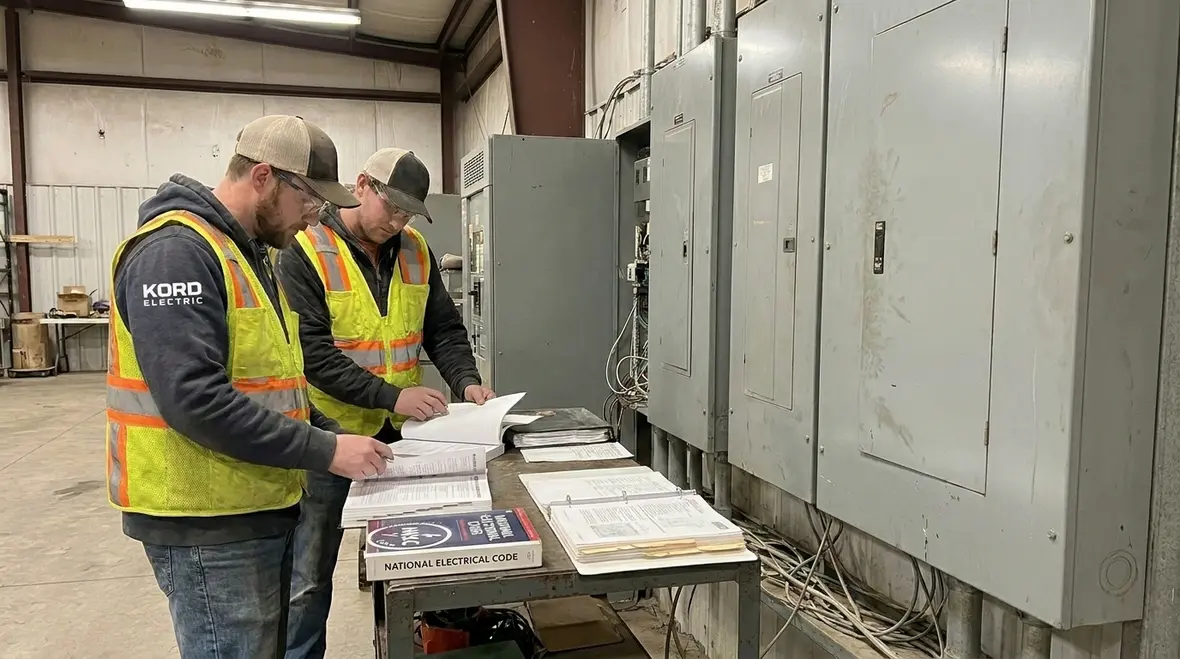
Lighting upgrades in commercial and industrial spaces must meet installation and code expectations, not just look bright. Our team uses a compliance focused approach aligned with best practices outlined in our guide on lighting installation code compliance at the Kord Electric blog. For a deeper dive, you can review our full Lighting Installation Code Compliance Guide. While codes vary by location, the underlying principles matter: proper wiring methods, safe installation practices, and correct controls placement.
So we coordinate the upgrade with the facility’s electrical setup and documentation needs. Then we verify the installation process with attention to safety and workmanship, including correct equipment selection for the environment. Warehouses often include dust, vibration, moisture exposure, and heavy traffic impact risk. Therefore, the system must be installed with the right protection and proper mounting.
Additionally, we ensure that controls and switching configurations support intended operation. When controls work correctly, they help avoid wasted energy and unexpected shutdowns that disrupt picking schedules. And yes, we have seen facilities where lighting “worked” on day one but failed under normal operations because nobody planned for how the building gets used at 2 a.m. during peak shipping.
Our expert service staff keeps the process clear, and they explain compliance steps in plain language. This reduces delays and keeps decision makers confident, which is a lot better than rolling dice with inspection day.
Controls, uniformity, and maintenance planning for long term savings
Lighting efficiency upgrades deliver the best results when the system stays consistent over time. Dust and debris accumulation reduce output, and aging optics can change distribution. To prevent that, we plan maintenance in a way that matches your real schedule. We also help set expectations for when cleaning, inspections, or part replacements should occur.
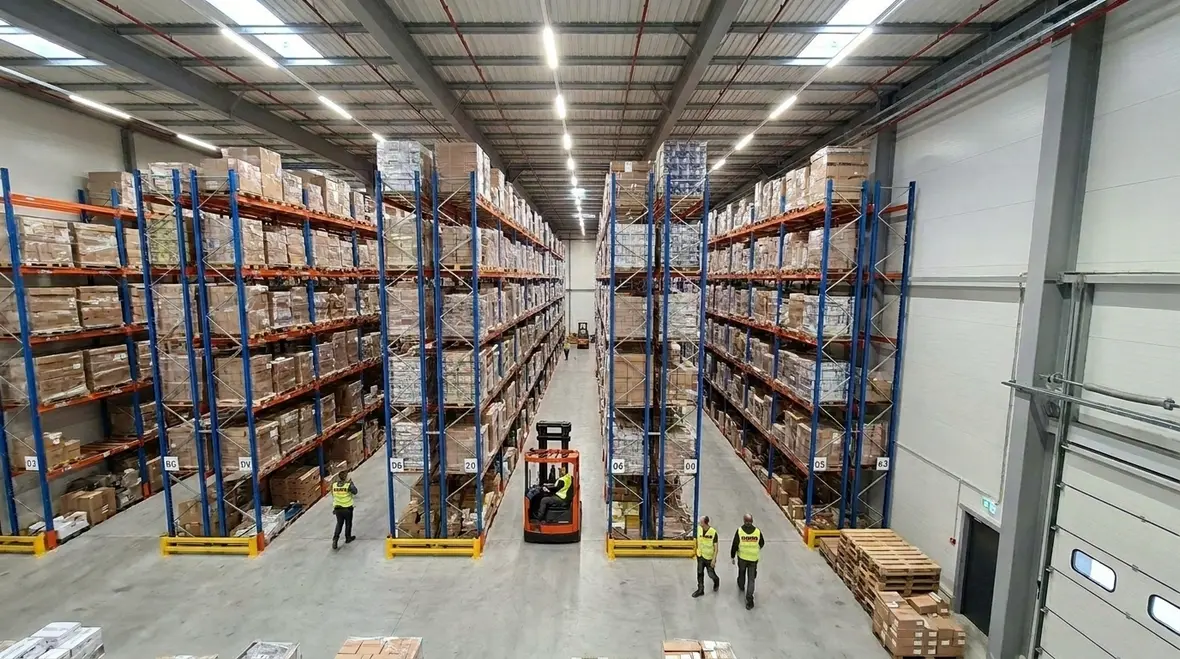
Next, we focus on uniformity and task visibility. In warehouses, “bright enough” is not the same as “good enough.” Uniformity improves wayfinding and reduces eye strain. It also helps workers spot damage, mispicks, and hazards faster. Therefore, we adjust fixture spacing and mounting considerations so the lighting distribution matches the aisle geometry and floor reflectance.
Controls add another layer of value. Occupancy sensing reduces energy during low activity, while scheduling supports predictable shifts. In many facilities, we also use strategies that prevent rapid cycling, which can wear components and annoy staff. Meanwhile, integrating daylight control in areas with skylights or windows helps reduce energy use when the sun does the job for you.
However, controls only work when they align with operations. So we ask how teams move, where they pause, and how often zones change. Then we tune the system to those patterns. As a result, lighting responds as your warehouse runs, not as some generic settings guess.
Planning maintenance without adding headaches
A good maintenance plan should feel more like routine stretching than emergency surgery. We help create practical inspection and cleaning schedules, identify which components are worth stocking as spares, and make sure your team knows how to spot early warning signs like dimming patches or inconsistent sensor behavior.
How we keep upgrades from disrupting your operation
We know warehouses cannot simply shut down for weeks. So we manage project sequencing carefully. First, our team reviews access needs, staging locations, and safety requirements for working around forklifts and active production. Then we plan installation in phases by zone, so one area can stay operational while another gets upgraded.
Next, we confirm electrical routing and fixture staging logistics. That avoids delays caused by missing parts or last minute trips. Our technicians also protect finishes and keep the work area controlled, because nobody wants construction dust on inventory that already has enough stress.
During installation, we verify alignment and aim, especially where optics and mounting height impact light distribution. After that, we test the system and validate operation for switching and controls. Then we document what we installed and explain the control behavior so staff and managers understand what to expect.
Finally, we walk through post install steps. Our expert service staff answers the questions that usually show up later, like why a zone behaves a certain way at night, or how the system changes when occupancy is detected. We prefer to explain early. That way, we avoid the “we thought it would work differently” conversation after the crew goes home.
Phased work that respects your warehouse schedule
Because every site runs differently, we align our phases with your shift patterns, dock schedules, and peak shipping windows. That might mean night work in sensitive areas, off peak commissioning, or carefully sequenced shutdowns so your operations team always knows what to expect.
FAQ
A quick note from our team, and the next step
If your warehouse lighting feels inconsistent, wasteful, or just plain tiring to work under, we can help. Kord Electric designs and installs warehouse lighting efficiency upgrades for commercial and industrial facilities, focusing on uniform light, safe visibility, and controls that match how your staff actually moves. Contact us for a site audit and an upgrade plan tailored to your zones, schedules, and compliance needs. We will keep the process calm, clear, and ready for business, not interruption. Let us light it right.
If your facility also needs support beyond lighting, our broader Los Angeles County commercial and industrial electrical services can help coordinate power distribution, protection, and lighting so everything works as one system instead of a patchwork of fixes.
For teams that manage multiple properties or large portfolios, pairing warehouse lighting efficiency upgrades with a consistent approach to installation standards, inspections, and documentation makes life a lot easier. Our blog resources, including the Lighting Installation Code Compliance Guide and the Lighting Installation Code Compliance Guide–adjacent planning tools in our Title 24 series, are designed to support those long view decisions.