Warehouse Lighting Efficiency Gains Guide
At Kord Electric, we see warehouse lighting efficiency gains show up fast when a facility upgrades the right fixtures, controls, and layout. In many cases, our clients get more usable light on work surfaces, fewer maintenance visits, and steadier brightness from dock to racking. And because we plan upgrades like adults, not like “let’s replace everything because we can” kind of people, they also avoid surprises. In the rest of this guide, our expert service staff will walk through what we measure, what we change, and how we make warehouse lighting run like a well tuned conveyor. Yes, we still laugh at the occasional joke about “dark corners” that somehow appear overnight, but we handle the real problem with real design.
Why lighting upgrades boost warehouse productivity
Lighting affects more than visibility. It changes how safely people move, how quickly they find labels, and how consistent tasks feel across the day. When teams can see clearly, they spot hazards sooner and work with fewer pauses. Moreover, better lighting supports dependable quality control, especially where operators inspect cartons, scan barcodes, or stage pallets.
To understand this, our technicians focus on the work zone, not just the ceiling. They look at aisle widths, shelf heights, and the locations where people spend time. Then they compare light levels against the actual task needs. Instead of guesswork, we use layout optimization principles, so light reaches the surfaces that matter.
And yes, warehouses can feel like a scene from a blockbuster where nobody knows what’s in the shadows. The difference is that we remove the “mystery box” with a plan.
Where efficiency breaks down in older warehouse lighting
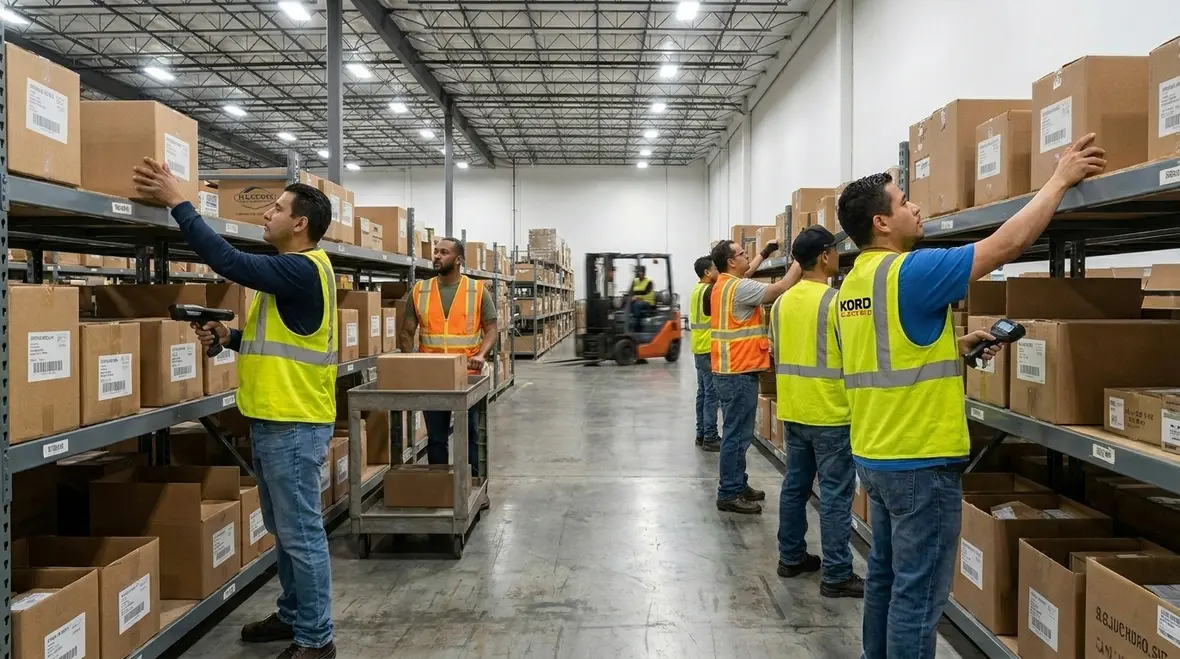
Most older industrial systems struggle for predictable reasons. First, fixtures often lose output over time. Second, glare and uneven light create patches of comfort and patches of confusion. Third, lights may stay on too long, even when activity drops. Finally, controls may not match how the facility operates across shifts.
We also see beam angles that do not fit the geometry. If the optics throw light onto the wrong surfaces, the facility wastes energy while workers still ask for more brightness. That is like running a forklift at the wrong speed: energy goes somewhere, but it does not go where you need it.
Our technicians explain these issues plainly during onsite reviews, because we do not want your team to rely on vague promises. We show what causes the loss and how layout and control choices fix it.

Industrial lighting layout optimization: the practical steps we use
To maximize warehouse efficiency, we start with mapping. We identify where tasks happen, where people walk, where scanners work, and where loading occurs. Then we plan the lighting layout so it supports those exact points. This is where the guidance from our industrial lighting layout optimization for efficiency article fits in, especially the idea that we must align fixtures, spacing, and mounting height with real warehouse conditions.
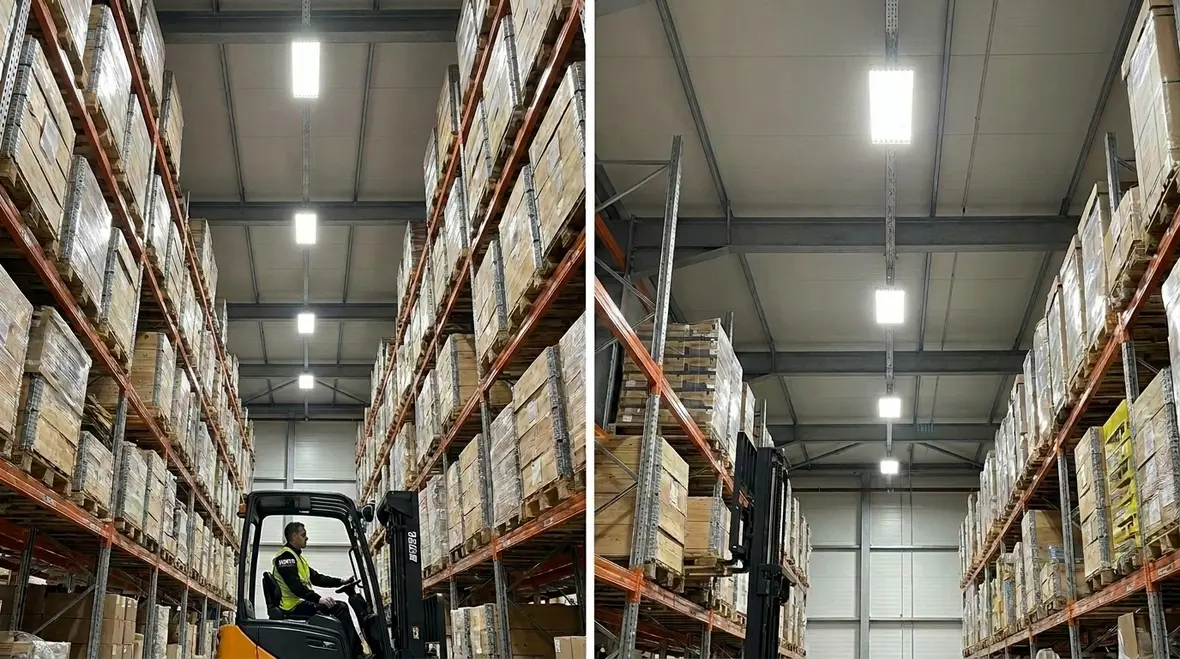
Next, we select fixtures with the right distribution. High output without proper spread can still leave aisles dim. Therefore, we balance beam angle, mounting height, and fixture spacing to reduce dark zones. Then we review surface reflectance, because light bounces. If walls and ceilings look like they were painted with “permanent dust,” we adjust the plan or include upgrades that improve overall performance.
After that, we refine the layout for maintenance access. We choose solutions that reduce the chance of long outages during replacement, and we plan staging so operations keep moving. This matters for commercial and industrial facilities where downtime has a direct cost.
In short, our method turns lighting design from a guessing game into a measurable system.
Controls and scheduling that match how the warehouse actually runs
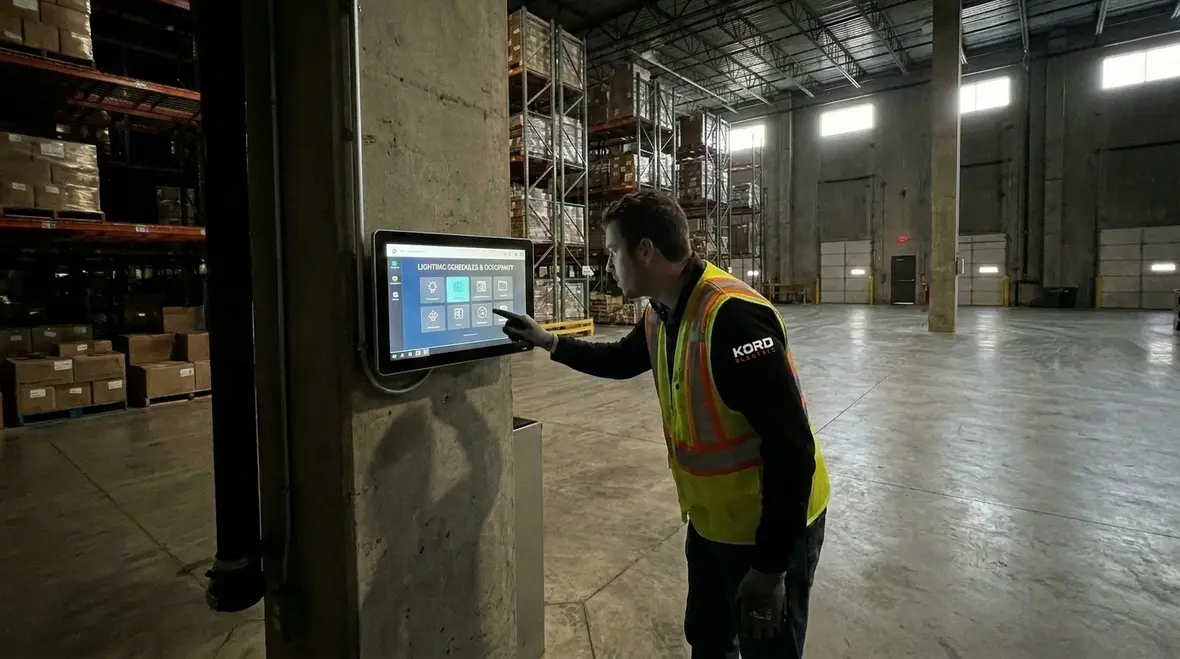
Lighting upgrades deliver more value when controls match real operations. Sensors, timers, and zoning strategies prevent wasted energy. For example, if a loading dock stays active for only a portion of the shift, the system should not light the entire building at full output all day like a retail store at midnight. Meanwhile, motion sensors should cover areas where activity changes frequently, such as packing zones, dock approaches, and staging lanes.
We help property teams set control logic that fits the workflow. If a warehouse uses different schedules by shift, we implement time based rules, then we tune brightness response based on occupancy patterns. This reduces energy without sacrificing safety or scan performance.
Our expert service staff also trains facility managers on what the controls do. They explain how to interpret alerts, how to validate zones, and how to adjust settings after layout changes. When your team understands the system, the system performs longer. That is a simple truth with a big impact.
How we improve uniformity, glare control, and task visibility
Efficiency means people can work well, not just that a meter shows savings. Therefore, we aim for uniform light distribution so workers do not keep adjusting their eyes. We also manage glare, because harsh light can cause fatigue and reduce comfort. In warehouses, glare can show up when high intensity sources point toward aisles or reflective surfaces.
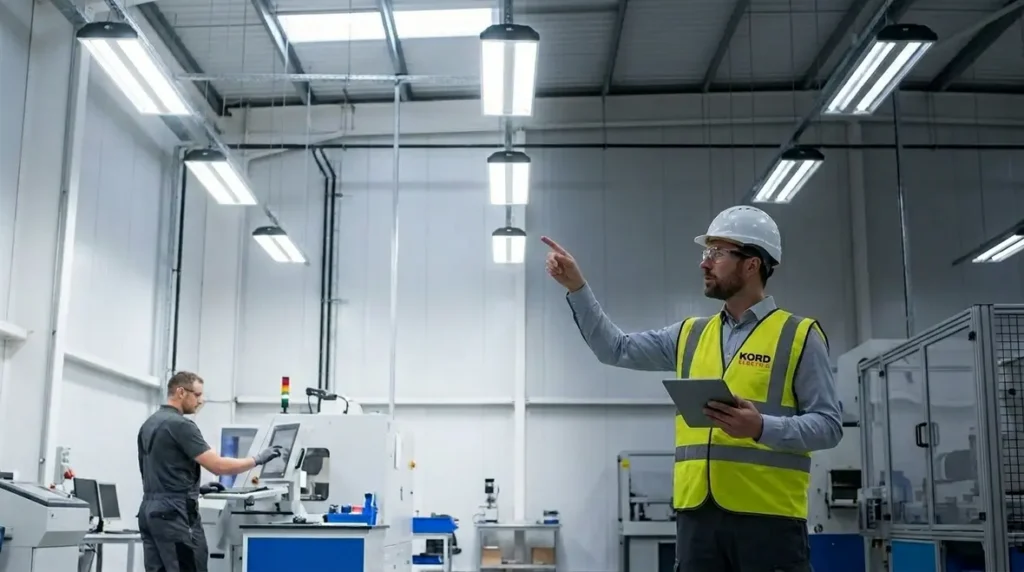
To fix this, we select optics and mounting angles that soften hotspots and spread illumination where it supports tasks. Additionally, we consider the vertical plane. Many facilities measure light at the floor, yet tasks often involve scanning at different heights and reading labels on racking. When we design for both, the warehouse lighting system supports work, not just visibility.
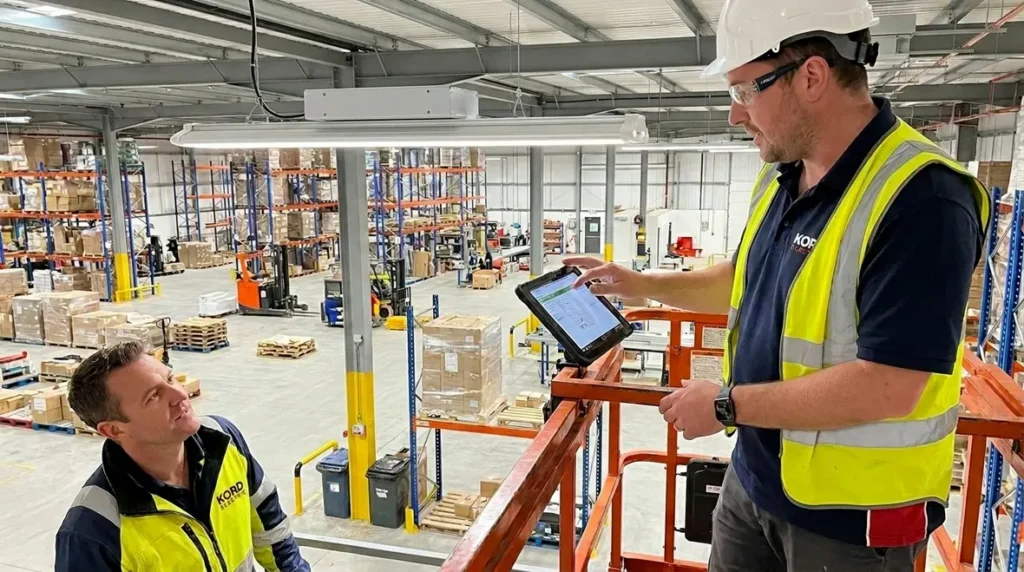
Our technicians explain these adjustments during commissioning. They walk through results and show how the lighting meets practical needs across zones. We want your team to feel the difference, not just believe it on paper.
Maintenance planning that protects the investment
Lighting upgrades should last, and they should stay consistent. So we plan for ongoing performance. That includes choosing durable fixtures for industrial environments, supporting proper installation, and setting expectations for cleaning schedules. Dust accumulation reduces output, and it also changes how light spreads. If the lighting plan does not account for regular maintenance, efficiency fades over time.
We also review spare parts strategy and access paths. In commercial and industrial facilities, maintenance access affects how fast fixes happen. A design that makes lamp or driver replacement hard can turn small issues into long downtimes. We design the upgrade so maintenance does not feel like a scavenger hunt.
And if anyone tells you that maintenance “is optional,” we gently remind them that electricity works best when people treat it like a system, not a wish.
Featured results: what clients typically notice after an upgrade
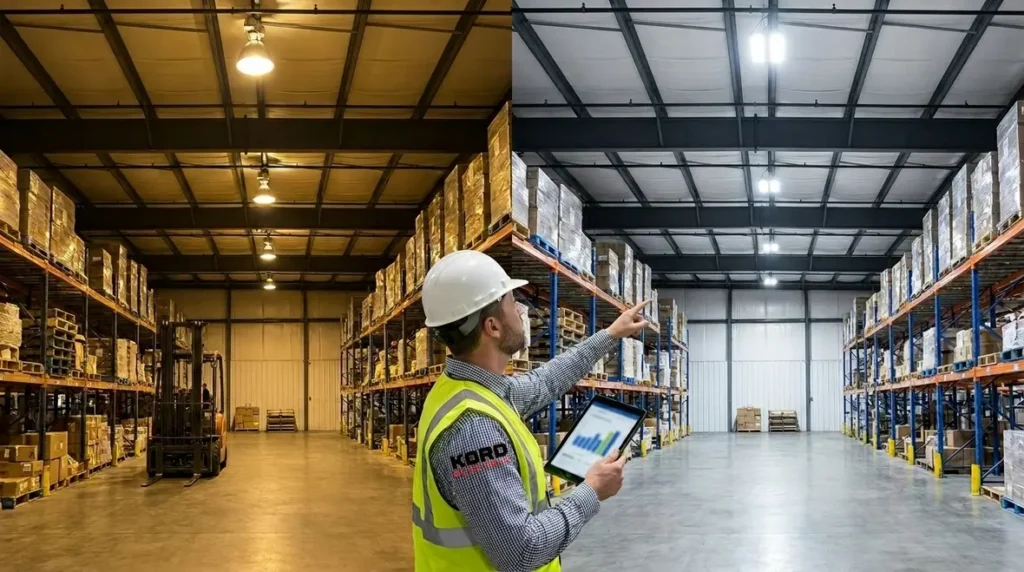
When warehouse lighting efficiency gains take hold, teams notice changes in three areas: speed, confidence, and operating costs. Workers tend to move with fewer hesitations because they see edges, labels, and hazards more clearly. Supervisors notice fewer complaints about dim aisles or inconsistent brightness. Meanwhile, facility leaders see energy use settle into a steadier pattern, especially when controls reduce runtime in low activity areas.
Importantly, we focus on safety and productivity outcomes, not just power math. Kord Electric treats the upgrade as a facility improvement project. We plan around the building, the schedule, and the workflow, which helps our work stay smooth from the first site visit to final commissioning.
Yes, the warehouse still has forklifts, pallets, and humans doing human things. But the lighting stops acting like it is in a different universe.
Frequently asked questions about warehouse lighting efficiency gains
Ready to upgrade your facility lighting?
If your warehouse lighting feels inconsistent, dim in key zones, or expensive to maintain, Kord Electric can help. We work with commercial and industrial facilities and major property buildings to design upgrades that improve visibility, reduce wasted runtime, and support safer day to day operations. Next, we will schedule a site review, map the lighting needs, and propose an upgrade plan aligned with your workflow. Contact us today and let our technicians explain the process from start to finish.
For facilities in Southern California, our dedicated Los Angeles County electrical services team can integrate warehouse lighting projects with broader electrical work, from code compliance to emergency power planning.
If you are already planning a broader efficiency upgrade, you can also pair a warehouse lighting project with structured preventive work and control enhancements so energy savings, safety improvements, and code compliance all move forward together.
That is how we turn warehouse lighting efficiency gains into long term performance, not just a short term retrofit.