Commercial Electrical Panel Sizing for Growth
Commercial Electrical Panel Sizing When Your Business Plans To Grow
At Kord Electric, we plan for growth the moment we talk about commercial electrical panel sizing. For expanding businesses and major property buildings, the electrical panel is not a “set it and forget it” item. It is the heart of distribution, and when it runs out of capacity, the problems tend to arrive like a bad customer review that never gets deleted. Others may wait for flickering lights or nuisance breaker trips, but our technicians and expert service staff help businesses see the full picture early.
In the real world, growth means more HVAC load, more refrigeration, more production equipment, more IT, and more places where power gets used. Therefore, we size panels based on present needs and future changes, not just a guess from last year. And yes, we sometimes joke that panels are like backpacks: if you overpack now, you will pay for it later, and usually at the worst time.
Why Electrical Loads Change as Facilities Expand
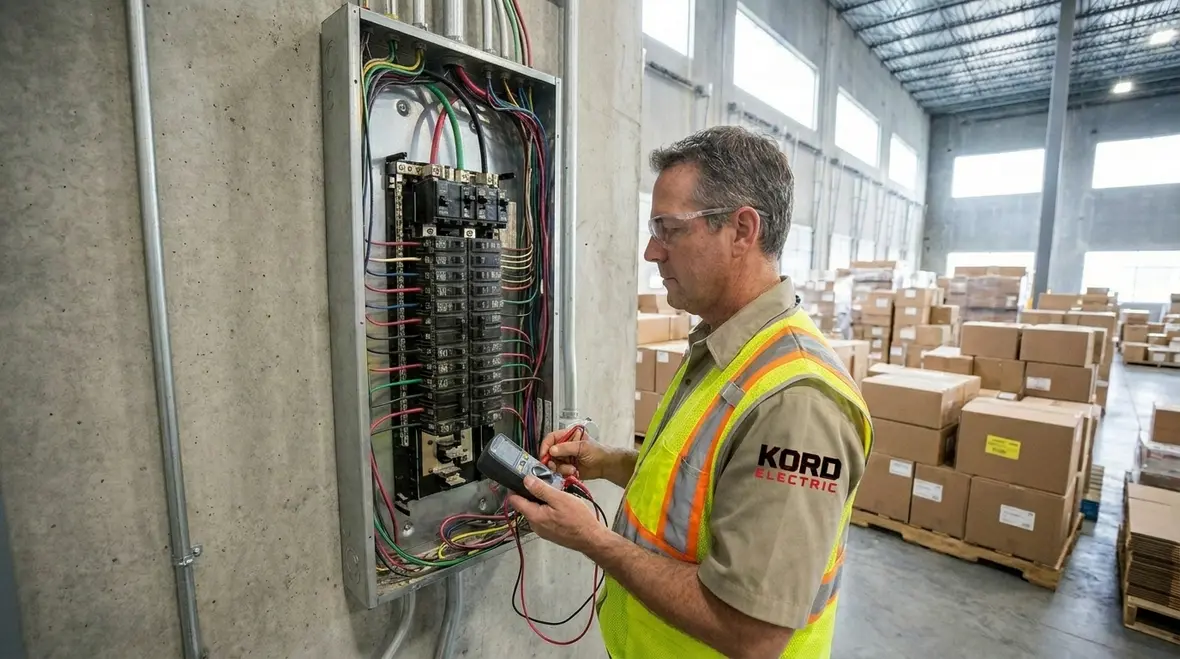
As a facility grows, the electrical load profile shifts in ways most people never track. Initially, new space may look like “mostly lights and outlets.” However, commercial and industrial systems add steady and start up loads that behave differently. For example, a building may add:
- New air handlers or rooftop units with higher starting current
- Additional refrigeration for food service or cold storage
- Motor driven equipment such as pumps, compressors, and conveyors
- More lighting with controls, drivers, and emergency systems
- Expanded power for servers, networks, and secure access systems
Then the worst part arrives: start up surges. Even if average demand stays within limits, motors and compressors can spike current and stress the bus bars, breakers, and connections. As a result, a panel that “fits today” may fail to handle tomorrow’s demand peaks. That is why our teams treat growth planning like a timeline, not a moment.
These changing loads do not happen in isolation. In many facilities, lighting is upgraded, EV chargers get added in the parking structure, and specialized equipment shows up for new tenants or production lines. Each of these shifts adds demand that must be understood at the panel level, the feeder level, and the overall service level if you want your system to stay reliable instead of running on luck.
This is also where problems like voltage fluctuations, nuisance trips, or mysterious equipment resets begin to show up. When circuits and panels are pushed too close to their limits, sensitive loads feel it first. By the time you are chasing unexplained shutdowns, the underlying capacity issues have usually been building for a while.
How We Size Panels for Commercial and Industrial Buildings
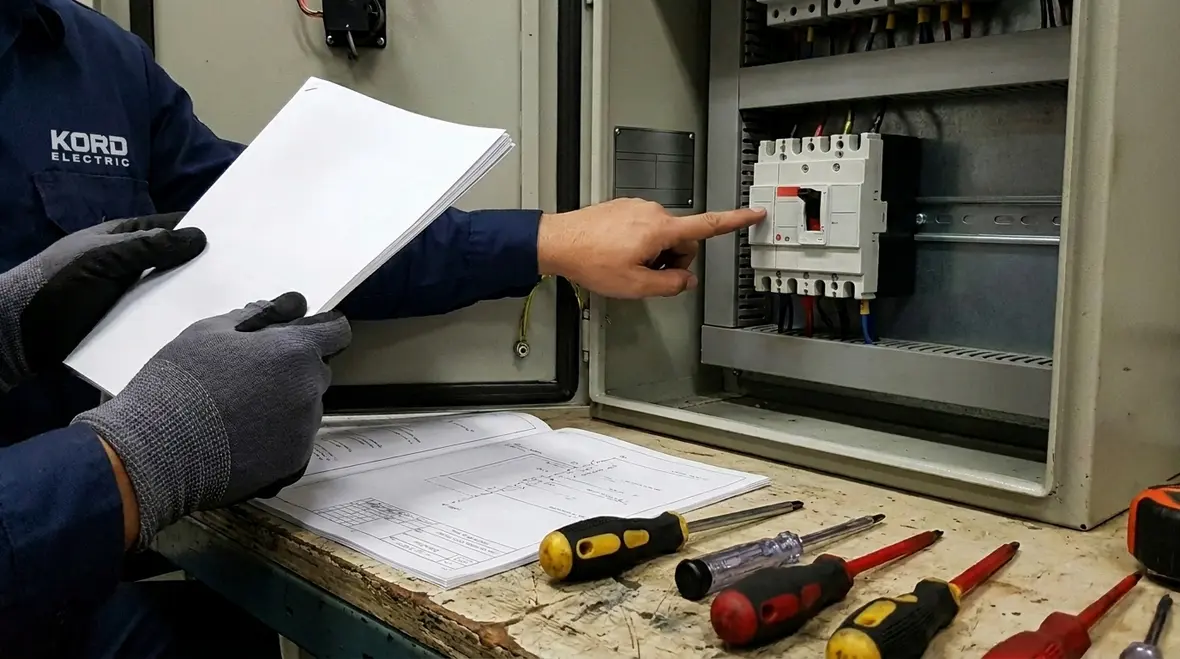
We approach panel sizing like a careful map. First, our technicians gather electrical information from the facility: equipment schedules, nameplate data, existing breaker loads, feeder sizes, and load classifications. Next, we analyze connected and expected loads using practical demand methods. That means we consider both steady load and the reality of peak usage.
After that, we evaluate service capacity and distribution pathways. A common mistake is to size only the panel box while ignoring the upstream elements. Therefore, we check how power arrives to the building, including switchboards, transformers, feeders, and grounding. If any part of the chain limits capacity, the panel cannot magically fix it.
Finally, we plan spare capacity and future expansion. We do not just aim for “minimum required.” We aim for dependable operation with room for safe additions. Because the next tenant improvement or process update always shows up, even when the schedule said it would not.
In many cases, that planning includes coordination with other large projects around the property. For example, if you are considering new lighting installation services, EV charger infrastructure, or upgrades to production equipment, each of those decisions ties directly back into commercial electrical panel sizing. Working with a team that sees the whole picture helps you avoid designing a panel that feels maxed out on day one.
For facilities that depend on uninterrupted operations, our technicians may also recommend staged upgrades or parallel panels so new sections of the building can grow without putting your entire system at risk. That balance between immediate needs and long term flexibility is where a lot of hidden value lives in a well-designed panel layout.
Load Calculations That Respect Real Startup Demand
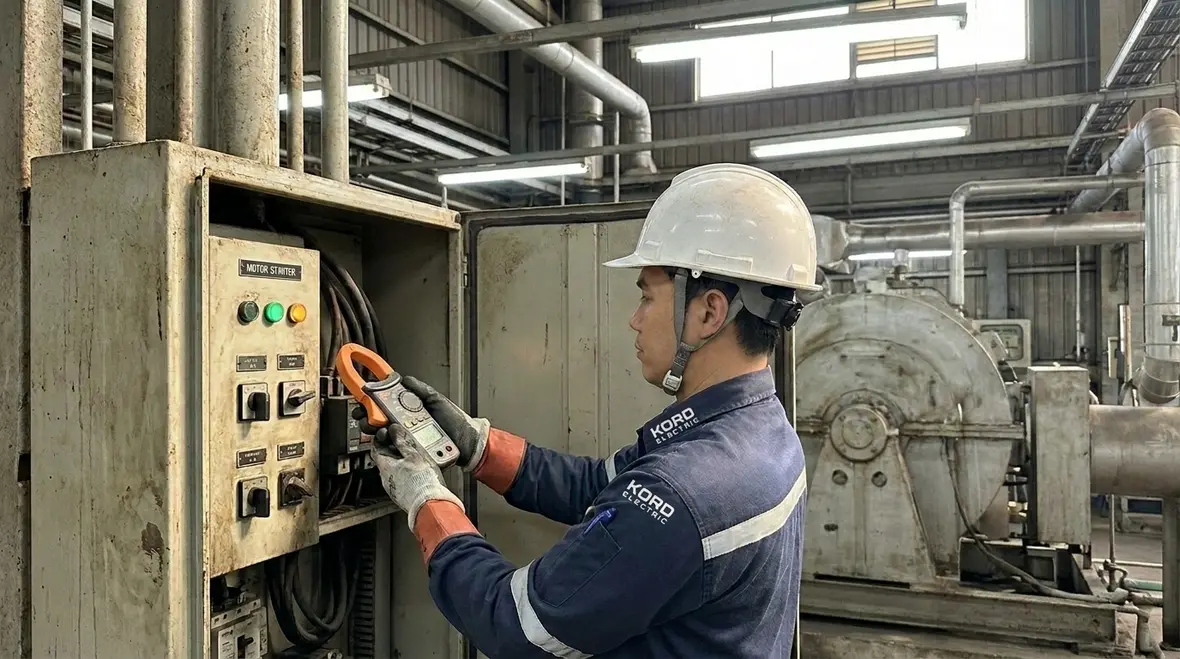
When people hear “load calculation,” they picture a spreadsheet and a quiet afternoon. In reality, commercial electrical panel sizing must account for how equipment draws power when it turns on. Motors and compressors can pull multiple times their running current. In addition, lighting drivers, variable frequency drives, and modern controls can add harmonic effects that do not show up in simple averages.
Our expert service staff explains these points in plain language so facility managers do not feel like they are reading a mystery novel with the ending missing. We show how the electrical system behaves during normal operation and during events like:
- Morning HVAC start sequences
- Process equipment startup after downtime
- One equipment line running while another restarts
- Emergency and life safety loads switching to backup power
Then we help customers avoid the classic “everything works until the day it doesn’t” scenario. If the panel lacks margin, nuisance trips and hot spots can develop. And hot spots are not the kind you want to discover during a busy shift.
For some facilities, that means revisiting panels that were originally sized only for lighting and general receptacles and now support EV chargers, expanded IT rooms, or additional machinery. Startup loads and overlapping schedules can quietly erode the safety margin that used to exist on paper.
By treating startup demand as a real design factor rather than a footnote, we help ensure your panels do not just pass an initial review—they stand up to real-world operating conditions day after day, season after season.
Keeping Capacity Clear With Smart Distribution Design

Even a correctly sized panel can become a problem if distribution design blocks access or creates messy, unsafe conditions. Therefore, we plan for safe layouts that support maintenance and future work. That includes:
- Appropriate breaker sizing and selective coordination
- Clear conductor routing and proper terminations
- Balanced phases to reduce overheating and uneven load
- Room for labeling, future expansion, and code compliant upgrades
- Correct grounding and bonding to protect people and equipment
As systems grow, accessibility matters. If the design makes it hard to isolate circuits, troubleshooting gets slower and repairs cost more. In other words, the electrical system becomes a maze. Our technicians design panels and distribution so staff can find problems faster and fix them without guessing.
Smart distribution design also connects directly to broader building goals. For example, if your facility is pursuing upgrades like recessed lighting installation, new data rooms, or specialized process loads, organized panel layouts and clearly labeled circuits make those projects smoother and less disruptive.
To support this kind of long term thinking, Kord Electric also shares maintenance planning guidance through our commercial and industrial electrical maintenance plans. We follow the same mindset: prevent issues before they interrupt operations.
Maintenance Planning That Protects Growth Investments
Growth costs money. Electrical downtime costs even more. That is why we use maintenance plans to protect the investment behind panel upgrades and new loads. If you read our approach to commercial and industrial electrical maintenance plans, you will see a common theme: proactive service keeps equipment reliable. Instead of waiting for failures, we inspect key components on a schedule that makes sense for the facility.
When our service team visits, we look for warning signs that capacity problems can create. We also look for wear that speeds up under heavy use. For example, our technicians may focus on breaker condition, bus bar integrity, connection heat risks, and signs of corrosion. Then we document findings and recommend actions.
Here is the calm part: our expert service staff does not just say “we checked it.” They explain what they found, why it matters, and what it means for next season’s growth projects. That way, your next expansion does not become an emergency electrician’s thriller.
When maintenance, commercial electrical panel sizing, and smart distribution design all align, your facility gains something invaluable: predictability. You know which panels have room for growth, which ones are nearing their limit, and what sequence of upgrades will keep your building ahead of demand instead of racing to catch up.
Common Panel Sizing Mistakes We Help Customers Avoid
Most problems do not start as “we did it wrong.” They start as “it seemed good enough.” And that is understandable, because budgets and deadlines pressure everyone. Still, these are the mistakes we most often help fix in commercial and industrial facilities:
- Using old load data after equipment upgrades without updating calculations
- Ignoring startup surges from HVAC, compressors, pumps, and process motors
- Underestimating future tenant improvements or planned equipment additions
- Failing to verify upstream capacity, not just panel capacity
- Skipping maintenance that reveals heat, wear, and connection issues early
Then there is the “we will deal with it later” attitude. Later becomes expensive when breakers trip during peak hours or when a facility must shut down to replace a component. Our technicians help customers avoid that outcome by planning early and explaining decisions clearly.
We also see situations where previous work seemed like a shortcut at the time—adding a small subpanel without evaluating the main service, repurposing existing circuits for heavier equipment, or stacking new loads onto panels that were already near their practical limit. These decisions are understandable, but they quietly erode safety margin and reliability.
By stepping back and looking at the full electrical story of the building, we help facility teams unwind those past choices and rebuild a more solid foundation for future growth. That often includes a mix of panel upgrades, targeted maintenance, and better documentation, so everyone knows what the system is truly capable of supporting.
FAQ for Commercial Electrical Panel Sizing
Ready to Plan Your Next Electrical Upgrade Without Guesswork
When your business grows, your power needs grow with it. Kord Electric helps commercial and industrial facilities plan safe, reliable commercial electrical panel sizing through clear load review, smart distribution design, and ongoing maintenance support. If you are adding equipment, expanding space, or managing multiple tenants in a major property building, we can help you avoid downtime and surprise costs.
For facilities planning major upgrades—whether that includes new lighting installation services, specialized process equipment, or EV charger installation for fleets and staff—treating the panel and distribution system as the backbone of the project pays off. Instead of guessing at available capacity, you gain a documented roadmap that supports phased growth with confidence.
If you are already seeing warning signs such as intermittent power issues, unexplained equipment resets, or persistent breaker trips, combining a careful review of your commercial electrical panel sizing with structured electrical preventive maintenance can help stabilize your system before a small inconvenience turns into costly downtime.
Kord Electric services commercial and industrial facilities across Southern California with dedicated offerings that include electrical preventive maintenance, emergency electrical services, and project support for large-scale upgrades. When you are ready to plan the next chapter of your facility’s growth, their team can help you align panel capacity, distribution design, and maintenance planning into one clear strategy instead of a series of isolated fixes.
Contact Kord Electric today to schedule an assessment with their expert technicians and service staff. They will map your capacity now, connect it to your growth plans, and help you run confidently tomorrow.