Commercial Electrical Subpanel Load Management Guide
Kord Electric helps commercial teams strengthen Commercial Electrical Subpanel Load Management by using clear design rules, disciplined commissioning, and safety checks that actually hold up in the field. In other words, we do not “set it and forget it” like a phone contract. We set the system up right, then we verify it. And yes, our technicians explain the plan in plain language, because a building deserves clarity as much as it deserves power.
Below, we walk through how our expert service staff handle subpanel planning, safe sizing, smart distribution choices, and ongoing monitoring for commercial and industrial facilities and major property buildings. Along the way, you will hear a few jokes, because even serious electrical work can benefit from a calm laugh. If you have ever watched a breaker trip and thought, “Why now, universe, why now,” you are in the right place.
Subpanel planning that prevents overloads before they happen
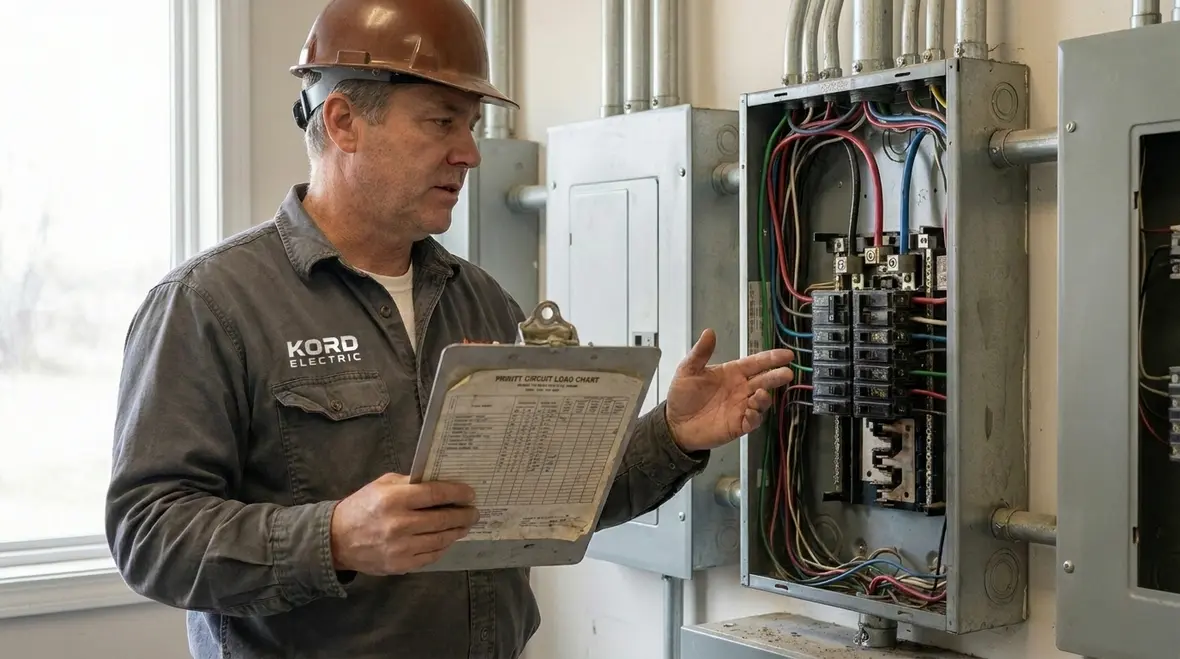
When others treat a subpanel like an empty shelf, the electrical system eventually teaches a lesson the hard way. At Kord Electric, we start with load discovery, not guesswork. First, we ask what equipment runs now, what starts later, and what spikes during shift changes, maintenance cycles, or seasonal schedules. Then we map those loads to circuits so the distribution matches how the building actually works.
Next, we factor in known demand patterns, such as motor starting surges, HVAC staging, elevator duty cycles, and data equipment utilization. In many commercial designs, the “nameplate rating” looks calm on paper, but real duty cycles create different stress levels. Therefore, we compare the expected current and voltage drop against the subpanel’s thermal limits and the upstream device coordination.
Finally, we document assumptions so your team can maintain the system without reinventing the wheel every time someone adds a tenant, a production line, or a new server rack. That documentation also helps when inspectors show up and ask for a rational story. Our technicians walk you through the story, step by step, like a calm narrator in a documentary.
How we size subpanels and circuits for real operating conditions
Commercial electrical distribution demands more than multiplying amps. We size with the practical realities that affect heat, reliability, and safety. For instance, we consider conductor temperature ratings and installation method because these details change how much current a wire can carry without overheating.
In addition, we review the relationship between loads and protective devices. If the breaker size is mismatched to conductor capacity or if coordination is weak, the system can fail in ways that are inconvenient and dangerous. Moreover, we verify whether the panelboard has enough space for future circuits, because “future expansion” is rarely optional in major property buildings. If you plan a retrofit later, you want room now, not a demolition project in a year.
Our expert service staff also check for harmonic content and sensitive loads, especially in facilities with variable frequency drives, rectifiers, and modern IT loads. Harmonics can increase heating and affect conductor behavior. So we plan accordingly, rather than hoping the system stays healthy forever. That hope is not a code requirement, and it should not be your strategy.
Safety checks that keep service teams and tenants protected
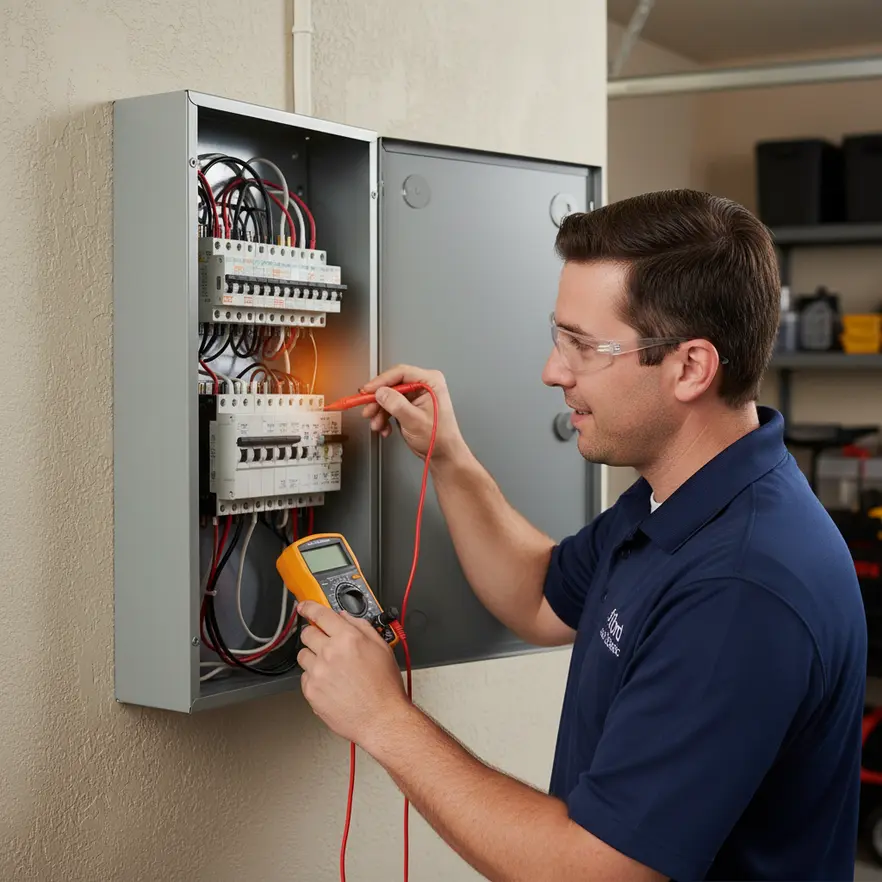
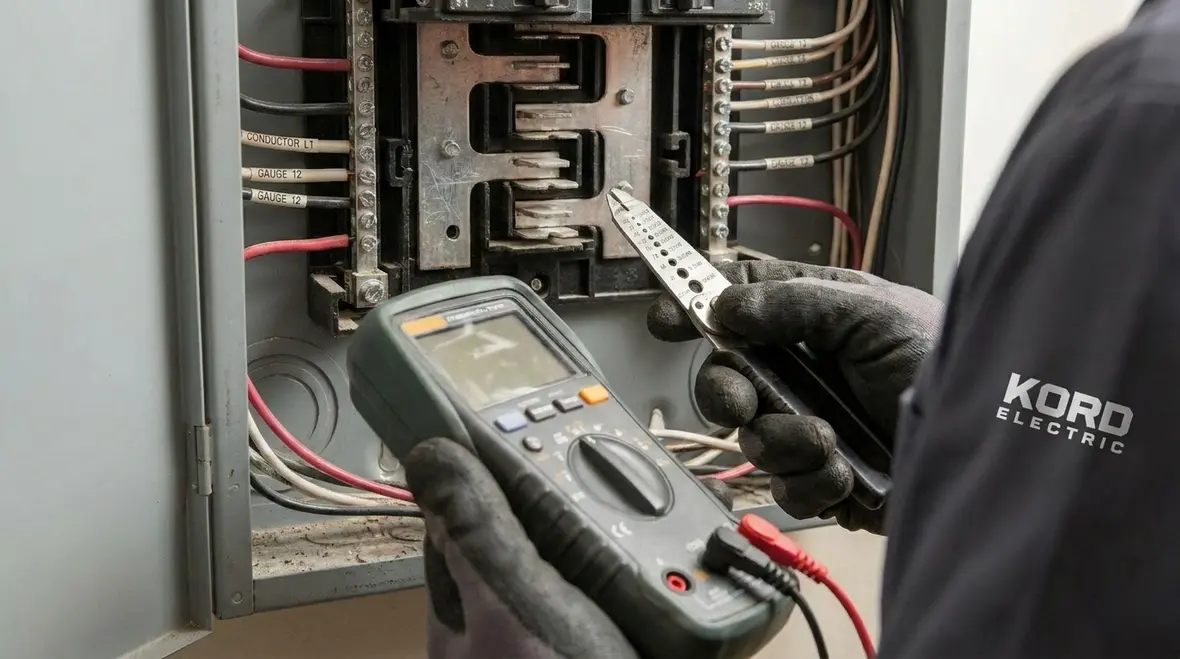
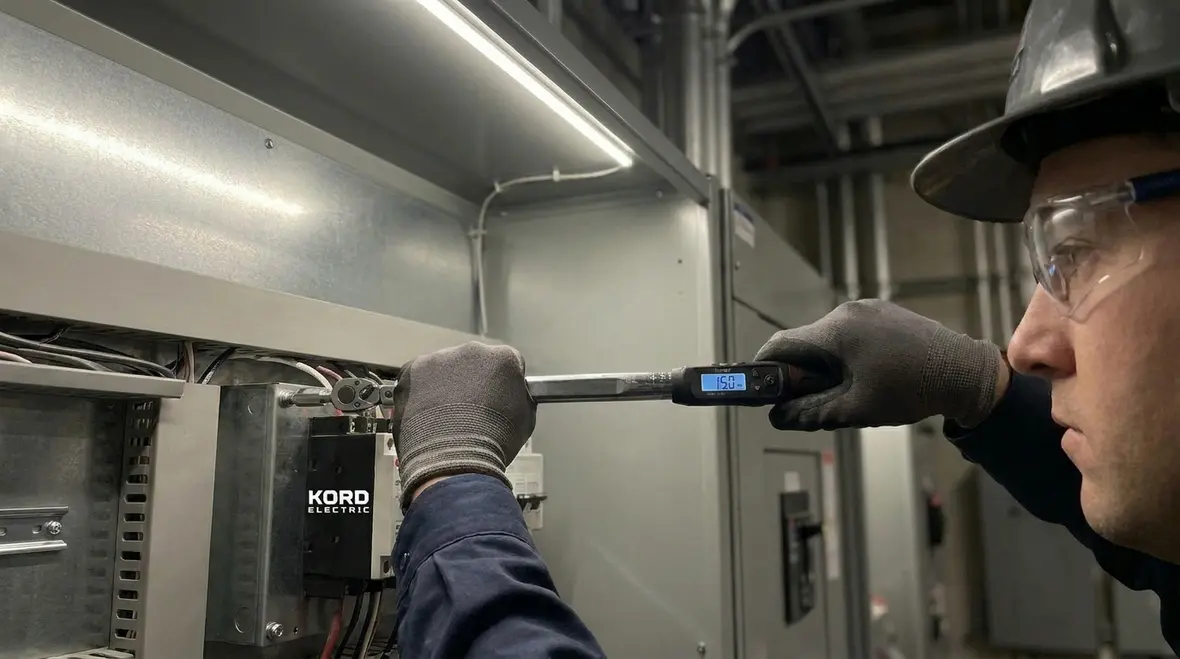
Safety is not a single test. It is a sequence. At Kord Electric, our technicians treat commissioning like a verification journey, not a box-checking exercise. We inspect torque on terminations, verify labeling, confirm wiring polarity, and test the response of protective devices under normal operation conditions.
Then we confirm that grounding and bonding support safe fault current paths. If grounding is wrong, a fault may not clear the way it should, and that is when danger stops being theoretical. In commercial and industrial environments, the stakes rise because more people, equipment, and critical processes depend on stable power.
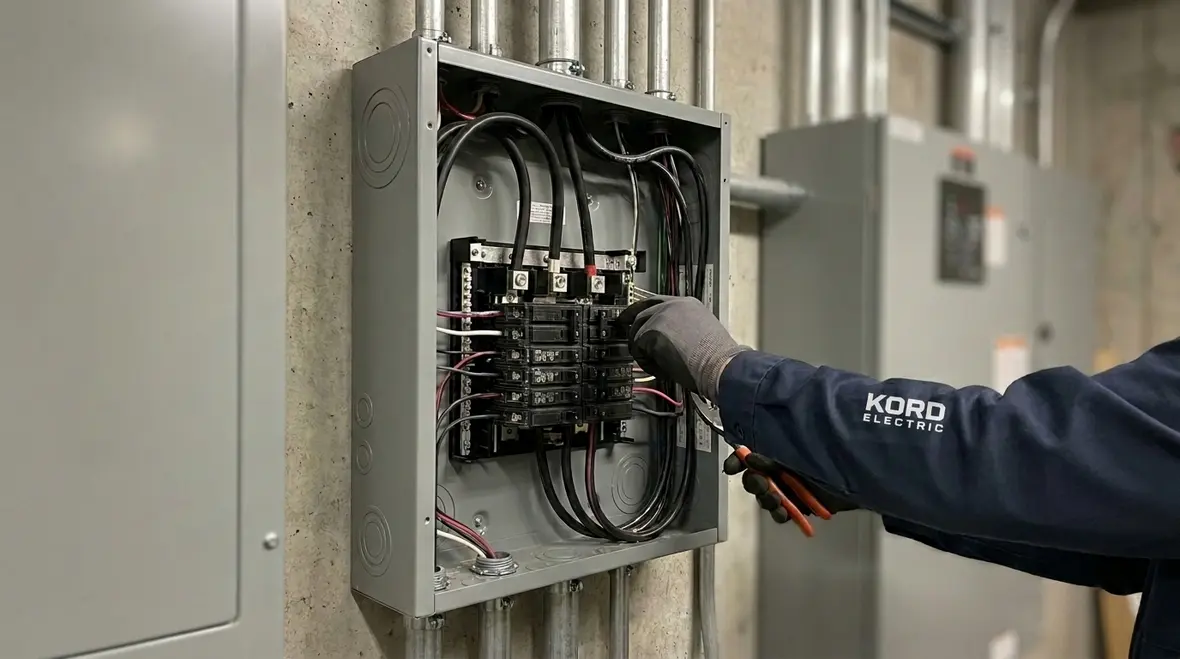
We also focus on panel integrity. Door interlocks, cover integrity, and correct use of knockouts prevent accidental exposure and help keep the enclosure rated for its environment. And when teams ask why we care about these details, we tell them the truth: electricity does not negotiate, and it does not care about anyone’s schedule. Better to prevent the issue than explain it later, especially when you are also coordinating with operations staff who would rather not see a maintenance delay.
Load balancing strategies that reduce nuisance trips and hot spots
Load balancing matters because it keeps phase currents closer to each other and reduces uneven heating. When others install circuits without a phase plan, one phase can carry more current while another stays underused. Over time, this creates hot spots, increases breaker wear, and makes future troubleshooting harder.
We manage this by planning circuit distribution during design and then validating it during installation. Our technicians assign loads to phases based on load type, expected duration, and start characteristics. For three phase systems, they also consider how the building operates during peak events like shift change, meal periods in hospitality spaces, or peak production windows in industrial facilities.
Furthermore, we watch for long term drift. As tenant spaces change, a balanced system can become unbalanced. That is why Kord Electric promotes periodic review of subpanel current distribution, especially in major property buildings where occupancy patterns evolve. Like a band lineup, it can be great at first, then one member leaves and the vibe shifts.
To support this approach, the reliability thinking we use in distribution design follows the same mindset described in our companion guide on data center electrical distribution design for reliability: we design for stability by planning capacity, distribution paths, and protective coordination so the system stays dependable under real conditions. In data centers and similar high load environments, reliability depends on how well the design anticipates change. The same principle applies here, even when the “change” looks like new equipment or a remodel.
Interfacing with upstream distribution for coordinated reliability
A subpanel does not exist alone. It sits in a chain that includes feeders, main service equipment, switchgear or switchboards, and protective devices upstream. Therefore, Commercial Electrical Subpanel Load Management also means coordination across that chain. If devices are not coordinated, a fault might trip the wrong section, causing wider outages than needed.
Kord Electric coordinates protective settings and device selection to match the expected fault current levels and trip characteristics. We focus on selective clearing, so the system isolates the faulted area quickly while keeping other areas online. That is especially important for commercial and industrial facilities that run critical operations and cannot afford broad shutdowns.
We also check how voltage drop affects performance. Long conductor runs and high starting currents can cause dips that stress equipment. When those dips happen, you may see nuisance alarms, reduced motor performance, or premature wear. So we verify conductor sizing and route planning so the system maintains voltage within the expected range.
And because reliability means more than one test, we include commissioning steps that confirm the system operates as designed. Our technicians explain what they find, what it means, and what the next step should be. That keeps the facility team aligned, which reduces surprise downtime. Surprise downtime is fun for comedians, but it is expensive for property owners.
Monitoring and maintenance that keeps reliability steady
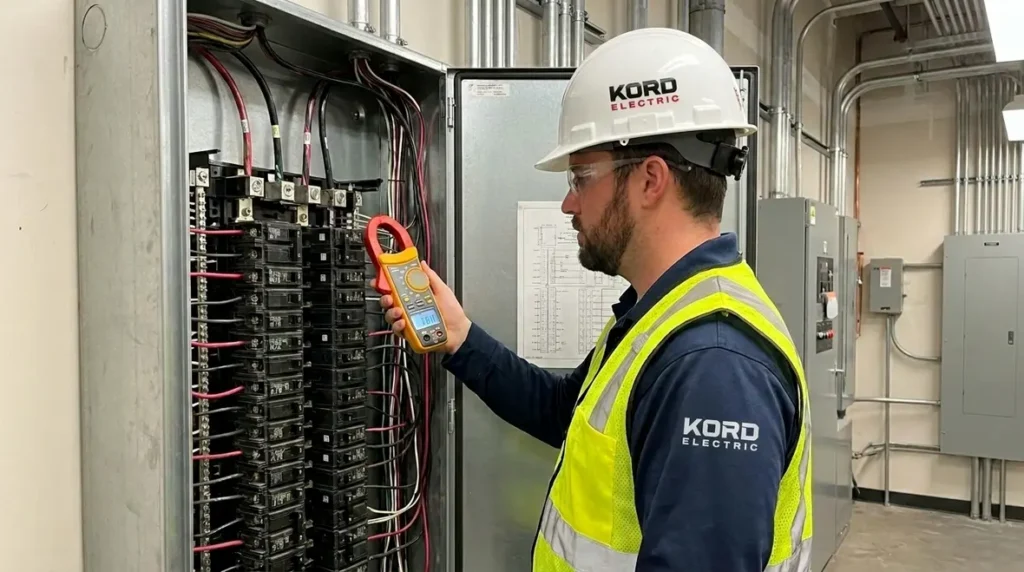
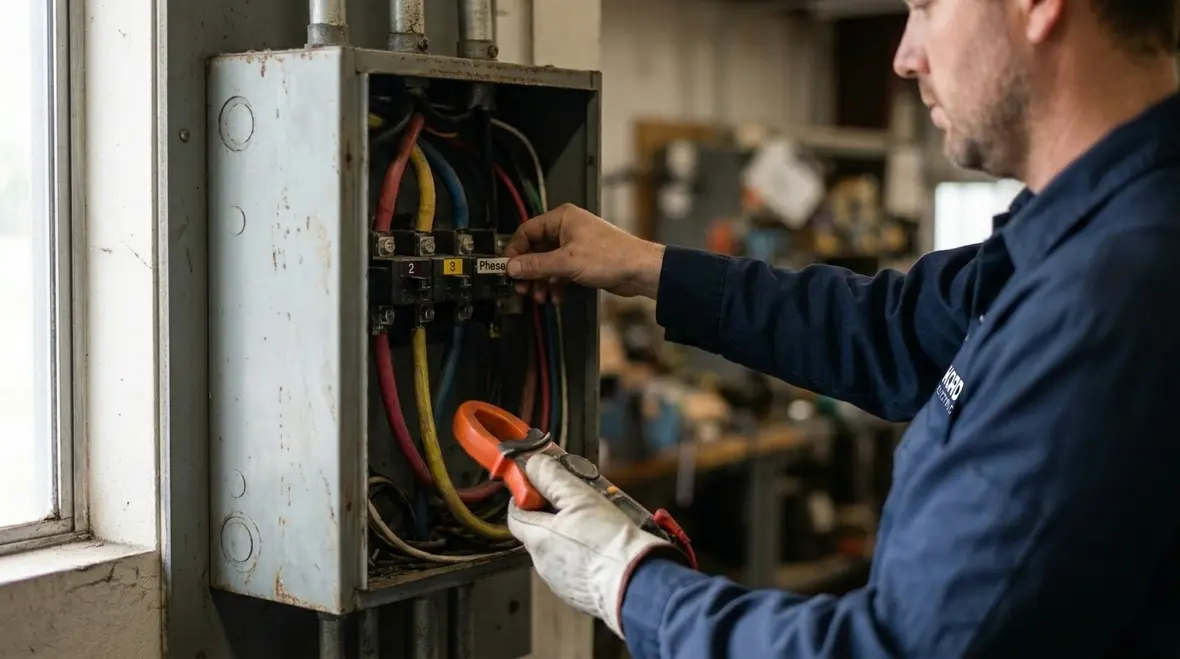
Even a well designed subpanel can drift in performance if loads change. Hence, Kord Electric recommends maintenance and review schedules that match how your building evolves. For many commercial and industrial facilities, this includes monitoring trends in current draw, checking breaker performance, and verifying that labels and circuit maps match real usage.
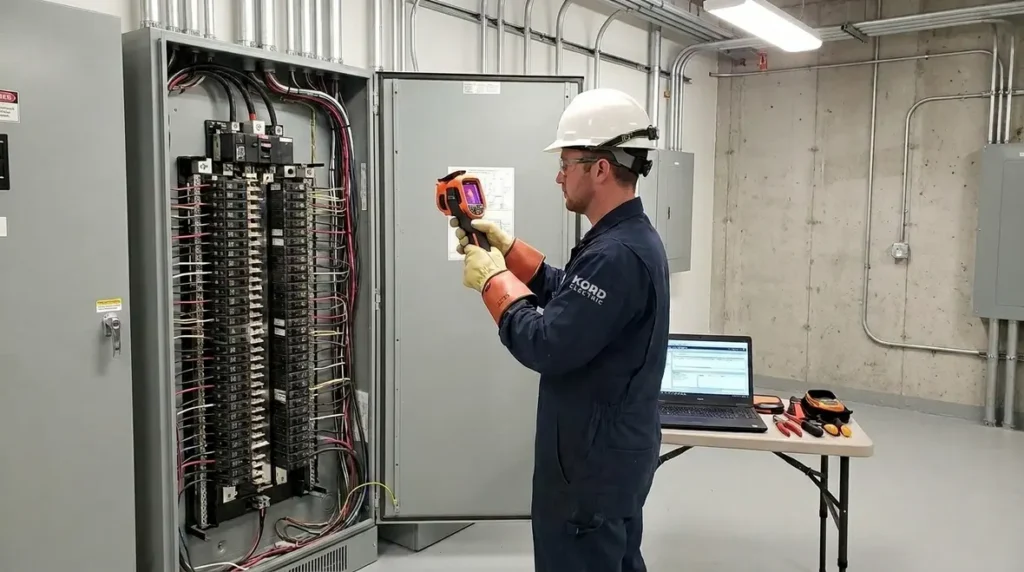
We also support maintenance practices that catch early warning signs. For example, we watch for recurring breaker trips, signs of overheating at terminations, and changes in thermal behavior. If a breaker trips repeatedly, the issue may not be “just a bad breaker.” It might be a circuit with gradual load creep, insulation aging, or an equipment mismatch.
In addition, we keep an eye on panel cleanliness and enclosure integrity. Dust, moisture, and physical damage can affect safety and heat dissipation. Our teams follow safe work practices when they inspect and service panels, because we respect that these systems serve people and processes, not just circuits.
When your team needs upgrades, our technicians help plan the next phase without tearing up the whole building. We verify available capacity, confirm safe paths for new feeders, and coordinate how added loads will affect existing phases and protective devices. This approach keeps expansion controlled instead of chaotic.
FAQ: Commercial electrical subpanel safety and load control
Next steps with Kord Electric for dependable subpanels
If your facility runs critical operations, you need more than a panel that “works.” You need dependable power distribution, safe circuit planning, and a real plan for how loads will change over time. Our technicians at Kord Electric help commercial and industrial teams build that reliability with solid design thinking, commissioning, and maintenance. Contact us for a site review and load assessment, and we will map out a safe, expandable path forward. Let us take the risk off your plate.
For facilities that want subpanel reliability to stay consistent year after year, pairing disciplined Commercial Electrical Subpanel Load Management with a structured electrical preventive maintenance program helps keep breakers, distribution paths, and protective devices operating the way they were designed, even as loads change and equipment ages.