Industrial Lighting Control System ROI Guide
Industrial Lighting Control System ROI: where the savings show up first
When a manufacturing facility looks at an Industrial Lighting Control System ROI, it usually wants one thing: proof that smarter lighting controls will pay back fast enough to matter. At Kord Electric, we help teams calculate that return in a way that feels grounded, not like a wish upon a power bill. First, we map the real drivers like operating hours, existing fixture condition, and how lighting is currently managed during shifts and maintenance. Then, we convert those inputs into measurable savings across energy, labor, and maintenance. Finally, we check risk, because in factories, the only surprise we like is a bonus, not a failed install.
And yes, someone always asks if the system will “work like the movies.” It will not make lights teleport. But it will make them behave smarter than most humans on a Monday.
Step 1: calculate the baseline before you guess
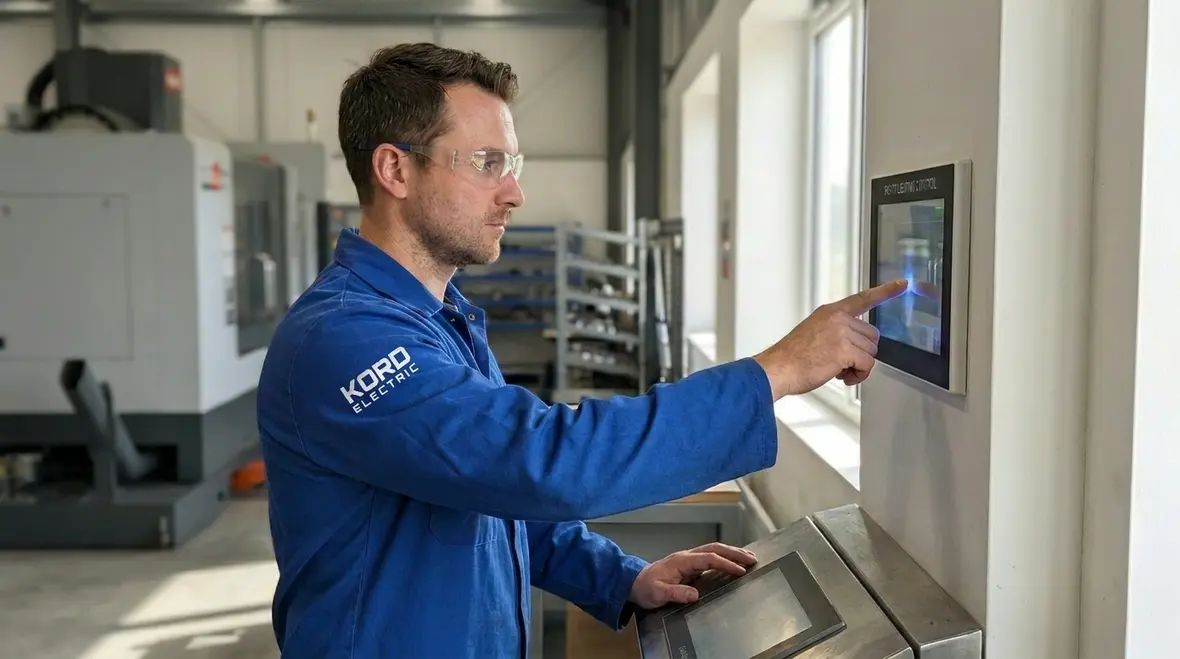
To estimate the Industrial Lighting Control System ROI accurately, our technicians start by building a baseline that reflects how the facility actually runs. This matters because two plants with the same square footage can use totally different electricity just because schedules, daylight, and occupancy habits vary.
So we gather the basics, and then we go deeper. We review fixture types, wattage, and whether lamps are aging. We also capture lighting schedules by zone, including cleaning, night shift, and overtime patterns. Next, we measure how much the space relies on daylight and how often lights are left on when areas sit empty.
We typically translate this into a baseline formula that teams can understand and audit:
- Annual kWh equals connected lighting load times annual operating hours, adjusted for current behavior
- Annual energy cost equals annual kWh times your utility rate, including demand charges if applicable
- Maintenance baseline includes relamp cycles and downtime risk tied to fixture age
Once that number is solid, the ROI math stops being a guess and becomes a decision.

Step 2: model energy savings that match real control behavior
After baseline measurement, the next task is modeling energy savings without pretending the plant will instantly change habits. Smart controls reduce usage by dimming, switching, and scheduling, and they do it per zone. However, savings depend on how the controls are configured and how the building responds to occupancy and daylight.
Our expert service staff explains the process in plain language, because when people understand how the system reacts, they trust the results. For example, motion sensing alone can work, but daylight harvesting usually produces better consistency in areas with windows or skylights. Also, scheduling helps because manufacturing facilities often run repetitive shift patterns.
We estimate energy reduction using three common levers:
- Dim to need using occupancy and time schedules so lights operate at lower levels
- Daylight harvesting that trims output when natural light reaches target thresholds
- Zone switching to avoid lighting empty areas during breaks, material staging pauses, and maintenance cycles
Then we validate assumptions by checking similar spaces and by reviewing your load profile. Transition words matter here because they keep the logic clear. First, we estimate. Next, we compare configuration options. Then, we stress test for “what if the shift pattern changes.” Finally, we confirm that the model still behaves in the real world.
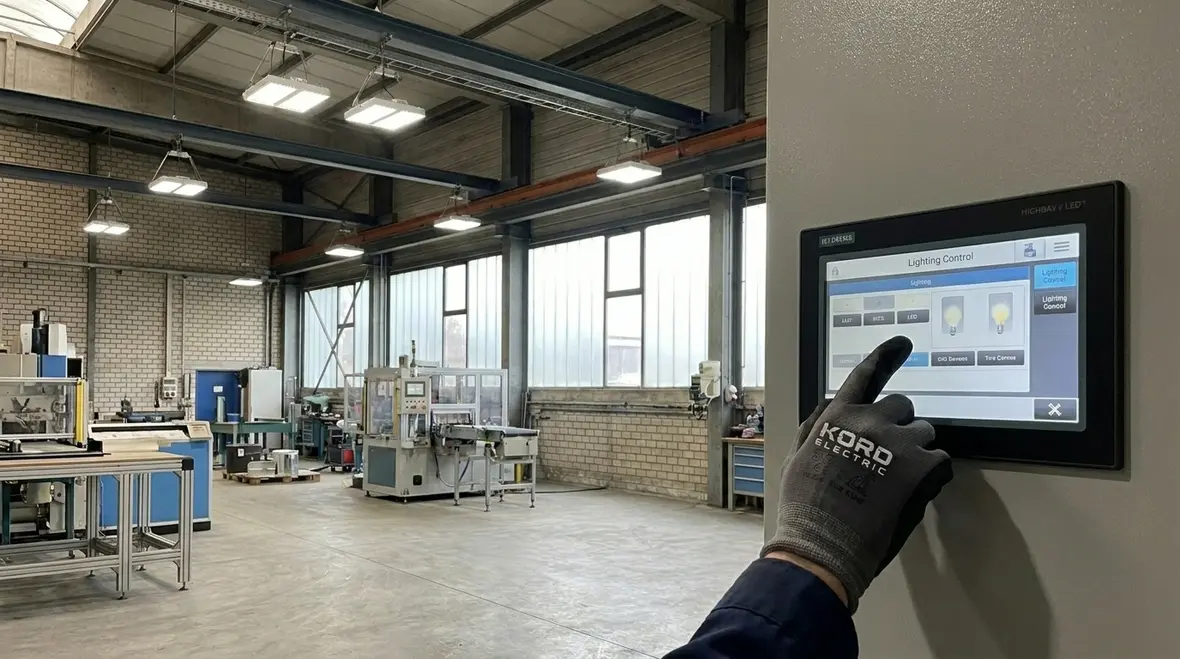
Step 3: include labor and maintenance value, not just electricity
Many ROI models stop at energy cost. We do not. In industrial environments, maintenance and labor costs can quietly become one of the biggest parts of the return.
Here is how we typically capture those benefits:
- Reduced relamping frequency when dimming extends fixture life, especially for areas that would otherwise run at full output all day
- Fewer service calls because controls can reveal fault conditions earlier through diagnostics and feedback
- Lower troubleshooting time as technicians can narrow down problem zones instead of checking every fixture
Also, there is operational downtime. Even short outages matter on production lines. Therefore, the ROI model includes a practical view of lost time and maintenance responsiveness. And yes, this is where the “smart” part earns its keep. A lighting system that helps people find issues faster is the kind of intelligence factories appreciate.
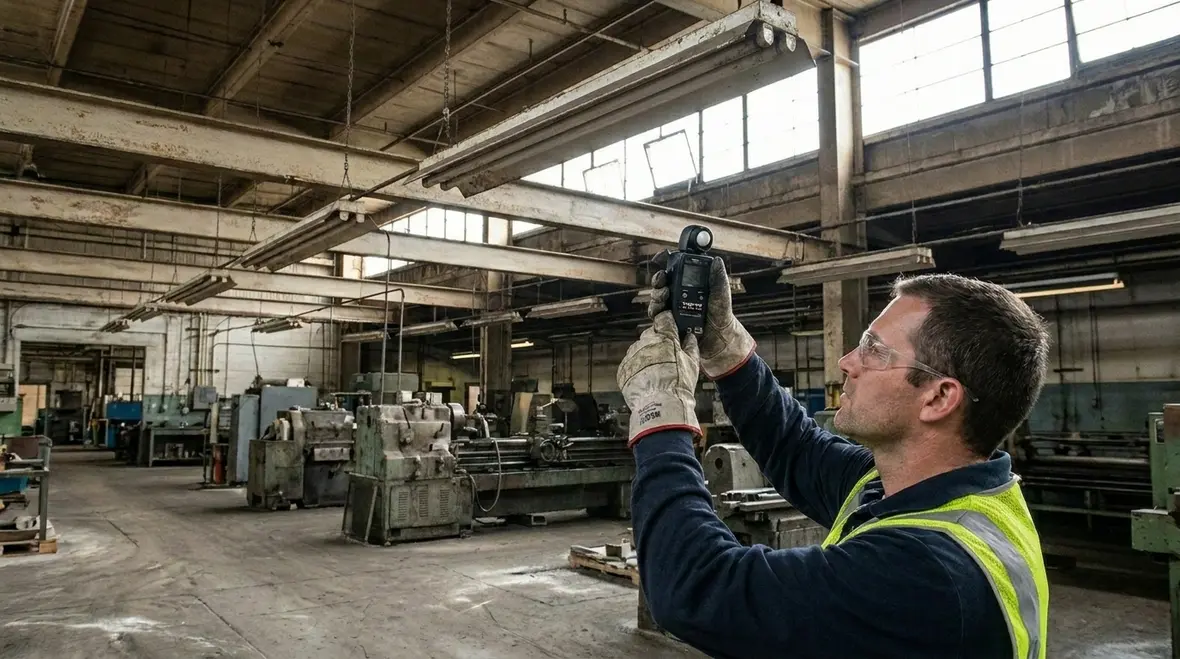
Step 4: use a real ROI and payback calculation
Once we have baseline costs and projected savings, the numbers need to be displayed in a format that decision makers can use in procurement meetings. After all, the person signing the check is rarely the person gathering the data.
We help teams compute:
- Annual savings equals energy savings plus maintenance and labor savings, minus any added operating costs
- Net savings equals annual savings minus recurring service, monitoring, or software costs
- Simple payback equals installed cost divided by net annual savings
- ROI percentage equals (total net savings over a chosen period divided by total installed cost) times 100
Next, we choose a conservative time horizon based on your facility needs. Some teams want a fast payback target for capital budgeting. Others plan longer for sustainability goals. Either way, we make the model transparent so others can audit it. Then, we show sensitivity scenarios, such as higher utility rates, changes in run hours, or adjustments to control setpoints.
This is also where we keep things honest. If someone assumes the plant will instantly adopt perfect lighting behavior, the ROI estimate will look great on paper and bad in real life. Therefore, our approach assumes gradual adoption, realistic schedules, and proper commissioning.
Commissioning and training: the part people rush, and then regret
Even the best system will not produce full value if it is not commissioned correctly. After installation, we guide the setup so control strategies match the facility. That includes tuning daylight targets, occupancy time delays, and dimming levels to support comfort, safety, and task needs.
However, tuning does not mean guessing. Our technicians use feedback loops and field testing. They verify that lights behave predictably in each zone during shift changes and common activity patterns like material pick, line clearing, and walkways usage.
Then comes training. When our expert service staff explains how the system responds, operators stop fighting it. Instead, they work with it. And that is when the ROI starts looking better than a superhero movie trailer. People accept it because it behaves like a reliable tool, not like a haunted appliance.
In manufacturing and major property buildings, consistent light levels also matter for quality and safety. So we commission to keep visibility stable while still saving energy. In other words, we avoid “cheap dimming” that creates problems for workers and inspectors.
FAQ for featured snippets
Make the ROI real with a facility-focused plan
If your facility is ready to trade guesswork for numbers, Kord Electric can help you calculate and validate the Industrial Lighting Control System ROI with a plan built for commercial and industrial environments. We work through the baseline, model savings by zone, and include maintenance and operational impact, not just energy. Then our technicians and expert service staff commission and train so the system performs as promised.
If you are evaluating broader lighting upgrades alongside controls, you can also review related guidance such as our Lighting Installation Code Compliance Guide and recessed lighting solutions for commercial and industrial spaces, including our dedicated Recessed Lighting Installation services. These resources make it easier to align Industrial Lighting Control System ROI goals with code compliance, safety, and long-term performance.
And if your facility is also planning infrastructure upgrades beyond lighting—such as EV charging for fleets, employees, or visitors—you can connect your energy planning by exploring our EV Charger Installation services. Coordinating electrical investments across lighting, controls, and EV charging can improve overall ROI, reduce downtime, and keep your industrial site ready for what comes next.
Reach out to us to schedule a site review and get a clear payback path your team can trust. Whether you are focused on Industrial Lighting Control System ROI, broader electrical reliability, or future-ready upgrades, Kord Electric helps you move from rough estimates to a facility-focused plan anchored in real data.
If you are managing complex electrical demands, you may also find it useful to understand how we stabilize sensitive systems and protect your investment over time. Resources like our overview of Voltage Fluctuations in Commercial & Industrial Facilities and our 24/7 Emergency Electrical Services page show how proactive design, monitoring, and rapid response work together with smart lighting controls to keep production lines running and buildings safe.
When you are ready to see how Industrial Lighting Control System ROI fits into your next phase of upgrades, our team can connect the dots between lighting, controls, EV infrastructure, and core electrical systems so each project supports the next instead of competing for budget.