Commercial Electrical Subpanel Sizing Guide
Commercial Growth and the Right Start: A Kord Electric Subpanel Sizing Approach
When a commercial space grows, the electrical system has to grow with it, and we do not guess. Our commercial electrical subpanel sizing guide starts with a simple idea: measure what the building already uses, add the new loads correctly, and size the distribution equipment so it can carry current without overheating or nuisance trips. Of course, people sometimes treat electrical design like ordering pizza during a movie marathon, and then act surprised when the second half does not get enough toppings. Kord Electric takes the opposite path. We have experienced technicians and our expert service staff explain the process clearly, so owners and managers understand what we calculate and why it matters.
In this article, a third person view will walk through how teams determine correct subpanel sizing for commercial expansion, while also keeping an eye on the hidden electrical risks that show up when crews skip the math or rush the field checks. For a deeper look at those risks, you can also review Kord Electric’s dedicated article on hidden electrical risks in commercial buildings, which connects directly to the decisions made during subpanel sizing.
First, Confirm the Capacity You Already Have in the Electrical Room
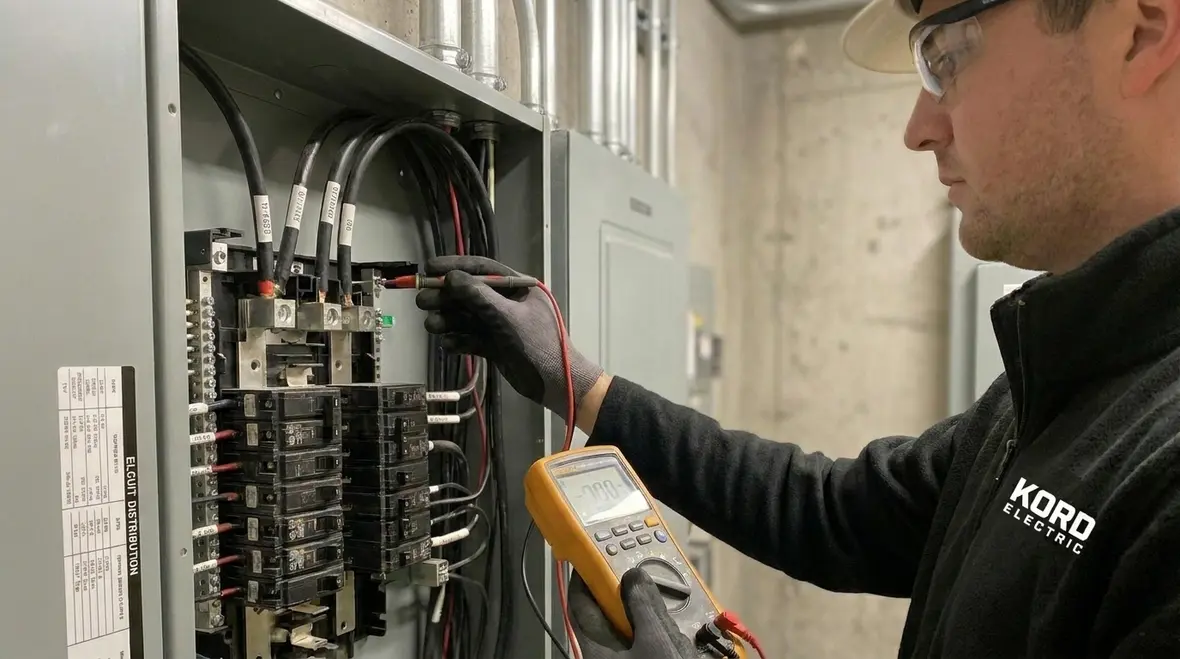
Commercial electrical subpanel sizing begins where many projects fail: inside the existing distribution setup. Kord Electric technicians typically start by reviewing the main service data, the panel schedules, and the available ampacity in the feeder and upstream devices. Then they verify what is actually connected. That matters because building records can be older than the last remodel, and older remodels sometimes leave behind abandoned conductors, oversized breakers that were “fixed” once, and loads that were never added to the plan.
Next, we look at the current operating conditions. We confirm conductor sizes, breaker ratings, and the condition of terminations. Even when the load list looks correct on paper, a loose lug or worn connection can create heat, which leads to insulation damage. And once insulation breaks down, the risk becomes more than a nuisance. It becomes a real safety issue.
From there, our expert service staff often helps the client understand the practical side. They explain how voltage drop affects equipment like motors, drives, and sensitive controls. Then, they connect it to the daily reality of commercial operations: dim lights, stalled motors, and HVAC issues that show up during the busiest hours, never during inspection week. When those symptoms appear across a wider facility, they often tie into the same themes discussed in Kord Electric’s guide on voltage fluctuations in commercial and industrial facilities.

How We Build a Load Plan for Retail, Office, Warehouses, and More
Once we confirm the starting point, we build a load plan. For commercial and industrial facilities, we do not treat every future device the same. We categorize new equipment by type, like lighting, receptacles, HVAC, machinery, refrigeration, pumps, and process loads. Then we consider diversity and demand factors where code allows. This is where the commercial electrical subpanel sizing guide earns its keep, because the correct method depends on what the building actually does.
So, the team asks the “what” and “when.” For example, a warehouse that runs dock doors and forklifts in bursts has a different demand profile than a hotel lobby with steady lighting and ventilation. Office floors often add IT racks, printers, security systems, and breakroom circuits that quietly multiply over time. Meanwhile, industrial facilities add motor loads and control power that can behave differently on startup.
And because expansion projects rarely happen in one tidy step, we map phases. We estimate what the panel must support immediately, and what it must support when phase two and phase three show up. This avoids the classic mistake: sizing for what is planned this month, then failing when the next tenant, new process, or new line arrives six months later. That is the electrical version of buying one suitcase and pretending the rest of the luggage will fit later. For complex campuses and modern buildings, this phased thinking lines up with the broader strategies outlined in Kord Electric’s article on commercial electrical systems for modern buildings.
Demand, Diversity, and Phase Planning That Prevent Overload
After the load plan, we apply demand and diversity assumptions in a way that matches the facility type. Kord Electric works with commercial and industrial sites, so we treat load behavior seriously, not casually. We also account for continuous loads and intermittent loads. Continuous loads, like some HVAC systems or refrigeration, can push equipment closer to its limits for long periods. Intermittent loads, like motor startups, can create short peaks that still matter for heat and breaker coordination.
In the real world, expansion projects often bring upgrades that sound harmless: “It is only a few new circuits.” But when those circuits feed panels, additional branch circuits, and then gear that drives motors or power supplies, the upstream capacity gets taxed. Moreover, when demand changes, hot spots can appear in areas that never had problems before.
Our technicians and expert service staff explain it in plain language: even if the average load seems fine, the peak load and the duration of load matter. Then, they show how proper subpanel sizing reduces the chance of overload conditions, nuisance tripping, and damage over time. In short, we aim for stable power, not a system that needs constant babysitting. When facilities also invest in structured inspections and testing, such as Kord Electric’s electrical preventive maintenance, those overload risks get identified long before they become shutdowns.
Check Voltage Drop, Feeder Ratings, and the “Small” Details That Create Big Problems
Many teams focus on breaker size and forget everything else. Kord Electric does not. Instead, we verify feeder ampacity, conductor size, and voltage drop, because long runs and undersized conductors can reduce voltage at the load. When voltage dips, equipment draws more current to compensate, which then increases heat at the panel and along the run.
Then we examine terminal quality and busbar condition. Heat and poor connections often start as something subtle: a slight discoloration, a smell after shutdown, or a breaker that feels warmer than normal. Over time, those signs become hidden electrical risks in commercial buildings, especially where panels are crowded, access is limited, and maintenance schedules slip.
If the building had past issues like loose lugs or water intrusion, we treat those as red flags, not as a one-time event. We also make sure the expansion does not crowd the panel beyond safe working space, and we verify grounding and bonding details. Those steps support safe fault clearing and stable operation.
In fact, Kord Electric references common hidden risks, such as overheating connections, overloaded neutrals in multi circuit setups, and equipment deterioration that can become dangerous when loads increase. Our expert service staff walks clients through what they can observe now and what they should plan for during expansion. For owners who want a deeper perspective on those underlying hazards, the article on hidden electrical risks in commercial buildings connects those small details to real-world consequences.
One Delivery Method: Coordinate Breakers, Circuits, and Grounding From Day One
After sizing calculations, we coordinate. That means the team confirms breaker type, interrupt rating, conductor types, and grounding paths for the new subpanel circuits. We also verify that the panel layout supports safe routing, labeling, and future expansion. Commercial and industrial sites often need clear documentation for operations and maintenance teams. So, we keep records organized and we label circuits so other contractors do not turn a panel into a mystery novel.
Next, we coordinate with the building’s safety and life safety needs, such as emergency circuits and essential loads. While every site differs, the idea stays the same: expansion should not weaken protection where it matters most. We also ensure the system supports proper fault clearing so that a fault does not linger and heat up components.
To keep decision making practical, Kord Electric uses a dual perspective once, mapping calculations to field realities. The goal is a plan that matches the panel bus, conductor runs, and future loads without forcing last minute changes.
Design calculation focus
- Load types and demand factors
- Feeder capacity and conductor sizing
- Voltage drop targets
- Breaker and panel ratings
Field coordination focus
- Panel space and routing clearances
- Termination quality and tightening
- Grounding and bonding continuity
- Labeling for operations staff
Commissioning and Testing: What We Validate After the Subpanel Is Installed
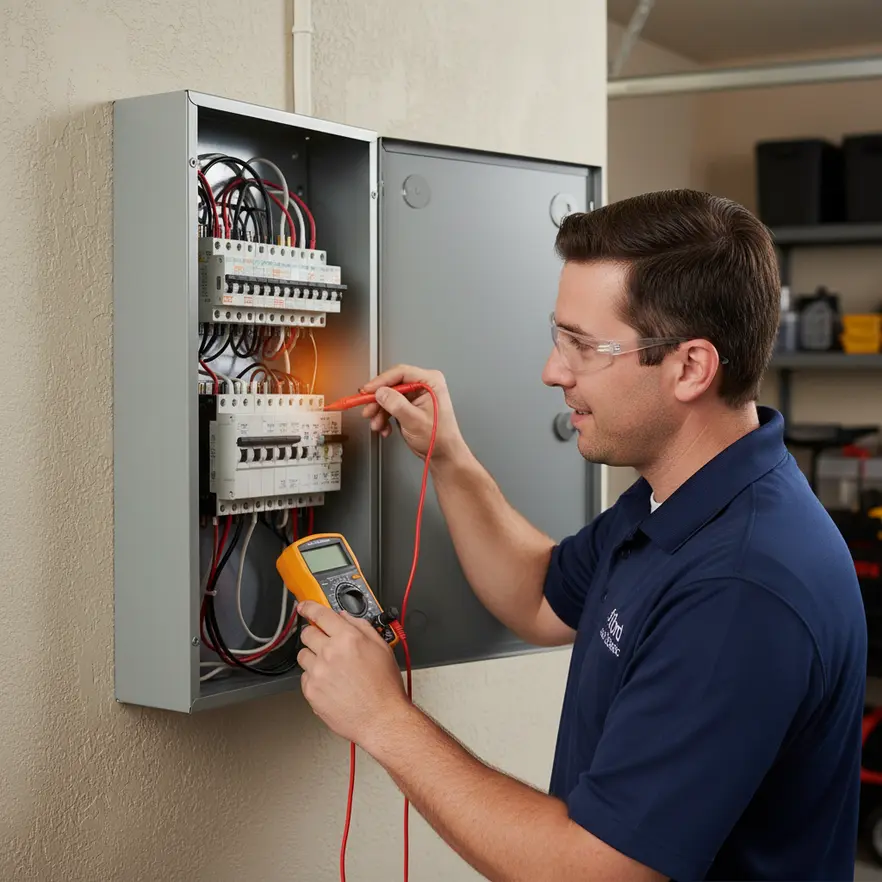
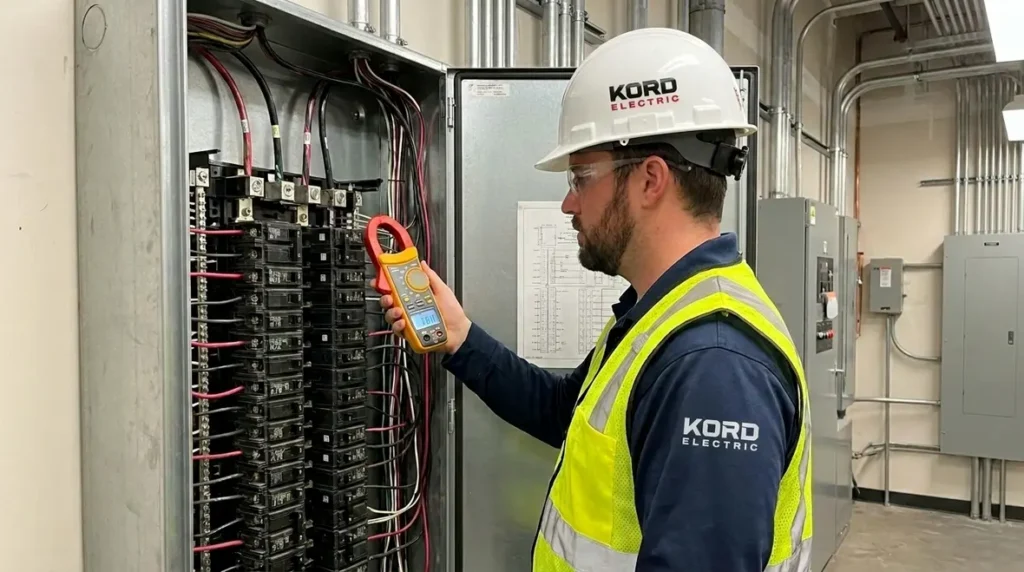
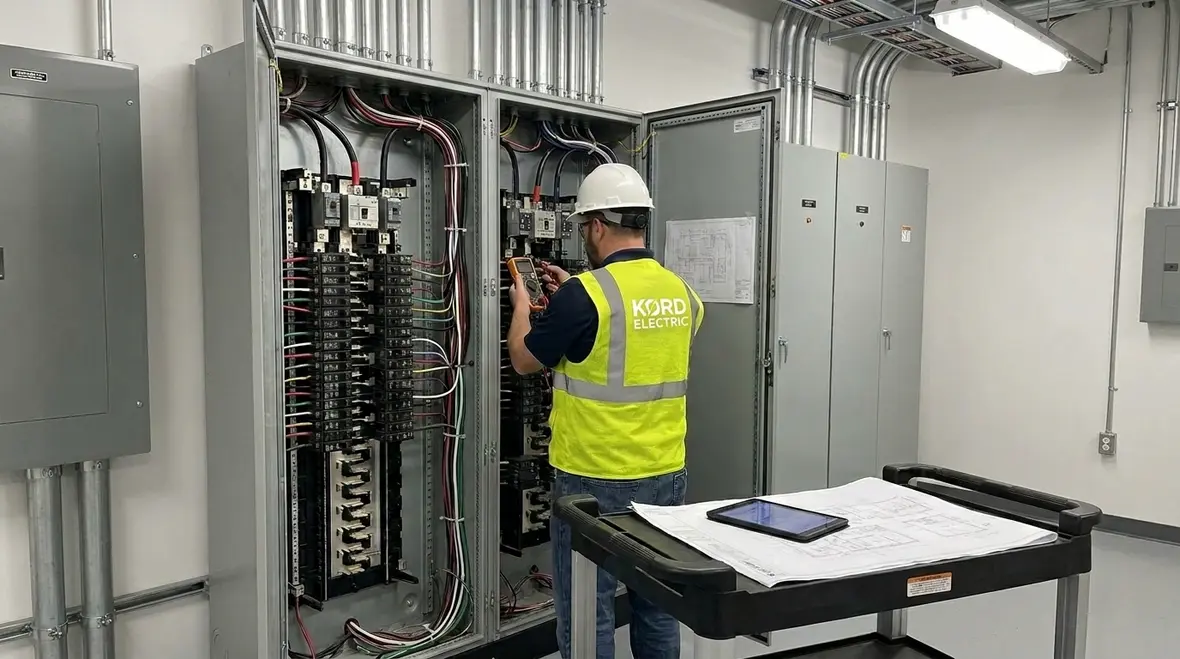
Installation is not the finish line. Kord Electric technicians validate performance after work is complete. That includes checking torque on terminations, verifying polarity, and confirming correct breaker mapping. Then, we test systems so the new loads behave as expected under real operating conditions.
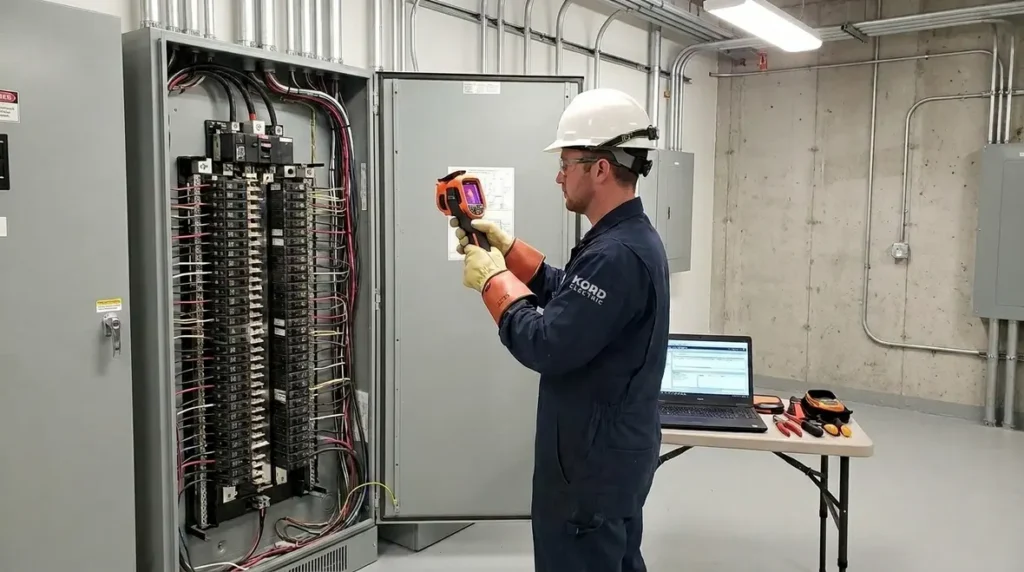
We also check for early warning signs. For example, if a connection is slightly off or a conductor is routed poorly, heat can show up later, not immediately. So we take a methodical approach: visual inspection, measurement of conditions, and verification of protective device function. Then, we document results so the building team can maintain the system with confidence.
Most importantly, we explain what we found and what it means. Our expert service staff does not just hand over a report. They walk through the results and tell the truth in a calm tone, like a good safety briefing before the lights go out. Because in commercial and industrial buildings, surprises are expensive, and downtime is rarely on the calendar. For facilities that want ongoing assurance beyond a single project, Kord Electric’s electrical preventive maintenance services and broader commercial and industrial electrical maintenance plans help keep that performance stable.
FAQ: Commercial Electrical Subpanel Sizing for Expansion
Final Word: Get the Right Size Before the First Breaker Trips
Expansion should make a facility more productive, not more complicated. Kord Electric helps commercial and industrial owners and managers size subpanels the right way, using a commercial electrical subpanel sizing guide approach that connects calculations to field reality. If you plan a tenant improvement, equipment upgrade, warehouse expansion, or power-intensive modernization, contact us early. Our technicians and expert service staff will review your current setup, build the load plan, and guide the project through testing so you can move forward with confidence.
When that expansion includes new lighting, specialized equipment, or long distribution runs, pairing your subpanel strategy with the right service makes a measurable difference. Kord Electric’s dedicated lighting installation services for commercial and industrial facilities are often part of the same roadmap, ensuring that panel capacity, circuit layouts, and high performance lighting all work together instead of competing for space and power.
If you want to explore how subpanel sizing fits into a larger reliability plan, it can also help to review related resources like the article on hidden electrical risks in commercial buildings and Kord Electric’s coverage of voltage fluctuations in commercial and industrial facilities. Together, these perspectives reinforce one simple message: when you get the distribution design right up front, the rest of the project runs smoother.