
Critical Infrastructure Electrical Audit Checklist
Critical infrastructure electrical systems: what a strong audit looks like
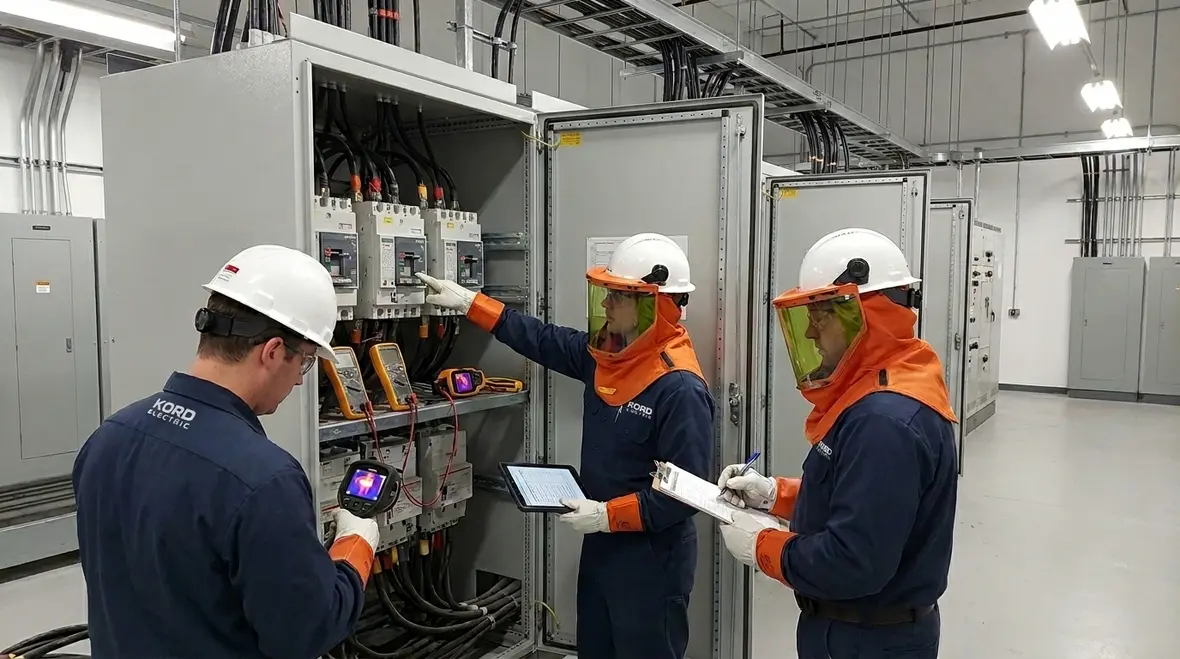
At Kord Electric, we treat a critical infrastructure electrical audit best practices like we treat a fire drill: boring when it is planned, priceless when it is needed. We start by confirming the facility scope, then we verify equipment condition, settings, and protective coordination. After that, our technicians trace power paths, check load behavior, and validate safety controls so failures do not spread like gossip through a breakroom. We also document findings in clear language, because “it looks fine” never helped anyone during an outage. Finally, we prioritize fixes by risk, not by budget vibes. And yes, we get it, budgets do not like spreadsheets, but reliability prefers them.
Essential checklist for high risk electrical assets

For commercial and industrial facilities and major property buildings, we build the audit around assets that can cause long downtime, safety incidents, and costly repair cycles. In other words, we focus on the electrical spine of the building, not the decorative lighting that people take personally. To keep the audit efficient, we work from upstream to downstream, and we keep the same checklist logic across sites so comparisons stay fair.
- Service entrance and utility interface: confirm metering accuracy, verify grounding connections, and check for heat damage or loose terminations.
- Main switchgear and switchboards: inspect mechanical operation, bus condition, and breaker health using safe test methods.
- Transformers and distribution: verify loading, oil or insulation condition where applicable, and check voltage regulation and losses.
- Panelboards, MCCs, and feeders: inspect labeling, torque history, conductor condition, and routing against heat sources.
- Emergency and legally required systems: validate transfer equipment, runtime readiness, and load pickup performance.
- Power quality and harmonics: monitor voltage sags, swells, flicker, and harmonic distortion that quietly punishes motors and drives.
- Safety and interlocks: confirm arc flash labeling accuracy, verify that interlocks work, and check control logic for fail safe behavior.
Then we do something many teams skip. We confirm the “paper story” matches the real world. Next, we compare actual operating conditions to design intent, because the building does not read the one line diagram. Our expert service staff explains what they see as they go, so facility managers understand the risk without needing a power engineering degree.
How we verify protective devices and coordination
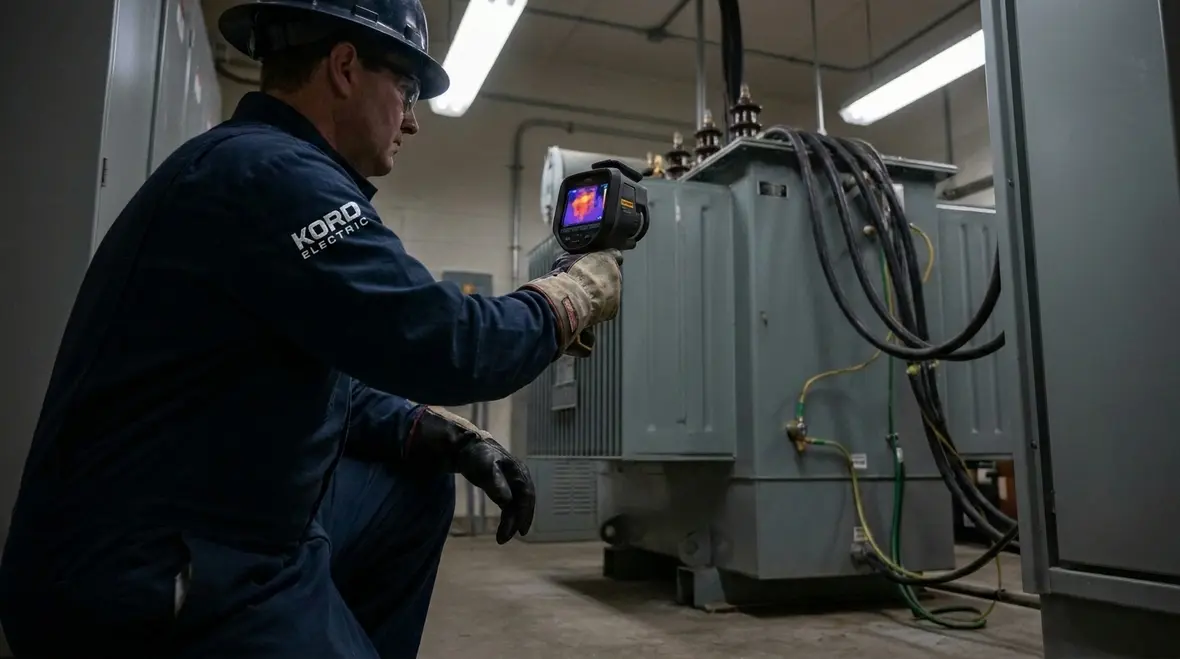
Even when equipment looks clean, protection problems can still lurk. That is why we verify protective device settings and coordination. If the wrong breaker trips, critical loads stay dark longer than they should. And if the protection never trips when it should, damage spreads, repairs get expensive, and everyone starts searching for someone to blame. We avoid that drama.
During the audit, we check and document:
- Breaker and fuse ratings: verify correct sizes for conductors and equipment duty.
- Time current curves: compare coordination across upstream and downstream devices.
- Protection settings: validate trip curves, ground fault behavior, and settings changes after field work.
- Thermal and arc fault behavior: check how protective devices respond under abnormal conditions.
- Fault current availability: confirm that expected fault levels match the system model.
Because commercial and industrial sites run with real schedules, we time the checks to reduce disruption. Moreover, our team labels what matters, explains why it matters, and tells you what to do next. If we find a device that will not protect the way it should, we present the consequence plainly: longer outage, higher repair cost, or increased safety risk. That is the kind of “so what” people actually use.
Rewiring decisions: what we look at before costs balloon

Rewiring is often discussed like it is a single event. In reality, it is a chain of decisions based on condition, loading, and how well the electrical system can be modernized without creating new failure points. Our technicians guide facility teams through this carefully, and we align the audit results with project planning so surprises do not show up at the worst time.
In our earlier guide on rewiring cost guide for commercial electrical systems, we explain how total costs depend on labor complexity, access constraints, and the scope of what needs replacement. We bring that same practical mindset into the audit.
Here is what we evaluate before recommending rewiring or targeted upgrades:
- Cable condition: insulation aging, jacket damage, moisture exposure risk, and signs of overheating.
- Termination quality: loose connections, corrosion at lugs, and repeated maintenance history.
- System capacity: whether loads increased beyond the original plan.
- Selective upgrade path: replacing only the sections that drive risk first.
- Operational constraints: outage windows, critical loads, and temporary power needs.
And yes, we do sometimes hear, “Can we just replace the bad cable and move on?” We understand the wish. However, electrical work rarely stays in one neat box. So we confirm how the change affects protective coordination, power quality, and future maintenance. Then we outline a plan that protects uptime while keeping costs under control.
Power quality, load patterns, and real world evidence
Most audits include a quick glance. We prefer real evidence. Power quality issues often show up as nuisance trips, motor stress, faster drive failure, or damaged control boards that never reproduce the same way twice. To catch that, we measure and analyze actual electrical behavior, especially during peak operation.
We focus on:
- Voltage stability: sags and swells that disturb controls and process equipment.
- Harmonics: distortion from drives, rectifiers, and modern power supplies.
- Unbalance: uneven phase loading that heats motors and transformers.
- Surge activity: spikes that quietly reduce insulation life.
- Grounding performance: check whether it stays stable under actual fault or disturbance events.
Then we explain the results in plain terms. Our expert service staff does not hide behind big charts. Instead, they connect the dots between what the meters see and what operators experience. As a result, maintenance teams can fix the right problem instead of swapping parts like they are playing whack a mole. And if you love mole games, we can still help, but we prefer the kind with fewer surprises.
Dual column audit documentation that teams can use
After testing, we create an audit package your team can act on. We organize recommendations so they move from “we found it” to “we fixed it” without confusion. That is where most projects either succeed or drift into slow, expensive delays. Below is a sample structure we use on commercial and industrial facilities and major property buildings.
| Audit finding | Recommended action |
| Loose terminations at distribution feeder lugs | Re-torque, inspect conductor condition, and verify thermal performance during load |
| Protective settings drift after upgrades | Recalculate coordination, update settings, and label per current one line diagram |
| Voltage sag during start cycles of major motors | Review load start strategy, evaluate mitigation options, and confirm results with follow up tests |
| Arc flash labeling mismatch with calculated incident energy | Update labeling after field verification and test data review |
| Harmonic distortion near limits from drives | Assess mitigation needs, verify power factor impact, and implement filter or control upgrades as needed |
Because every facility runs differently, we tailor the documentation. More importantly, we present priority by risk and outage impact. That keeps decision makers aligned, and it helps procurement move faster without a guessing game.
FAQ: essential audit checklist and next steps
Final word: let us audit before the outage auditions
Power issues rarely announce themselves politely. They show up when production runs, when budgets are tight, and when the schedule cannot breathe. That is why we recommend a structured critical infrastructure electrical audit best practices process at commercial and industrial facilities before failure forces the plan. Kord Electric brings expert technicians, clear findings, and practical next steps so you protect uptime and safety. If you are ready, contact us for an on site assessment and a prioritized action plan that your team can actually use.
If your facility is also facing recurring issues like nuisance breaker trips, unexplained equipment failures, or aging infrastructure that has not been reviewed in years, pairing a focused audit with broader support such as commercial and industrial electrical maintenance plans and strategic rewiring projects can create a long term reliability roadmap rather than a series of one off fixes.
From inspection and testing through documentation and follow through, Kord Electric’s commercial electrical services help facility teams move from guesswork to data driven decisions. Whether you are preparing for a major upgrade, planning a compliance review, or simply trying to get ahead of the next outage, a disciplined audit is one of the most powerful tools you can put to work for your critical infrastructure.
To explore how this kind of structured approach can support your broader upgrade plans, you can also review our in depth look at rewiring budgets and planning in the rewiring cost guide for commercial electrical systems, then connect those insights directly to your next audit cycle.
When you are ready to translate findings into field work, our team can coordinate everything from targeted rewiring and panel upgrades to preventive maintenance and troubleshooting, giving your organization a single, trusted partner across the life of your critical electrical systems.
If your operation is already feeling the strain of aging gear or frequent interruptions, consider pairing your next audit with a tailored service plan from our broader suite of commercial electrical services so that every recommendation has a clear, executable path forward.
From planning audits and coordinating projects to long term system care, Kord Electric helps commercial and industrial properties keep power stable, people safe, and operations ready for what comes next.


