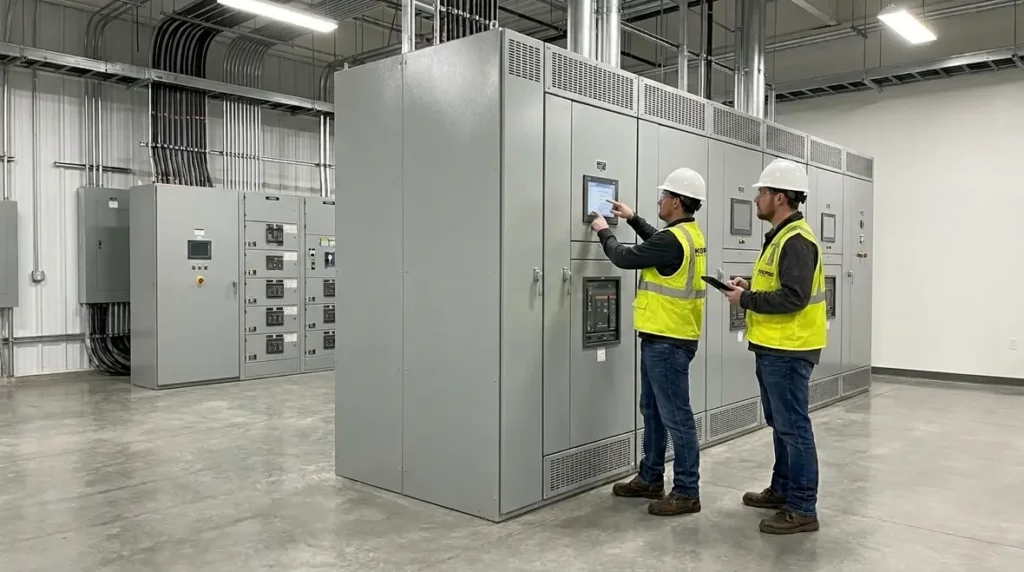
Industrial Electrical Load Balancing for Peak Efficiency
Industrial load balancing tips for peak efficiency, done right
Industrial facilities only get one chance to behave during peak demand, and that moment always shows up on the same day as your busiest shift. That is why industrial electrical load balancing matters from day one. At Kord Electric, we guide customers using practical load balancing tips: match feeder capacity to real process demand, spread critical equipment across phases, and monitor harmonics so one bad circuit does not drag everything down. Then, we fine tune the plan with breaker coordination, smart metering, and clear operating steps for maintenance staff. Yes, it sounds like “boring electrical planning,” but in real life it prevents downtime that costs more than the entire project. Others can guess. We measure, design, and verify.
Why load imbalance quietly kills efficiency in commercial and industrial sites
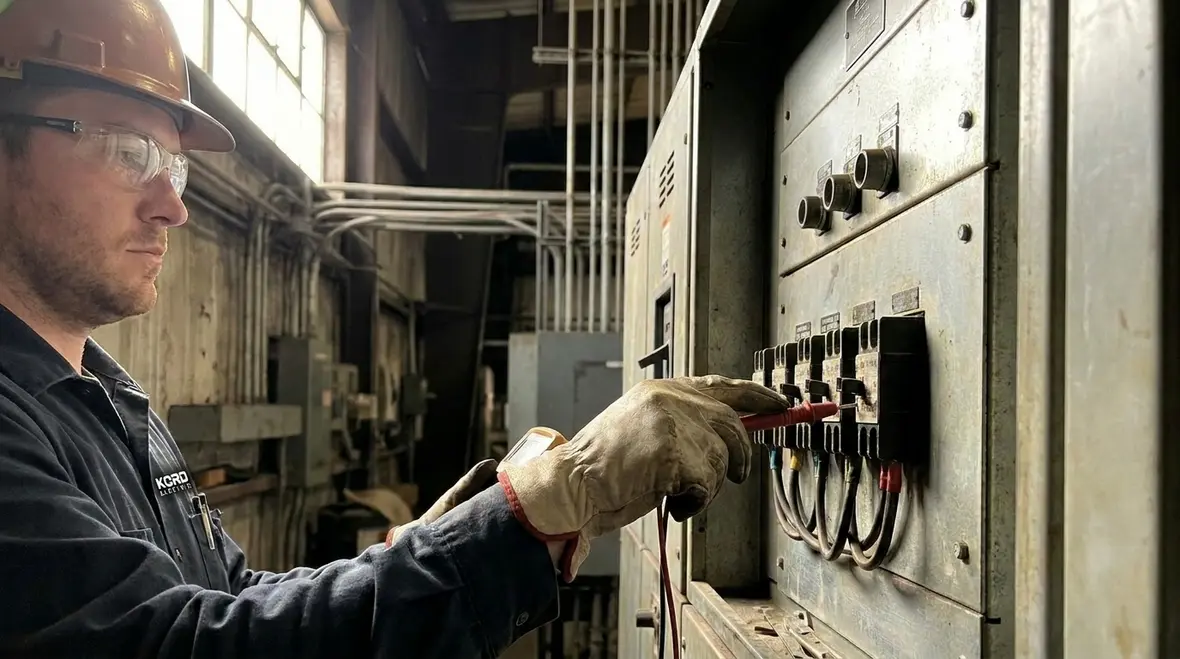
In third person terms, the problem often starts small and grows quietly. One panel gets a little more current, one phase carries a little less, and the site still “runs.” Then, losses rise, voltage drops become more frequent, and heat builds where it should not. Over time, this drives up wear on motors, reduces transformer life, and increases nuisance trips. Meanwhile, operators notice only the symptoms: recurring alarms, uneven cooling in electrical rooms, or a UPS that seems to work harder than it should.
Here is how the impact stacks up. First, current imbalance increases I2R losses in conductors. Next, it can cause neutral current issues in systems that use neutral conductors. Then, it can affect torque on three phase motors, especially when load swings happen during shift changes. In other words, the site does not just waste energy. It also loses stability.
And yes, it is like the classic joke where everything is fine until someone checks the one spreadsheet nobody updated. Load imbalance is that spreadsheet, except the “error” shows up as real-world heat and real-world risk.
Designing distribution for reliability and balanced phases
To master industrial electrical load balancing, the design has to support the goal before the first breaker is even labeled. Kord Electric follows the same discipline we describe in our article on data center electrical distribution design for reliability. The principle is simple: build redundancy and control around how power actually flows, then verify that the system can handle load shifts without chaos.

In practice, we look at feeder segmentation, switchgear layouts, and how panels connect to each other. We also ensure phase assignment supports expected operating profiles, not just “whatever was available.” For major property buildings and industrial plants, we plan for variations in demand: equipment cycles, HVAC modes, production schedules, and startup sequences. If a distribution design assumes steady demand but the site behaves like a rollercoaster, imbalance follows like it has a season pass.
Our technicians explain the design logic in clear language. They do not just hand over a one line diagram and a prayer. Instead, they walk facility teams through why we isolate certain loads, how we group loads by duty cycle, and how we prevent single points of failure. That approach keeps the site calmer, and it keeps maintenance smarter.
How we plan load allocation across panels, feeders, and busways
Allocation is where the math becomes real. A balanced system does not happen by accident. It comes from a deliberate process that Kord Electric runs with commercial and industrial customers: we review one year of load data when possible, then we forecast changes for known expansions. After that, we map loads to panels and phases with an eye on both peak and rhythm. Rhythm matters because many imbalance issues repeat daily at predictable times.
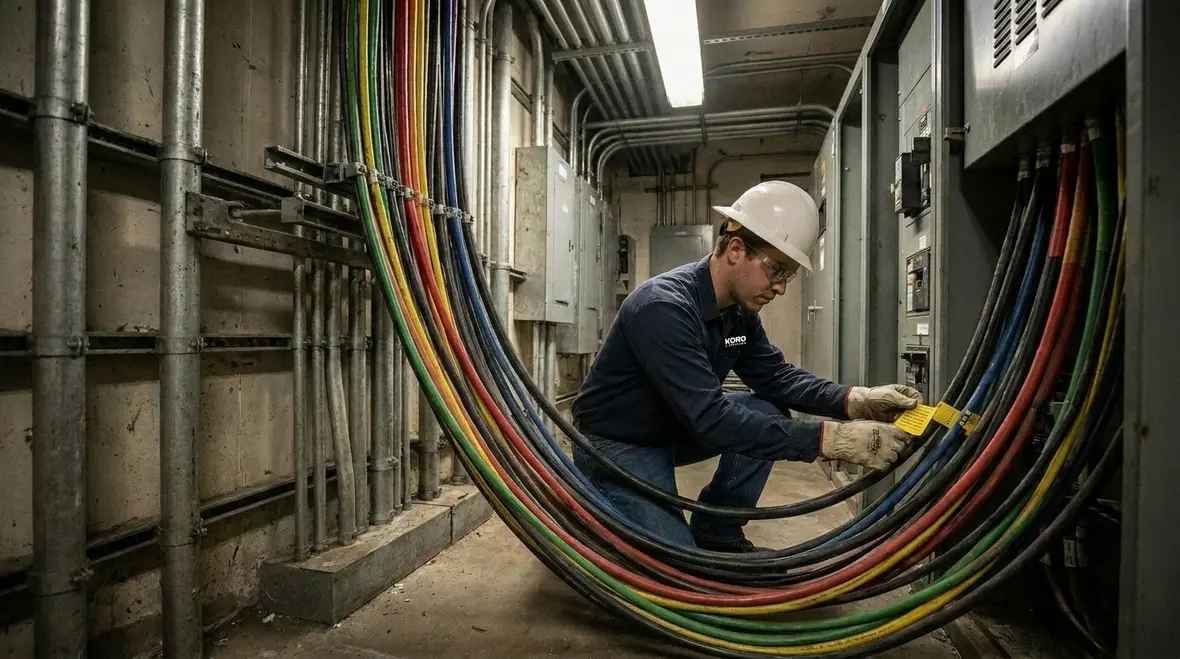
To keep industrial electrical load balancing stable, we use a few field-tested steps. First, we group loads by characteristics such as motor start behavior, controller loads, and steady lighting or plug loads. Next, we plan phase assignment so each phase carries a similar portion of kW, not just a similar number of breakers. Then, we confirm neutral current paths where applicable and check if nonlinear loads add harmonics that distort waveforms.
Finally, we coordinate breakers and relays so the protection scheme does not introduce new instability. If protection trips early on one phase, operators often “fix” the symptom by shifting loads later, and that can make imbalance worse if no one checks the full picture. We help teams avoid that trap by aligning electrical coordination with how people actually run the building.
Measurement, harmonics, and controls that keep balance under stress
Even a strong design can drift. Equipment ages. Loads change. A new process line adds tomorrow what was not in the original schedule. Therefore, measurement matters as much as design. Kord Electric supports customers with metering strategies and commissioning steps that catch imbalance before it turns into downtime.

We pay close attention to harmonics because harmonics can make current appear “balanced” while still causing heating and poor performance. For example, a single panel with a heavy variable frequency drive setup can push harmonic currents that raise effective losses. Then, those effects can show up in transformer temperatures, busbar hotspots, and overheating at terminations.
Controls also play a role. Demand response, HVAC staging, and generator transfer sequences can create abrupt load shifts. When controls switch in a staggered or predictable way, phases stay closer to their target. When the controls all “snap” at once, imbalance can spike. That is why we recommend tuning sequences and setting safe ramp rates for large loads, especially in major property buildings with complex life safety and mechanical systems.
Our experts explain these points on site, using simple terms. They show what the meters see and what the thermal cameras confirm. And if someone asks, “How bad could it be?” we answer like pros: “Bad enough to interrupt a shift, and good enough to cost you money.” The joke ends there, because the fix needs to begin immediately.
Implementation that reduces downtime and keeps operations moving
Industrial electrical load balancing requires work that respects operations. Nobody wants a “perfect” plan that forces a full shutdown. So, Kord Electric sequences implementation to reduce downtime risk. We start with a short survey and short list of changes, then we schedule modifications around production windows and utility constraints.
We also document the plan so the facility team can maintain it. That means clear labeling, updated single line diagrams, and written steps for how to change load routing during future maintenance. When technicians later swap equipment, they need to understand the balancing logic, not just where the wires go.
During commissioning, we verify results under realistic load conditions. We do not accept “it looks fine.” We confirm phase current levels, neutral loading where it applies, voltage stability, and thermal performance. If adjustments are needed, we coordinate with facility leadership on the safest way to shift loads. Then, we train the staff that runs the building day after day.
This is where our team’s calm process shines. Our service staff does not rush decisions, and they do not hide behind vague statements. They explain what changes improve peak efficiency and what changes only shift the problem. In business terms, we help the site keep money in the bank, not in the form of emergency calls.
If your facility is already fighting voltage swings or unexplained trips, pairing these industrial electrical load balancing tips with a deeper review of issues like voltage fluctuations in commercial and industrial facilities can reveal where imbalance, aging infrastructure, and power quality are quietly working together against you.
FAQ: Industrial electrical load balancing questions, answered fast
Conclusion: partner with Kord Electric before imbalance becomes a headline
Load imbalance does not announce itself with a whistle. It arrives as heat, wasted energy, and recurring operational issues that cost more than planned upgrades. Kord Electric helps commercial and industrial facilities master industrial electrical load balancing through solid design, careful allocation, and real verification. If your site faces peak stress, phase imbalance trends, or growing power demands, contact us for an assessment and a practical action plan. We will map the problem, explain the options in plain language, and build a solution your team can maintain.
For facilities that rely on uninterrupted production and stable power quality, combining these industrial electrical load balancing tips with a structured electrical preventive maintenance program gives your team a long-term safety net. Regular inspections, testing, and data-driven adjustments help your distribution system stay balanced, efficient, and ready for the next peak demand event.